You spend hours building your website, writing helpful articles, and waiting for Google to notice you. But after months of effort, your posts still sit on page five. It feels like shouting into the void while bigger sites always steal the show.
Here is one interesting fact: publishing your content on top sites like LinkedIn and Medium can help you rank fast in search results because those platforms already have strong authority with Google.
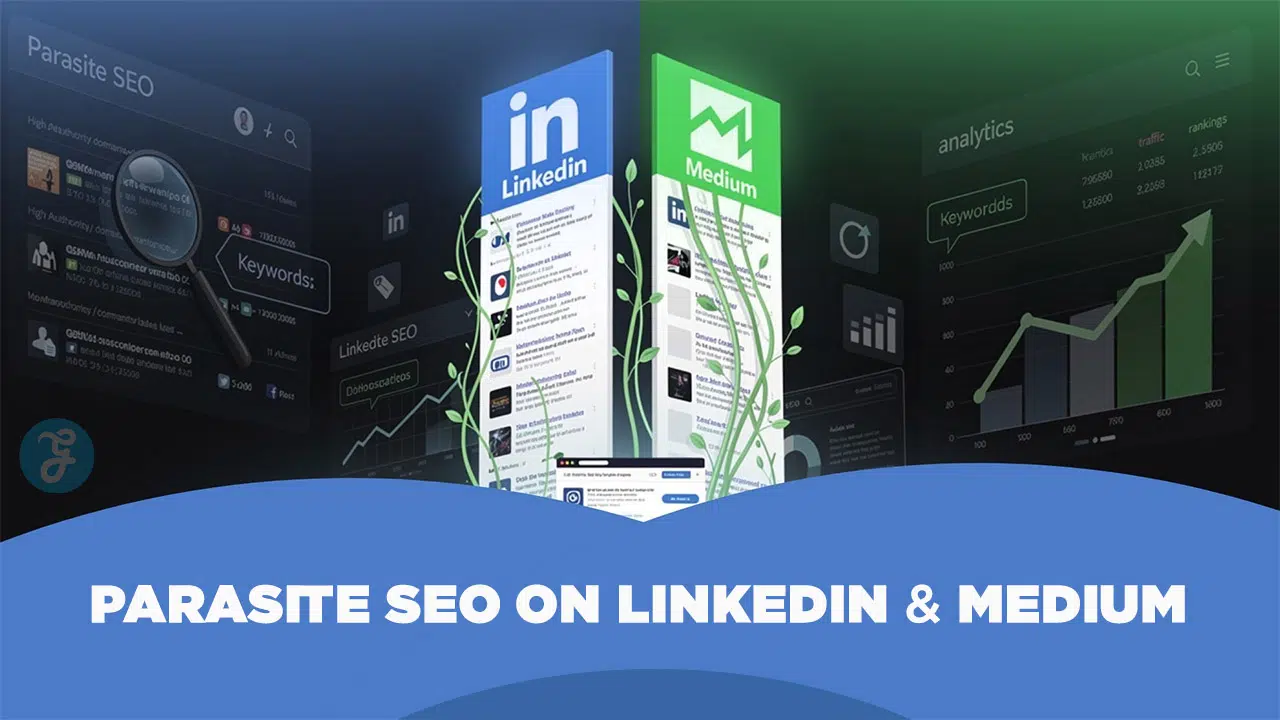
This guide explains how to leverage Parasite SEO on LinkedIn and Medium to increase visibility for your content. Straightforward actions are outlined to help generate results, regardless of how new your site may be.
Take a moment to review the approach carefully. The full process is laid out in a simple, easy-to-follow format.
What is Parasite SEO?
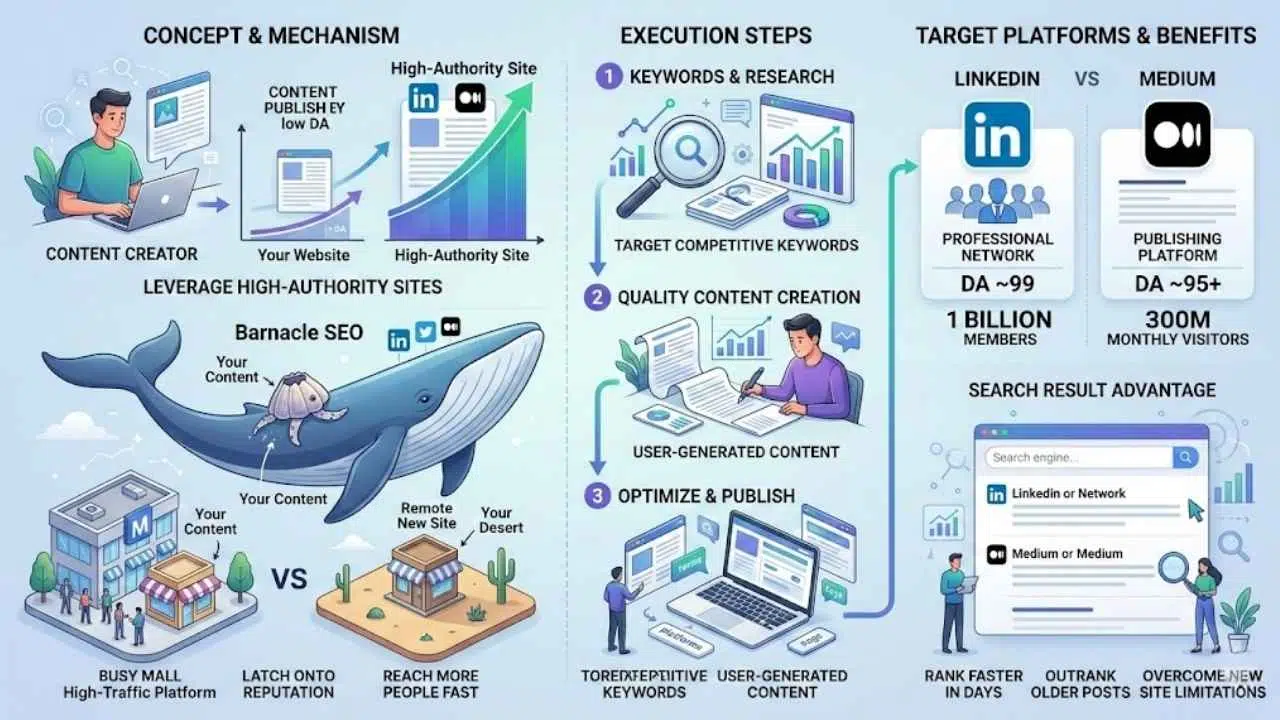
Parasite SEO lets you use big, trusted sites to boost your content in search results. You can ride on their strong reputation and reach more people fast.
Definition and Concept
Using Parasite SEO means publishing search engine optimized content on strong websites like LinkedIn and Medium, not your own site. Marketers often call it “Barnacle SEO” because you latch onto sites with massive authority, much like a barnacle attaches to a whale.
You use their trust and power to help your articles show up faster in Google searches. Think of it like opening a store inside a busy mall instead of building a shop in the middle of a desert.
This approach works great with user-generated content platforms. With good keyword research and high-quality writing, even newcomers can beat older posts for hot keywords.
The “So What?”: A 2024 report by Search Engine Land highlighted that high-authority domains can often rank for competitive keywords in days, whereas a new domain might take 6-12 months. This speed is your competitive advantage.
How It Leverages Authoritative Domains
Parasite SEO takes full advantage of high-authority websites. These platforms have strong “Domain Authority” (DA), a score that predicts how well a website will rank on search engines.
For example, LinkedIn has a DA of 99, while a new blog might have a DA of 1. When you publish on LinkedIn, Google sees that content as coming from a trusted source. This helps your content show up on the first page way quicker than a new site could hope for.
Marketers call this strategy piggybacking. You “stick” your content onto sites that Google already loves. A well-written post on Medium or LinkedIn Pulse taps into their credibility without needing years of backlink building.
Based on recent experiments, good articles about trending topics rank in days—sometimes hours—not weeks or months. Sites like Quora have also shown great results with this approach since 2023, but Medium is still a goldmine if you are fast and relevant with keywords first.
Why Use Parasite SEO on LinkedIn and Medium?
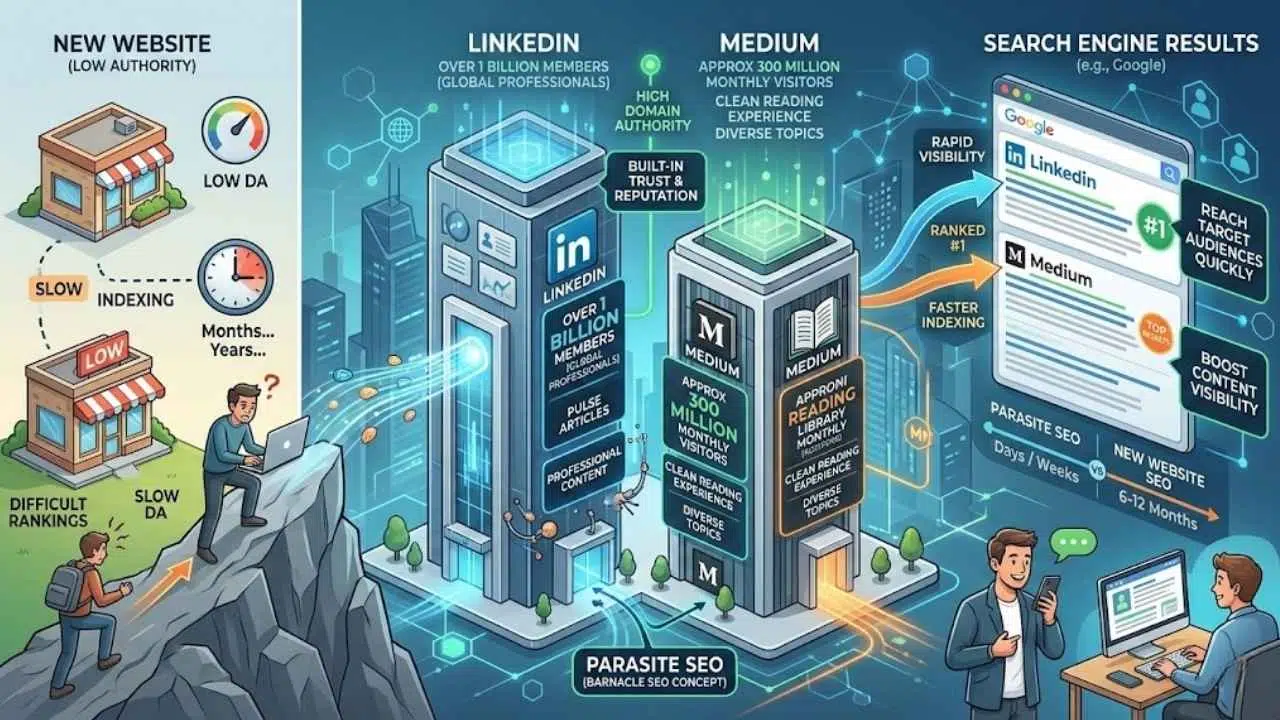
Getting your articles on big sites like LinkedIn and Medium can work wonders for your search rankings. These platforms open the door to more readers and make it easier to grab attention fast.
High Authority and Trust of Platforms
LinkedIn and Medium have massive authority with Google. Both sites show up fast in search results because search engines trust their domains. Millions use these platforms for sharing ideas, so fresh articles get noticed quickly.
With years of user-generated content behind them, LinkedIn and Medium keep building trust every day. Publishing high-quality content here can help your pages rank faster than on a brand new website. You do not need to build domain authority from scratch.
Here is a quick look at why these platforms are so powerful:
- LinkedIn: Has over 1 billion members worldwide as of 2025. Its content is seen as highly professional and credible.
- Medium: Attracts approximately 300 million monthly visitors. It is designed specifically for reading, meaning people stay on the page longer.
- Trust Flow: Google’s algorithms favor these sites, meaning your article inherits their “reputation” instantly.
Faster Ranking for Competitive Keywords
Publishing optimized content on Medium and LinkedIn lets your articles ride the coattails of high-authority domains. Google favors these established sites. This makes it easier for good posts to appear in top search results.
For tough keywords that might seem out of reach on new websites, Parasite SEO opens doors fast. Marketers have seen quick wins using this strategy, especially with trending or competitive topics.
People who post quality content early can leapfrog slower-moving competitors and enjoy a boost before others catch up. This zero-sum game means you need strong writing and smart keyword choices right from the start for Search Engine Optimization victories.
Parasite SEO vs Guest Posting
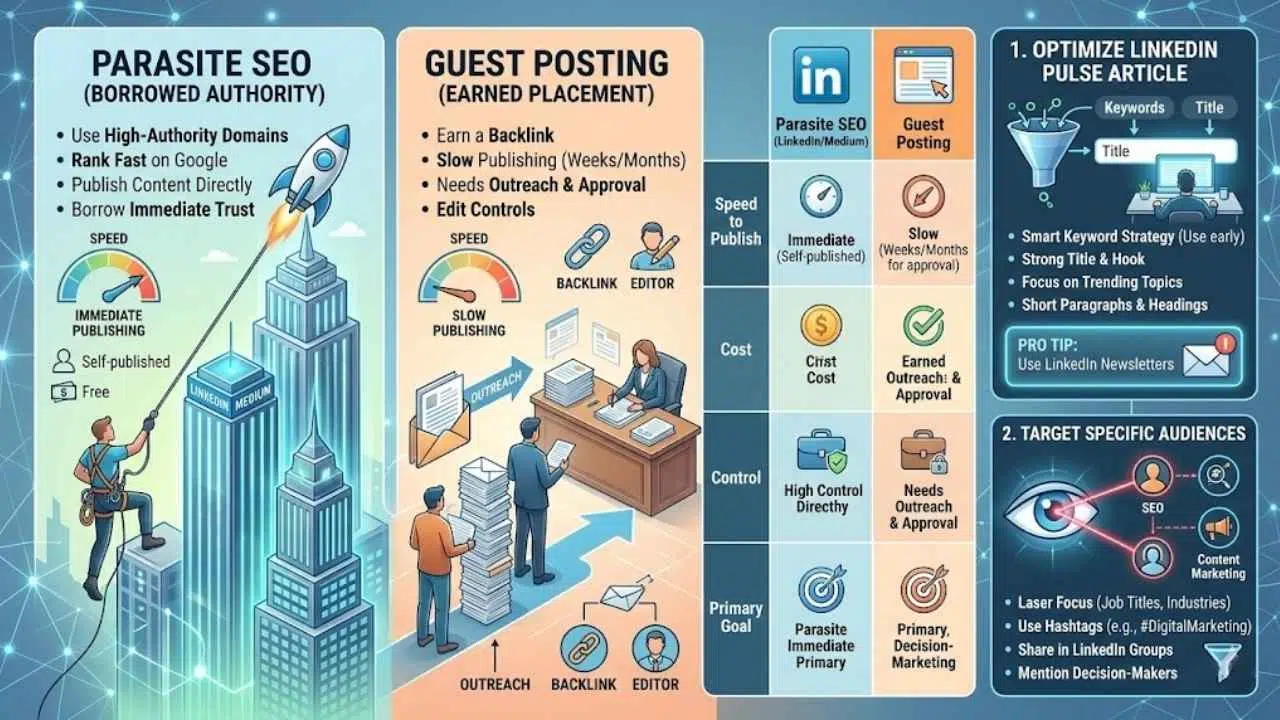
Most folks think posting on big sites is all the same, but there is a real gap between slipping your content onto their turf and being invited as a guest. One way lets you hitchhike off their power fast, while the other asks you to earn your seat at the table.
Key Differences Between the Two Strategies
Parasite SEO uses high-authority domains like LinkedIn and Medium to rank fast on Google. The content is published on these platforms directly by you. This means you borrow their trust and strength immediately.
Guest posting means writing for another blog or website, but it often needs approval. It can take weeks of emailing and editing before your post goes live. With Parasite SEO, anyone can publish quickly since both LinkedIn Pulse and Medium offer User Generated Content options with fewer barriers.
| Feature | Parasite SEO (LinkedIn/Medium) | Guest Posting |
|---|---|---|
| Speed to Publish | Immediate (Self-published) | Slow (Weeks/Months for approval) |
| Cost | Usually Free | Often requires a fee or manual outreach |
| Control | Moderate (Platform rules apply) | Low (Editor controls final link/text) |
| Primary Goal | Rank the article itself on Google | Get a backlink to your site |
Advantages of Parasite SEO Over Guest Posting
Using Parasite SEO on LinkedIn and Medium gives you speed that guest posting just cannot match. You ride on the back of high-authority domains, so your content often lands higher in Google search much faster.
Publishing a keyword-rich article on LinkedIn Pulse or Medium can get it indexed within hours. You can grab competitive keywords before slower sites catch up. No need to email site owners, wait for approval, or beg for backlinks like with traditional guest posts.
These platforms allow anyone to publish user-generated content without needing connections or special deals. Results speak volumes as many marketers see their articles rank overnight thanks to the trust Google places in these authority websites.
How to Do Parasite SEO on LinkedIn
Write your LinkedIn articles with clear goals and strong keywords, then share them to reach the right crowd. Engage readers by providing value, sparking discussions, and using visuals that pop.
Optimizing LinkedIn Pulse Articles
Optimizing LinkedIn Pulse articles starts with a smart keyword strategy. You should use your target Search Engine Optimization keywords early in your title and opening lines. Google scans those areas first.
Focus on trending topics or competitive terms since Parasite SEO thrives on LinkedIn’s high authority domain. Add a strong intro that hooks busy professionals right away.
Use short paragraphs and clear headings for better readability, as people often skim on mobile devices. Consider dropping in data or stats from 2024 digital marketing reports to boost trust.
Insider Tip: Many users on r/Marketing suggest using the LinkedIn Newsletter feature instead of just standard articles. Newsletters send a push notification and an email directly to your subscribers’ inboxes, which drives immediate traffic signals to Google.
Targeting Specific Audiences on LinkedIn
LinkedIn lets you get your content in front of the right eyes fast. With millions of users split into job titles, industries, and skills, you can target your digital marketing to hit home with a laser focus.
Want search engine optimization folks? Tag “SEO,” use hashtags like #DigitalMarketing or #ContentMarketing, or share inside LinkedIn groups hungry for ranking strategies.
Some smart writers publish articles aimed straight at high-authority websites decision-makers by mentioning trending topics in their field. Parasite SEO on LinkedIn rides this wave by picking keywords these audiences search for every day.
How to Do Parasite SEO on Medium
Write catchy stories that answer what people search for. Use smart tags, and sprinkle links to other helpful posts to boost visibility.
Crafting High-Quality, Keyword-Targeted Articles
Crafting high-quality, keyword-targeted articles on Medium starts with smart research. People who publish good content first often win top spots and enjoy more organic traffic. Add keywords like “Search Engine Optimization” and “Digital Marketing” right in your title and early paragraphs for a quick ranking boost.
Use real examples or short case studies if possible. These connect with readers fast. Platforms such as Medium are goldmines because Google loves their authority domains.
Use the main keyword no more than three times per article. Sprinkle secondary terms like “Content Marketing” or “Authority Domains” where they fit naturally.
- Use the “Import” Feature: If you are reposting from your own blog, use Medium’s “Import a Story” tool. It automatically adds a canonical link, telling Google that your original site is the primary source. This protects your site’s SEO while giving you Medium’s reach.
- Format for Skimmers: Use H2 and H3 headers to break up text.
- Custom URL: Before you hit publish, you can customize the URL slug in settings. Make it short and keyword-rich (e.g., medium.com/user/parasite-seo-guide) rather than a string of random numbers.
Leveraging Medium’s Internal Linking and Tags
Linking to other strong Medium articles can give your piece a real boost. Find related posts with high engagement, then link naturally inside your writing. This helps search engines understand what your article is about and connects your content to the rich web of authority domains on Medium.
People often click these links too, which can send more eyes straight to your work. Tagging smartly opens new doors for organic traffic.
Use up to five relevant tags like “Search Engine Optimization,” “Content Marketing,” or “HighAuthority Websites.” Fast keyword ranking on Google depends on these small details because Medium’s tagging system feeds into its search and discovery tools.
Benefits of Parasite SEO on LinkedIn and Medium
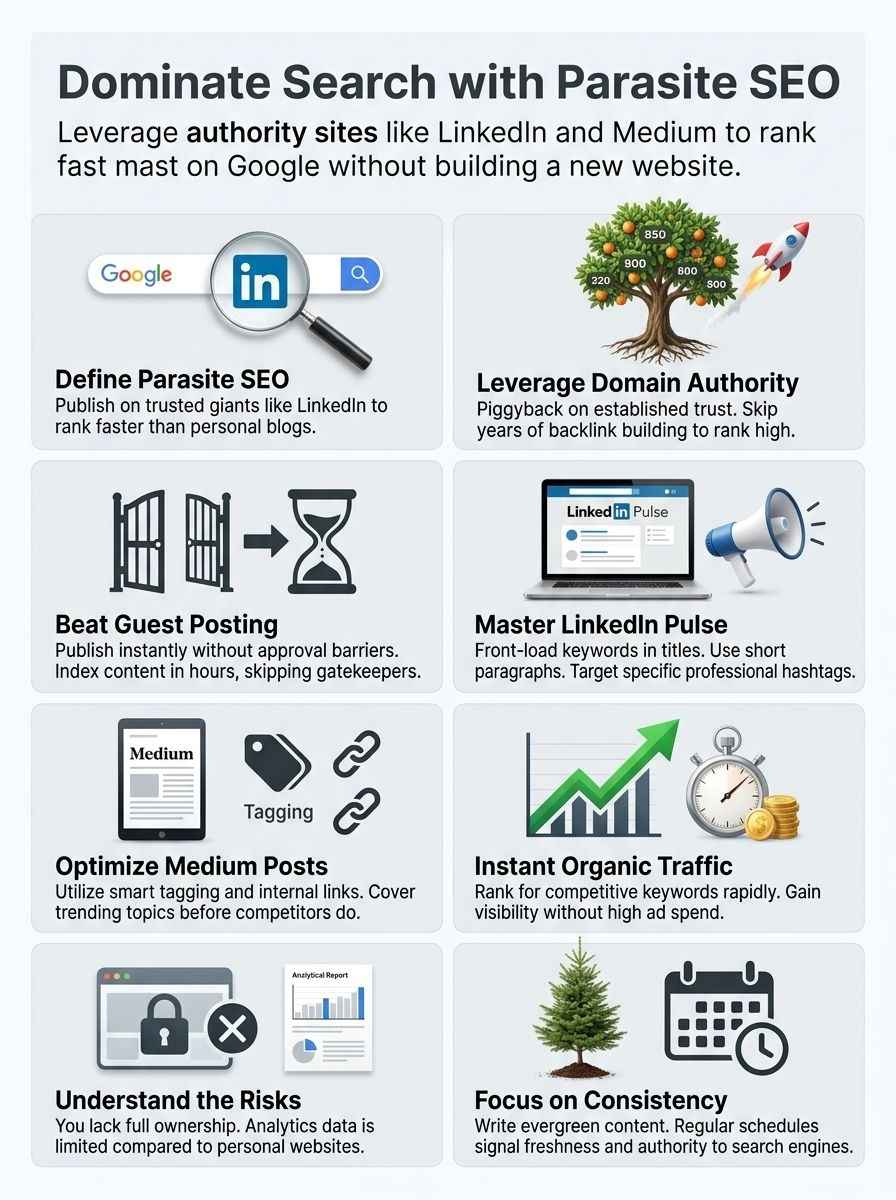
Posts can ride the wave of strong platforms, helping you rise faster in search results. These sites open doors to fresh eyes and steady streams of new readers, almost like magic beans for your traffic garden.
Increased Organic Traffic
Parasite SEO on LinkedIn and Medium pulls in more organic traffic by using the strength of these high-authority platforms. Content published here often ranks faster for tough keywords.
In 2024, experts found that posting search engine optimized articles on Medium or LinkedIn can get a website onto page one without waiting years to build domain authority from scratch. Medium is often called a goldmine because good content there climbs the rankings quickly.
The process is simple. Create quality user-generated content packed with smart keyword strategy, drop in some backlinks, and watch the visitor numbers climb. Quick experiments show even brand-new posts can beat older websites in competitive spaces just by piggybacking on these giants’ reputations.
Faster Indexing on Search Engines
Google loves authority domains like LinkedIn and Medium. Posts on these platforms often show up in search results within hours, far quicker than brand-new blogs. Using this strategy with User Generated Content gives you a shortcut past strict indexing issues faced by most new sites.
Experiments prove that well-written articles on LinkedIn and Medium allow digital marketers to grab high keyword rankings fast. No need to wait months while building domain authority from scratch. Google’s preference for trusted domains does the heavy lifting for you.
Cost-Effective SEO Strategy
Publishing on LinkedIn and Medium saves money and time. You do not need to pay for expensive backlinks or build a large website from scratch. Both sites act as powerful authority domains favored by search engines like Google.
You can post high-quality, keyword-rich articles for free. Many digital marketers see results within days instead of waiting months. Parasite SEO lets small businesses compete with bigger brands without deep pockets.
All you need is strong writing, smart keywords, and a bit of hustle. This strategy works well for quick keyword ranking while keeping costs low.
Risks and Limitations of Parasite SEO
You never own the full rights to your posts on these platforms, so changes can happen anytime. Tracking results gets tricky too, since you rely on their data tools instead of your own.
Lack of Full Control Over the Content
Publishing on high-authority platforms like Medium and LinkedIn means following their rules, not your own. These sites may change content guidelines at any time. They can delete posts they disapprove of or even ban certain UserGenerated Content without warning.
One day you might see your article ranking for a big keyword. The next, it might vanish if someone flags it or an algorithm update hits. Edits to your Search Engine Optimization strategies are limited after publishing.
Creators risk losing traffic overnight from rankings changes outside their control. For example, Medium often updates its spam policies, taking down what it sees as low-quality articles. Even some well-written ones get caught in that net accidentally.
Challenges With Data Tracking and Analytics
Getting solid data from Parasite SEO on LinkedIn and Medium feels like chasing shadows. Direct tools for tracking traffic, clicks, or keyword rankings are missing on these authority domains.
Google Analytics does not work well with user-generated content sites like Medium or LinkedIn Pulse articles. Marketers often rely on guesswork or third-party platforms that may not paint the full picture.
You cannot add tracking pixels to most posts. This means you get less control over analytics than your own website. Many experts agree this is a big limitation if you want sharp insights into what works best with organic traffic.
Tips to Maximize Success With Parasite SEO
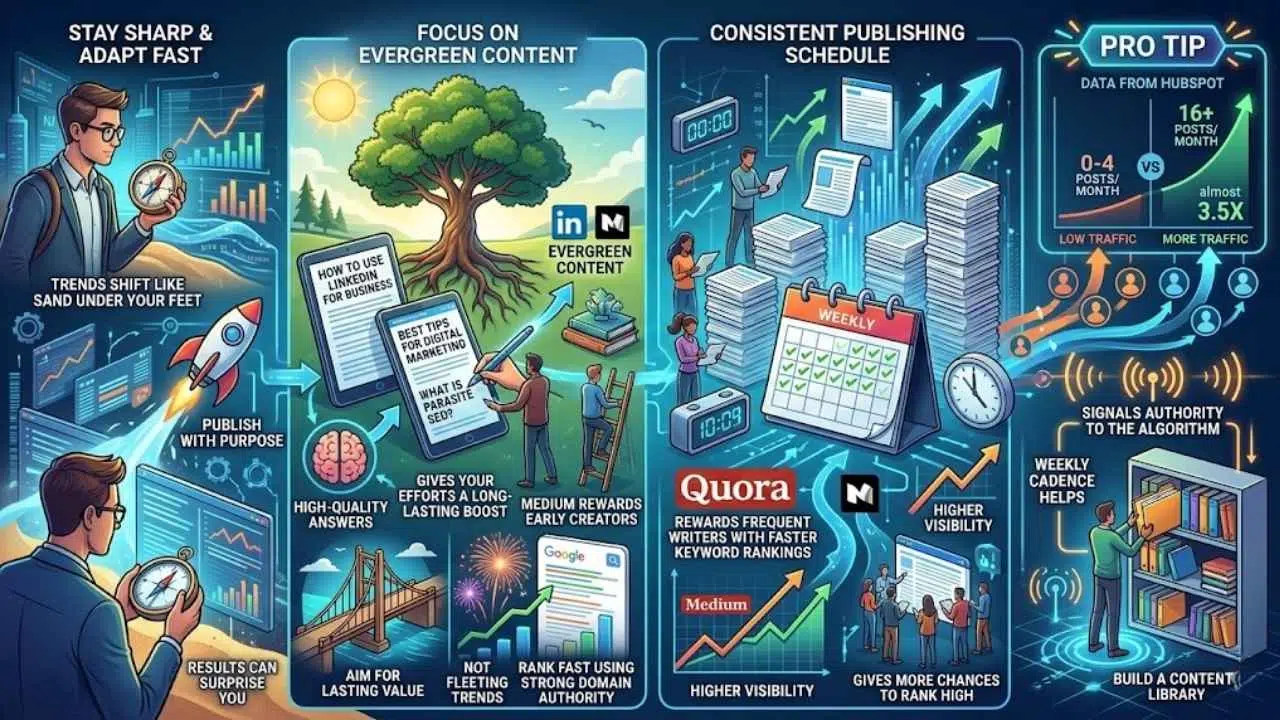
Stay sharp and adapt fast. Trends shift like sand under your feet. Publish with purpose, and results can surprise you.
Focus on Evergreen Content
Evergreen content never goes out of style. Write about topics that people always search for, like “how to use LinkedIn for business” or “best tips for Digital Marketing.” This gives your Parasite SEO efforts on Medium and LinkedIn a long-lasting boost.
Google loves high-quality answers to common questions, and so do readers. Platforms like Medium reward early creators of useful posts by ranking them higher. Take advantage of this goldmine tactic.
Aim for articles with lasting value instead of chasing fleeting trends or breaking news stories. With evergreen pieces, you stand a better chance to rank fast using the strong domain authority these sites enjoy.
Consistent Publishing Schedule
Publishing often on LinkedIn and Medium gives your content more chances to rank high in search results. Google loves fresh content, especially from platforms with strong authority domains like these.
People who posted good articles early on Medium found success, grabbing top spots before others noticed the trend. Platforms such as Quora and Medium reward frequent writers with faster keyword rankings and higher visibility.
Pro Tip: Data from HubSpot suggests that companies that publish 16+ blog posts per month get almost 3.5 times more traffic than those that publish 0-4 monthly. While you don’t need to hit that number perfectly on Medium, a weekly cadence helps build a “content library” that signals authority to the algorithm.
Final Thoughts
Parasite SEO on LinkedIn and Medium gives you a shortcut to higher rankings by using the power of trusted sites. Write good content, target smart keywords, and tap into big audiences without building your own site from scratch.
Posting here is fast, easy, and often gets results before traditional methods get going. These platforms can help drive organic traffic and boost visibility with less effort than old-school link building.
If you want more tips, many digital marketing blogs break down winning posts step by step. You just might be one article away from seeing your keyword in Google’s top results.
So test it out, watch what works, and let these platforms do some heavy lifting for you!