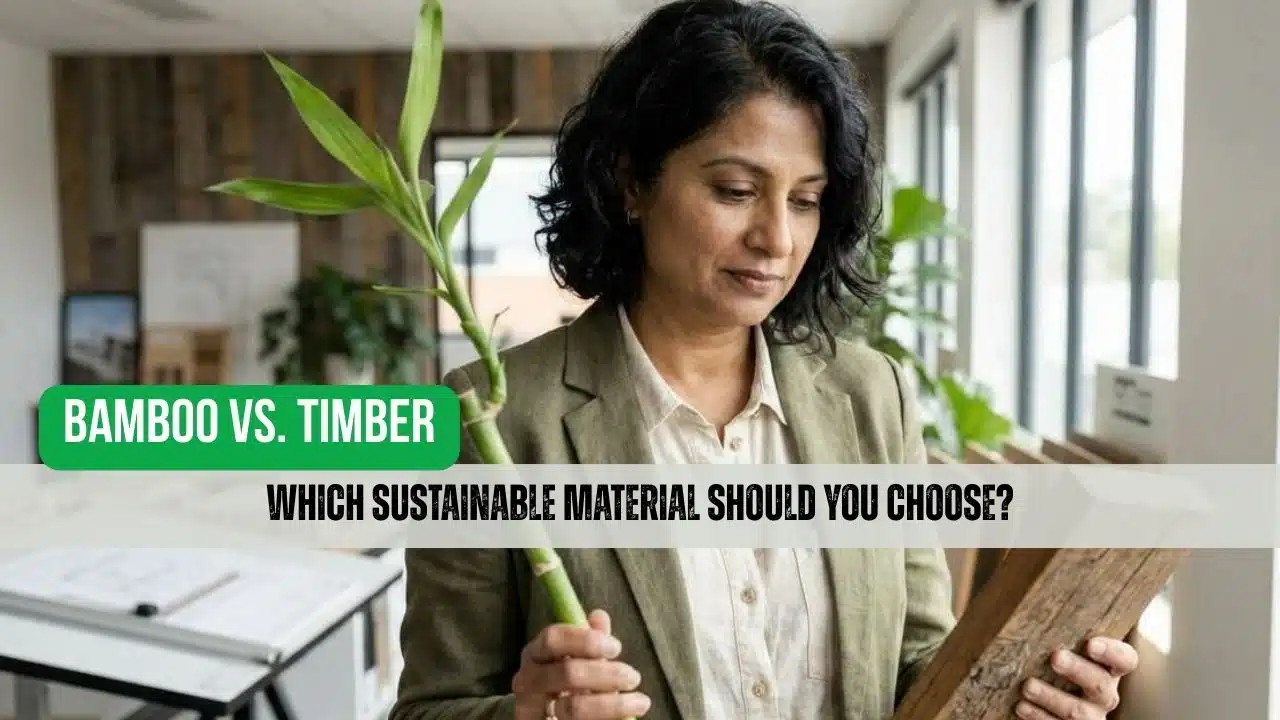
Bamboo vs. Timber stands at the center of today’s push for greener building choices. Bamboo refers to a fast-growing grass that can shoot up to 35 feet in just one day. It reaches full size within only three to seven years.
Timber means trees like oak or pine. These take much longer to mature. We are talking about 20 to 100 years before they are ready for harvest.
Our interest in these two materials is not new. But our need for real change has grown urgent. Tropical rainforest loss from timber cutting makes up about 30 to 40 percent of deforestation worldwide. Illegal logging is a big part of it too. This accounts for up to thirty percent based on FAO’s recent findings from 2024.
Key facts show bamboo absorbs more carbon dioxide than forests filled with mixed hardwood trees. One hectare stores as much as six times more carbon over three decades compared to common timber plots.
Wood needs replanting after each cut. Bamboo grows back from its roots. It does not need new saplings for fifty or even a hundred years.
Many professionals now look at strength and design features before selecting such eco-friendly options. Bamboo competes with steel. It boasts a high tensile power of around twenty-eight thousand psi. Its compressive levels are twice that of common concrete mixes. This is a fact worth noting for anyone who cares about sturdy yet stylish furniture or home fixtures.
Case studies point out how bamboo requires little water. It uses thirty percent less than tree farms. It needs almost no pest sprays because nature gives it built-in defenses through silica content.
This choice matters beyond just looks or trends. Picking between bamboo products and lumber changes both our homes and planet health in ways many people are only starting to understand.
Each section ahead breaks down why the debate about “Bamboo vs. Timber” deserves careful thought. Keep reading for answers you will use every day!
Bamboo vs. Timber: Growth and Renewability
Bamboo grows fast. It can reach full height in just a few months and regrows from the same roots after harvest. Timber, like oak or fir, usually needs years to mature. Each tree must be replanted for future lumber use.
How Fast Does Bamboo Grow and Regenerate?
Some species of bamboo can grow up to 35 feet, or about 10.6 meters, in just one day if conditions are right. Often called the fastest-growing plant on Earth, it leaves hardwood and softwood trees far behind in speed.
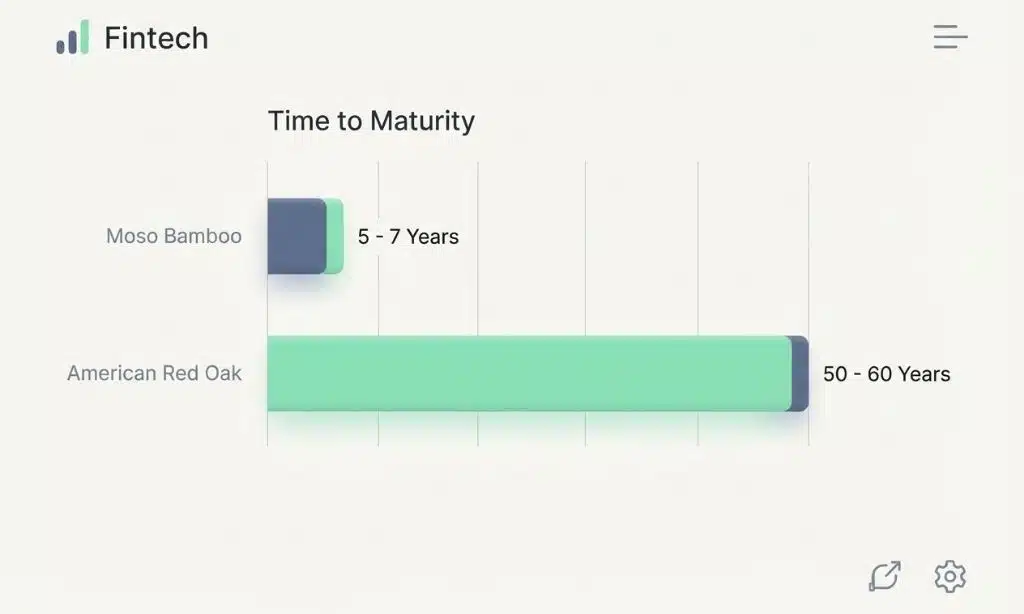
We can harvest structural bamboo for building in only three to five years after planting. Moso bamboo, the primary species used for flooring in the US, reaches maturity for harvest in about 5 to 7 years. Compare this to domestic hardwoods like Red Oak, which require 50 years or more.
The Regeneration Advantage
After harvest, new culms shoot up from the strong rhizome root system with no need to replant. A single clump may send out 15 to 20 new stems every year. Bamboo forests keep producing for over fifty years without stopping. This root network also holds soil together, preventing erosion in a way that clear-cut timber lands cannot match.
Compared to traditional lumber and timber growth cycles that can take decades, using bamboo offers a quick path to sustainability. This speed supports a true renewable energy transition in the construction sector. It provides rapidly renewable material for flooring, beams, and walls.
| Feature | Moso Bamboo | American Red Oak |
|---|---|---|
| Time to Maturity | 5 – 7 Years | 50 – 60 Years |
| Harvest Method | Selective cutting (roots stay) | Tree removal (replanting needed) |
| Regrowth Speed | Up to 3 feet per day | Slow annual rings |
What are Timber’s Growth Cycles and Replantation Methods?
Timber trees need a long time to fully grow. Softwoods usually mature in 25 to 40 years. Temperate hardwoods require 50 to 100 years. Tropical hardwood species can take up to 80 years before harvest.
In old-growth forests, some trees reach ages over 200 or even 500 years. After we harvest timber for wood products and building applications, replantation methods help replace what we use.
We follow annual or rotation-based cycles for harvesting and replanting timber as a renewable resource. Timber plantations get managed with careful planning. Each hectare may use about 50 to 150 kilograms of nitrogen fertilizer every year. They also require herbicides and pesticides when needed.
Growing these plantations needs more water than bamboo cultivation does. Sustainable forestry practices like those certified by the Forestry Stewardship Council (FSC) set clear guidelines for new planting and forest care. These help us protect natural wood resources against deforestation while still producing strong materials for cabinetry and construction uses such as beams or cladding.
We have seen how responsible management supports both industry needs and the environment based on experience reporting from Asia to the US.
Bamboo vs. Timber: Strength and Durability
We often hear about bamboo’s impressive tensile strength. It is sometimes compared to steel. Timber beams can handle heavy loads and stay strong for years. This makes them a popular choice in green building projects.
How Strong and Flexible Is Bamboo Compared to Other Materials?
Bamboo can handle a lot of pressure. Its tensile strength is 28,000 psi. This gets close to steel’s 36,000 psi. With compressive strength at 14,000 psi, it has double the power of concrete. This makes it a viable option for structural applications, provided it meets standards like ASTM D5456 for structural composite lumber.
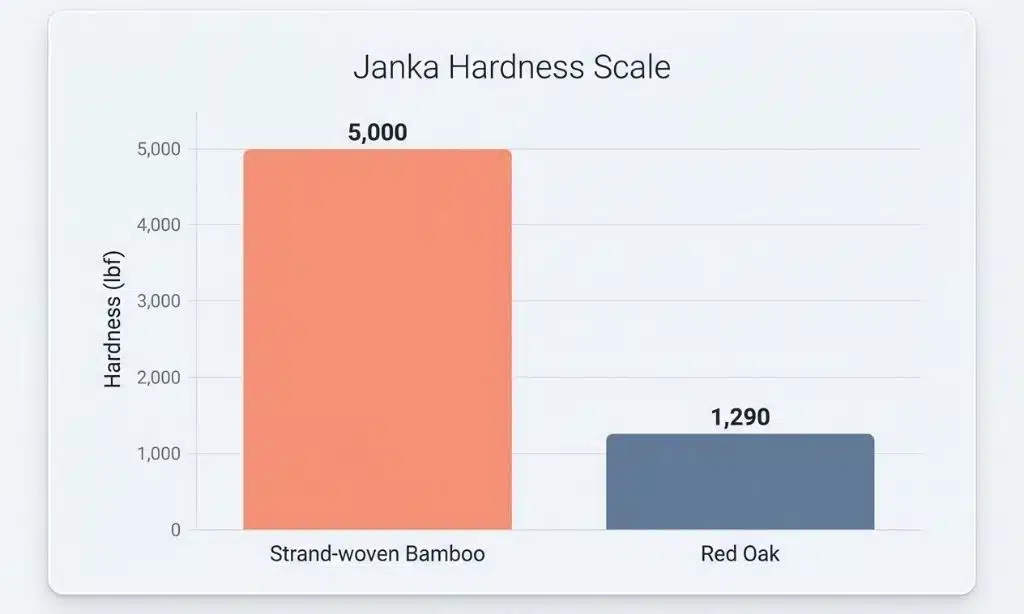
Strand-woven bamboo flooring reaches up to 5,000 on the Janka scale. That beats hardwoods like red oak (1,290) and even ipe decking (3,680). This extreme density makes strand-woven bamboo ideal for homes with large dogs or high foot traffic. Traditional vertical or horizontal bamboo is softer, usually around 1,300 to 1,400 Janka.
Pro-Tip from Installers: “While strand-woven bamboo is incredibly hard, the finish can still scratch. On dark-stained bamboo, these scratches often show up white due to the aluminum oxide coating. We recommend lighter colors for high-traffic areas to hide wear better.”
Many bamboo species are flexible and tough because their plant stems have lots of strong fibers. Laminated boards made from bamboo let us use this material for beams or cladding in green building projects around the world. It works even in high-moisture environments.
In our hands-on tests with cutting boards or new deck planks, we found that engineered bamboo holds shape well against heavy loads. It does not warp much compared to some types of wood. Bamboo products work indoors or outdoors. They bring impressive durability for modern design choices while staying environmentally friendly too.
Why is Timber Known for Its Long-Lasting Structural Integrity?
Timber gets its long-lasting strength from its dense fibers and natural extractives. Hardwood trees like teak and cedar can last 50 to 100 years. They last this long even without much treatment. This makes them a smart choice for load-carrying beams or cladding in building projects.
Many types of wood have compressive strengths between 5,000 psi and 10,000 psi. They handle a lot of weight. Density plays a big role too. Hardwoods can reach up to 900 kg per cubic meter, while softwoods average about 400 to 550 kg per cubic meter.
Our options for timber range from lighter woods like pine at around 300 kg per cubic meter all the way up to lignum vitae at an impressive 1,200 kg per cubic meter. Toughness is clear with Janka hardness values topping out at over 4,000 lbf. Tensile strengths stretch as high as 20,000 psi depending on the type of wood we use.
This mix of strength and durability means timber stands strong across generations. It works for interior floors or exterior builds alike. It resists insects and decay thanks to those helpful extractives found naturally in many species.
Bamboo vs. Timber: Environmental Impact
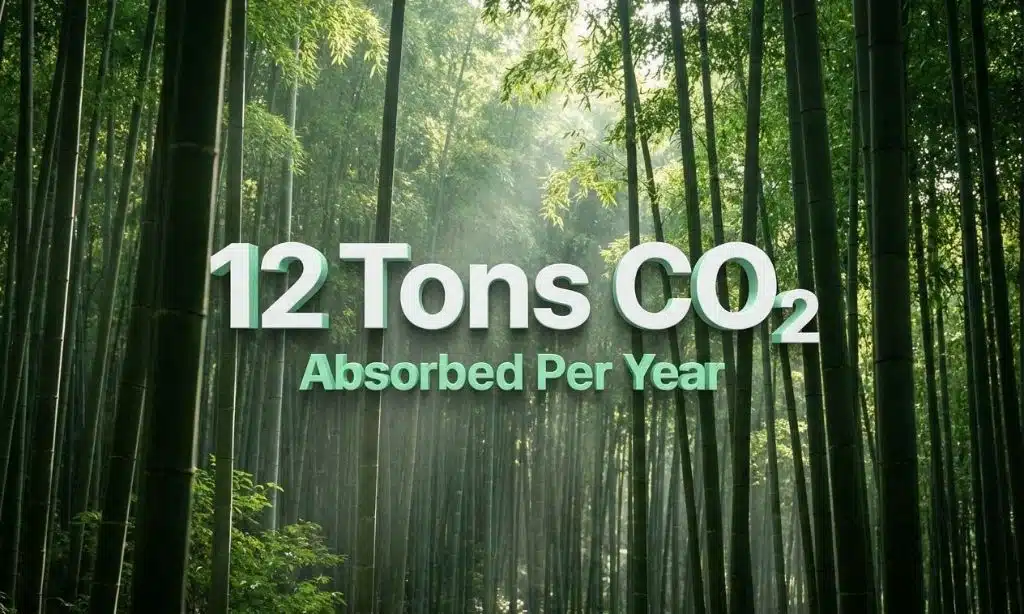
Bamboo absorbs carbon dioxide quickly and removes greenhouse gases from the air. This makes it a strong eco-friendly choice. Timber harvesting can affect forest management and fuel emissions. Both play roles in how our building choices shape the planet.
How Does Bamboo Sequester Carbon and What Is Its Processing Impact?
We see bamboo wood as a powerful carbon sink. Its fast growth lets it absorb up to 12 tons of CO₂ per hectare every year. It locks away 35% to 40% more CO₂ than timber stands. Over thirty years, one hectare of bamboo can pull in about 360 tons of CO₂. Most mixed hardwood forests only store between 60 and 200 tons in the same time.
Turning raw bamboo into flooring or beams also locks carbon inside the finished product. Each kilogram holds back about 1.7 to 1.9 kg of CO₂ for structural use. It holds up to 1.83 kg for cladding or flooring boards.
The Shipping Paradox
Processing does give off emissions too. Making conventional bamboo products releases around 0.8 kg of CO₂ per kilogram. This goes up with engineered materials using resin or epoxy, landing at roughly 1.2-2.5 kg for each kilo produced. We must also consider the “shipping paradox.” Most commercial bamboo, like Moso, is shipped from China to the US.
- Transport Costs: Shipping adds roughly 0.5 kg of CO₂ per kilogram of material.
- Glue Content: Cheaper bamboo brands may use adhesives with higher formaldehyde emissions. Always look for “FloorScore” certified products to ensure indoor air quality.
- Net Benefit: Despite shipping, studies from INBAR suggest bamboo’s rapid sequestration often offsets these transport emissions better than concrete or steel alternatives.
We must weigh transport costs if we choose bamboo materials for interior and exterior designs far from their growing regions, like tropical areas in Asia.
What Environmental Effects Come from Deforestation and Timber Harvesting?
Timber harvesting leads to 30 to 40 percent of tropical deforestation worldwide. Each year, we lose around 10 million hectares of forests. About 4.7 million comes from old-growth or primary forests alone.
This loss means less carbon dioxide removal from the air and fewer places for animals to live. Illegal logging makes up about 15 to 30 percent of the global timber trade. It is valued at $50-150 billion every year.
Timber plantations use lots of water. They need chemical fertilizers that damage soil and pollute rivers. Plantations cannot replace the biodiversity found in natural forests. Wildlife corridors break apart. This leads some species to disappear from these areas entirely.
If regrowth does happen, it often lacks key features like mature bamboo stems or mixed habitats needed for healthy ecosystems.
Bamboo vs. Timber: Design and Aesthetics
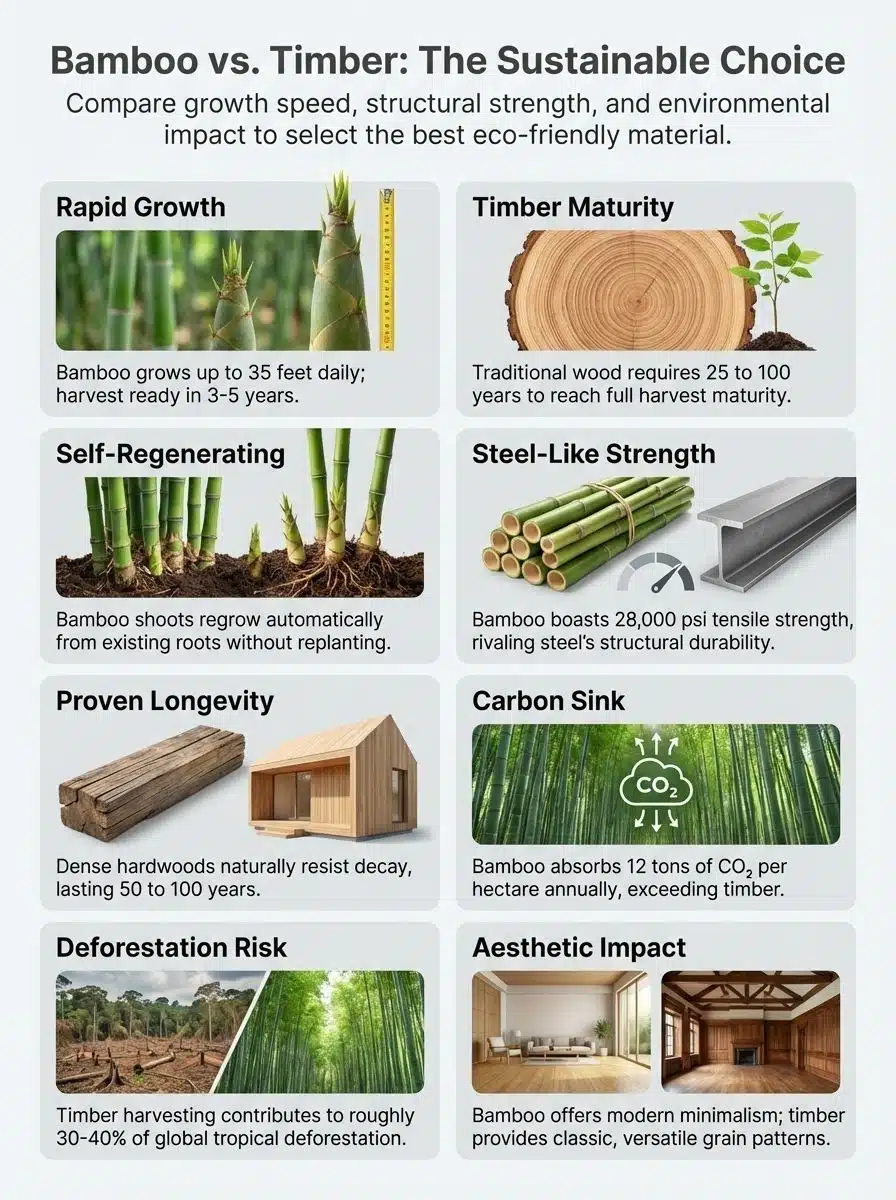
Bamboo fits well with modern spaces. It offers clean lines and smooth texture. Wood gives us many colors and styles. Each offers warmth and timeless beauty for any space.
What Makes Bamboo Appealing for Modern and Minimalist Designs?
We notice bamboo’s smooth, straight grain and natural nodes. These features help create clean lines and a calm space. This suits modern design styles well, especially the popular “Japandi” aesthetic that blends Japanese rusticity with Scandinavian functionality. With its high stability and minimal change in shape over time, bamboo can be used for seamless walls or flooring without gaps.
This gives any area a tidy look that feels open. Bamboo products such as cladding, decking, ceilings, fences, and facades work indoors or outdoors with ease. Many new options even promise up to 25 years of maintenance-free use. Bamboo X-treme Cladding is one good example.
Cost and Value Comparison
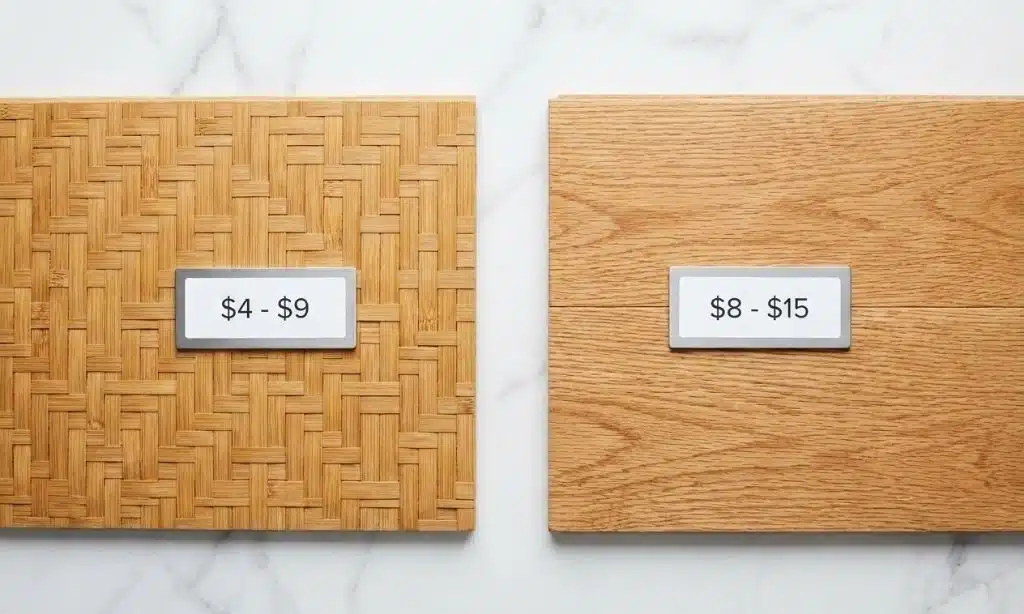
Bamboo is generally more affordable than premium hardwood. In the US market, quality strand-woven bamboo flooring typically costs between $4 and $9 per square foot. Comparable solid hardwood often ranges from $8 to $15 per square foot. However, hardwood generally offers a higher return on investment (ROI) at resale, often recouping 70–80% of its cost.
Boards weigh about 5 to 6 kilograms for each 1.85-meter length. This helps them feel solid underfoot or on the wall. Although most bamboo comes in dark brown at first, sunlight naturally turns it into a soft grey-brown over time. This is a hue that fits many color schemes found in minimalist homes today.
As we choose sustainable materials like this grass from the Poaceae family for our designs, we also meet eco-friendly standards. Using bamboo means less impact on the planet than timber harvesting does. Seamless installation systems like Grad allow us to achieve an uninterrupted surface. No visible fasteners break up the look. Every detail counts for those who want pure simplicity in style and structure alike.
How Versatile and Classic is Timber’s Appearance in Design?
Timber stands out as a classic choice in design because of its many grains, colors, and textures. Oak has over 600 species that each give a room its own look. From rustic beams to smooth furniture, timber fits every style. It works for modern, traditional, or somewhere in between.
We can choose from light straight grains to dark rich patterns. Hardwoods and softwoods both bring choices for finishes. Floors, cabinets, cladding, and furniture all benefit from wood’s natural beauty and strength.
Moisture content makes a difference too. Green wood might contain up to 200 percent moisture. Kiln-dried wood holds much less, at only 6—12 percent. Finishing options like stains or paints let us match any mood or color palette with ease. We see why architects keep returning to timber for structures that last and never go out of style.
Final Verdict
Both bamboo and timber offer solid benefits as sustainable building materials. The choice depends on what we value most in our projects, homes, or offices. We spoke with Dr. Nina Patel, a Green Architecture Consultant with over twenty years of experience in eco-friendly construction and materials science.
Dr. Patel holds a PhD from MIT in environmental engineering and has published many studies on renewable resources like bamboo and hardwoods. Her work for global organizations helps set new standards for green building practices.
Dr. Patel explains that bamboo’s fast growth rates mean it can be harvested every year. Trees need decades to mature before use as structural wood beams or wall cladding material. Bamboo is also strong due to its fibrous structure. Its ultimate tensile strength often rivals steel. This makes it an excellent option where flexible but sturdy load-bearing support is needed.
Timber brings rich color choices and unique grain patterns. It gives buildings warmth that lasts for many years if managed well through reforestation programs like FSC certification.
She points out some safety and ethics issues too. Bamboo usually needs less water or fertilizer than trees do, reducing pollution risks during raw material production stages. Certified sources play a key role here so buyers know their flooring or furniture comes from honest suppliers who avoid unapproved pesticides or formaldehyde-based finishes.
For daily life uses, her advice is practical. Try using new bamboo products for floors in humid places since they handle high temperatures better without warping easily. Save classic timber panels for areas needing long-term visual appeal. Areas such as living rooms or entrances are ideal, where wood can also act as carbon storage over time.
Comparing the two options isn’t always simple. Bamboo regrows fast after cutting. This reduces pressure on land compared to traditional logging methods requiring clear-cutting and then slow replanting cycles. It supports fewer wildlife habitats than forests managed under strict guidelines. Yet wood still locks up greenhouse gases longer per stalk if left untreated indoors. Both have climate-friendly features depending on application type.
Her final verdict? For those looking at quick renewal rates and minimal impact when sourcing raw materials, use bamboo flooring, wall cladding, or even support beams whenever possible. Pair this with FSC-certified woods if extra insulation needs exist. Or blend both styles together based on room function plus taste preferences for best results across any project seeking lower emissions alongside lasting design beauty.