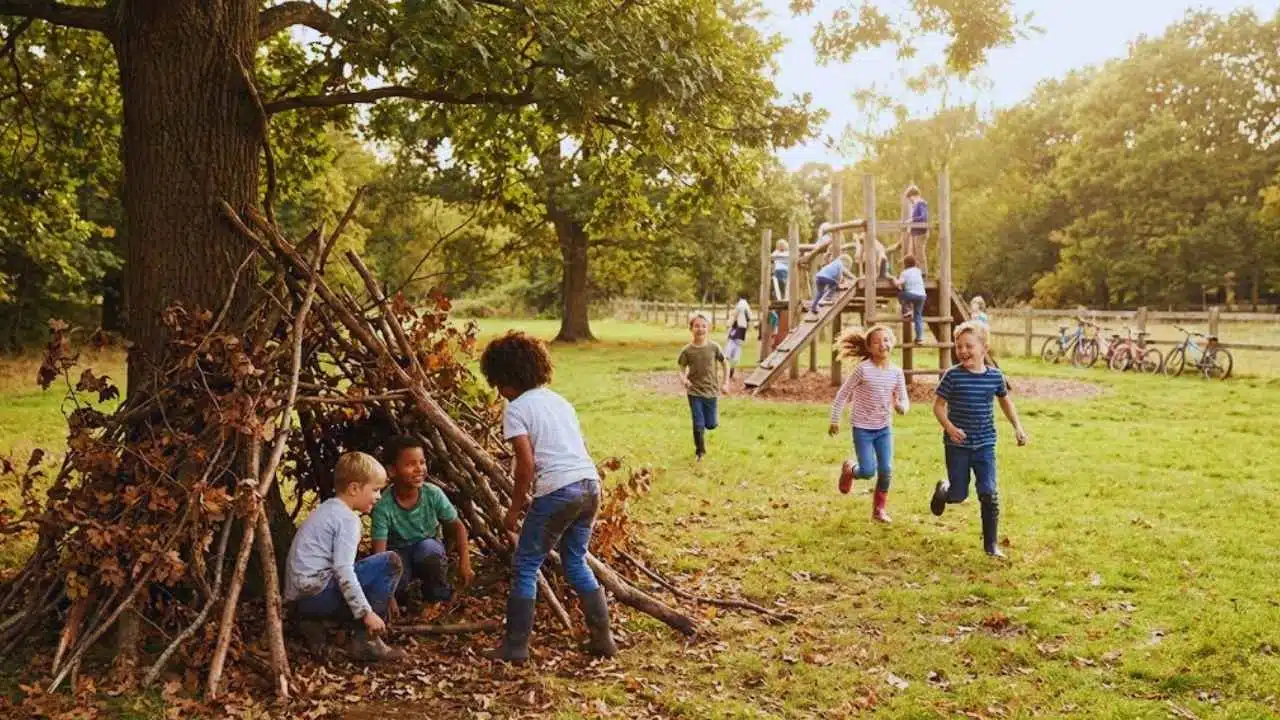
The conversation around childhood has shifted fast in the last decade. Screens multiplied, schedules filled up, and the idea of free play slowly slid to the margins. What used to happen naturally, kids spilling outside after school, riding bikes until dinner, inventing games that made no sense but felt perfect, now competes with apps, structured activities, and constant adult oversight. This is not a nostalgia trip. It is a recognition that the case for outdoor play for children is stronger now than it has been in generations, because the modern world has quietly made it harder for kids to move, explore, and breathe without an agenda.
Outdoor play is not a luxury or a reward for finishing homework. It is a foundation. It shapes physical health, emotional regulation, confidence, and social skills in ways no screen or organized program can replicate. The stakes are higher today because childhood itself has changed, and kids need the outdoors to balance what modern life demands of them.
The Physical Benefits Go Beyond Burning Energy
It is easy to frame outdoor play as a way for kids to burn off extra energy, but that undersells what is really happening in their bodies. When children climb, run, balance, and jump, they are building bone density, coordination, cardiovascular health, and muscular strength in a way that feels natural rather than forced. These movements are varied and unpredictable, which helps develop resilience and body awareness that structured workouts rarely provide.
Outdoor environments also invite risk assessment in healthy doses. Kids learn how high they can climb, how fast they can run, and when to slow down. These micro decisions strengthen motor planning and confidence. Over time, that physical self trust carries into other areas of life, from sports to classroom participation to everyday problem solving.
Fresh air matters too. Time outdoors often leads to better sleep, improved appetite, and stronger immune responses. These benefits compound, especially as sedentary habits become easier and more tempting indoors.
Outdoor Play Supports Emotional Regulation and Mental Health
Children today absorb more stimulation and information than ever before. Even without realizing it, their nervous systems are working overtime. Outdoor play offers a reset that is difficult to recreate inside. Natural light, open space, and unstructured time help calm stress responses and give kids room to process emotions through movement.
When children play outside, they practice independence in a low stakes environment. They negotiate rules, handle small conflicts, and experience the satisfaction of figuring things out on their own. These moments build emotional resilience. Frustration becomes manageable. Joy feels earned. Confidence grows quietly.
This is especially important when talking about raising healthy kids, because emotional health is not separate from physical well being. Kids who regularly play outside tend to show better mood stability, stronger coping skills, and improved focus when they return to tasks that require sustained attention.
Why Play Equipment Can Enhance, Not Replace, Imagination
There is sometimes concern that play equipment limits creativity, but the opposite is often true when it is used thoughtfully. A backyard does not need to look like a theme park to be effective. A simple structure can become a spaceship, a fort, or a meeting place depending on the day.
Modern play options have evolved as well. Something like a trampoline with led lights may sound flashy at first glance, but what matters is how kids use it. When children jump together, invent games, and move freely, the equipment becomes a tool for connection and creativity rather than passive entertainment. The key is that the play remains self directed, not scripted or overly supervised.
Outdoor setups that invite movement and shared experiences can encourage kids to stay outside longer, especially in the evening or during seasonal changes. That extra time outdoors adds up, both physically and emotionally.
The Social Skills Learned Outside Cannot Be Replicated Indoors
Outdoor play naturally encourages social interaction that feels organic rather than managed. Kids form groups, split into teams, argue, compromise, and reconcile without an adult mediating every step. These experiences teach communication, empathy, and leadership in real time.
Inside, social interactions are often filtered through screens or adult rules. Outside, kids learn to read body language, tone, and context. They figure out how to include others or set boundaries. These lessons stick because they are learned through experience, not instruction.
Outdoor play also levels the playing field. Academic performance, verbal skills, or structured achievements matter less when kids are chasing each other, building something together, or making up rules on the fly. This creates space for different strengths to emerge and be valued.
The Time Argument Misses the Bigger Picture
One of the most common reasons outdoor play gets pushed aside is time. Families are busy. Schedules are tight. Homework, activities, and responsibilities pile up. But outdoor play does not have to be a separate item on the calendar. It can be woven into daily life.
Even short stretches outside make a difference. A walk after dinner, backyard play before bedtime, or unstructured weekend afternoons can shift the tone of a child’s week. These moments often improve focus and efficiency elsewhere, making the rest of the schedule feel more manageable.
The real question is not whether there is time for outdoor play, but whether we can afford to keep treating it as optional. The long term benefits touch every part of a child’s development, making it one of the most efficient investments families can make.
Making room for outdoor play is an act of care, not indulgence. It supports health, builds resilience, and strengthens social and emotional skills that last far beyond childhood. In a time when kids are pulled in every direction, giving them the freedom to play outside may be one of the simplest and most powerful choices we can make.