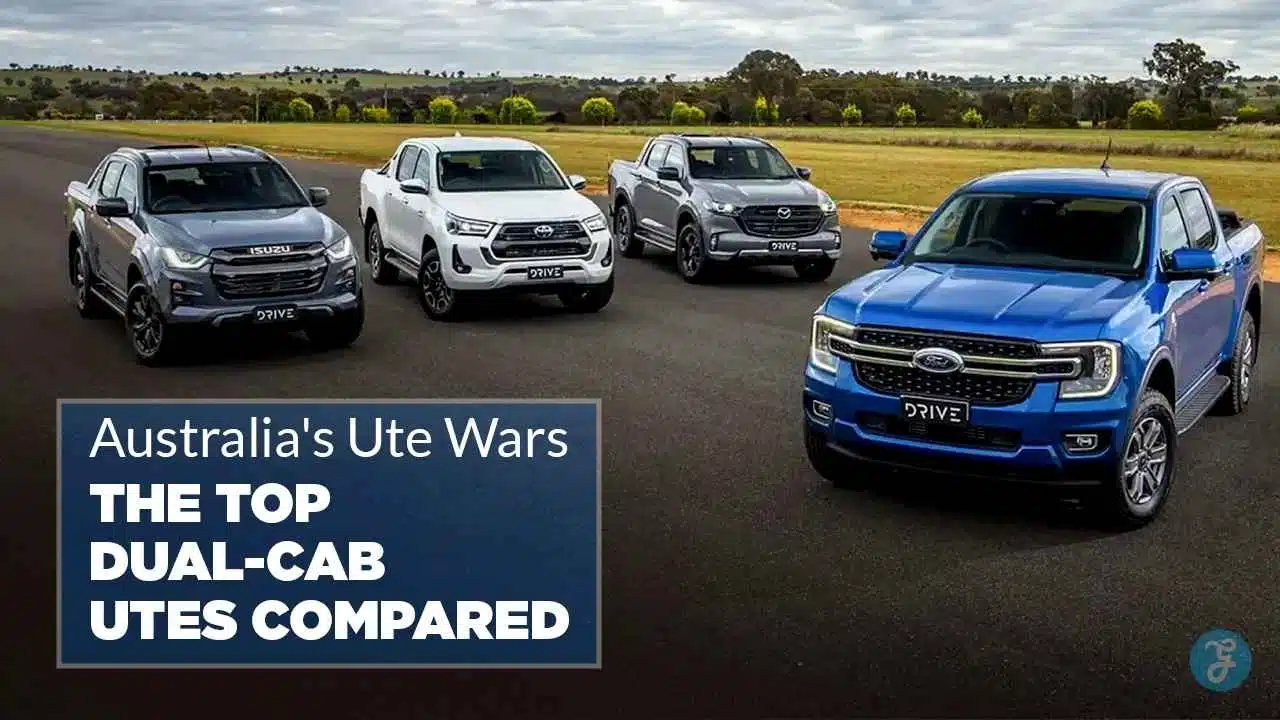
The battle for the title of the best Dual Cab Ute Australia has never been fiercer, more complex, or more exciting than it is in 2026. For decades, the choice was simple: you bought a Toyota HiLux for reliability or a Ford Ranger for driving comfort. But as we settle into 2026, the landscape has fractured. We have entered the era of the “Tech Ute” and the “Plug-in Workhorse.”
The introduction of stringent New Vehicle Efficiency Standards (NVES) has forced manufacturers to innovate, bringing us high-performance Plug-in Hybrids (PHEVs) from Ford and BYD, a polarizing yet technically brilliant contender from Kia, and a heavily updated, reliable guard from Isuzu and Toyota.
Whether you are a tradie needing a tax write-off, a family looking for a jagged SUV alternative, or a grey nomad planning the Big Lap, this guide breaks down the top 7 contenders fighting for your driveway this year.
Key Takeaways: The State of Play in 2026
-
The Hybrid Shift: 2026 is the year the electric motor officially joined the worksite. The BYD Shark 6 and Ford Ranger PHEV are real options, not just science experiments.
-
The New King of Tech: The Kia Tasman has reset the benchmark for interior technology, making the HiLux and D-Max feel a generation behind.
-
Towing Reality: While almost all contenders claim 3.5-tonne towing, only the big V6 diesels (Ranger) and the new “Super Duty” variants can do it comfortably with a payload.
-
Price Creep: The average price of a flagship dual-cab is now pushing $80,000–$90,000, making the value options from Mitsubishi and GWM more critical than ever.
The 2026 Ute Landscape: What Changed?
The biggest shift in 2026 isn’t just new sheet metal; it’s under the bonnet. The “Ute Tax” (NVES) has pushed brands to lower emissions. This has led to two distinct camps:
-
The “Smart” Diesels: Toyota and Isuzu have refined their diesel engines with 48V mild-hybrid tech or smaller, more efficient capacities (like Isuzu’s new 2.2L) to keep fuel bills down without losing torque.
-
The Performance Hybrids: Ford and BYD are proving that batteries can mean more power, not less. The instant torque of an electric motor is perfect for towing and off-roading, provided you have the charge.
The Top 7 Dual-Cab Utes Ranked
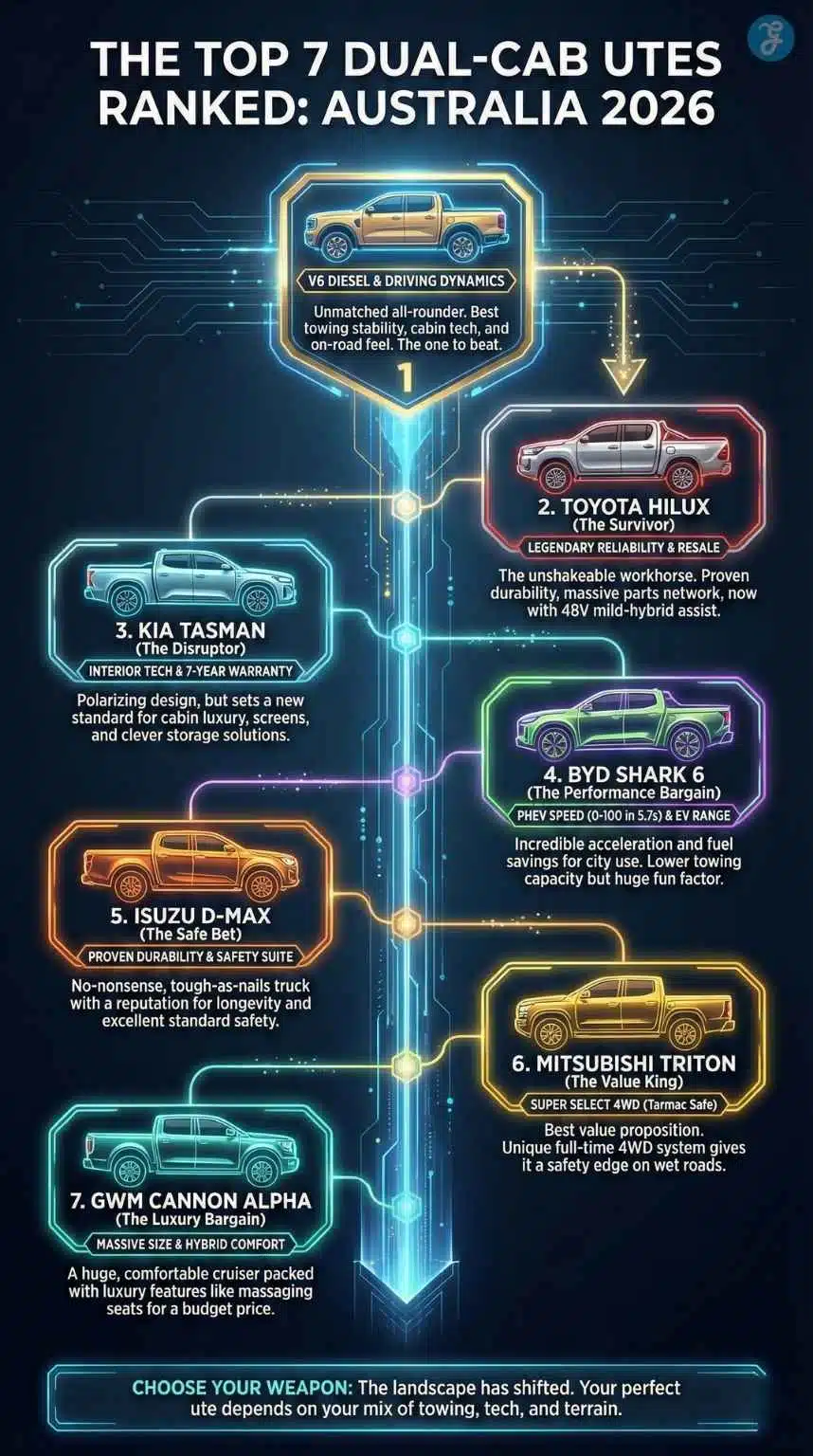
We have tested and analyzed the seven most significant contenders currently dominating Australian roads, from established diesel icons to the new wave of high-tech challengers. Below is our definitive breakdown of each model’s performance, utility, and value to help you decide which key belongs in your pocket.
1. Ford Ranger: The Reigning Benchmark
Still the most complete package on the road.
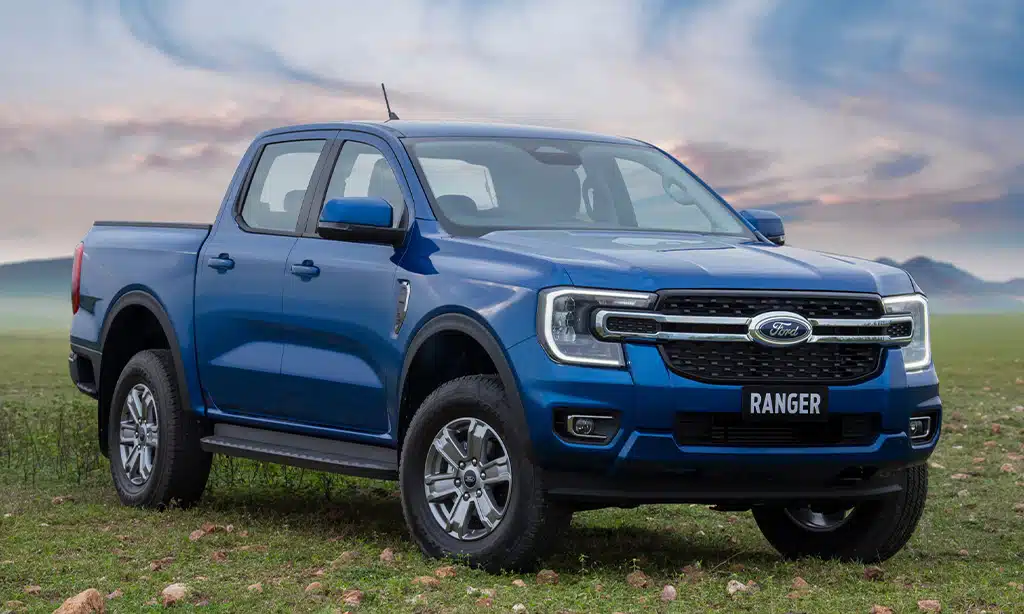
The Ford Ranger continues to hold the crown in 2026 because it simply does everything well. It doesn’t force you to compromise between a work truck and a family car.
2026 Updates
The headline for 2026 is the arrival of the Ranger PHEV. It pairs the 2.3L EcoBoost petrol engine with an electric motor, delivering more torque than the V6 diesel. Ford has also introduced a “Super Duty” variant for commercial buyers, boasting a 4.5-tonne GVM to handle heavy builds that crush standard utes.
| Feature | Specification (V6 Sport/Wildtrak) |
| Engine | 3.0L V6 Turbo Diesel |
| Power/Torque | 184kW / 600Nm |
| Transmission | 10-Speed Auto |
| Towing Capacity | 3,500kg |
| Fuel Economy | ~8.4L/100km |
Driving Experience
The Ranger drives with a maturity that its rivals struggle to match. The V6 diesel is smooth, quiet, and effortless when overtaking. The steering is light at low speeds (great for parking), but weighs up nicely on the highway. The suspension tune—specifically developed in Australia—soaks up corrugations better than anything else in the class.
Interior & Tech
Inside, the portrait-oriented touchscreen (12-inch on high specs) remains the gold standard for usability. The SYNC 4 system is fast, and the inclusion of zone lighting (which lights up the area around the truck for camping/working) shows that Ford understands how these vehicles are actually used.
| Pros | Cons |
| Best-in-class driving dynamics | PHEV variants are expensive |
| V6 engine is a towing dream | V6 fuel economy suffers in the city |
| Interior ergonomics are unmatched | Wait times for popular trims still exist |
2. Toyota HiLux: The Survivor
Aging, but fighting back with unmatched reliability.
You can never count out the Toyota HiLux. It remains the default choice for fleet buyers and remote travelers for one reason: if it breaks (which is rare), you can find parts in any country town in Australia.
2026 Updates
This year sees the rollout of the “9th Generation” heavy facelift. It’s not a “ground-up” new platform, but it brings a tougher, “Cyber Sumo” aggressive look. Under the bonnet, the 2.8L diesel now comes standard with 48V “V-Active” mild-hybrid technology across the dual-cab range to smooth out the stop-start system and shave a few decimal points off fuel consumption. An all-electric HiLux Revo BEV is launching mid-year for urban fleets.
| Feature | Specification (SR5 48V) |
| Engine | 2.8L Turbo Diesel (48V Hybrid) |
| Power/Torque | 150kW / 500Nm |
| Transmission | 6-Speed Auto |
| Towing Capacity | 3,500kg |
| Fuel Economy | ~7.9L/100km |
Driving Experience
The HiLux feels more “truck-like” than the Ranger. The ride is firmer when unladen, leading to a bit of jitter on country roads. However, the off-road capability is legendary. The traction control system is arguably the sharpest in the business, finding grip where others spin wheels. The 48V system makes the engine quieter at idle, addressing a long-time complaint.
Interior & Tech
Toyota has updated the infotainment screen and added wireless Apple CarPlay, but the cabin architecture feels older than the Ranger or Kia. It’s durable and hard-wearing, but it lacks the “lounge” feel of modern rivals.
| Pros | Cons |
| Unshakeable resale value | Ride quality is harsh unladen |
| Massive dealer network support | Cabin feels dated vs. Kia/Ford |
| GR Sport variant is a genuine off-road weapon | 6-speed auto feels old-school |
3. Kia Tasman: The Disruptor
The new benchmark for interior tech and warranty.
The Kia Tasman is the most talked-about vehicle of 2026. Its design is polarizing—boxy, utilitarian, and unusual—but beneath the skin, it is a masterclass in product planning. Kia aimed this ute at “lifestyle” buyers who spend their weekends at the beach or the snow.
2026 Updates
Now fully available in showrooms, the Tasman brings a 2.2L diesel engine derived from the Sorento/Carnival but toughened for commercial use. It launches with a 7-year unlimited kilometre warranty, which immediately puts the 5-year warranties of Ford and Toyota to shame.
| Feature | Specification (X-Pro) |
| Engine | 2.2L Turbo Diesel |
| Power/Torque | 154kW / 440Nm |
| Transmission | 8-Speed Auto |
| Towing Capacity | 3,500kg |
| Fuel Economy | ~7.6L/100km |
Driving Experience
Don’t let the smaller 2.2L engine fool you; it is punchy and refined. The 8-speed transmission is smarter than the HiLux’s 6-speed, keeping the engine in its sweet spot. The ride quality is excellent, thanks to frequency-selective dampers that stiffen up for corners but soften for bumps. It feels more like a large SUV than a trade tool.
Interior & Tech
This is where the Tasman wins. The panoramic triple-screen display looks like it was lifted from a luxury EV. It has clever touches everywhere: a folding console table for working on a laptop, hidden storage bins under the rear seats, and a “sliding” cargo bed option.
| Pros | Cons |
| Best interior in the segment | Exterior styling is “love it or hate it.” |
| 7-Year Warranty is unbeatable | The engine lacks the grunt of the V6 Ranger |
| Clever storage solutions | No V6 option available (yet) |
4. BYD Shark 6: The Performance Bargain
A game-changer for urban tradies and speed lovers.
The BYD Shark 6 is the wildcard that paid off. It offers performance stats that usually cost $100,000+ (think Ranger Raptor) for a fraction of the price. It is a Plug-in Hybrid (PHEV) that prioritizes power.
2026 Updates
The 2026 model year has refined the software, fixing early bugs with the driver assist systems. The availability of accessories (bullbars, trays) has also improved significantly, addressing early concerns about customizing the vehicle.
| Feature | Specification (Premium) |
| Engine | 1.5L Turbo + Dual E-Motors |
| Power/Torque | 321kW / 650Nm |
| 0-100km/h | 5.7 Seconds |
| EV Range | ~100km (NEDC) |
| Towing Capacity | 2,500kg |
Driving Experience
In electric mode, it is silent and smooth. Put your foot down, and the petrol engine kicks in to deliver 321kW of combined power. It is frighteningly fast for a ute. The independent rear suspension gives it a car-like ride, but this comes at the cost of towing capacity (maxed at 2.5 tonnes) and payload compared to leaf-sprung rivals.
Interior & Tech
The cabin is futuristic, dominated by a rotating 15.6-inch screen. It has voice control that actually works (“Hey BYD, open the window”). The materials are plush, perhaps too plush for a dirty worksite, but perfect for the family run.
| Pros | Cons |
| Incredible acceleration (0-100 in 5.7s) | Low towing capacity (2,500kg) |
| Massive fuel savings if charged daily | No spare parts network like Toyota |
| High-tech standard equipment list | FWD bias when the battery is low |
5. Isuzu D-Max: The Safe Bet
The sensible, safe, and durable choice.
The Isuzu D-Max sits comfortably as the “intelligent choice.” It doesn’t have the flash of the Ranger or the cult of the HiLux, but it builds on Isuzu’s truck heritage to offer a vehicle that is incredibly hard to kill.
2026 Updates
Isuzu has shaken up the lineup by replacing the base 1.9L engine with a new 2.2L turbo-diesel. This new unit is cleaner, quieter, and produces better low-down torque (400Nm). The famous 3.0L “4JJ3” engine remains for the top-spec models, ensuring heavy towers are still catered for.
| Feature | Specification (X-Terrain) |
| Engine | 3.0L Turbo Diesel |
| Power/Torque | 140kW / 450Nm |
| Transmission | 6-Speed Auto |
| Towing Capacity | 3,500kg |
| Warranty | 6 Years |
Driving Experience
The D-Max is honest. The 3.0L engine is grumbly and loud, but it feels unstressed towing a caravan. The “Rough Terrain Mode” added in recent updates makes it very capable off-road. The steering is heavier than the Ranger’s but gives good feedback. It is a ute that feels like it will last 500,000km.
Interior & Tech
The cabin is functional and ergonomic. The safety tech (IDAS) was once intrusive, but 2the 026 software updates have made the Lane Keep Assist and collision warnings much less annoying. It has wireless CarPlay and physical buttons for climate control—a big plus for ease of use.
| Pros | Cons |
| Proven 3.0L engine durability | The engine is noisy/agricultural |
| Excellent safety suite standard | Interior feels cheaper than Ranger/Tasman |
| Good value for money | The infotainment screen is basic |
6. Mitsubishi Triton: The Value King
90% of the capability for 80% of the price.
Mitsubishi has always positioned the Triton as the value player, and the new-gen model cements this status. It is bigger, squarer, and more capable than the previous model, which was criticized for being too small.
2026 Updates
The suspension has received a specific “Australian Tune” for 2026, developed on local corrugated roads to fix the firm ride of the global model. The GSR flagship model now gets active yaw control (from the Lancer Evolution!) to help cornering on loose surfaces.
| Feature | Specification (GSR) |
| Engine | 2.4L Twin-Turbo Diesel |
| Power/Torque | 150kW / 470Nm |
| Transmission | 6-Speed Auto |
| Towing Capacity | 3,500kg |
| 4WD System | Super Select II |
Driving Experience
The twin-turbo engine has virtually no lag. The standout feature is the Super Select II 4WD system, which allows you to drive in 4WD High (4H) on sealed tarmac roads. This is a massive safety advantage in the wet that HiLux, D-Max, and Ranger (part-time models) cannot match.
Interior & Tech
It’s a huge step up from the old Triton. The seats are supportive (developed with physical therapists), and the visibility is excellent. It doesn’t have the “wow” factor of the BYD or Kia screens, but everything is where you expect it to be.
| Pros | Cons |
| Super Select 4WD (use 4×4 on road) | Twin-turbo complexity worries some |
| 10-Year Warranty (if serviced at dealer) | The driver monitoring system is sensitive |
| Sharp pricing vs. major rivals | No V6 option |
7. GWM Cannon Alpha: The Luxury Bargain
A luxury cruiser for the budget-conscious.
The GWM Cannon Alpha is physically larger than the Ranger and HiLux. It bridges the gap between a normal ute and a full-size American pickup (like an F-150). It is aimed squarely at caravanners who want comfort.
2026 Updates
The hybrid system has been refined for smoother transitions between electric and petrol power. The 2026 “Ultra” grade introduces upgraded massaging seats for front passengers, a feature unheard of in this price bracket.
| Feature | Specification (Ultra Hybrid) |
| Engine | 2.0L Turbo Hybrid |
| Power/Torque | 255kW / 648Nm (Combined) |
| Transmission | 9-Speed Auto |
| Towing Capacity | 3,500kg |
| Tech Highlight | Split Tailgate |
Driving Experience
It is a wafer. The suspension is soft, designed for comfort rather than dynamic cornering. The hybrid powertrain offers massive torque (648Nm), making it surprisingly quick. The cabin is whisper-quiet, thanks to double-glazing sound insulation.
Interior & Tech
The interior feels like a Mercedes-Benz knock-off in the best possible way. Nappa leather, woodgrain trim, and crystal gear shifters. The 60/40 split tailgate (which can open like barn doors or drop down) is a stroke of genius for accessing the fridge in the back.
| Pros | Cons |
| Huge size and road presence | Soft suspension wallows in corners |
| Luxury interior features | Driver assist tech can be glitchy |
| Innovative split tailgate | Fuel thirst on the petrol hybrid |
Head-to-Head Comparison: The Specs That Matter
For quick reference, here is how the top models stack up in the metrics that buyers care about most.
| Model | Power/Torque | Towing | Payload (Est) | Warranty | Best Feature |
| Ford Ranger V6 | 184kW / 600Nm | 3.5t | 950kg | 5 Years | V6 Smoothness |
| Toyota HiLux | 150kW / 500Nm | 3.5t | 1000kg | 5 Years | Reliability |
| Kia Tasman | 154kW / 440Nm | 3.5t | 1000kg+ | 7 Years | Interior Tech |
| BYD Shark 6 | 321kW / 650Nm | 2.5t | 790kg | 6 Years | Speed/EV Mode |
| Isuzu D-Max | 140kW / 450Nm | 3.5t | 995kg | 6 Years | Safety/Durability |
| Mitsubishi Triton | 150kW / 470Nm | 3.5t | 1000kg+ | 10 Years | 4WD on Tarmac |
| GWM Cannon Alpha | 255kW / 648Nm | 3.5t | 800kg | 7 Years | Luxury/Comfort |
Buying Guide: How to Choose the Right Ute in 2026
1. The “Diesel vs. PHEV” Dilemma
This is the new question for 2026 buyers.
-
Choose Diesel (Ranger V6, D-Max, HiLux): If you tow heavy loads for long distances (highway driving) or travel to remote areas where charging infrastructure is nonexistent. Diesel is still the king of long-range hauling.
-
Choose PHEV (BYD Shark, Ranger PHEV): If you are a tradie working in the city or a weekend warrior. If you can charge at home, you could save $3,000+ a year on fuel by commuting on electricity, saving the petrol engine for the weekend camping trip.
2. The Towing Reality Check
Be careful with the brochure numbers. Just because a ute can tow 3,500kg doesn’t mean it should.
-
GCM (Gross Combination Mass): If you tow 3.5 tonnes with a HiLux or Triton, you often have very little payload left for the tray.
-
The Exception: The Ford Ranger V6 and the GWM Cannon Alpha (due to its size) handle heavy towing with more stability than the lighter 4-cylinder rivals. If you tow a 3-tonne caravan, buy the biggest engine you can afford.
Frequently Asked Questions (FAQ)
1) Which dual-cab ute has the best resale value in 2026?
The Toyota HiLux retains its crown for resale value. Despite being older tech, the demand for used HiLuxes remains insatiable in the used market. The Isuzu D-Max is a close second.
2) Is the BYD Shark 6 actually capable of off-road?
Yes, but with caveats. The electric motor provides instant torque, which is great for crawling over rocks. However, the independent rear suspension has less articulation (flex) than a traditional solid axle (like on a Ranger or HiLux), so it may lift wheels more often on severe tracks.
3) When is the all-new Toyota HiLux coming?
We are currently seeing the “heavy facelift” (9th Gen) for 2026. A completely ground-up new platform is rumored for 2027/28, likely sharing architecture with the US Tacoma.
4) Which ute is the safest for families?
The Ford Ranger and Isuzu D-Max both have 5-star ANCAP ratings with excellent active safety tech. The Ranger edges ahead with slightly better implementation of features like “Lane Centering,” which feels more natural and less jerky than the Isuzu system.
5) Can I drive the Mitsubishi Triton in 4WD on dry roads?
Yes! This is its superpower. The Super Select II system allows you to use “4H” (High Range 4WD) on dry bitumen. It acts like an All-Wheel Drive system, giving you better grip in rain or patchy conditions without winding up the transmission.
Final Thoughts: Who Wins the War?
The “Ute War” of 2026 has no single winner because the needs of Australians have diversified.
-
The Best All-Rounder: Ford Ranger. It balances work, play, towing, and tech better than anything else. It justifies its premium price tag.
-
The Smart Money: Mitsubishi Triton. It offers incredible safety and capability features (like that full-time 4WD) for a price that undercuts the big boys.
-
The Future Choice: Kia Tasman. If you are tired of the same old “truck” interiors and want something that feels modern, fresh, and backed by a huge warranty, this is the one to test drive.
The days of blindly buying a HiLux are over. In 2026, the best ute is the one that fits your specific mix of tarmac, tow ball, and tech needs. Choose wisely.