

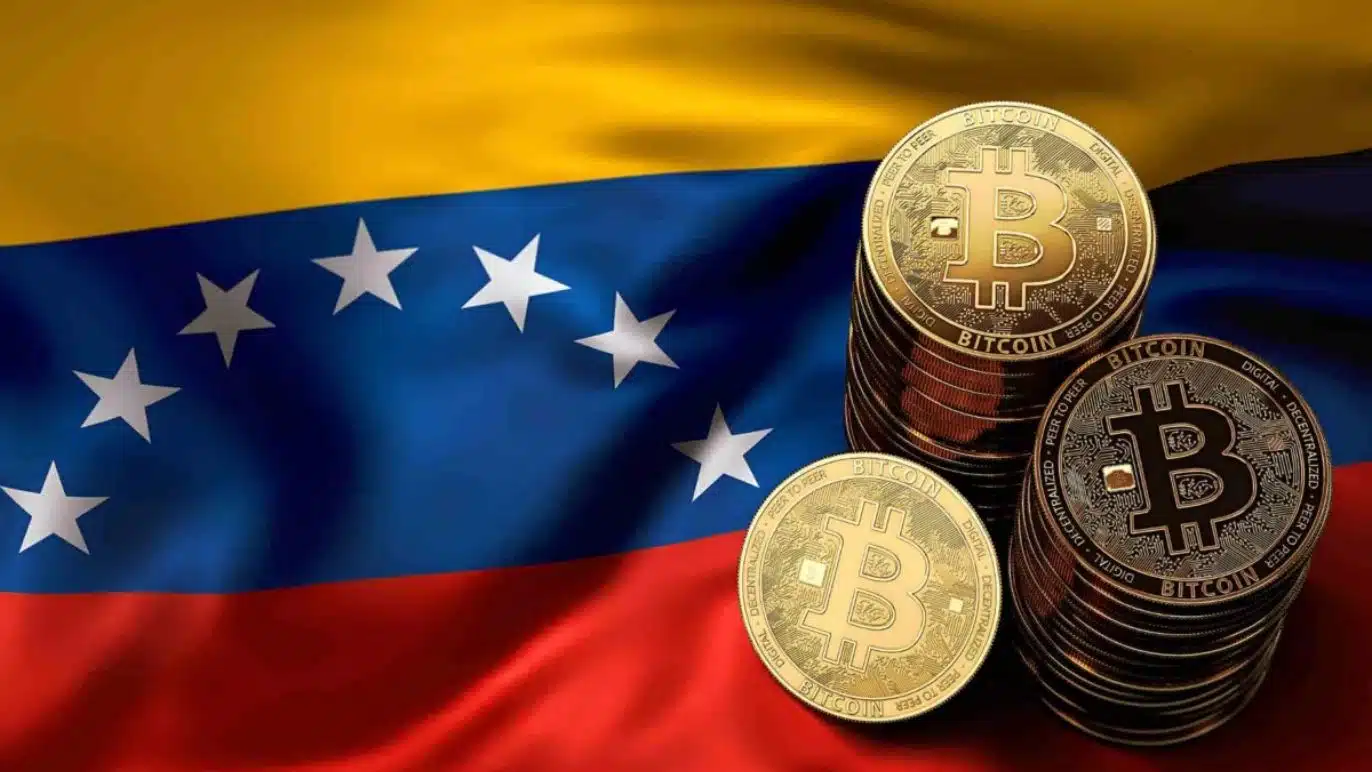
In a striking revelation that’s shaking up global energy markets, Venezuela has shifted roughly 80% of its crude oil sales revenue into Tether’s USDT stablecoin, according to prominent local economist Asdrúbal Oliveros. This move underscores the Maduro regime’s deepening reliance on cryptocurrency to dodge crippling U.S. sanctions and keep its oil-dependent economy afloat. As oil production climbs past 1 million barrels per day, generating over $12 billion annually, USDT has emerged as the digital lifeline sustaining Caracas’s cash flow.
The Spark: Economist’s Bombshell Disclosure
Asdrúbal Oliveros, vice president of economic research at Caracas-based Ecoanalítica, dropped the bombshell during a recent podcast interview, stating plainly that “almost 80% of oil revenue is being collected in cryptocurrencies, in stablecoins.” Oliveros, whose firm tracks Venezuela’s opaque economy with forensic precision, tied this surge directly to the country’s crypto adoption boom. With PDVSA—the state-owned Petróleos de Venezuela S.A.—at the helm, this isn’t a fringe experiment; it’s core policy amid U.S. pressures that have frozen traditional dollar channels since 2019.
The timing couldn’t be more charged. Venezuela’s oil output has rebounded to over 1 million barrels daily, fueled by shadowy deals and shadow fleet tankers, yet revenues face constant bottlenecks from sanctions. Oliveros highlighted how stablecoins like USDT bridge the gap, allowing payments from key buyers—primarily in Asia—to bypass Western banks. This disclosure arrives as President Donald Trump ramps up naval blockades, seizing tankers and vowing a “total blockade” on sanctioned vessels, escalating the cat-and-mouse game between Washington and Caracas.
Sanctions’ Iron Grip: Why Crypto Became King
U.S. sanctions hit Venezuela like a sledgehammer starting in 2017 under Trump, targeting PDVSA and the Central Bank in 2019 to choke off oil dollars amid Maduro’s crackdown on opposition. These measures severed correspondent banking ties, leaving Caracas starved for hard currency as hyperinflation ravaged the bolívar. Fast-forward to 2024: PDVSA mandated digital wallets and USDT prepayments for spot oil deals, turning crypto into a sanctions-evasion staple.
China, snapping up 84% of Venezuela’s exports (often relabeled as Malaysian crude), leads the charge, channeling payments via USDT to skirt U.S. oversight. Russia’s playbook—using crypto for oil sales—inspired this shift, with Venezuela joining an “Axis of Evasion” alongside Iran and North Korea. In July 2025 alone, $119 million in stablecoins flooded private firms via authorized exchanges, swapping USDT for bolívars and easing dollar scarcity. Yet challenges persist: Tether froze 41 Venezuelan-linked wallets in 2024 after OFAC flagged them, and a 25% U.S. tariff on buyers adds friction.
Trump’s 2025 escalations—tanker seizures off Venezuela’s coast and accusations of drug trafficking ties—have only accelerated the crypto pivot. Maduro fired back, decrying a “grotesque threat,” while GDP ticked up from $102 billion in 2024 to $119 billion amid the chaos. Analysts warn prolonged sanctions could cement Venezuela as a stablecoin poster child, with USDT volumes hitting tens of millions monthly.
USDT Mechanics: How the Oil-Crypto Pipeline Works
Picture this: A Chinese “teapot” refinery orders Venezuelan heavy crude. Instead of wiring dollars through SWIFT—now a sanctions minefield—the buyer loads a PDVSA-approved digital wallet with USDT. PDVSA confirms delivery via shadow fleet tankers (trackers off, flags swapped), and tokens transfer instantly, borderless and pseudonymous. Banks and exchanges in Venezuela then convert USDT to bolívars for private firms, injecting liquidity without Uncle Sam’s nod.
Since Q1 2024, new clients must prepay half cargo values in USDT, per Reuters reports, with intermediaries handling compliance dodges. China Concord Resources Corp’s $1 billion bet on two oil fields—promising 60,000 barrels daily by 2026—exemplifies this: lighter crude stays home, heavier heads east, paid in stablecoins. Volumes? Over 50% of shipments by mid-2025, now at 80%, per Oliveros. Risks loom—Tether’s compliance with U.S. probes could freeze funds—but for now, USDT’s $168 billion market cap offers stability pegged 1:1 to the dollar.
| Key Players in Venezuela’s USDT Oil Chain | Role | Impact |
|---|---|---|
| PDVSA | Mandates USDT prepayments; controls wallets | Centralizes revenue, evades bank freezes |
| China (Teapots/CCRC) | Buys 84% of exports; invests $1B | Provides bulk USDT inflows, boosts production |
| Tether (USDT Issuer) | Supplies stablecoins; freezes sanctioned wallets | Enables trades but risks U.S. backlash |
| Local Exchanges/Banks | Converts USDT to bolívars | $119M/month to private sector |
| Shadow Fleet Tankers | Ships disguised crude | Delivers 936,000 bpd undetected |
Economic Lifeline or Bottleneck in Disguise?
USDT has propped up Venezuela’s battered economy, where oil funds 90% of exports and hyperinflation projections top 600% for 2026. Production recovery—from sanctions nadir to 1 million bpd—owes much to crypto flexibility, letting Maduro privatize small fields and lure investors like Delcy Rodríguez’s deals. Private businesses cheer the $119 million monthly drip, gaining forex amid bolívar collapse.
But hurdles mount. Converting USDT to spendable cash clogs forex markets, hiking prices and demand pressures, Oliveros notes. PDVSA scandals—$21 billion in ghost receivables—taint prior crypto pushes like the failed Petro (RIP 2024). Everyday Venezuelans see little: stablecoins stay elite, fueling inequality as GDP grows but poverty lingers. Still, legal crypto frameworks since Maduro’s exchange nods position Caracas as a commodity-crypto lab.
Broader ripples? Venezuela mirrors Russia (Lukoil/Rosneft eyeing USDT) and Iran, testing stablecoins’ power against petrodollar dominance. Annual $12 billion revenue, 80% digitized, signals a seismic shift in sanctioned trade.
Global Ripples: Rewriting Energy and Crypto Rules
This isn’t Venezuela’s story alone—it’s a harbinger for sanctioned states. Russia’s crypto oil payments to India/China hit millions; Iran’s shadow trades echo here. Atlantic Council warns of an “Axis of Evasion,” urging U.S. intel on wallets for targeted freezes. Trump-era tariffs and blockades test this: Asian buyers demand discounts on risky shipments, yet demand holds.
Crypto’s maturation shines through. USDT, once illicit-finance poster child, now greases $75 billion daily volumes, proving utility in real-economy trades. Tether’s DOJ cooperation—dismantling Garantex—shows regulators can bite. For buyers, USDT slashes costs: no banks, instant settlement, hedging bolívar woes.
| Venezuela Oil Metrics: Sanctions vs. Crypto Era | Pre-2019 (Peak) | 2024-2025 (USDT Shift) | Change |
|---|---|---|---|
| Daily Production (bpd) | 2.5 million | 1+ million | -60% recovery |
| Annual Revenue | $70B+ | $12B+ | Stabilizing via crypto |
| China Export Share | 15% | 84% | +469% |
| USDT Revenue % | 0% | 80% | Full pivot |
U.S. Counterplay: Blockades, Freezes, and Beyond
Washington’s toolkit expands: tanker grabs (two in December 2025), 25% tariffs, and OFAC blacklists. Proposals call for stablecoin intel-sharing with Tether/exchanges to freeze PDVSA wallets, as in 2024’s 41-case. Secondary sanctions on Chinese firms like CCRC loom, challenging Beijing’s defiance.
Critics slam blockades as energy-market meddling, risking chains as Venezuela’s 936,000 bpd feeds Asia. Trump frames it as anti-drug/terror, but motives blend security with dominance. Maduro’s riposte: privatize fields, deepen crypto regs, court Russia aid (unlikely, per analysts).[page:2 intro]
Future Horizons: Stablecoin Superpower or Sanctions Trap?
If sanctions endure, Venezuela could pioneer stablecoin oil economies, with USDT as petrodollar foe. Production targets (60,000 bpd from CCRC) hinge on this pipeline; failures expose frailties. Broader adoption? Legal frameworks greenlight it, but population access lags.
Geopolitics intensifies: China’s $1B bets signal eroding U.S. leverage; Russia’s Ukraine focus limits backup. For global markets, it’s a stress test—crypto enabling 80% of a major exporter’s cash amid blockades. Oliveros’ warning rings: forex bottlenecks could spike inflation unless distribution scales.
Venezuela’s USDT gambit proves digital assets’ resilience, but sustainability demands balance—evasion tactics evolve, U.S. hammers tighten. As 2026 looms with hyperinflation shadows, Caracas bets big on blockchain to outmaneuver the blockade. The world watches: will stablecoins dethrone dollars in rogue trades, or crumble under regulatory fire?






















