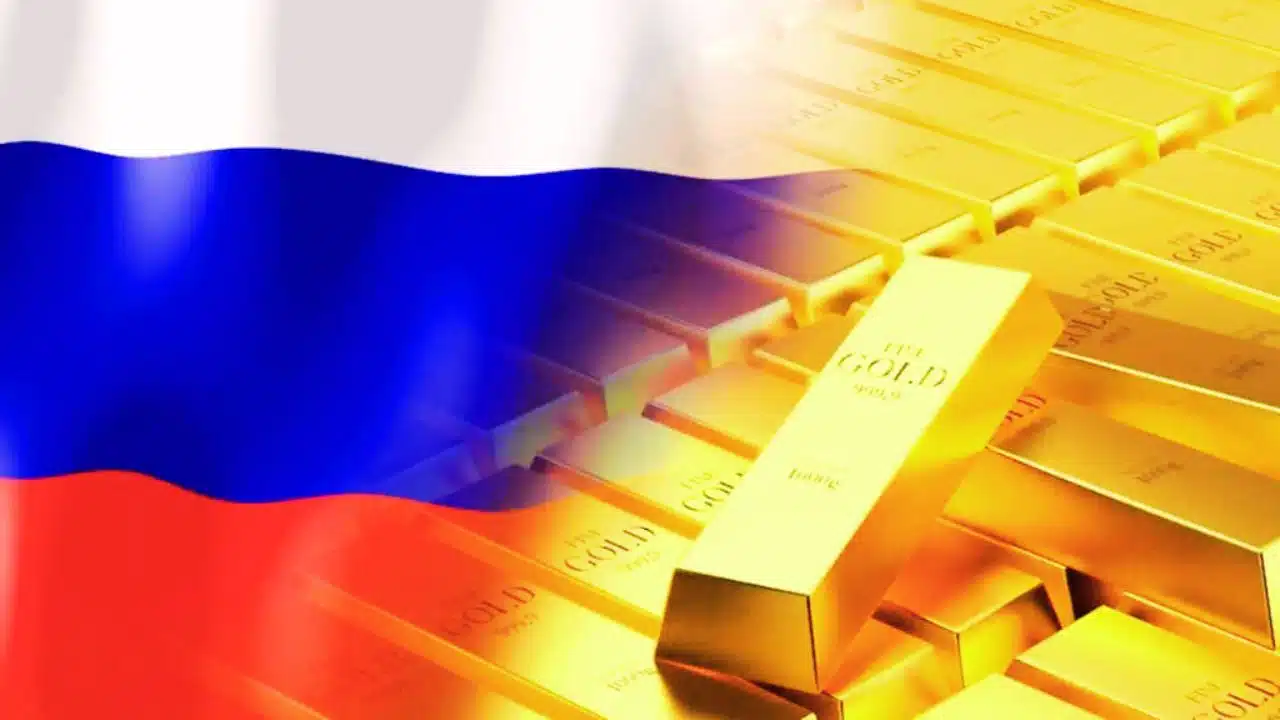
Russia’s gold reserves have reached a record valuation of almost 300 billion dollars, even though the physical volume of gold has barely changed, underscoring how surging bullion prices and sanctions pressure are reshaping Moscow’s reserve strategy.
The Central Bank of Russia and the government are increasingly using these reserves as both a financial buffer and a geopolitical tool amid prolonged confrontation with the West.
Record valuation of Russia’s gold
According to CEIC data based on figures from the Bank of Russia, the market value of Russia’s official gold reserves climbed to about 299.8 billion US dollars in October 2025, the highest level on record. This new peak reflects a revaluation of roughly 2,330 tonnes of gold held by the central bank, a volume that has been broadly stable since mid‑2023 but has become more valuable as global gold prices surged. Industry reports and international datasets indicate that this stockpile places Russia among the world’s top five official gold holders, with gold now accounting for more than one‑third of its total reserves by value in early 2025.
Key recent figures
| Date / period | Gold holdings (tonnes) | Estimated valuation (USD bn) | Notes |
| June 2000 | 343.41 | ≈2.3 | Early post‑Soviet low; small share of reserves. |
| June 2024 | 2,335.85 | n/a | All‑time high in physical tonnage. |
| March 1, 2025 | ≈2,330 | 217.4 | Value cited as new record at the time; gold about 34.4% of reserves. |
| October 2025 | ≈2,329.6 | 299.8 | All‑time high valuation in US dollars. |
The table shows that since 2000 Russia has increased its gold holdings almost seven‑fold in tonnage terms, while the dollar value has risen far faster thanks to both accumulation and higher prices. The latest jump from about 217 billion dollars in March 2025 to nearly 300 billion in October is driven mainly by bullion’s price rally rather than fresh large‑scale purchases.
How Russia built its gold stockpile
Official data and market databases show that the Central Bank of Russia began steadily increasing its gold holdings in the 2000s and accelerated purchases after the 2014 annexation of Crimea, as relations with Western governments deteriorated. Over this period, Moscow sharply reduced its exposure to US Treasury securities and shifted reserves into gold and friendly currencies, aiming to make its balance sheet less vulnerable to American and European financial sanctions. By the early 2020s, Russia’s central bank had become one of the most active official buyers of gold globally, contributing to strong central‑bank demand documented by the World Gold Council.
Analysts note that Russia’s gold strategy operates on two levels: substantial official holdings at the central bank, and growing private gold purchases by households encouraged through tax incentives and domestic bullion products. This dual‑layer approach is designed to provide both state‑level protection against sanctions and a savings alternative for citizens amid inflation and currency volatility.
Sanctions, de‑dollarisation and domestic pressures
Russia’s push into gold intensified after the 2022 full‑scale invasion of Ukraine, when Western countries froze an estimated 322 billion dollars of its foreign‑exchange reserves held abroad. Because physical gold stored inside Russia is harder to seize, officials and market strategists describe it as a sanctions‑resistant asset that can be mobilised in crises or used in transactions with partners willing to accept bullion. At the same time, economic pressure from war spending and restricted access to capital markets has increased the temptation to monetise at least part of these holdings.
In late 2025, the Central Bank of Russia confirmed that its operations involving gold were increasing, including the first reported sales of physical gold from reserves on the domestic market as part of Finance Ministry budget operations. Separate reporting on the National Wealth Fund shows that the government has already sold more than half of the fund’s gold—about 233 tonnes—since 2022 to cover budget shortfalls, leaving roughly 173 tonnes by November 2025. Commercial‑bank data suggest a parallel shift, with Russian banks’ own physical gold stocks halving over 2024 to around 38 tonnes, indicating that metal is moving off bank balance sheets toward the state and private investors.
Global context and market impact
Global rankings compiled from central‑bank and market data place the United States first with about 8,133 tonnes of official gold, followed by Germany with around 3,350 tonnes, while Italy and France each hold just under 2,500 tonnes. Russia, with roughly 2,330 tonnes, now sits around fifth, slightly ahead of China’s reported 2,300‑plus tonnes, though China’s true total may be higher than official disclosures. This means Russia’s record valuation comes from a mid‑sized tonnage by top‑holder standards, amplified by high global prices and a large concentration of reserves in gold rather than currencies.
Selected top official gold holders (2025)
| Country | Gold holdings (tonnes) | Approximate status |
| United States | 8,133.5 | Largest official gold stockpile worldwide. |
| Germany | 3,350.3 | Second‑largest holder; debate over repatriation from the US. |
| Italy | ≈2,450 | Among top three in Europe; large legacy hoard. |
| France | ≈2,440 | Long‑standing major holder, little change in tonnage. |
| Russia | ≈2,330 | Around fifth globally; value hit record high in 2025. |
| China | ≈2,300 | Rapid recent additions; still officially just behind Russia. |
World Gold Council data show that central‑bank demand for gold reached record or near‑record levels in 2024, with emerging‑market institutions— including Russia and China—driving much of the buying. Analysts argue that Russia’s accumulation and now selective selling of gold are part of a broader BRICS‑linked push to reduce reliance on the US dollar in trade and reserves, potentially increasing the metal’s role in regional payment and settlement systems.
What comes next
Commentary from economic research firms suggests that Moscow may sell up to 30 billion dollars’ worth of gold in 2025 and a further 15 billion in 2026 to plug fiscal gaps if oil revenues disappoint and sanctions remain tight. At the same time, officials are promoting domestic gold exchanges and yuan‑ and gold‑based instruments in St. Petersburg and Moscow, signalling that gold will remain central to Russia’s financial architecture even if some reserves are liquidated. The future size and value of Russia’s gold hoard will depend on the course of the Ukraine war, the durability of sanctions, and global bullion prices—but for now, the record valuation underscores how deeply gold is embedded in the country’s economic and geopolitical strategy.