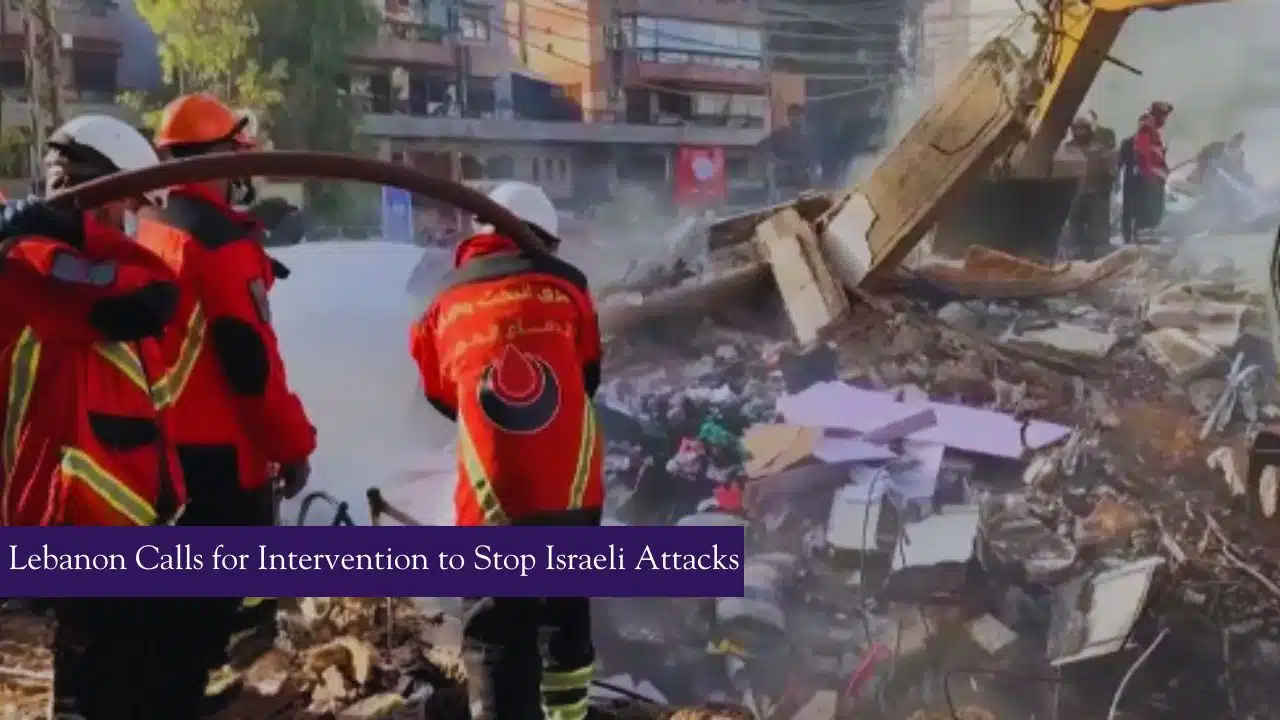
Lebanese President Joseph Aoun has made a passionate appeal to the international community to take immediate and decisive action to end Israeli military strikes on Lebanon, following a devastating airstrike in the southern suburbs of Beirut on Sunday, November 23, 2025. This attack, which occurred on Lebanon’s Independence Day, killed at least five individuals, including a high-ranking Hezbollah commander, and injured 28 others, according to official reports from Lebanon’s Health Ministry.
The strike targeted an apartment building in the Haret Hreik district of the Dahieh neighborhood, a predominantly Shiite area known as a Hezbollah stronghold, marking Israel’s first direct assault on central Beirut since early June 2025. President Aoun’s statement highlighted Lebanon’s repeated efforts to maintain peace under a fragile ceasefire, underscoring the need for global powers to enforce international resolutions and protect civilian lives amid escalating tensions.
Details of the Deadly Strike and Its Immediate Impact
The Israeli airstrike unfolded around midday, with warplanes unleashing precision munitions on a residential complex in Haret Hreik, causing the building to partially collapse and igniting fires that engulfed nearby vehicles and structures. Lebanon’s National News Agency described the scene as chaotic, with thick black smoke billowing over the bustling suburb as emergency responders rushed to the site, where gunfire echoed from security forces securing the perimeter. The Health Ministry confirmed five fatalities: Haytham Ali Tabatabai, Hezbollah’s chief of staff, along with four other operatives—Ibrahim Ali Hussein, Rifaat Ahmed Hussein, Mustafa Asaad Barrou, and Qassem Hussein Barjawi—all of whom were in a meeting at the time.
Over 28 people were wounded, many suffering from shrapnel injuries and smoke inhalation, overwhelming local hospitals in the area. Social media videos captured crowds gathering near the fourth-floor impact site, where the explosion left a gaping hole in the facade, symbolizing the sudden intrusion of violence into everyday life in Beirut’s southern suburbs. This incident disrupted celebrations of Lebanon’s 82nd Independence Day, turning a day of national pride into one of mourning and outrage.
Who Was Haytham Ali Tabatabai? A Key Figure in Hezbollah’s Military Hierarchy
Haytham Ali Tabatabai, also known as Abu Ali Tabatabai, was a veteran Hezbollah commander born in 1968 to a Lebanese mother and Iranian father, making him part of the group’s founding generation with decades of operational experience across multiple conflict zones. Rising through the ranks since the 1980s, Tabatabai previously commanded the elite Radwan Force, Hezbollah’s special operations unit responsible for planning cross-border incursions into Israel and high-stakes missions. His role expanded during the Syrian civil war, where he oversaw training for Shiite militias near the Golan Heights, survived a 2015 Israeli assassination attempt in Quneitra that killed other senior figures, and coordinated with Iran’s Quds Force in Yemen alongside Houthi rebels.
By late 2024, following heavy losses to Hezbollah’s leadership in the previous Israel-Lebanon war, Tabatabai was appointed chief of staff, effectively becoming the group’s second-in-command after Naim Qassem, and focused on rebuilding military capabilities in violation of ceasefire terms. Israel viewed him as a primary threat due to his involvement in entrenching Hezbollah’s infrastructure along the border and directing Unit 3800’s regional activities in Iraq, Syria, and Yemen. This strike represented Israel’s third attempt on his life since 2015, reflecting long-standing intelligence efforts to dismantle Hezbollah’s command structure.
President’s Strong Statement and Its Broader Implications
In a formal statement released shortly after the attack, President Aoun condemned the strike as a blatant “disregard for calls to halt assaults,” emphasizing that it coincided with Independence Day to deliberately undermine Lebanon’s sovereignty and stability. He reiterated Lebanon’s commitment to a ceasefire brokered by the US and France on November 27, 2024, which ended 14 months of intense cross-border fighting that displaced over a million Lebanese and caused thousands of deaths. Aoun noted that Lebanon has pursued diplomatic channels, including readiness for indirect talks under UN, US, or joint international frameworks, to secure a permanent halt to hostilities and Israeli withdrawal from five southern positions still occupied beyond the 60-day deadline.
However, he accused Israel of repeated violations, including over 50 documented breaches by early December 2024 alone, which have resulted in 331 deaths and 945 injuries since the truce took effect. Aoun called for the international community to “assume its responsibility and intervene firmly and seriously,” warning that unchecked aggression threatens not just Lebanon but regional peace, especially with upcoming events like Pope Leo XIV’s visit next week. His words reflect a broader Lebanese leadership stance, shared by Prime Minister Nawaf Salam, that prioritizes diplomacy amid public exhaustion from conflict.
Historical Context: A Pattern of Strikes on Beirut’s Southern Suburbs
The southern suburbs of Beirut, particularly Dahieh, have long been a focal point of Israeli military operations against Hezbollah, dating back to the 1980s South Lebanon conflict when Israel occupied parts of the country until its withdrawal in 2000. This area became a hub for Hezbollah’s social services, political offices, and military planning after the group’s emergence in response to Israel’s 1982 invasion, enduring waves of airstrikes in 2006 and during the 2024 escalation that leveled entire neighborhoods. The recent strike echoes October 2024’s intense bombardments, which destroyed six buildings in Laylaki and killed dozens in what was then described as the most violent night in the suburbs since the war’s start.
Since the ceasefire, Israel has conducted three prior strikes on Dahieh, often citing rocket fire or Hezbollah movements—claims the group denies—as justifications, while maintaining a presence in southern Lebanon to counter perceived threats. Hezbollah, in turn, has been accused of 20 violations, including fighters entering no-go zones south of the Litani River and firing on IDF positions. These incidents highlight the ceasefire’s fragility, with analysts noting Israel’s actions as a pattern of preemptive enforcement that risks derailing de-escalation efforts.
Broader Regional Tensions and Escalation Concerns
This Beirut strike unfolds against a backdrop of renewed Israeli operations in southern Lebanon and the Bekaa Valley, including a drone attack on the Ein al-Hilweh Palestinian refugee camp in Sidon last week that killed 13 people—mostly children—in a purported strike on Hamas targets. Hezbollah officials, such as MP Ali Ammar, labeled the assault a “crossing of a red line” that assaults Lebanon’s dignity, vowing retaliation while cautioning against giving Israel pretext for all-out war, which could devastate the already strained economy. Israeli Prime Minister Benjamin Netanyahu’s office defended the operation as essential to prevent Hezbollah’s rearmament and protect northern communities still displaced from the 2024 fighting.
Security experts like Ali Rizk warn that Hezbollah faces a dilemma: inaction invites more strikes, but response could provoke broader bombardment, especially as public sentiment in Lebanon favors diplomacy and Israeli withdrawal over renewed conflict. The international response remains muted so far, with France previously documenting violations but little concrete action, raising fears that the cycle of tit-for-tat attacks could unravel the truce entirely. As Lebanon prepares for potential talks, the strike serves as a stark reminder of the unresolved border disputes and proxy influences fueling the standoff.