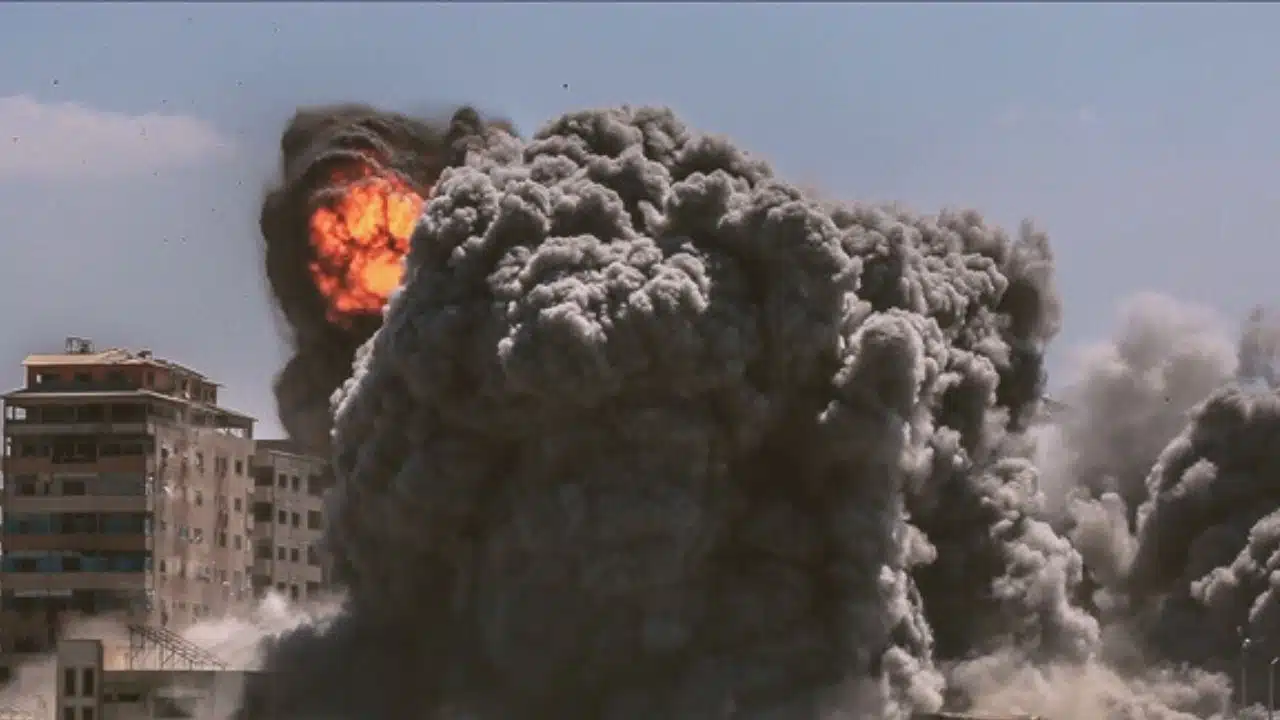
On Monday, the Israeli military began a full-scale ground assault aimed at seizing control of Gaza City, marking a new and highly dangerous phase of the nearly two-year war between Israel and Hamas. Israeli officials explained that the goal of the operation is to dismantle Hamas’s operational command within the city and reduce its ability to carry out attacks against Israel.
The decision to send in ground forces followed weeks of intensified aerial bombardment. Israeli airstrikes in recent days destroyed large sections of Gaza City, including many high-rise residential and commercial towers. The military has claimed that these towers were being used by Hamas fighters for military planning, weapons storage, and communication hubs. Tanks, infantry, and mechanized units moved into the city on Monday night, with reports from Palestinian outlets confirming their presence inside urban neighborhoods. Additional brigades are expected to reinforce them in the coming days, expanding the offensive deeper into the city’s districts.
Civilian Impact and Rising Death Toll
The humanitarian situation in Gaza continues to deteriorate. The Gaza Health Ministry, which is run by Hamas, has reported that almost 65,000 Palestinians have been killed since Israel’s counteroffensive began in response to the Hamas assault of October 7, 2023. The majority of those casualties, according to local health authorities, are women and children. While Israel disputes the accuracy of the figures, independent humanitarian groups and the United Nations have repeatedly confirmed that the civilian toll is extremely high and that the destruction across Gaza has reached catastrophic levels.
Entire neighborhoods in Gaza City are now reduced to rubble, leaving families displaced with no permanent shelter. Hospitals, already crippled by shortages of fuel and medicine, are struggling to cope with waves of wounded civilians. Humanitarian agencies warn that water and food supplies are becoming critically scarce, increasing the risk of famine and disease outbreaks in overcrowded shelters in the southern parts of the enclave.
Evacuation Orders and Mass Displacement
In preparation for the offensive, the Israel Defense Forces (IDF) issued repeated warnings for the approximately one million residents of Gaza City to evacuate and move south to designated “humanitarian areas.” Israeli military officials have described these zones as safer regions where international aid can be more effectively delivered.
Despite the warnings, evacuating Gaza City has proven extremely difficult for many families. Continuous bombardment, lack of transportation, and the dangers of traveling under constant drone and artillery fire have slowed the evacuation process. Israeli officials estimate that around 300,000 Palestinians have managed to leave the city, but hundreds of thousands remain trapped. Many residents fear that moving south does not guarantee safety, as airstrikes have also struck areas far from the city center.
Military and Political Disagreements Inside Israel
The decision to send ground forces into Gaza City was not unanimous within Israel’s security establishment. Senior military leaders—including the Chief of Staff of the IDF, the heads of Mossad, Shin Bet, and military intelligence—cautioned Prime Minister Benjamin Netanyahu against the operation.
Their assessment raised several risks:
-
Threat to Israeli hostages still held inside Gaza, who could be killed if fighting intensifies around them.
-
Heavy IDF casualties as troops face urban warfare in densely populated neighborhoods filled with tunnels, booby traps, and ambush positions.
-
Failure to fully dismantle Hamas, even at the cost of massive destruction.
-
The possibility of Israel being forced into direct military administration over Gaza’s two million residents, which could mean an open-ended occupation with international and domestic consequences.
Despite these warnings, the Israeli government pressed ahead, arguing that leaving Hamas’s command intact in Gaza City would allow the group to regroup and continue its resistance campaign.
U.S. Involvement and Diplomatic Context
The timing of the ground assault coincided with a high-profile visit by U.S. Secretary of State Marco Rubio. Hours before the operation began, Rubio met Netanyahu and senior members of Israel’s cabinet in Jerusalem. During the visit, he expressed U.S. backing for Israel’s right to defend itself but reportedly urged that the ground campaign should be swift and limited, rather than an open-ended occupation.
Rubio also attended a symbolic ceremony with Israeli settlers in a controversial tunnel project under the Palestinian neighborhood of Silwan in East Jerusalem. The event took place not far from the Al-Aqsa Mosque, a site of recurring tensions. The U.S. diplomat’s presence signaled strong political support for Israel, though it drew criticism from Palestinian leaders who saw it as legitimizing settlement activity in occupied territory.
Trump’s Position and Warnings to Hamas
Former U.S. President Donald Trump, whose administration remains closely aligned with Netanyahu, also weighed in. He issued stern warnings to Hamas not to harm the approximately 20 hostages still believed to be alive in Gaza. Reports from Israel’s public broadcaster suggested that Hamas may have moved hostages above ground, possibly to use them as human shields against Israeli tanks and airstrikes.
Trump responded by warning Hamas leadership that harming hostages or using them in this way would trigger severe consequences. He demanded the immediate release of all captives and emphasized that responsibility for their safety rested entirely with Hamas.
Netanyahu publicly welcomed Trump’s statements, describing them as evidence of unwavering U.S. support for Israel’s war aims and its efforts to secure the release of hostages.
Families of Hostages Voice Anger
While Netanyahu celebrated international backing, families of Israeli hostages expressed deep concern and outrage. The Hostages and Missing Families Forum, which represents relatives of those still in Gaza, condemned the government’s decision to move forward with the assault despite strong security warnings.
They argued that the ground offensive could eliminate any remaining chances of rescuing hostages alive, while also making it impossible to retrieve the remains of those already killed. Families accused Netanyahu of putting political interests ahead of the safety of Israeli citizens, describing the move as a deliberate gamble with their loved ones’ lives.
What Lies Ahead
The Israeli ground offensive in Gaza City marks a turning point in the war. It could either deliver a major blow to Hamas’s infrastructure or drag Israel into a prolonged urban battle with devastating human consequences.
For civilians, the crisis has reached an almost unbearable stage, with food, shelter, and medical care collapsing under the strain. International actors—including the United Nations and humanitarian groups—are warning that Gaza may face one of the worst humanitarian disasters of the modern era if safe corridors, aid deliveries, and medical relief are not urgently expanded.
Whether the offensive succeeds militarily remains uncertain, but what is clear is that both Palestinians and Israelis face weeks of intensified bloodshed, rising displacement, and heightened political stakes.