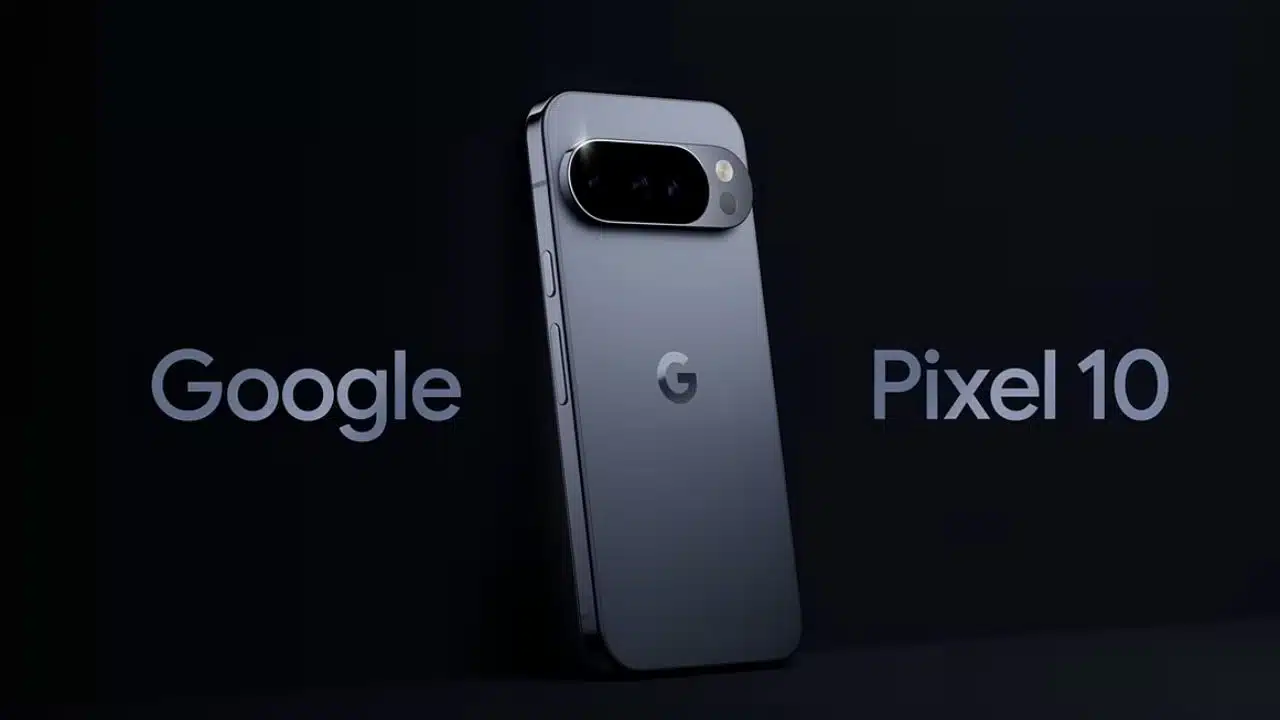
At its Made by Google event in New York on August 20, 2025, Google rolled out its largest-ever Pixel device launch, unveiling four new smartphones—Pixel 10, Pixel 10 Pro, Pixel 10 Pro XL, and Pixel 10 Pro Fold—along with the new Pixel Watch 4 and updated Pixel Buds. This marks a decade of Pixel innovation, and Google is making a bold statement: AI is no longer an add-on—it is the centerpiece of its hardware ecosystem.
The event was filled with excitement, hosted by television personality Jimmy Fallon, giving it a showbiz flair. But behind the entertainment, the announcements carried weight: Google’s strategy to make AI features indispensable for everyday users.
The Phones at a Glance
- Pixel 10: The entry-level model, bringing Gemini AI features at an accessible price.
- Pixel 10 Pro & Pro XL: Advanced models with the latest Tensor G5 chip, enhanced cameras, and pro-level photography tools.
- Pixel 10 Pro Fold: Google’s first foldable with IP68 dust and water resistance, aimed at competing with Samsung’s Galaxy Z Fold series.
Each device is designed not only to perform better but also to push AI into the mainstream smartphone experience.
Gemini AI: Google’s Answer to Apple’s Siri Struggles
The centerpiece of the launch was Google’s Gemini AI integration. Gemini has been powering Pixel phones since the Pixel 7, but the Pixel 10 family takes it to a new level, with on-device AI processing via the Tensor G5 chip. This ensures speed, privacy, and real-time functionality without constantly depending on the cloud.
By contrast, Apple’s Siri overhaul has been delayed until 2026, leaving iPhone users without a powerful AI companion for at least another year. Apple’s iOS 26 this fall will introduce some AI tools, but they won’t match the practicality of Google’s Gemini-powered Pixel experience.
Magic Cue: The Feature That Redefines Smartphone Assistance
One of the headline features is Magic Cue, an AI tool that intelligently pulls information from across your apps and presents it exactly when you need it:
- If a friend texts you about dinner, Magic Cue checks your Gmail or Calendar and suggests a reply with the reservation details.
- When calling an airline, your Pixel can automatically surface your flight information on screen, saving you the hassle of digging through apps.
- If you plan a trip in Calendar—say to Yellowstone—the Weather app, powered by Magic Cue, will warn you if rain is expected and even offer travel tips, like protecting electronics from moisture.
Privacy at the Core
Unlike some AI assistants that constantly rely on servers, Magic Cue runs entirely on-device. Your private data stays locked in a secure enclave within the Pixel phone. Apps can only access this data if you grant explicit permission, giving Google an edge in privacy—a key selling point for users wary of AI surveillance.
Beyond Magic Cue: A Full Suite of AI Tools
Google didn’t stop at Magic Cue. The Pixel 10 family introduces several AI-powered capabilities designed to make daily life easier and more creative:
- Real-Time Voice Translation: Pixel 10 can translate live phone calls instantly, maintaining natural tone and inflection. This is a breakthrough in global communication and currently outpaces Apple’s iPhone offerings.
- Camera Coach: An AI photography trainer that suggests the best angles, lighting adjustments, and framing tips in real-time—ideal for amateur photographers.
- AI Photo Editing: Users can describe edits in natural language, such as “make the sky brighter” or “blur the background,” and the Pixel camera applies them seamlessly.
- Super Res Zoom / Pro Res Zoom: Available on the Pro models, this enables up to 100x zoom, though some experts caution that heavily AI-processed images blur the line between reality and digital enhancement.
These tools demonstrate how Google sees AI as more than entertainment—it’s a functional assistant that handles tasks once considered tedious or time-consuming.
Pixel Watch 4, Pixel Buds, and Accessories
Google also expanded its AI ecosystem beyond smartphones:
- Pixel Watch 4: Features a curved AMOLED display, improved health AI tracking, user-replaceable batteries, and satellite SOS for emergencies. It brings Gemini AI into wearable tech, allowing proactive suggestions and personalized health insights.
- Pixel Buds 2a and Pixel Buds Pro 2: Both integrate Gemini-powered voice assistance. The Pro version adds adaptive sound control and gesture features for seamless listening.
- Pixelsnap Accessories: Google unveiled its magnetic Pixelsnap system, compatible with MagSafe chargers and stands, showing a push toward accessory standardization.
Pricing, Launch Timeline, and Perks

Google has kept pricing similar to the Pixel 9 series, an unusual move in today’s rising-tech-cost era:
- Pixel 10: $799
- Pixel 10 Pro: $999
- Pixel 10 Pro XL: $1,199
- Pixel 10 Pro Fold: $1,799
Launch dates are staggered:
- August 28, 2025: Pixel 10, Pixel 10 Pro, Pixel 10 Pro XL, Pixel Buds 2a, and Pixelsnap accessories hit the market.
- October 9, 2025: Pixel 10 Pro Fold and Pixel Watch 4 launch.
Additionally, Pro buyers receive one year of Google AI Pro (Gemini Pro), a premium AI subscription service.
Market Context: Can Google Challenge Apple and Samsung?
Google’s Pixel devices currently hold just 3% of U.S. smartphone shipments, far behind Apple (49%) and Samsung (31%), according to Canalys market data. Motorola even beats Google at 12%.
However, analysts see the Pixel 10 launch as part of a long-term AI strategy, not an immediate market-share grab. Google’s true strength lies in its Android ecosystem, which powers Samsung devices too. Eventually, Gemini AI features could extend to Samsung Galaxy smartphones, giving Google’s AI an audience far larger than Pixel’s small base.
This matters because the next smartphone battleground isn’t hardware—it’s AI services. As experts note, just as apps once defined smartphones, AI will soon become “table stakes.” A phone without integrated AI will feel outdated, much like how BlackBerry devices lost relevance when Apple introduced the iPhone.
Apple’s Position: Falling Behind in AI
Apple remains the dominant U.S. player, but its AI ambitions are lagging. While iOS 26 (coming later this year) will add new AI-powered features, the true game-changer—a redesigned Siri assistant—won’t arrive until 2026.
Samsung, meanwhile, is moving quickly with Galaxy AI, which allows agentic functions across apps—like searching for football game schedules and adding them to calendars with one command. This puts Google and Samsung ahead of Apple in real-world AI usefulness, at least for now.
A Turning Point for Smartphones
The Pixel 10 launch represents a major shift in smartphone competition. Google is not just selling devices—it is selling AI as the main driver of user experience.
- For consumers, this means phones that anticipate needs, simplify communication, and make tasks seamless.
- For the industry, it signals the start of an era where AI isn’t optional—it’s essential.
While Apple still dominates in sales, the innovation spotlight has shifted toward Google and Samsung, with AI leading the charge. If Apple doesn’t catch up soon, its iPhone could risk looking outdated, much like once-revolutionary BlackBerry devices did in the past.
For now, the Pixel 10 family proves that the AI race isn’t about flashy demos—it’s about delivering practical, reliable tools that make life easier. And in that race, Google just pulled ahead.
The Information is collected from Yahoo Finance and CNN.