

Artificial intelligence startup Perplexity AI has surprised the tech world by making an unsolicited offer of $34.5 billion in cash to acquire Google’s Chrome web browser. The proposal, confirmed by CNBC on August 12, 2025, comes at a time when Google is facing mounting regulatory pressure in the United States to consider divesting parts of its business following an antitrust ruling.
This bid is striking because it exceeds Perplexity’s current valuation by a considerable margin. The company was valued at about $18 billion in July 2025, up from $14 billion earlier in the year, but the offer suggests Perplexity is positioning itself for a transformative leap in scale. Despite the gap between the company’s worth and its offer, Perplexity says it has secured commitments from multiple investors to finance the deal.
Why Chrome Matters in the Tech Ecosystem
Launched in 2008, Google Chrome rapidly grew to dominate the web browser market, becoming the gateway to the internet for billions of people. Chrome’s appeal has been built on speed, integration with Google services, and its underlying open-source project, Chromium.
Chrome’s dominance also plays a crucial role in Google’s advertising business. By controlling one of the most widely used access points to the internet, Google gains valuable user data that fuels targeted advertising campaigns. According to recent market share data, Chrome holds over two-thirds of the global browser market, a level of dominance that has attracted intense scrutiny from regulators worldwide.
Antitrust Ruling Sets the Stage
The timing of Perplexity’s bid is not random. In 2024, Google lost a major antitrust case brought by the U.S. Department of Justice (DOJ), which found that the company maintained an illegal monopoly in the internet search market. As part of potential remedies, the DOJ proposed that Google be required to divest Chrome entirely.
The DOJ has argued that removing Chrome from Google’s control would weaken the company’s ability to reinforce its search dominance and would create a more competitive environment for rival search engines. According to the agency’s filings, divesting Chrome would cut off Google’s exclusive control over a critical internet entry point, forcing the company to compete more fairly for user searches.
Google has strongly opposed this proposal, calling it overly aggressive and disproportionate to the case’s findings. The company has not yet disclosed how it plans to restructure its operations if the court sides with the DOJ on divestiture. Analysts believe that if a court-ordered sale happens, Chrome’s market value could exceed $50 billion, meaning Perplexity’s current offer might be just an opening move.
Perplexity’s Vision for Chrome
Perplexity, best known for its AI-powered search engine that delivers concise answers with links to original sources, has stated that it intends to keep Chrome as an open and competitive platform. The company’s proposal reportedly includes:
-
Maintaining Chromium as open-source, allowing developers worldwide to continue contributing to the browser’s codebase.
-
Keeping Google Search as the default search engine for Chrome users, at least initially, to avoid abrupt disruptions for users.
-
Investing $3 billion over two years to enhance Chrome’s features, security, and performance, integrating AI functionality where appropriate.
The company views Chrome not only as a browser but as a strategic asset that could seamlessly integrate with AI-driven features, giving users advanced search and productivity tools directly within their browsing experience.
The Comet Connection
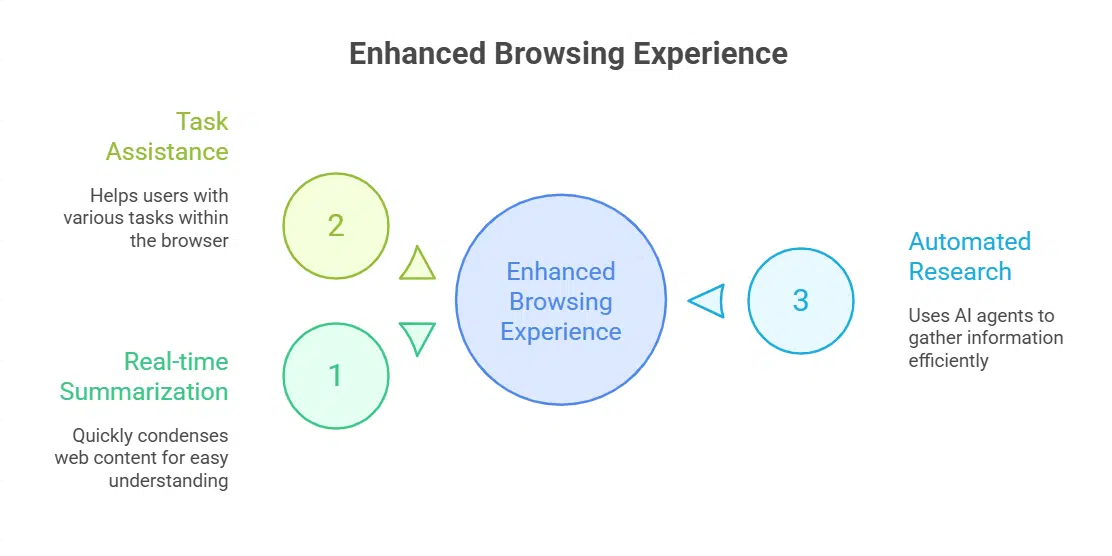
Perplexity is not entering the browser market from scratch. In July 2025, it launched Comet, its own AI-powered web browser, built on the Chromium framework. Comet integrates Perplexity’s AI engine directly into the browsing experience, enabling capabilities such as:
-
Summarizing and analyzing web pages in real time.
-
Assisting with tasks like shopping, sending emails, or booking services without leaving the browser.
-
Automating research and information gathering with conversational AI agents.
Comet is currently available to Perplexity Max subscribers at a monthly fee of $200, with plans to expand access through invitations before a broader release. While Comet is still in its early stages, Perplexity sees Chrome’s massive user base as a way to accelerate its adoption and bring AI-native browsing to hundreds of millions of people almost instantly.
Industry Reactions and Competitive Implications
The tech industry has reacted with surprise and skepticism to Perplexity’s bold bid. Some analysts note that acquiring Chrome could instantly position Perplexity as a major competitor not just to Google Search, but to other AI-driven platforms like OpenAI’s ChatGPT, Microsoft’s Copilot, and Meta’s AI products.
Large technology companies are already spending tens of billions of dollars annually on AI infrastructure, including data centers, GPUs, and the development of large language models. For Perplexity, owning Chrome could provide both a massive distribution channel and an unrivaled dataset to train and improve its AI systems.
However, the challenges are significant. Integrating Chrome into Perplexity’s operations would require navigating complex technical, regulatory, and user-experience considerations. Additionally, Google is unlikely to voluntarily sell Chrome unless forced by a legal ruling, which could delay any potential acquisition for years.
Past Big Swings from Perplexity
This isn’t Perplexity’s first ambitious acquisition attempt. In early 2025, the company proposed a merger with TikTok, aiming to secure a foothold in the short-form video market. That deal never materialized, partly because TikTok’s parent company ByteDance faced ongoing political and regulatory uncertainty in the United States.
The Chrome bid, however, taps into a different strategic play: controlling a major platform for web access, rather than just acquiring a high-traffic content platform.
Perplexity’s $34.5 billion offer puts pressure on Google at a time when it is already fighting legal battles that could reshape its business. Even if the deal doesn’t go through, it sends a clear signal that AI-driven companies are prepared to challenge long-standing internet giants not just with software products, but with acquisitions of their most valuable assets.
The coming months will likely involve intense legal maneuvering, negotiations, and public scrutiny. If the courts side with the DOJ and order Google to divest Chrome, Perplexity may find itself in a strong position to secure the deal—provided it can maintain its investor backing and demonstrate the capability to manage one of the world’s most widely used digital products.





















