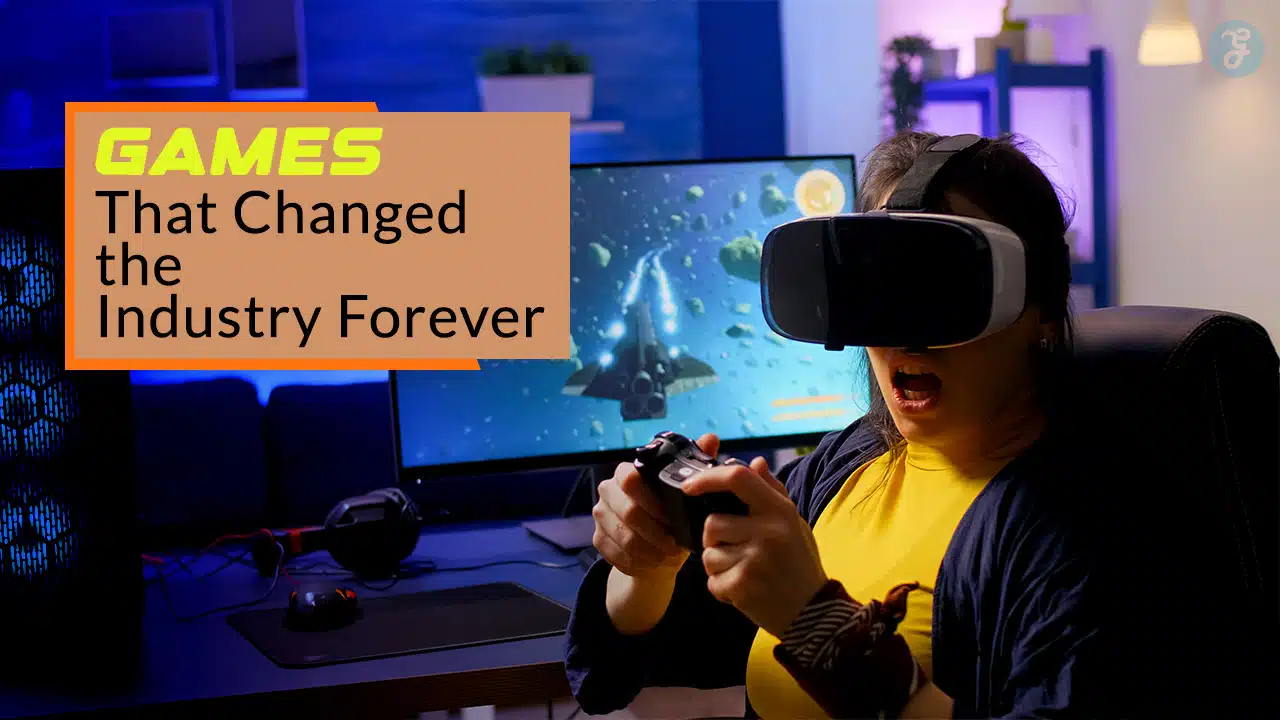
You scroll through lists and still feel lost. You want to know which games shook the industry. Many posts mix hype with real hits.
Key Takeaways
- Pong (1972) by Atari kicked off the arcade craze and led to a 1975 home console version with paddle controllers for TV sets.
- Space Invaders (1978) from Taito in Japan added a high‐score board, caused a coin shortage, and set ranking charts seen later in games like Wolfenstein 3D and World of Warcraft.
- Pac-Man (1980) by Namco became a pop icon with T-shirts and a 1982 TV show. Tetris (1984) by Alexey Pajitnov sold over 500 million copies after Nintendo bundled it on Game Boy in 1989. Super Mario Bros. (1985), led by Shigeru Miyamoto, defined platformers on the NES.
- Street Fighter II (1991) by Capcom revived arcades with Ryu’s hadouken and Chun-Li’s combos. Doom (1993) from id Software let John Romero add deathmatch and shareable mods. Final Fantasy VII (1997) on PlayStation used cinematic 3D scenes and an Active Time Battle system.
- Grand Theft Auto III (2001) used RenderWare to create a free-roam Liberty City. World of Warcraft (2004) by Blizzard built guild raids and used a monthly fee for steady updates. Minecraft (2011) by Mojang gave players a blocky sandbox with redstone wiring, mods, and an Education Edition.
Pong (1972): The Birth of Video Gaming
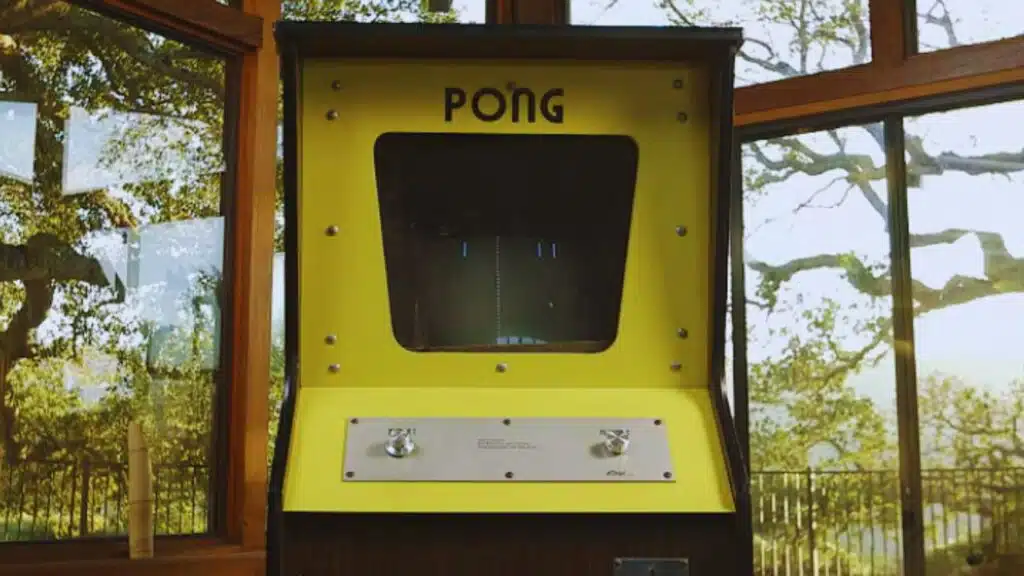
Atari released Pong in 1972. It featured two paddles, a ball, and the goal to hit the ball past the opponent’s paddle. Allan Alcorn built the first unit using a custom circuit board and a small CRT monitor.
Nolan Bushnell pitched it as a bar game to spark interest.
The game sparked an arcade game revolution and opened the home console market. Atari shipped a home version in 1975 with a paddle controller that hooked to TV sets. Players fed quarters and chased high scores for hours.
That simple setup laid a foundation for modern video games.
Space Invaders (1978): Introducing the High Score System
Space Invaders hit arcades in 1978. It came from Japan and sparked a frenzy. Players saw rows of pixel aliens descend. Arcade video games had never felt so alive. Game cabinets held a control stick and a score display.
Players chased the top number on the screen. The high score system drove fierce rivalry. Japan ran low on coins that year.
Developers borrowed that score tracker for future hits. Shoot ’em up and fighting games, even 3D shooter titles like Wolfenstein 3D, added ranking boards. id software credited Space Invaders for setting a new bar in video game culture.
Arcade fans moved to home consoles and handheld gaming with a drive to beat records. Online worlds such as World of Warcraft still carry that spark. Ranking boards feed the same thrill that began with pixel invaders.
Pac-Man (1980): Gaming’s First Pop Culture Icon

Namco released Pac-Man in 1980 and it soon topped arcade charts. Fans loved its non-violent maze game, they guided a yellow circle through winding paths. The joystick moved with ease.
It reshaped the gaming industry. The cabinet lit up dim halls. Video game fans in Tokyo and New York hungrily gobbled pellets.
Merchandise popped up on T-shirts, lunch boxes, even songs on pop charts. A TV show aired in 1982, it crowned Pac-Man a star. The red ghost haunted every corner, while others trailed in hot pursuit.
Gamers chased high scores, they swapped tips at the arcade.
Tetris (1984): The Perfect Puzzle Game
Alexey Pajitnov launched Tetris in 1984. Players arrange falling tetrominoes to clear lines. The action spread like wildfire in early video games culture. Its clean puzzle design won hearts in arcades and homes.
Many folks found it hard to put down.
Handheld gaming soared after Nintendo bundled it with the Game Boy in 1989. That tiny device sold millions thanks to the title. Sales rocketed past 500 million copies worldwide. Studies show no other single game boosted the gaming industry so fast.
It still lands on top lists for puzzle fans and indie developers.
Super Mario Bros. (1985): Defining Platformers Forever
Super Mario Bros. landed in 1985 on the Nintendo Entertainment System. It sparked the platformer genre. Shigeru Miyamoto led the team, rebranding Jumpman from Donkey Kong. The plumber, now Mario, chased Princess Pauline before saving the Mushroom Kingdom from Bowser.
Designers used side scroller mechanics, sprite animation, and simple hitboxes on the 8-bit engine. Players pressed the NES controller’s D-pad to run fast, jump high, and stomp Goombas.
Mushrooms hid in secret blocks, boosting Mario’s size and unlocking new moves.
Super Mario Bros. defined platformers forever. It set a bar for game design, leaping over the competition. Nintendo rose to a top spot in the video games industry as a leader in console design.
Developers copied its style in arcade ports and handheld Game Boy titles. Indie games and platformer fans still study its sprite art and level layout online.
Street Fighter II (1991): Revolutionizing Fighting Games
Street Fighter II revived arcades. Gamers rushed to coin-op cabinets. Players faced off in one-on-one fighting game matches. Ryu and Ken drew global fans. Chun-Li and Guile brought new flair and style.
Each hero had special moves and combos.
The title defined the fighting game genre. It popularized competitive gaming around the world. Arcades in malls and clubs filled with players. Tournaments sprouted across cities. Crowds roared as a player pulled off a hadouken combo using an arcade stick.
Pros trained their timing to land each custom combo. Its impact shaped modern esports.
Doom (1993): The Pioneer of First-Person Shooters
Id Software launched Doom in 1993 on PCs. John Romero led the design team. It set a new path for first-person shooter games. Players moved through dark halls and faced demons in real time.
It added online multiplayer deathmatch so gamers could battle friends. The game engine handled 3D corridors, lighting, and texture mapping at a smooth pace. The team shared tools so fans could build and trade new levels.
Those mods sparked a modding culture that lives on in fps games. It shaped titles like Call of Duty 4: Modern Warfare.
Final Fantasy VII (1997): Bringing RPGs to the Mainstream
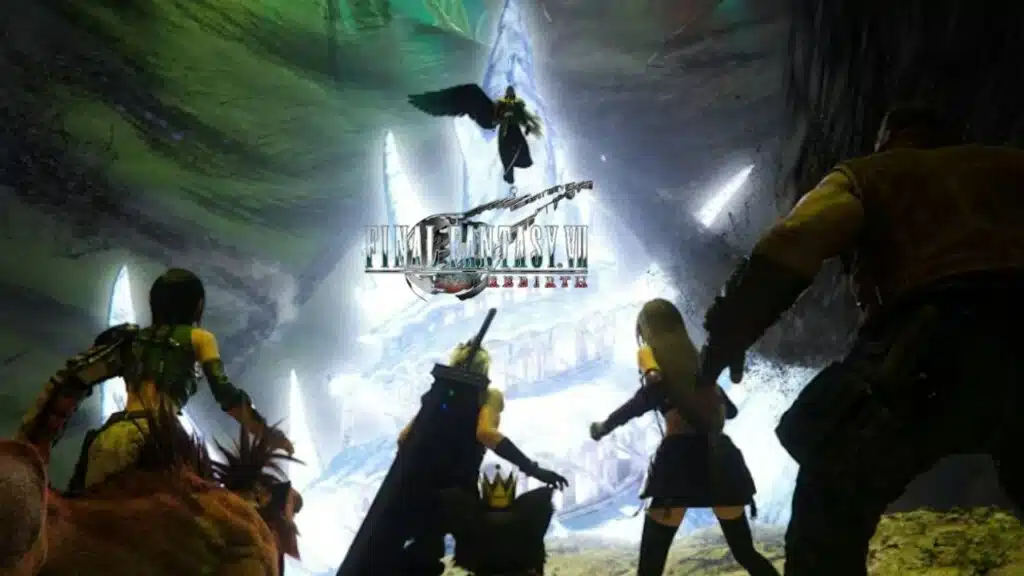
Final Fantasy VII (FFVII) hit shelves in 1997 on the PlayStation console. It mixed deep storytelling with cinematic scenes and FMV, it stunned fans with 3D graphics. CG cutscenes boosted drama, they set new visual standards for consoles.
Characters like Cloud Strife and Sephiroth felt real, they carried complex emotions. Gamers toured Midgar’s sectors, they saw a city that seemed alive.
Active Time Battle added a pulse of real time strategy to turn based fights. It kept you on edge, you made quick choices under a ticking clock. A vast world map urged exploration, you found hidden caves and ruins in deserts and forests.
Emotional depth in the plot drew a wider crowd into JRPGs, teens and adults joined the adventure. FFVII sparked a boom in Final Fantasy fandom, it carried the genre beyond Japan and into mainstream culture.
Grand Theft Auto III (2001): Redefining Open-World Games
Grand Theft Auto III put players in Liberty City, a city that pulsed with life. The RenderWare engine powered its day-night cycle, physics tweaks, and free-form play. It let you roam, steal cars, and shape your own path.
Most games then felt rigid, but this one moved like water; you could turn any corner and find a new dare.
Critics sparked fierce debates on video game violence with its gun fights, car chases, and wild side quests. Some said it inspired copycats, spawning many gta iii clones. Others hailed it as a pathbreaker for open-world games and games that changed gaming forever.
First-person shooter (fps) fans even tipped their hats to its bold leaps in open-ended missions.
World of Warcraft (2004): The MMO That Changed Player Communities
World of Warcraft launched in 2004 and placed gamers in the kingdom of Azeroth. It stood as the most successful massively multiplayer online role playing game, thanks to simple mechanics.
The game simplified mmorpg mechanics for broad reach. Developers used a subscription model to fund steady content updates each month. Real-time strategy fans from Warcraft: Orcs & Humans found a live map to conquer.
Players formed guilds to tackle raids, trade items, and share stories across continents. Massively multiplayer channels buzzed with chatter about quests and loot. This game sparked online events, fan art, and memes in pop culture.
Some design paths flowed into defense of the ancients and league of legends. World of Warcraft changed how we join and play online role playing games.
Minecraft (2011): A Sandbox for Infinite Creativity
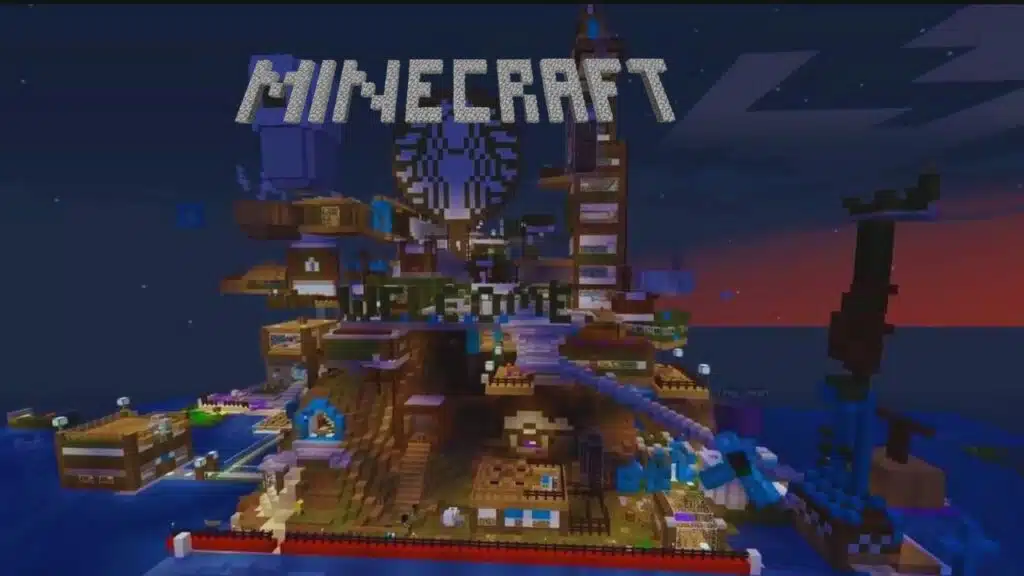
Players enter a vast sandbox, placing cubes, digging tunnels, and shaping land with simple blocks. A random world spreads forests, deserts, and snowy peaks. They gather coal, iron, and diamonds.
They build pickaxes at a workbench, then craft swords. Builders top towers with redstone wiring, making basic switches and lights. Creative mode gives all the blocks, so fans can stack towers by the dozen.
Survival mode locks players in, with zombies and skeletons prowling at dusk. The open world feels fresh, thanks to procedural generation and varied biomes.
Thousands of fans tweak the game with mods and APIs, from simple skins to epic adventure maps. A modding community shares custom mobs, new quests, even rocket ships. Java Edition stays at the core, while Education Edition lets teachers cover math, history, and coding.
Multiplayer mode joins friends on private servers or large public servers with mini games and races. Updates roll out like clockwork, with new mobs, blocks, or mechanics, often free.
Kids and grown-ups upload videos and guides, building a community that shapes each content drop.
Takeaways
Old paddle games lit the spark for digital play. Newcomers chased high scores in pixel shooters, and shaped competition into a social feast. Mario’s leap gave us 3D platformers, and we still chase those analog stick moments.
Doom’s halls taught us how first-person shooter action could thrill millions, and modding tools let fans craft new maps. Blocky worlds like Minecraft opened a sandbox where fans build dreams, brick by brick.
These ten titles proved that bold ideas can change an industry, and they laid the track for modern epic adventures.
FAQs
1. Why is Wolfenstein 3D seen as the first-person shooter that changed gaming?
Because Wolfenstein 3D put you in a 3d maze with guns. It taught players what a first-person shooter is. It felt like you were actually there. It blew us away. It kicked off a new era. It tops lists of games that changed gaming.
2. How did Super Mario 64 shape analog stick controls?
Super Mario 64, the plumber’s 64-bit jump game, gave us an analog stick to roam 3d worlds with ease. I still recall the first time I felt that stick move, it blew our minds. It set the standard for all 3d adventures.
3. What makes Liberty City car chaos game a pillar of open-world games?
Liberty City car chaos game let players roam a big city, steal cars, go on wild rides. It opened the door to open-world games. It spawned endless gta clone imitators. It showed how freedom can drive fun.
4. Why did the Midgar saga raise the bar for role playing games?
Midgar saga, known to fans as Final Fantasy VII, used a grand story. It mixed rts games style with rpg combat. It had blockbuster cutscenes. It pulled players into a world like no other.
5. How did Orc and Elf Realm set the stage for mmorpgs?
Orc and Elf Realm rolled out raids, guilds, and live worlds full of quests. It became the go to title for big online role playing game fans. It showed friends how to team up in a mmorpg.
6. What made the pocket game device a hit for handheld gaming?
The Game Boy, a pocket game device, let you play on the go. It ran on batteries for hours. It sparked handheld gaming and shaped the history of video games in the united states. It proved the power of try before you buy demos.