

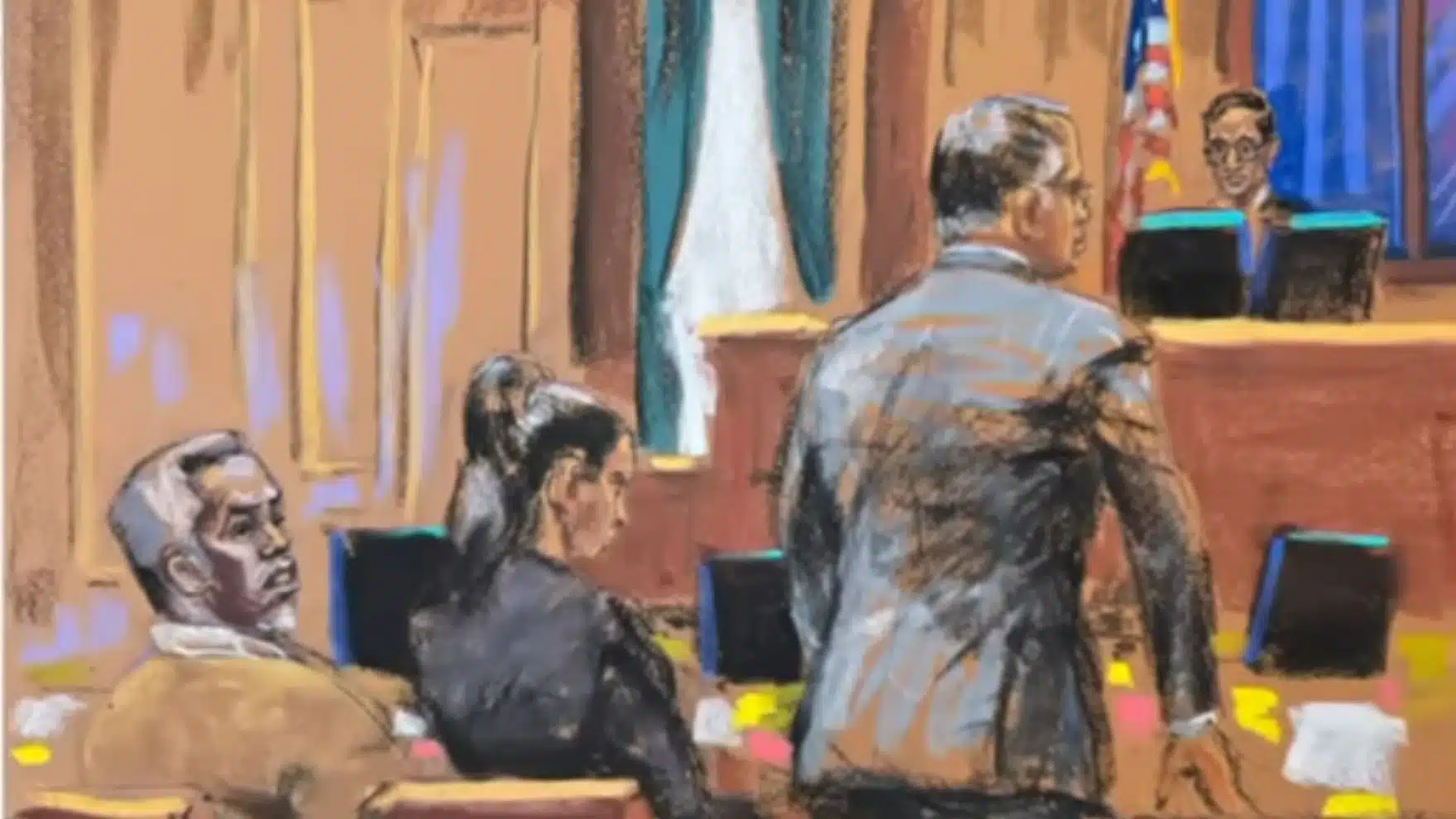
The federal trial of music mogul Sean “Diddy” Combs took a dramatic turn as prosecutors introduced explosive new evidence, including graphic sex videos, text messages, and flight logs, while the presiding judge removed a seated juror mid-trial, citing concerns about credibility and residency.
This latest courtroom development marks a pivotal phase in a trial already rife with high-profile accusations involving racketeering, transportation for prostitution, and coercive control through threats and drug use.
Prosecutors Unveil Key Evidence in Diddy’s Racketeering Case
Text Messages Reveal Internal Culture of Illicit Activities
In Monday’s courtroom session, Ananya Sankar, a paralegal working with the U.S. Attorney’s Office, presented a detailed walkthrough of the digital evidence being used against Combs. These included text messages and call logs pulled from phones belonging to Diddy, his employees, and others allegedly involved in the operation.
Some of these messages revealed that Diddy’s use of male escorts for so-called “freak offs” — drug-fueled sex parties involving sex workers — was an open secret among his staff. In fact, according to testimony, these events were frequently joked about in internal communication, suggesting a casual and normalized culture around illegal conduct.
In one particularly incriminating message, Diddy allegedly asked one of his employees to acquire “15 pills of molly,” a street name for MDMA. Prosecutors suggest this is evidence of drug procurement for use in the sex parties, some of which were recorded and involved individuals who later claimed they were coerced.
Blackmail Threats Alleged in Ex-Girlfriend’s Messages
Adding to the gravity of the allegations, Meredith Foster, one of the lead prosecutors, showed jurors text messages sent by a woman referred to as “Jane” — believed to be one of Diddy’s ex-girlfriends — to Kristina Khorram, who previously served as Combs’ chief of staff.
In these messages, Jane claimed that Diddy had threatened to release sex tapes unless she complied with his demands, implying blackmail and intimidation. The prosecution argued that Khorram’s receipt of these messages indicates her awareness or complicity in some of Diddy’s actions — a narrative that could further implicate members of his inner circle.
Flights for Sex Work? Escort’s Travel Records Introduced
Special Agent Deleassa Penland of the U.S. Attorney’s Office introduced flight records for Jules Theodore, a known male escort. According to prosecutors, Theodore was flown across state lines to participate in “freak offs” with Combs and singer Cassie Ventura.
This evidence is intended to directly support one of the three main charges against Combs: transportation to engage in prostitution, a federal offense that carries significant prison time.
The prosecution is methodically connecting Diddy’s wealth, influence, and logistical resources to an alleged organized system of sexual exploitation, thus reinforcing the racketeering conspiracy charges.
Jurors Shown Graphic “Freak Off” Videos for First Time
For the first time in this high-profile trial, jurors were shown short video clips from the “freak off” events previously described in testimonies.
These videos, reportedly captured at a New York City hotel in 2012 and 2014, showed explicit encounters involving Diddy, Cassie Ventura, and several sex workers. The material, which was not made available to the public or the media, caused visible reactions among some jurors — particularly among Black female jurors who appeared shaken or disturbed.
The judge strictly limited the viewing to jurors only, citing graphic content and privacy concerns. Prosecutors indicated that the clips were shown to establish a pattern of behavior and evidence of coercion.
Juror #6 Dismissed Over Residency Concerns
Judge Subramanian Acts on “Lack of Candor”
In a surprise move, Judge Arun Subramanian announced the dismissal of Juror #6, a 41-year-old Black man, over concerns that he had misled the court about where he lived.
During the jury selection process, Juror #6 stated under oath that he lived in the Bronx, which is part of the Southern District of New York (SDNY) and makes him eligible for jury duty. However, subsequent internal court records and conversations revealed that he may have actually been residing in New Jersey, a location outside the district’s jurisdiction.
This apparent inconsistency led Judge Subramanian to declare that the juror’s candor was in question, and that federal rules require jurors to reside within the district for at least one year prior to serving.
Defense Pushes Back on Juror’s Removal
Diddy’s legal team filed a 14-page letter objecting to the juror’s removal, suggesting the decision could be racially motivated or discriminatory. With Juror #6 gone, only one Black male juror remains on the panel. The defense argued that dismissing him undermines diversity and could bias the jury’s perception of the defendant.
Judge Subramanian, however, emphasized that the decision had nothing to do with race, stating:
“This court cannot prioritize demographic considerations over credibility and honesty. Allowing a potentially dishonest juror to remain could taint the entire verdict.”
The juror was replaced by an alternate: a 57-year-old white man from Westchester County, New York.
What’s Coming Up in the Trial
Upcoming Testimonies and Prosecution Timeline
- The prosecution expects to rest its case by Wednesday, June 19.
- Remaining key witnesses include Brendan Paul, Diddy’s former personal assistant, who may shed light on his day-to-day activities and whether he was involved in logistics for the alleged “freak offs.”
- Two summary witnesses will also testify, likely to provide context, timelines, and interpretations of collected evidence, such as the digital records and financial statements.
Public Access and Media Coverage
NBC’s Dateline has launched a special nightly podcast series titled “True Crime Weekly” for the duration of the trial. Hosted by Andrea Canning, with commentary from Chloe Melas and other legal analysts, the episodes offer summaries of each day’s proceedings and insights into the broader implications of the case.
These podcasts are available on major streaming platforms and are recorded live near the courthouse, providing a unique lens on what’s happening behind the scenes.
Why This Trial Matters
This case is significant for several reasons:
- Celebrity Influence vs. Justice
Diddy is one of the most influential figures in music and business. Prosecuting him shows the legal system is willing to hold powerful people accountable. - Sexual Exploitation and Coercion Allegations
This trial goes beyond drugs and parties. It centers on serious accusations involving consent, manipulation, blackmail, and the exploitation of both men and women. - Use of Technology as Evidence
The extensive use of text messages, video footage, and digital records marks a new frontier in prosecuting alleged racketeering cases that span private and public digital communications. - Juror Integrity and Public Trust
The removal of a juror mid-trial highlights the importance of transparency, fairness, and strict adherence to federal legal standards — even in high-profile celebrity cases.
The trial of Sean “Diddy” Combs is entering a crucial phase. With detailed evidence now in the public record and key witnesses taking the stand, prosecutors are building a case that portrays a pattern of organized and exploitative behavior. Meanwhile, the defense is likely to argue that consensual adult behavior is being mischaracterized as criminal — and that racial and personal bias could be influencing the legal process.
The coming days will be pivotal in determining whether Diddy faces conviction on serious federal charges or successfully defends himself against what he calls false allegations.
The Information is Collected from NBC News and Yahoo.






















