Frozen pipes can turn a cozy winter into a wet, cold mess. Many people wake up to no water or even worse, find huge leaks from burst pipes during freezing days. This happens more often than you might think, especially when temperatures fall quickly at night.
Did you know that just one cracked pipe can waste hundreds of gallons of water? That kind of damage is expensive and leaves families in trouble until repairs are complete. But there’s good news—you do not have to be stuck with these problems.
This post shares 12 simple steps for winterizing your plumbing system. You will learn how to protect outside faucets, add insulation for pipes, and stop water from settling in the lines.
Get ready to make your home safe and dry all season long.
Are you curious about step one? Keep reading!
Importance of Winterizing Your Plumbing System
Cold weather sneaks in, water pipes start to shiver. Water freezes and swells up inside the pipe, turning your peaceful home into a leaky mess. Thousands of families see burst pipes each winter just because outdoor valves and hose bibbs stay open.
That leads to costly repairs, sky-high water bills, and ruined floors or walls.
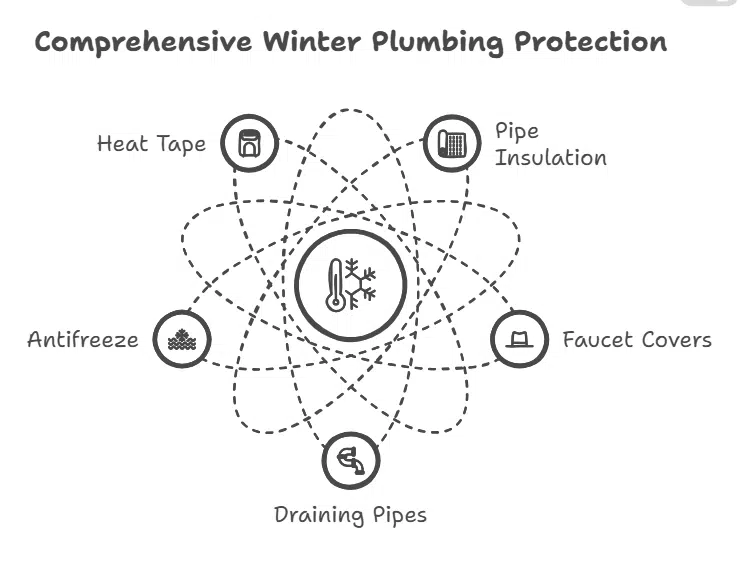
Old homes with cracked plumbing are easy targets too. Even one drafty spot can freeze your water lines solid as a rock overnight! Insulating pipes with foam sleeves or slip-on covers works like giving your house a warm jacket.
Outdoor faucets like hose bibs need their own hats—simple insulating covers keep them from freezing up tight. If you leave for the winter, draining every drop out helps stop ice from forming deep inside lines or pumps.
Some folks add antifreeze to pipes if their houses stay empty all season—a smart move for cabins in snowy places! Heat tape on problem spots acts like an electric blanket for cold weather plumbing.
Winterizing helps stop leaks; it saves money and prevents trouble later, keeping those toes dry even during icy snaps.
12 Steps to Avoid Freezing Pipes
Freezing pipes can cause a lot of trouble in winter. Here are 12 steps to keep them safe.
- Turn off valves to the outside water supply. This stops water from freezing inside.
- Pull garden hoses off their bibs. Water won’t get trapped and freeze.
- Drain water lines well. Use a compressor for a thorough job.
- Look for cracks in old plumbing. Fix them up and wrap outside pipes with insulation.
- Slip-on foam or wrap pipes with sleeves. Make sure no part is left uncovered.
- Put insulating covers on outdoor faucets and hose bibs.
- Check your space heaters and pumps. Make sure they work right for the cold months.
- Think about using antifreeze in house pipes, but do it safely.
- If your house will be empty, follow special steps to keep the plumbing okay without heat.
- Wrap pipes with heat tape where it gets very cold.
- Keep cabinet doors under sinks open sometimes, so warm air can reach the pipes.
- Let a drip of water run from faucets overnight when it’s super cold, just to make sure water keeps moving.
These steps help avoid freezing pipes during winter’s chilliest days!
Tips for Inspecting and Maintaining Your Plumbing During Winter
Winter is tough on plumbing. Inspecting and maintaining your system helps avoid surprises.
- Look for leaks in all exposed pipes, especially where they run through cold areas.
- Check insulation on outdoor pipes. Add more if it’s thin or missing.
- Test outdoor faucets for drips. Fix them right away to prevent freezing.
- Open cabinet doors under sinks on very cold nights to let warm air circulate around pipes.
- Use a flashlight to inspect joints and pipes in the basement and attic for cracks or leaks.
- Feel pipes for cold spots. This could mean you need more insulation there.
- Drain water lines leading to outside faucets before the first freeze hits.
- If you have a sump pump, make sure it’s working well before winter starts.
- Flush your water heater to remove sediment that makes it less efficient.
- Check hoses connected to washing machines and dishwashers for wear and replace them if needed.
- Have a professional check your plumbing system if your house will be empty during winter.
Takeaways
In conclusion, it’s crucial to take care of your plumbing in winter to prevent freezing pipes and potential damage. The 12 steps provided are practical and easy to implement, ensuring the effectiveness of your efforts.
By following these strategies, you can avoid common problems associated with cold weather and protect your plumbing system. Keep in mind to insulate exterior pipes, cover outdoor faucets, and use antifreeze where necessary.
Moreover, regularly checking for leaks and maintaining heat trace tape will help keep your plumbing functional during winter. For more information or guidance on winterizing your home’s plumbing system, seek professional services or explore further reading materials available online.
Taking action now will not only save you money but also spare the hassle of dealing with frozen pipes later on.