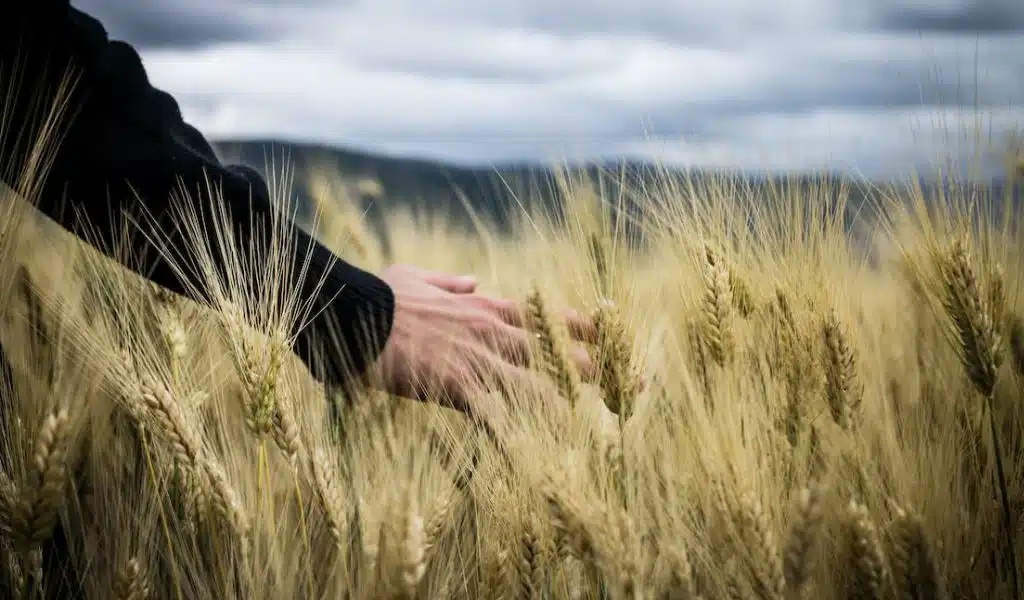
According to a recent study, extreme heat waves and drought brought on by climate change have the ability to shock the world’s food supply and drive up prices.
The study, which was released on Friday in the journal npj Climate and Atmospheric Science, evaluates a worst-case scenario in which severe weather strikes two breadbasket regions in the same year, devastating winter wheat crops in both the Midwest of the United States and Northeastern China.
Winter wheat is sown in the fall, let to dormant during the harsh winter, and then harvested in the early summer. According to the study, it is growing increasingly likely that wheat crops will be subjected to extreme weather circumstances that exceed their physiological tolerances. In today’s climate, it is feasible for severe weather to hit numerous places simultaneously, which might put a frightening amount of strain on the world’s food supply.
The study’s lead author, Erin Coughlan de Perez, a climate scientist and assistant professor at Tufts University, explained that the goal of the study was to inform policymakers and emergency responders of the extent to which a vital crop is in danger so that they can make the necessary preparations for a crisis.
Coughlan de Perez stated, “We’re suffering from a lack of vision in terms of what this may look like. “We could take action to prevent them and build a more resilient system, which is the whole point of imagining these serious consequences,” the author said.
Already, global food supply is being hampered by climate change. For instance, starting in 2020, the Horn of Africa had several years of drought that wiped out crops and killed cattle. More than 4 million people required humanitarian aid as a result of the drought, which the World Weather Attribution Network said was caused by climate change.
This year, late rain in Henan, China’s largest wheat-growing region, is making it more difficult to harvest grain that has already been harmed by wet weather, according to Reuters.
The results of the current study by Coughlan de Perez and her colleagues were compared to the known physiological tolerances of the winter wheat cultivated in the Midwest and Northeastern China.
High spring temperatures can hinder wheat growth and lead to the breakdown of essential plant enzymes.
According to the climate models, heat waves that were predicted to hit the Midwest just once every 100 years in 1981 are now more likely to occur every six years. A 1-in-100-year heat wave is currently anticipated to occur in Northeastern China every 16 years.
Crop failures could result from such intense heat.
According to Coughlan de Perez, “physiologically, this can be devastating for wheat crops if we get heat waves that are unprecedented and bigger than things that we’ve seen in the past.” She continued by saying that temperatures as high or harmful as those predicted by climate models have never been experienced in these two important agricultural regions.
“Locations that haven’t recently been through a major disaster or extreme event are probably not preparing for one,” she said.
Risks to vital crops are increasing as the world warms, according to Weston Anderson, an assistant research scientist at the University of Maryland and NASA who focuses in climate implications on food security.
The new study provides “a solid and sound way to evaluate threats to our food system that are outside the range of the historical record,” according to Anderson, who was not involved in the research.
Coughlan de Perez said it’s plausible that such events may occur in the same year, despite the fact that the climate models employed in the research did not discover a clear correlation between heat wave patterns in the Midwest and Northeastern China.
As a result, the supply of wheat would collapse, and prices would soar. In 2022, China produced around 17% of the wheat consumed worldwide. According to the Department of Agriculture, the U.S. produced around 6%, with the Midwest accounting for the majority.
Wheat imports are essential for many nations’ nutritional needs. The Russian invasion of Ukraine at the beginning of last year, which halted wheat exports from both nations, served as a particularly stark reminder of this reality. They were in charge of one-third of the world’s wheat exports together. Fears of impending hunger and starvation spread as prices skyrocketed in several African and Middle Eastern nations that depend on such wheat supply. However, the worst effects of the wheat crisis were avoided when the warring nations achieved a settlement that permits Ukraine to export grain.
The recent study is by no means the first to issue a warning about the dangers of climate change on our food supply. The danger of hunger is expected to rise over time, according to the most recent U.N. Intergovernmental Panel on Climate Change synthesis of climate consequences, its sixth such study. According to the paper, the diverse effects of climate change could hinder the production of staple commodities including rice, wheat, soybeans, and corn and increase the likelihood of simultaneous crop failures.
According to Anderson, other recent research indicate that certain levels of global warming might actually enhance total global wheat yields. That’s because rising carbon dioxide levels may increase photosynthesis and productivity, and climate change may alter the places in which wheat may be cultivated. But the same research also imply that bust years are growing more likely.
Some growers’ attempts to enhance wheat breeding, according to additional studies, may not keep up with how quickly the environment is warming.
Even for these crops, where we anticipate average yields to be rising, Anderson said, “we should be considering these types of threats and the possibility that extreme climate events are leading to more frequent shocks on a global scale.”