In a world dominated by fast fashion and ever-changing trends, the concept of a capsule wardrobe stands as an elegant anti-trend. It’s a movement that challenges the relentless cycle of consumption and promotes a minimalist approach to personal style. This simple, sustainable fashion idea is not only a powerful concept, also saves time and money. Moreover, helps reduce the environmental impact of fast fashion.
It rejects the constant churn of newness and instead opts for a curated, timeless, versatile selection of garments. It’s not about piling up more clothes; it’s about owning fewer, better pieces. The result? Less time wasted deciding what to wear, fewer dollars spent chasing fleeting looks, and a smaller environmental footprint. Let’s explore why the capsule wardrobe truly saves time, money, and the planet — and how you can adopt it for yourself.
What Is A Capsule Wardrobe?
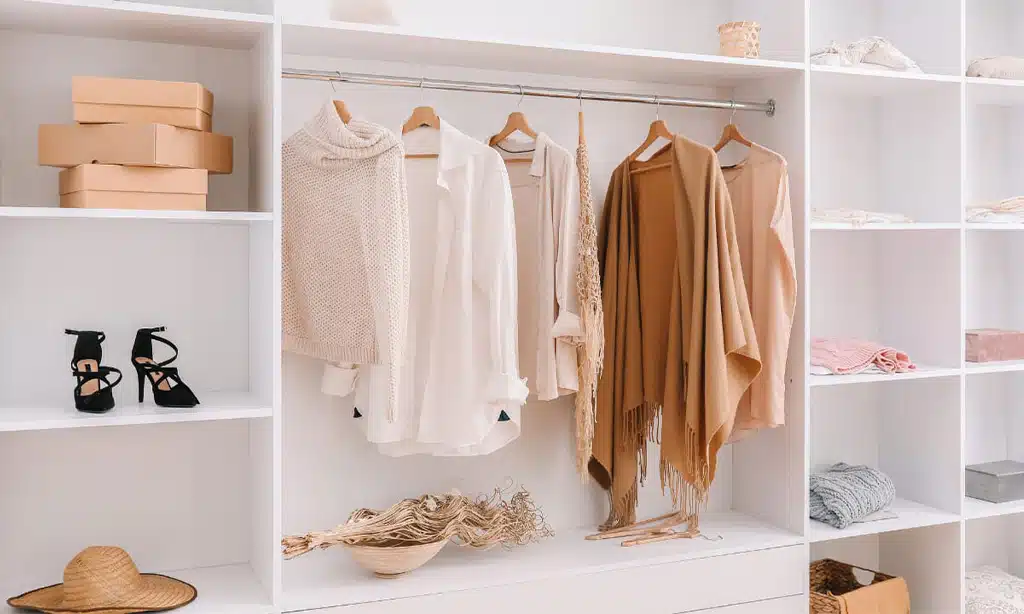
A capsule wardrobe is a deliberately limited collection of clothing items that are versatile, timeless, and mix‑and‑match friendly. Instead of accumulating dozens or hundreds of pieces driven by every new trend, you select a finite number (often 20‑40) of high‑utility garments that work together.
The term has roots going back decades: in the United States, as early as the 1940s, the term “capsule wardrobe” described a small collection of garments designed to “go together”.
In a more contemporary form, the concept emphasises quality over quantity, interchangeability, neutral colour palettes, and long‑term use rather than seasonal disposal.
Origins And Evolution Of The Concept
The phrase “capsule wardrobe” was revived in the 1970s by London boutique owner Susie Faux, who promoted the idea that a few essential items could form the backbone of a woman’s wardrobe, augmented with seasonal pieces.
Later, American designer Donna Karan popularised the idea in the 1980s with her “7 Easy Pieces” concept.
Today, amidst heightened awareness of environmental and economic pressures, the capsule wardrobe has grown not just as a styling choice but as a sustainable lifestyle marker.
Why It’s Called An “Anti‑Trend”
Calling the capsule wardrobe an “anti‑trend” is no accident. Trends are defined by novelty and planned obsolescence: new fabrics, new colours, new silhouettes each season. A capsule wardrobe pushes back against that by privileging timelessness, utility, and reuse. In doing so, it positions itself not as “what’s next” but “what will still work six months, one year, five years from now”.
Because of this, the capsule wardrobe stands out in a market saturated with fast fashion, disposable styles, and “wear once” looks — thereby fulfilling the “anti‑trend” label.
How The Capsule Wardrobe Saves Time
One of the immediate and tangible benefits of adopting a capsule wardrobe is the time saved. Time is a non‑renewable resource, and reducing decision‑making overhead around clothing can free that up.
Streamlined Mornings And Outfit Decisions
When you own a large, cluttered wardrobe, each morning can become a decision minefield: what colour goes with what, which new piece hasn’t been worn, and whether you’re still keeping something “in case”. The capsule wardrobe simplifies that drastically because each item has been selected to coordinate with others.
Research shows that people using a capsule wardrobe reported feeling less stressed, more detached from fashion‑trend pressure, and happier with their style decisions.
A blog on the subject reports that “everything in a capsule wardrobe works together … you can get up in the morning and spend very little time thinking about what to wear.”
Reduced Decision Fatigue
Decision fatigue is a real cognitive drain — the more choices you make, the less sharp your decision‑making becomes. By reducing the number of clothing decisions you face (what to wear, what to buy, what to discard), the capsule wardrobe frees mental energy for more meaningful tasks.
For busy professionals, parents, creatives, and many others playing multiple roles, this benefit alone can justify the shift.
Less Time Spent Shopping, Sorting, and Maintaining
When your wardrobe is curated, you shop less, discard less, rotate less, and maintain it more efficiently. Fewer impulse purchases, fewer items that need washing, reshelving, or rewashing because “it hasn’t been worn yet”. A streamlined wardrobe means less time in closets, fewer returns, and fewer items languishing unused.
Estimates show massive wardrobe waste and unused items in typical closets; the capsule model addresses that head‑on.
In short: less time managing clothes; more time living.
How The Capsule Wardrobe Saves Money
Time saved is one thing. But for many, the financial argument is equally compelling. The capsule wardrobe shifts spending from frequent trend‑chasing to deliberate investment.
Fewer Purchases, Longer Use
Rather than buying many inexpensive items that may fall apart or go out of fashion quickly, a capsule wardrobe encourages buying fewer pieces of higher quality. These items last longer, can be repaired, and maintain style relevance. Many sources point to reduced overall spend when this discipline is applied.
A piece from a sustainable fashion site describes it: “Rather than adding ad hoc pieces to your wardrobe … you instead choose pieces that all work together … you spend far less money on clothes you hardly or never wear.”
Given that many consumers wear only a fraction of their wardrobe (studies show only ~20% of items get regular wear), this shift makes sense.
Avoiding Impulse and Trend‑Driven Spending
Trends are expensive. They tempt us with the “new”, but they often offer little longevity. A capsule wardrobe rejects that, so you avoid impulse buys, “just‑because” purchases, and collections of garments that don’t coordinate with what you already own.
The result: less waste in your closet and less drain on your wallet. Occasionally, you invest in something good, but you wear it often — making the cost‑per‑wear much lower.
Cost Per Wear Improves
When you wear an item many times, its cost amortised over each wear becomes very small. By contrast, a cheap purchase you wear once is expensive in real terms. A high‑quality staple worn repeatedly has a far better cost‑per‑wear ratio. The economics of the wardrobe is often ignored but crucial when you treat fashion as utility plus expression rather than disposable consumption.
Financial Resilience During Economic Uncertainty
In times of economic volatility, adopting a capsule wardrobe can support financial resilience: you buy less often, allocate less budget to clothing, and maintain a stable set of garments rather than chasing whims. For both households and businesses (e.g., uniforms, stylised dress codes), this structure supports predictability and control.
How The Capsule Wardrobe Supports The Planet
This is where storytelling meets broader societal impact. The fashion industry is among the largest polluters, and over‑consumption of clothing contributes to excessive waste, energy use, water use, chemical pollution and landfill burden. A capsule wardrobe responds to that reality by design.
Reducing Waste And Resource Use
One major benefit: fewer garments purchased and fewer garments discarded. Sources cite that fashion waste is enormous — for example, big portions of textiles end up in landfills or are shipped overseas for disposal.
By wearing more of what you own and owning less, you reduce the demand for new production and the associated upstream environmental cost. A capsule playlist of items becomes a better ecological choice.
Aligning With Slow Fashion Principles
Slow fashion emphasises durability, ethical production, natural fibres, and timeless design. A capsule wardrobe fits naturally within that framework. A recent article noted key benefits of capsule wardrobes as aligning directly with the ethos of slow fashion: durability, quality, and mindful consumption.
By selecting garments that last and that you’ll enjoy for years, you support supply chains that aren’t about churn, but about craft.
Changing the Consumer Mindset
Perhaps the largest impact isn’t just in physical garments, but in shifting how people view consumption: from “more is better” to “better is better”. That shift matters. When consumers adopt capsule wardrobes, they become more intentional: what pieces to buy, how often to wear them, and when to replace them. A study found that participants adopting capsule wardrobes reported stronger awareness of ethical consumption and reduced trend‑driven stress.
The ripple effect: less waste, less over‑production, less strain on the planet.
Carbon Footprint, Water Use, Chemical Impact
While specific numbers vary, the overall fashion industry accounts for a substantial share of the world’s carbon emissions, as well as high water consumption (cotton production, textile dyeing) and chemical use. By reducing garment turnover, the capsule wardrobe model can contribute to lower cumulative environmental impact. It may not solve global fashion‑industry problems alone, but it represents a proactive step at the individual level.
How To Build Your Own Capsule Wardrobe
Now that we’ve explained what it is and why it matters, let’s get practical. Building a capsule wardrobe takes intention. Here’s a step‑by‑step approach.
Audit Your Current Wardrobe
Start by taking all your clothes out, reviewing them piece by piece, and sorting them into three piles: Keep, Donate/Sell, and Unsure. Evaluate each item on fit, frequency of wear, and whether it aligns with your personal style and lifestyle. Many capsule‑wardrobe guides suggest a baseline of 20‑40 items (plus accessories & shoes) depending on your needs.
Note duplicates, unworn pieces, and clothes that hang because they “might come back” but haven’t. Decluttering is as much mental as physical. One study found that decluttering and minimal wardrobe practice lead to reduced stress and greater clarity.
Define Your Style, Colour Palette, and Lifestyle Needs
A capsule wardrobe isn’t one‑size‑fits‑all. Think about your day‑to‑day life: work, travel, weather, events, hobbies. Choose a neutral base palette (navy, black, white, grey, beige) plus 1‑2 accent colours. This ensures high interoperability of garments.
Ask: What items do I wear most? What items make me feel confident? What items do I not wear because they don’t fit or coordinate? Use these insights to define what your future wardrobe must contain.
Choose Versatile, High‑Quality Pieces
Select garments that can be mixed and matched, layered, and adapted across occasions. Some typical staples include: a well‑fitting blazer, a classic white shirt, tailored trousers or jeans, a little black dress (for those who wear dresses), a neutral cardigan, a versatile coat, and quality shoes.
Prioritise materials and construction: natural fibres, durable seams, timeless cuts. These will last longer, keep shape, and maintain relevance.
Limit Your Item Count And Adopt Rules
Many capsule‑wardrobe advocates recommend limiting your collection to 30‑40 pieces (clothing only) for a given season. Some go even smaller (20‑30) to sharpen discipline.
Consider adopting a rule like “One In, One Out” if you still buy something new: remove an existing item so your total stays constant. This supports the minimal‑consumption mindset.
Rotate Seasonally And Refresh Thoughtfully
A capsule wardrobe isn’t static. You may rotate items with the seasons, or adapt when your life changes (job change, climate change, style evolution). But the key is to curate rather than accumulate. A seasonal review can help you keep only what still works and keep your capsule relevant.
When you refresh, avoid chasing trends. Instead, ask: Does this item integrate into my existing palette and serve multiple outfits?
Maintain Awareness & Mindful Shopping
Adopt conscious consumption habits. Before buying, ask: Do I need this? Do I already have something similar? Will it coordinate with what I own? How many times will I wear it?
Because the capsule wardrobe model rests on durability, coordinate your purchases with quality, repairability, and meaningful use. Over time, this builds financial and environmental resilience.
Overcoming Challenges And Misconceptions
No strategy is flawless. The capsule wardrobe has great benefits — but there are also hurdles and misunderstandings we need to address. For example:
“I’ll Get Bored With Fewer Clothes”
One common objection: “Won’t having fewer pieces feel limiting or boring?” The counter is: if you pick versatile, high‑quality pieces with some accent items, you can combine them in many ways. In fact, limitation can breed creativity.
Also, you can incorporate patterns, colour accents, accessories, and layering to keep interest alive. The point is not sterility but purposeful simplicity.
“My Lifestyle Isn’t Standard”
If your life involves many formal events, travel, changing climate zones or a highly variable wardrobe need, then a capsule wardrobe may require more nuance. The key is to customise. Your capsule may be slightly larger or include more sub‑capsules (travel, formal, casual) — but the principles of curation, quality, and versatility still hold.
Claiming it only works for “office workers in neutral tones” misses the point. It’s about building a wardrobe for your life — whatever that is.
Myth: Capsule Wardrobe Is Only For Minimalists / Expensive Brands
No, you don’t need designer labels or an ultra-minimal lifestyle to adopt a capsule wardrobe. The principle works across budgets: buy fewer pieces, choose items you’ll wear often, and avoid impulse buys. Over time, you upgrade if you wish. But you can start with what you own.
Furthermore, a research study found that participants using capsule wardrobes felt less trend‑driven and more aligned with their personal style — this applies regardless of budget.
Seasonality And Weather Changes
Yes — climates change, seasons change, styles evolve. That means your capsule needs to accommodate layering or have seasonal sub‑sets. But it doesn’t mean discarding the entire philosophy. A well‑planned capsule includes transitional pieces and/or seasonal check‑ins. One guide notes that you can build a capsule that integrates with previous collections over seasons.
The Market Angles And Greenwashing
Finally, a caution: some brands promote “capsule wardrobe” collections as marketing hooks — yet still operate fast‑fashion models or encourage frequent purchase. The capsule wardrobe is a mindset, not just a label on a catalogue. Consumers must remain critical: Does this item genuinely fit the capsule principle? Is this about more consumption disguised as minimalism?
A Vogue article asked whether we’re at “peak basics” and warned of the saturation of “capsule‑type” offerings that may undermine the sustainability goal.
Vogue
Real‑World Impact: Time, Money, and Planet In Practice
Theory is one thing; what about actual outcomes? Here’s what research and real life suggest.
Time And Psychological Gains
A study of consumers adopting a capsule wardrobe found they reported: reduced stress, less obsession with trend‑following, enhanced joy in their everyday style, and improved self‑awareness about consumption.
Another source notes that simplifying a wardrobe reduces decision fatigue, leads to faster outfit choices, and more confidence.
So the benefit is not just practical but psychological: more clarity, less clutter, both mental and physical.
Financial Outcomes
While hard data from large cohorts is less abundant, the frameworks suggest meaningful savings: buy fewer items, wear them more. The “cost‑per‑wear” metric improves, and impulse purchases drop. For households tracking their spending, this means redirecting fashion budget to other priorities, or upgrading quality rather than quantity.
One market report noted the “capsule wardrobe market” (defined broadly) was valued at USD 3.1 billion in 2023 and projected to reach USD 7.8 billion by 2031, with growth driven by sustainability and mindful consumption.
Verified Market Research
Environmental Outcomes
At an individual scale, the reduction in clothing turnover, disposal, and impulsive buys contributed by capsule wardrobes adds up. One source estimates that consumers discard large amounts of clothing annually — by reducing that discard rate and increasing wear frequency, the environmental footprint shrinks.
For instance, by owning fewer items that remain in circulation longer, manufacturers can reduce demand, production pressures lessen, and landfill burdens are reduced. It’s not a panacea for the fashion industry, but a responsible step.
Broader Cultural Shift
Beyond the individual, the rise of capsule wardrobe thinking sends signals to the fashion industry: that large‑scale trend‑chasing and rapid turnover are less appealing to a growing segment of consumers. This may encourage brands to produce fewer, better‑made garments, prioritise durability, repairability, and timeless design. The market forces align with sustainability when consumer behaviour changes.
Is A Capsule Wardrobe For Everyone?
Let’s pressure‑test whether this concept has universal applicability, or whether there are blind spots.
When It Works Best
Individuals with predictable daily routines (office, commute, errands) find it easiest to build a capsule because their garment needs are stable.
Those motivated by sustainability, cost‑control, or simplifying lifestyle will extract more value.
People are comfortable with reducing choice and embracing higher‑quality pieces rather than frequent buys.
Potential Blind Spots
People whose wardrobes need to cover highly diverse functions (e.g., performers, actors, models, extreme climates) may find a capsule less suited or may need multiple capsules (formal, casual, travel).
Those who derive significant identity or joy from constant variety, colour‑chasing, or trend participation may find fewer pieces feel limiting rather than freeing.
The upfront cost of higher‑quality pieces can be a barrier for low‑income households; the savings accrue over time rather than immediately.
Cultural or social contexts where clothing is used for signalling status (e.g., in some societies) may make a minimalist capsule less socially comfortable.
Strategic Adaptation
If you fall into one of those blind‑spot categories, you don’t have to abandon the capsule idea — adapt it. For example:
- Build a core capsule for 80 % of your clothes (daily life) and a flex extension of 10‑15 extra items for special occasions.
- Allocate your budget gradually: start with essential staples, then add one “fun” piece each season if needed.
- Define your capsule not by a strict count but by a guiding principle: “every item must serve X purposes and coordinate with at least Y others”.
- Align the capsule with your context: a creative professional in a flamboyant field might build a “colour‑accent capsule” rather than all neutrals; the principle remains.
The Future of Fashion Through The Capsule Lens
What does the wider industry perspective say about this anti‑trend? Let’s zoom out.
Market Growth And Consumer Signals
As noted earlier, the capsule wardrobe market (a proxy for the mindset) is projected to grow significantly. Search interest for “capsule wardrobe” has surged, per fashion‑industry reporting, indicating consumer hunger for simplicity over frenzy.
This suggests the anti‑trend is gaining traction, not just as a niche but as a sizeable behaviour shift.
Brand Response And Supply‑Chain Impacts
Many brands are launching curated sets, wardrobe “kits”, and limited collections built around versatility and mix‑and‑match synergy. For example, some brands reported that capsule‑style bundles increased conversion rates and average order values.
From a supply‑chain standpoint, this demand could encourage:
- longer‑life garments
- repair/alter services
- rental or resale models
- fewer seasonal collections and more timeless offerings
Environmental And Social Stakes
The fashion industry cannot continue business‑as‑usual amidst climate, resource, and labour pressures. The capsule wardrobe model aligns with a more sustainable paradigm by lowering demand, emphasising quality, and extending garment life.
If widely adopted, such behaviour could meaningfully shift fashion’s environmental footprint—though it will require both individual action and systemic change (production, regulation, recycling infrastructure).
Could It Become Over‑Commercialised?
The risk: the capsule wardrobe becomes a marketing term stripped of its deeper meaning. As more brands adopt “capsule” language but maintain fast‑fashion logic (low quality, quick turnover), the term risks dilution. As the Vogue piece asked: have we reached “peak basics”?
Consumers must remain discerning: the core value of the capsule wardrobe is not just “fewer items” but “less, better items”.
Final Words: A Trend That’s Here to Stay
The capsule wardrobe stands as a compelling antidote to the frenetic pace of fast fashion, trend cycles, and mindless consumption. Its value lies in three core areas: saving time by eliminating wardrobe overload and decision fatigue; saving money by shifting spending from frequent buys to smart investment; and saving the planet by reducing resource use, waste, and consumer churn.