Have you ever worked with someone who would throw you under the bus just to save their own skin? We’ve all seen it, whether it’s in a high-stakes corporate meeting or just a messy group project. It’s frustrating, isn’t it? When the pressure mounts, some people retreat into a shell of self-preservation that ultimately hurts everyone.
In Netflix’s hit show Alice in Borderland, the character Shibuki creates a perfect storm of this behavior. Portrayed by the talented Ayame Misaki, she manipulates her way through the deadly games, sparking intense reactions, leaving many fans asking, “Why Nobody Liked Shibuki.” Her strategy was simple: look out for number one, no matter who gets hurt.
Let’s find out the answer to why nobody liked Shibuki and why her approach failed, and what her story teaches us about loyalty, trust, and winning the long game.
The Psychology Behind Shibuki’s Selfish Strategy
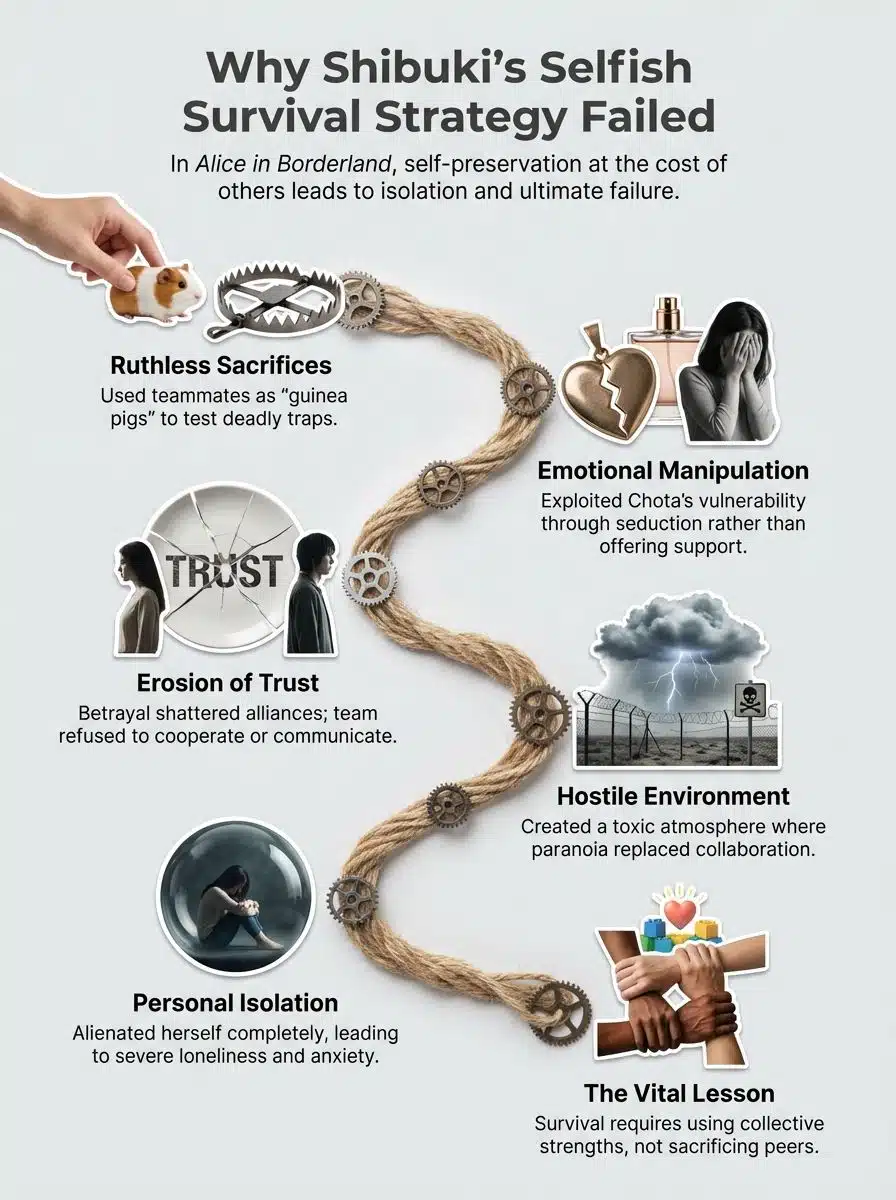
Shibuki operates on a “zero-sum” mindset: for her to win, someone else must lose. While this might seem logical in a life-or-death scenario, it creates a toxic environment that destroys any chance of cooperative success.
The “Seven of Hearts” Dynamic
The flaw in her strategy becomes obvious during the brutal “Seven of Hearts” game in the Shinjuku Botanical Garden. The rules were simple but cruel: players were assigned roles of “Wolf” or “Sheep.” Only the Wolf survives the exploding collars.
- The Mechanic: The Wolf role transfers through eye contact.
- The Trap: It forces players to hunt each other to survive.
- Shibuki’s Move: Instead of seeking a collective solution, she immediately focuses on manipulating the weakest link, Chota.
By preying on Chota, she secured short-term safety but alienated the group. In business and life, this is like the colleague who steals credit for a team win. They might get the promotion today, but they burn the bridge for every opportunity tomorrow.
Weaponizing Weakness: The Manipulation of Chota
Shibuki’s most controversial tactic was her emotional and sexual manipulation of Chota. She identified his deep-seated inferiority complex, stemming from a background involving a controlling cult, and used it to her advantage.
She didn’t just ask for help; she manufactured a scenario where Chota felt he owed her his life. A subtle touch, a manufactured tear, and the phrase “You can trust me” were calculated moves to turn him into a loyal pawn.
“People are puppets if you pull the right strings.” , This old theater adage perfectly describes her approach. She saw Chota not as a teammate, but as a tool.
This aggressive emotional exploitation is why viewers reacted so viscerally. It wasn’t just survival; it was predatory. In the workplace, this mirrors leaders who exploit their team’s insecurities to drive performance, a strategy that invariably leads to burnout and resentment.
Why Fans Turned on Shibuki: The Viewer Verdict
If you check discussions on Reddit or Twitter, the sentiment is clear: Shibuki is one of the most disliked characters in the series. But why does she trigger more hate than the actual villains?

The Betrayal of Social Contracts
Viewers can forgive a villain who is openly evil. We struggle to forgive someone who feigns friendship while holding a knife. Shibuki broke the “social contract” of the group. Arisu and his friends welcomed her, and she repaid that hospitality with immediate betrayal.
Specific Viewer Complaints:
- The Sexual Manipulation: Many fans found her seduction of Chota uncomfortable and non-consensual in nature, given his vulnerable mental state.
- Lack of remorse: Unlike other characters who struggle with the morality of the games, Netflix’s Shibuki appeared cold and calculating until the very end.
- Wasted potential: Fans of the original manga often point out that her character was stripped of the nuance that made her sympathetic in the source material.
Manga vs. Netflix: A Tale of Two Shibukis
The transition from page to screen changed Shibuki’s character arc significantly. In the original manga by Haro Aso, she is a tragic figure. In the Netflix adaptation, she becomes a cautionary tale of selfishness.
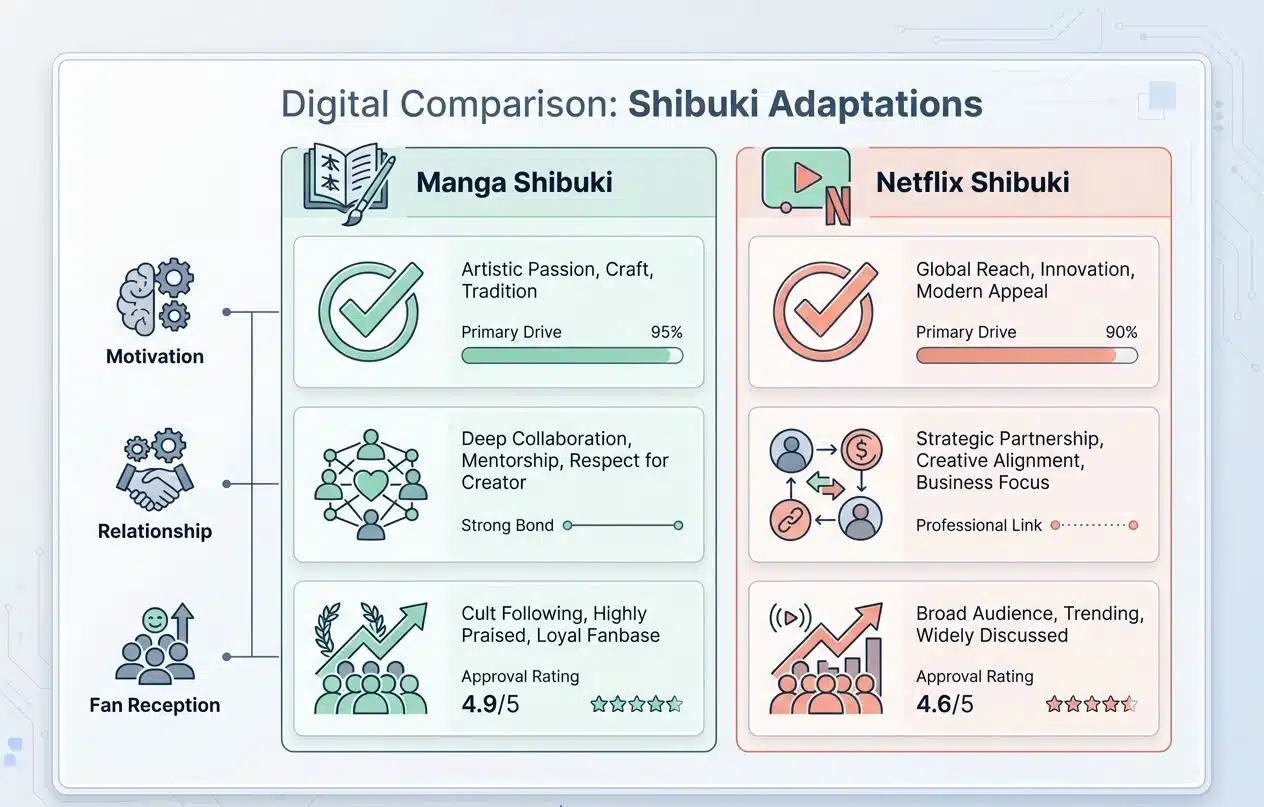
Here is a breakdown of the key differences that shaped viewer perception:
| Feature | Manga Shibuki | Netflix Live-Action Shibuki |
|---|---|---|
| Backstory | Enters the Borderland via the “Poison Gas Train” game, surviving alone. | Appears early and integrates with Arisu’s group before the games escalate. |
| Relationship with Chota | Uses sex for mutual comfort and to regain a sense of control; shows genuine guilt. | Uses sex purely as a transaction to secure a protector; actions feel predatory. |
| The Final Choice | Voluntarily sacrifices herself after hearing the friends’ bond, choosing to die. | Has to be physically restrained by Chota to prevent her from betraying the group again. |
| Viewer Empathy | High, seen as a flawed human doing her best. | Low is seen as an antagonist who rejects redemption. |
This shift effectively removed her redemption arc. By making her fight until the bitter end in the show, the writers emphasized the futility of her selfish worldview.
Ranking Survival Strategies: How Shibuki Stacks Up

To understand why her strategy failed, it helps to compare her with other iconic survivors in the genre. Successful survivors usually balance self-interest with alliance building.
| Character | Core Strategy | Impact on Group | Sustainability |
|---|---|---|---|
| Shibuki (Alice in Borderland) | Parasitic: Uses others as shields and discards them. | Destroys trust; creates enemies within the team. | Low. Works once, but fails as soon as the reputation spreads. |
| Arisu (Alice in Borderland) | Cooperative: Uses logic to find “win-win” solutions. | Inspires loyalty; people want to help him survive. | High. Builds a network of allies who protect him in return. |
| Katniss Everdeen (Hunger Games) | Symbolic Leader: Protects the weak to gain public support. | Unites disparate groups against a common enemy. | High. Her reputation becomes her shield. |
| Sae-byeok (Squid Game) | Defensive/Cautious: Trusts no one but rarely harms the innocent. | Neutral; gains respect for competence but lacks deep allies initially. | Medium. Survival depends entirely on individual skill. |
Lessons Learned from Shibuki’s Approach
Shibuki teaches us that self-focus in tough times is a trap. Readers who want a deeper look at teamwork and trust will find plenty to chew on next.
The Power of Psychological Safety
People need to cooperate if they want to make it out of tough situations. Google’s famous “Project Aristotle” studied hundreds of teams to find the secret to success. Their number one finding? Psychological Safety. This is the belief that you won’t be punished or humiliated for speaking up or making a mistake.
Shibuki created the exact opposite environment. Her presence increased fear and decreased information sharing. In a survival situation, two brains are better than one, but only if they are working together. By silencing others through manipulation, she cut herself off from the group’s collective intelligence.
Dangers of Self-Interest in Group Settings
After seeing how teamwork can save lives, it helps to spot the cracks when someone like Saori Shibuki puts herself first. Her selfish actions in the Seven of Hearts game tear trust apart. Trust leaks out fast, and team spirit sinks quicker than a stone tossed in water. People with strong self-interest sow division; gossip grows louder, and sides form overnight.
In my own group project last year, one member grabbed all the credit during our final report. The rest of us felt cut off and angry, just like Shibuki’s teammates did. Soon, we stopped sharing ideas, and collaboration froze along with our friendships. Selfishness poisons morale and leaves lasting damage behind, making isolation sting much worse than losing any game or grade ever could.
Final Words
Shibuki’s downfall wasn’t just bad luck; it was the inevitable result of a flawed strategy. In the “Seven of Hearts,” she proved that while you might be able to trick people for a moment, you cannot survive alone in the long run.
Real survival, whether in a dystopian Tokyo or a competitive market, requires trust. It requires the courage to be vulnerable and the wisdom to build allies rather than pawns. If you want to build a life (or a career) that lasts, focus on being the person others want to see win.
Don’t be a Shibuki. Build the bridge, don’t burn it.