
Many people wonder, “Why is it called Christina piercing?” This unique female genital piercing has a fascinating story and elegant charm. Yet, its name often leaves curious minds wanting more.
The Christina piercing, also known as the Venus or pubic mound piercing, got its name from a woman named Christina in the 1990s. While this decorative surface piercing does not bring physical pleasure, it boosts confidence and adds style to body art lovers.
In this blog, you will learn about its origin, meaning, jewelry options like curved barbells or surface bars, healing tips like saline solution use, and risks such as rejection or swelling.
Keep reading—you’ll discover all there is to know!
Key Takeaways
- The Christina piercing is named after a woman named Christina, the first known person to have it in the 1990s.
- This female genital surface piercing is placed on the pubic mound above the cleft of Venus.
- It became popular in the 1990s as body modification trends grew and is also called Venus or pubic mound piercing.
- Healing takes 2-4 months, helps confidence, but has risks like rejection or swelling due to its anatomy-dependent nature.
- Jewelry options include curved barbells or surface bars; aftercare involves saline cleaning and avoiding friction for proper healing.
The Origin of the Name Christina Piercing
The Christina piercing got its name from the first known person to wear it. This decorative piercing is placed on the pubic mound, just above the cleft of Venus.
Named after the first known recipient
This piercing got its name from a woman named Christina. She was the first known person to have it done. It’s a vertical surface piercing placed through the mons pubis, also called the cleft of Venus.
Many consider this style decorative rather than functional. Anatomy plays a big role in whether someone can get it. Not everyone’s body is ideal for this type of female genital piercing.
Historical context of the piercing
The Christina piercing became known during the 1990s. Adrienne Santos-Longhurst wrote about it, and Cynthia Cobb medically reviewed her work in 2020. This decorative piercing gained popularity within female genital piercings at that time.
Many women sought it for its unique placement on the mons pubis or cleft of Venus.
The procedure involves placing jewelry like curved barbells or surface bars above the clitoral hood. Its anatomy-dependent nature means not all vulvas are suited for this vertical surface piercing.
Healing time varies but is often delayed due to slow healing processes common with surface piercings.
Alternative Names for the Christina Piercing
Some people call it by other names tied to its location and look. These labels often highlight the piercing’s elegance or placement.
Venus piercing
The Venus piercing is an alternative name for the Christina piercing. It’s placed at the top of the cleft of Venus, where the outer labia meet near the mons pubis. This female genital piercing is a surface bar type and works best for anatomy-dependent candidates.
Jewelry like curved barbells or straight barbells is often used to decorate this area. Since it doesn’t penetrate deep tissue, risks like piercing migration and rejection are higher.
Healing time can also be delayed due to its location on the vertical surface. Proper aftercare with saline solution helps prevent infections and swelling during recovery.
Pubic mound piercing
A pubic mound piercing, also called a Christina piercing, sits at the top of the mons pubis. It is a surface piercing that does not pass through internal tissue. This decorative piercing uses curved barbells or metal l-bars as jewelry.
It is anatomy-dependent and may not suit everyone. Healing time can take longer since it’s a vertical surface piercing prone to rejection or migration. Implant-grade titanium or stainless steel reduces risks of allergic reactions like soreness or swelling.
Cultural Significance and Popularity
This piercing gained attention during the 1990s. It soon became a symbol of unique self-expression and bold style choices.
Rise in popularity in the 1990s
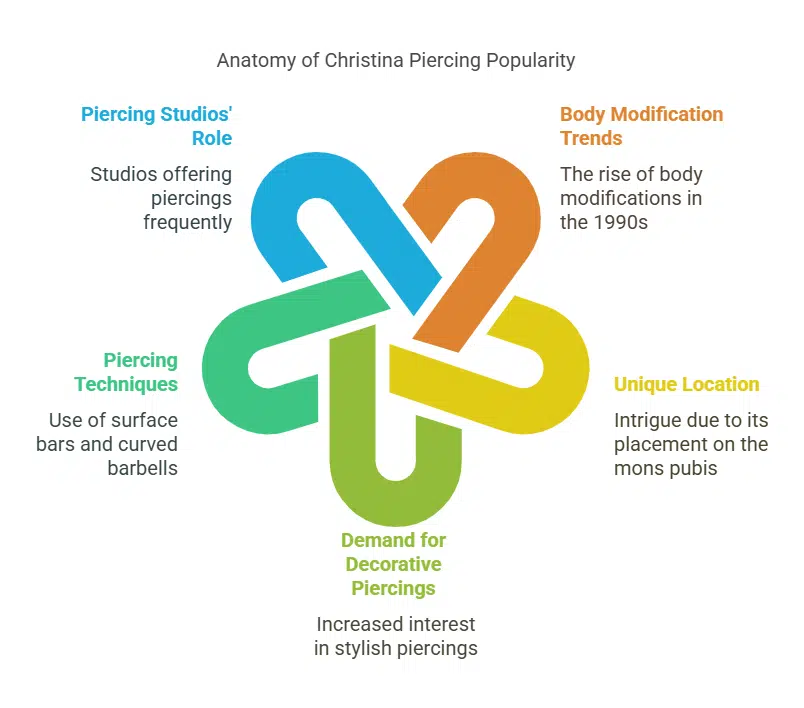
Christina piercings gained attention in the 1990s. During this time, body modification trends grew rapidly. The piercing’s unique location on the mons pubis intrigued many. It became a symbol of bold expression and individuality.
The increased demand for decorative piercings pushed its popularity further. Surface bars or curved barbells made it more appealing and stylish. Piercing studios began offering it frequently as interest soared among women exploring female genital piercings.
Perception in modern body modification culture
Body modification has become more normalized today. Female genital piercings, like the Christina piercing, reflect personal expression rather than taboo.
The 1990s saw a rise in decorative piercings, including pubic mound designs. Many see them as art or empowerment symbols, boosting body confidence and reducing anxiety about appearance.
Healing and Aftercare for Christina Piercing
Healing a Christina piercing takes time and care. Follow these tips to protect your piercing and help it heal.
- Clean the area with saline solution 2-3 times daily. This helps prevent infection and keeps it clean.
- Avoid sexual activity, oral sex, or swimming during healing. These can increase the risk of infection.
- Use loose clothing to reduce friction on the pubic mound area. Tight clothes can irritate the skin and slow healing.
- Protect the piercing from clothing with a sanitary pad or panty liner. This reduces rubbing and keeps the area dry.
- Choose jewelry made of implant-grade titanium or stainless steel to lessen metal allergies and rejection risks.
- Watch for signs like swelling, redness, pain, blisters, or pus discharge that may signal an infection.
- Healing typically takes 2-4 months but might need up to a year if delayed.
- The pain is usually mild—around 3-4 out of 10—but varies by person.
- Visit a professional piercing studio for consultation before starting this decorative piercing.
- Regularly check for issues like migration or scarring caused by surface bar movement at the mons pubis site.
Takeaways
The Christina piercing stands out for its unique history and name. It honors the woman who first brought attention to it in modern times. Known also as the Venus piercing, it highlights beauty and individuality.
Though not for everyone, it offers a bold way to embrace body art. Many find joy in its decorative appeal and personal meaning.
FAQs on Why Is It Called Christina Piercing?
1. Why is it called a Christina piercing?
The Christina piercing is named after the first person documented to have this type of female genital piercing. It passes through the cleft of Venus, which is located on the pubic mound.
2. Where is a Christina piercing placed?
This decorative piercing sits at the top of the mons pubis and extends vertically through surface skin near the labia majora.
3. What types of jewelry are used for a Christina piercing?
Common jewelry includes curved barbells, circular barbells, or metal l-bars made from implant-grade titanium or stainless steel to reduce risks like allergies to metals.
4. Is everyone suited for a Christina piercing?
No, it’s anatomy-dependent because not everyone’s clitoral hood or outer labia structure can support this vertical surface piercing without issues like rejection or migration.
5. How long does healing take for a Christina piercing?
Healing time can vary but often takes several months due to its location on sensitive tissue. Proper aftercare with saline solution helps prevent swelling, infection, and scarring during the healing process.
6. Are there risks with getting a Christina piercing?
Yes, risks include delayed healing, swelling, migration, scarring, and even infections like hepatitis B and C if done in an unsanitary studio without proper consultation beforehand.