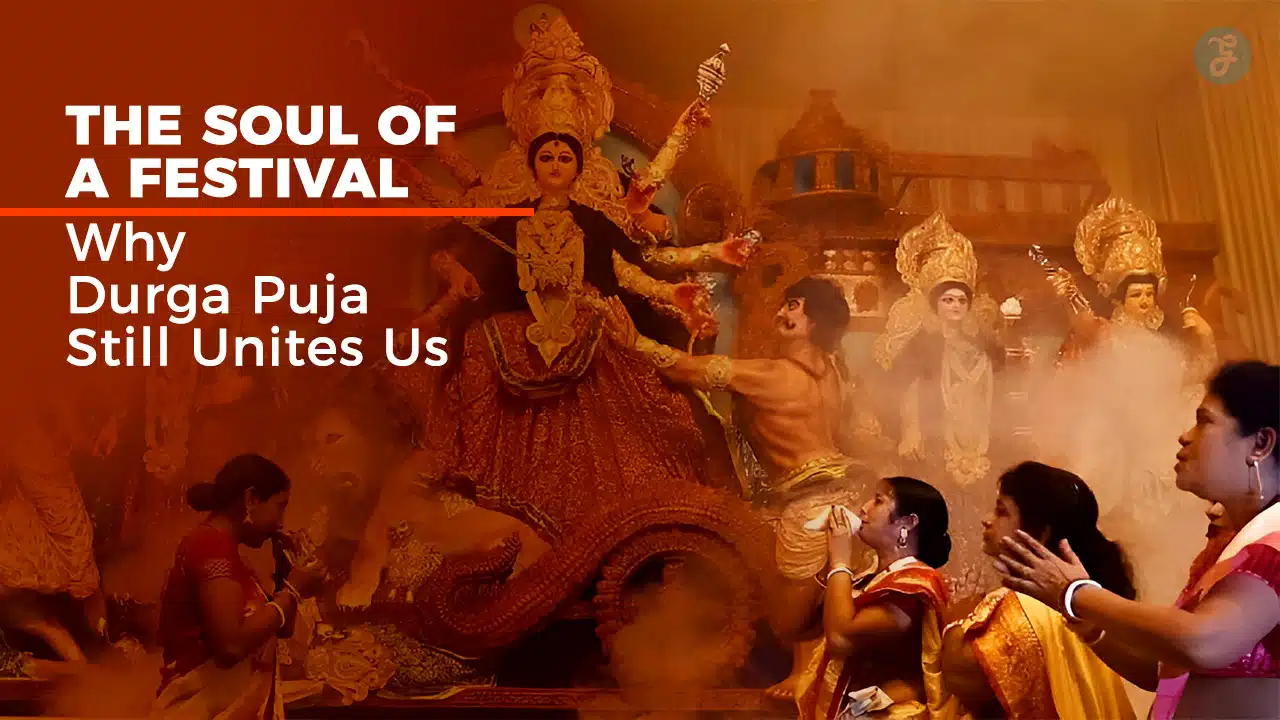
Festivals should root you, yet modern life pulls you in many directions. Work, studies, and travel shrink the time left for family or local customs. Many also live far from home, which can dim the joy of the season.
Durga Puja still cuts through that distance. In 2021, UNESCO named Durga Puja an Intangible Cultural Heritage of Humanity, a rare honor that reflects its living impact on Indian Bengalis and the wider Bengali diaspora.
This article explains why Durga Puja still unites us. You will see its cultural role, the art of Durga Puja pandals, and the energy of dhunuchi naach, an incense-bowl dance. It also outlines key worship practices, like sandhi puja and sindoor khela, and how Goddess Durga, the Hindu goddess of power, inspires hope each year. Read on to learn what keeps this festival strong today.
Key Takeaways
- UNESCO listed Durga Puja as Intangible Cultural Heritage in 2021, recognizing its significance for Indian Bengalis and the global Bengali diaspora.
- Kolkata hosted more than 3,000 Barowari, or community-run, pujas in 2022, and over 200 had budgets above one crore rupees.
- Rituals such as sindoor khela and dhunuchi naach connect families and local groups, from West Bengal to community halls in the U.S. and Japan.
- Spectacular art, including silver-covered pandals and towering statues, draws millions in cities like Cuttack and Kolkata during the festive season.
- Shared prayers, stories from texts like the Mahabharata, and guidance from priests called purohita build faith, joy, and resilience.
The Cultural Significance of Durga Puja
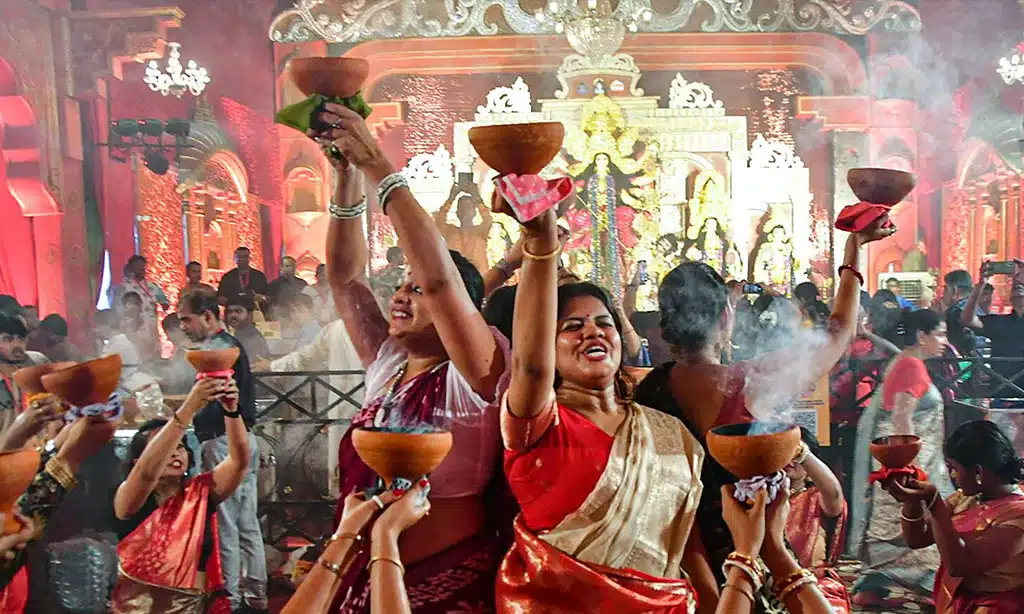
Durga Puja, centered on the goddess Durga, is a major festival across the Bengal region. It brings people together through music like chandi path, community meals, and ancient rites in shakta temples, which honor the divine feminine. Think of it as a yearly homecoming for culture and community.
A celebration of unity and togetherness
Community ties show up in numbers, and in stories you can feel. In 2022, Kolkata held more than 3,000 Barowari pujas, which are community-managed events. Over 200 of them crossed one crore rupees in budget, a sign of scale and shared effort. In Tripura, King Radha Kishore Manikya Bahadur encouraged such public celebrations at the Durgabari temple in Agartala. By 2013, the state hosted more than 2,500 community events.
Gatherings continue worldwide. The first U.S. Durga Puja was held at Columbia University in 1970. Today, Kallol in New Jersey welcomes crowds of more than 4,000. These events show how a festival can hold a community together, even far from home. You see it in greetings, meals, and shared songs, small acts that build trust and friendship.
The role of traditions in fostering community bonds
Family visits rise during Durga Puja. Married daughters often return to their parents’ homes. New clothes are bought, and gifts are exchanged, simple steps that renew relationships. Priests known as purohita recite the Devi Mahatmya, a sacred text about the great goddess, and lead sandhi puja, a special twilight ritual that marks a turning point between two days.
Daily practices include pushpanjali, a flower offering; bhog, sacred food shared as a meal; dhunuchi naach, an incense-bowl dance; and evening aarti, a circle of light and song. Large idol immersion processions can stretch for days in West Bengal, including in Siliguri, as people walk together through crowded streets. Practices vary by region and community. Some areas once had animal sacrifices, while many groups now choose symbolic offerings instead.
Radio also helps tie generations together. Since the 1950s, the Mahalaya broadcast of Mahishasuramardini, voiced by Birendra Krishna Bhadra, has signaled the start of the season. In Kolkata’s 2015 festival, one pandal displayed an 88-foot goddess Durga statue that drew more than a million visitors. From Cuttack to Balasore, silver-covered decorations shine with local pride. Overseas, groups like Kallol adapt the schedule to fit school and work, so the diaspora can still take part.
Artistic and Creative Expressions
Artists and craft workers bring stories of Maa Durga to life through murtis, which are sacred statues, and themed pandals, which are temporary temple-like structures. Many ideas come from the Markandeya Purana and the Devi-Bhagavata Purana, classic Hindu texts. Art turns lanes and parks into open-air galleries.
Across West Bengal and nearby states, pandals rise with fresh themes each year. In Cuttack, the Chandi Medha tradition uses real silver to decorate pandals. In 2019, artisans there adorned 97 pandals with silver. In 2015, one Kolkata pandal presented a striking 88-foot goddess Durga idol that amazed visitors and boosted neighborhood pride.
Idol making follows guidelines found in old manuals, such as the Vishvakarma Shashtra, and in puranas, which are ancient stories. Clay artists, often called kumors, shape the forms for months. Many pandals now use themes tied to folk culture or social issues, so art becomes a way to educate as well as inspire.
Ritual items also carry meaning. Navapatrika is a bundle of nine plants, tied together, that symbolizes nature and farming life. These symbols show the link between faith and the land, between prayer and daily work. After sindoor khela on vijaya dashami, farewell processions move toward rivers in places like Basirhat. People walk, sing, and drum together, a shared rhythm that says goodbye until next year.
The Emotional and Spiritual Connection
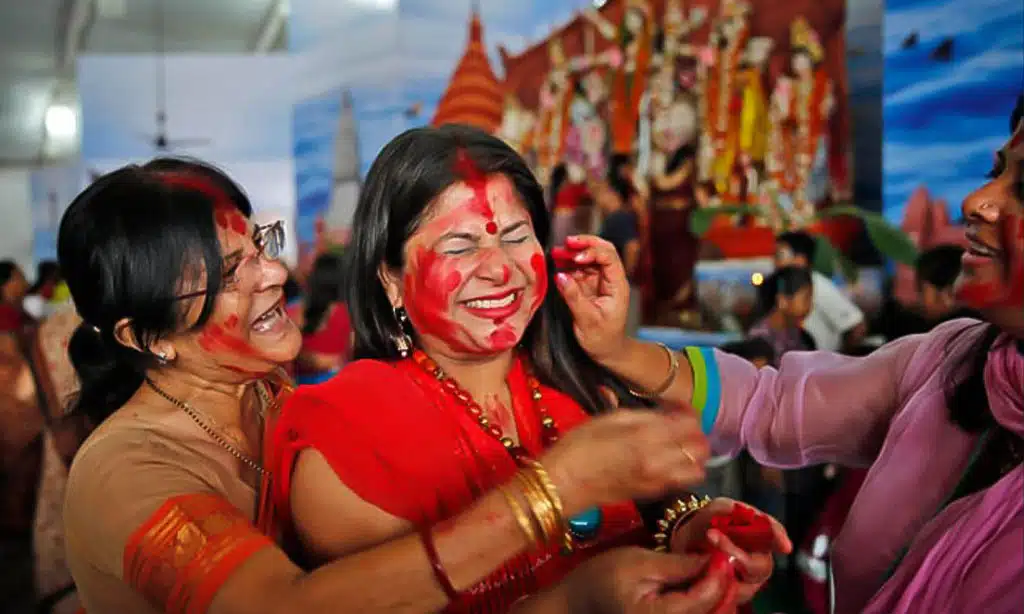
Durga Puja lifts spirits through story, sound, and shared action. A city block can feel like a single courtyard, bright with light and music.
How the festival inspires faith, resilience, and collective joy
At its heart, the festival honors the goddess of power and her victory over evil. You hear parts of the story in the Mahabharata and the Ramayana, two famous epics. The ritual of akal bodhana marks her special awakening at an unusual time. The story of Rama worshiping Devi Durga before facing Ravana teaches courage, planning, and steady devotion.
Idols show Durga with ten arms, holding many tools, riding a lion or tiger, and facing the demon Mahishasura. This image stands for strength joined with care. Streets glow with lights, while dhak drums set the pace. In that sound, people of every age find a place. Moments like Sandhi Puja and Sindoor Khela tie families and friends to shared memory. Diaspora members also report a strong pull, since the festival turns distance into connection.
Takeaways
Durga Puja continues to gather people in West Bengal and in distant cities, including the United States, Canada, and Japan. The mix of art, worship, and welcome makes space for everyone. Neighborhoods shine with pandals and music. Rituals such as dhunuchi naach and sandhi puja keep cultural heritage alive and easy to pass down.
If you join as a visitor or a volunteer, you help keep that circle strong. The story of goddess Durga reminds you that courage and care can stand together. Year after year, Durga Puja points to unity and resilience and gives a clear way to celebrate both.