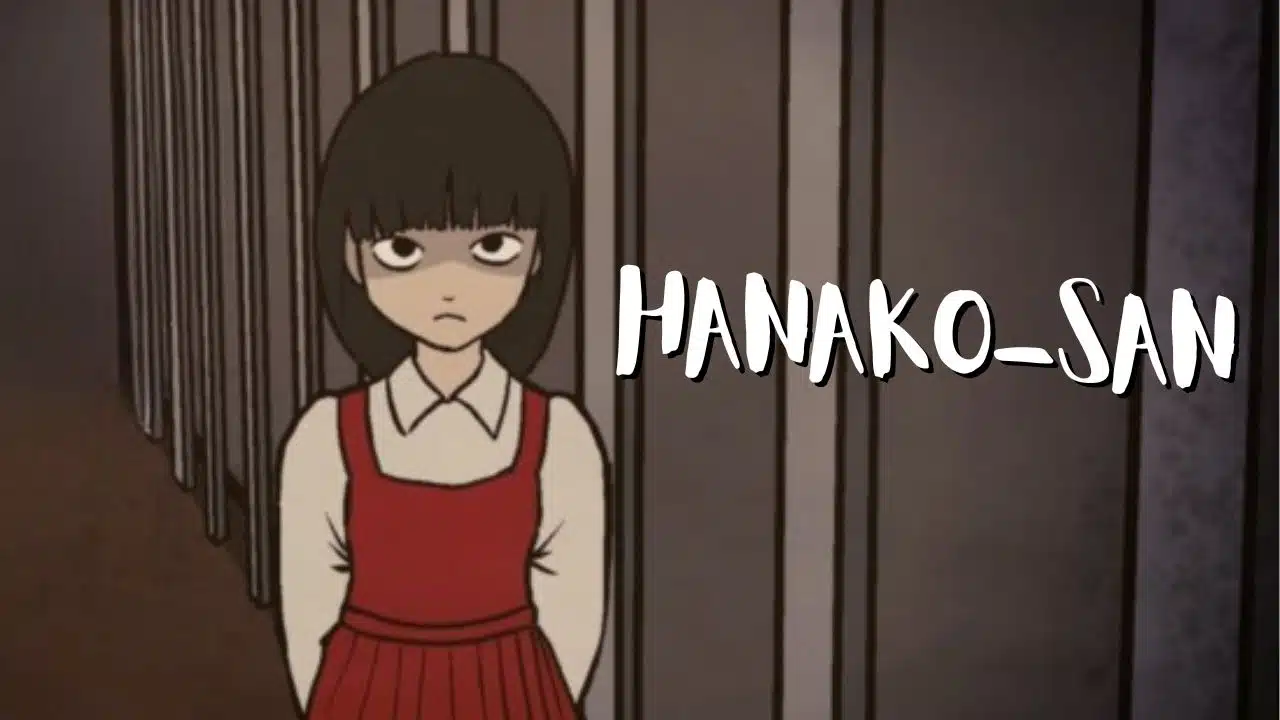
Have you heard a strange tale about a girl who haunts school bathrooms? Students in Japan still knock three times on the third stall door and ask, “who is hanako san”? This urban legend sparks both fear and curiosity.
Legend says a young girl died in a school toilet decades ago. We will trace her roots. We will share regional twists and show her impact on ghost stories, anime, and games. You will learn why she still fascinates kids and fans worldwide.
Find out more.
Key Takeaways
- Legends say a girl died during hide-and-seek when bombs hit her school after WWII. Kids still knock three times on the third stall and whisper, “Are you there, Hanako-san?” Folklorist Matthew Meyer links the tale to mid-20th century fears.
- Shiga legends say she drags callers to Hell, Osaka myths show her as a three-headed lizard, and Hiroshima tales tie her to WWII air raids. Tokyo links her to schoolyard murder, Nagano uses a local “hai” chant, and many towns test courage with the three-knock ritual.
- She jumped to pop culture in 1995’s Toire no Hanako-san as a kind spirit, a 1998 sequel as a vengeful ghost, and two 2013 films. The 2014 manga Toilet-Bound Hanako-kun by Aida Iro led to a 2020 anime, and Spirit Hunter: Death Mark II made her the first spirit. Yo-kai Watch renamed her “Toiletta,” and NPR writers Cecily Meza-Martinez and Gene Demby covered her in 2014.
- Her simple dare taps real school fears and honors Japanese rites about courage. Folklore scholar Michael Dylan Foster calls it a key school urban legend. Fans share art, memes, TikTok clips, and indie games to keep her myth alive worldwide.
The Origin of Hanako-san: Tracing the Roots of the Legend
Kids first spotted Hanako-san in empty school bathrooms, tapping out her name three times, and then they heard her soft reply. Folklore experts used temple records and museum maps to trace her back to shrine traditions and village ghost tales.
What is the history behind Hanako-san?
Urban legend fans trace Hanako-san to mid 20th century, after fighting ended in Asia. Stories claim a young girl died during a hide and seek game when bombs hit her school. Some storytellers add that she suffered at home or from bullies.
Public radio network reports say she haunted toilet stalls for nearly 70 years. Scholar Matthew Meyer links her tale to postwar anxieties.
Folklore groups call it a supernatural ghost story. Students pass the anecdote in toilet stalls, fueling horror and childhood fears. Others describe her as playful, luring curious peers into a haunting.
Scholars gather oral histories and archive accounts from mid 1900s. It taps deep cultural currents in Japanese culture.
Where did the Hanako-san legend begin in Japan?
Students first told Hanako-san tales in a tiled girls bathroom on the third floor of a school. They knocked three times on the third stall door and whispered, “Are you there, Hanako-san?” Michael Dylan Foster, in The Book of Yōkai, calls it a key school urban legend.
The ritual’s trio of knocks and the spooky stall setting launched the haunting among Japanese schoolchildren.
Kids dare each other to chant her name. They chase that spooky thrill between classes. This folklore blends ghost tales and simple rituals in a bleach-scented stall. The myth mirrors deeper fears in Japanese culture.
It shows how a small tradition can haunt an entire school.
Variations of the Hanako-san Myth Across Japan
Folklore buffs hunt Hanako-san in toilet stalls from the far north to the far south. They stuff audio recorders and notebooks into rucksacks, then chase spooky anecdotes like kids in a candy shop.
How does the Hanako-san story differ across regions?
Hanako-san wears new faces across Japan. Each area spins its own ghost tale.
- Shiga schools treat Hanako-san as an Urban legend about a toilet ghost. Tales warn she grabs the summoner and drags them into Hell.
- Osaka locals spin a Folklore yarn where she morphs into a three-headed lizard. That twist chills all who dare call her name.
- Hiroshima storytellers link her ghost to WWII air raids Tragedy. They describe her as a Supernatural soul seeking peace.
- Tokyo students argue she springs from schoolyard bullying and murder. Films there flip her from benevolent helper to vengeful spirit.
- Nagano educators adapt the Summoning ritual to local dialect. A chant line swaps out “yes” for “hai,” so the lore fits their speech.
- Various towns echo a Haunting theme in stalled restrooms. Regions share screaming her name, tapping into Japanese Mythology and Cultural variation.
What are the common themes in Hanako-san myths nationwide?
Students whisper about a phantom girl lurking near bathroom sinks. The tales unfold in each region as an Urban Legend steeped in Folklore and charged with Supernatural chills. The apparition appears as a pale hand or a faint face slipping through stall doors.
Each account warns kids of danger after chanting her name three times. These school Horror stories hinge on Tragedy and Bullying, often tracing back to a violent death.
Folklore scholars note the Ritual’s use of the number three binds variants nationwide. Kids knock three times, call out her name, then hold their breath. This act echoes older rites that tested courage.
Many variants cloak a Cautionary Tale in a brief Ghost Story set in dark corridors. They drive home respect for classmates, and fear of cruel acts.
Hanako-san in Popular Culture: How She Became a Global Icon
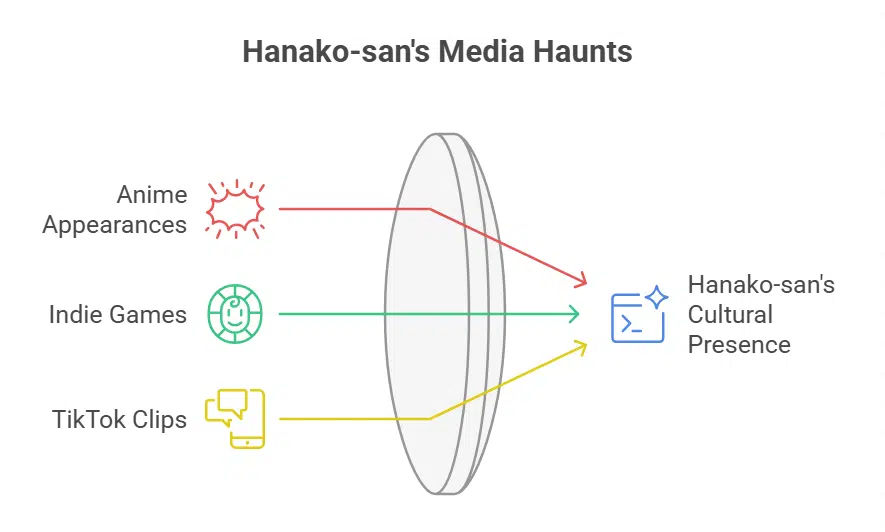
Hanako-san haunts anime series like a pop-up ad you can’t close, lighting up late-night streams. She lingers in indie games built on a game engine, and she bubbles up in viral TikTok clips, turning every scroll into a shiver.
How has Hanako-san appeared in movies, TV, and games?
Filmmakers cast her as a kind spirit in the 1995 film Toire no Hanako-san. The 1998 Shinsei Toire no Hanako-san flips the tale into a vengeful ghost horror. Two 2013 movies, Toire no Hanako-san: Shin Gekijban and Senritsu Kaiki File Kowasugi! File 04: The Truth! Hanako-san in the Toilet, revisit school bathroom scares.
Toilet-Bound Hanako-kun hit manga shelves in 2014 with art by Aida Iro. An anime adaptation aired in early 2020. Sakae Esuno casts her in Hanako and the Terror of Allegory. Other anime titles like Kyoukai no Rinne, GeGeGe no Kitaro, Ghost Stories slip in her supernatural presence.
The video game Spirit Hunter: Death Mark II greets players with her ghost first.
Why did Hanako-san gain international popularity?
Animated comic Toilet-Bound Hanako-kun and its manga drove her global reach after 2014. Game studios and TV producers used her image to tap the supernatural vein. Yo-kai Watch renamed her Toiletta in the English version, so she met fans across North America.
A 2014 NPR article by Cecily Meza-Martinez and Gene Demby sparked chatter among folklore buffs. The 2020 YA short story “Who’s at the Door?” revived her as a young adult ghost figure.
Critics liken her to Moaning Myrtle and the Bloody Mary mirror ghost. This string of pop culture adaptations lifted a Japanese culture urban legend into icon status.
Japanese horror films shipped ghost plots that felt fresh yet familiar. Animated series and video games added her as a haunted presence. Players in Europe, Latin America, and Asia found her in mobile titles and console releases.
Each adaptation shows her myth in new settings, from school restrooms to abandoned shrines. Fans share art and memes on social media, fueling the folklore. She resonates because her tale taps fears and values in cultures worldwide.
That adaptability cements her standing as a global mythology figure.
Why is Hanako-san So Captivating? Exploring Her Enduring Popularity
Hanako-san grips students as a dark urban legend in school restrooms. She jumps from comic books into short video apps, so teens share her scary tale.
What makes Hanako-san intriguing to people today?
Kids dare friends to call on her in empty stalls at school, a rite from an old urban legend. The ritual needs just a dark stall, a steady knock, and brave hearts. It sparks creep and thrill in schoolyard games and it feels like a live ghost story.
Young crowds pass the dare like a torch, keeping her myth alive.
Mystery and horror swirl in this supernatural folklore, with hints of tragedy that tug at hearts. Some say she protects shy kids, others warn she bites back, a twist that keeps all guessing.
Movies, manga, and video games toss her into fresh plots, so each generation finds new chills. Easy rules let any child act it out, so her presence in Japanese culture stays real and urgent.
How does Hanako-san reflect cultural fears or values?
Hanako-san lurks in school bathroom stalls to teach caution. Her legend grew from tales of bullying, violence, and untimely death, echoing real social worries. Ghost tales like hers use superstition and folklore, and they tap anxieties about private, vulnerable spaces.
This specter shows dangers of peer pressure at school.
Students rap three times and call her name to summon a restless spirit. This practice mirrors Japanese custom and highlights the value placed on tradition. The motif of a vengeful ghost fits a long line of mythology in Japan.
Similar restroom myths, such as Aka Manto or Madam Koi Koi, express shared anxieties.
Takeaways
This train ride through Japanese folklore’s school ghost tale shows why she still spooks us.
Young readers keep whispering about her specter sighting in stalls.
Pop culture hits, like horror films, animated shows, and graphic tales, helped her fame cross oceans.
Her bob haircut and red dress stick in the mind like a catchy tune.
Shadows of childhood fears made her a cultural icon, yet she also gives us a shared shiver and a smirk.
FAQs
1. What is Hanako-san?
Hanako-san is a ghost in school restrooms. She hides in a stall, taps the door, and waits. Kids whisper her name three times to see if she appears. It is a spooky way to test nerves, and share a thrill with friends.
2. Where did her legend start?
Her tale began in Japan after World War II. Girls told each other the story in lunch lines, on playgrounds. It spread fast, like wildfire through dry grass. It felt alive. Soon every school had its own version.
3. Why did she become so popular?
Kids love a good scare, it brings you closer in a strange way. The story fits into cartoons, comics, and games. It moves from hushed voices to online posts in an instant. Each telling adds a new twist, so the tale never feels old.
4. How do people summon her?
You knock on the stall door three times, and call her name. You wait in silence, hearts pounding like drums. No one knows if she is real, but the thrill lives on.