
Have you ever read a wendigo story online, watched one in a movie, or heard one around a fire and wondered what parts come from real Native stories and what parts are modern horror?
I get it, wendigo stories can feel creepy fast, and it is hard to find clear facts.
In this guide, we will sort out the roots of the legend of the wendigo, the famous Swift Runner case, what people mean by “wendigo psychosis,” and why pop culture keeps changing the monster.
Grab a seat, and we will walk through it step by step.
Key Takeaways
- The wendigo comes from Algonquian-speaking traditions, including Ojibwe and Cree teachings, and it is closely tied to winter hunger, fear, and human cannibalism as a warning story.
- Britannica notes that one of the earliest widely cited written mentions appears in a 1636 Jesuit report by Paul Le Jeune, using the term “atchen,” which helps explain why spellings vary so much today.
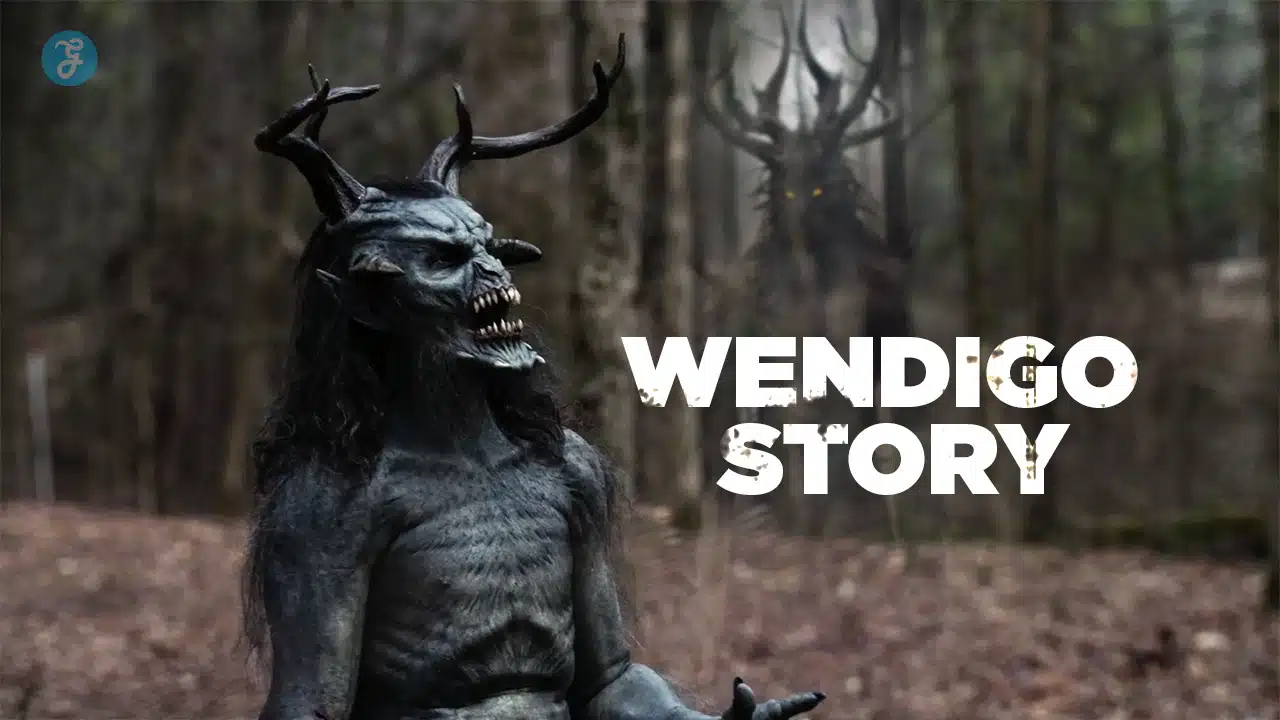
- Descriptions are not one-size-fits-all: some stories focus on a possessing spirit, while others describe a gaunt giant, and the antlered “deer skull” look is mostly a modern media choice.
- The Swift Runner case (1878-79) is often tied to the idea of wendigo psychosis, and records place his execution at Fort Saskatchewan on December 20, 1879.
- The World Health Organization’s ICD-10 research criteria discuss “windigo” in an annex of culture-specific disorders, but modern psychiatry still debates whether “wendigo psychosis” was a distinct syndrome or a label outsiders misunderstood.
- In the United States, the name shows up on real places too, like Lake Windigo on Star Island in northern Minnesota, which is one reason the folklore can feel oddly “close to home.”

The Origins of the Wendigo Legend
The wendigo legend sits inside a bigger web of Native American folklore across the northern woodlands, especially among Algonquian-speaking peoples. These are places where winter could stretch on, food could disappear, and the fear of starvation was not abstract.
That is the heart of the concept of the wendigo: a warning about what happens when hunger, isolation, and greed take over a person and pull them away from community responsibility.
As Britannica summarizes it, early colonial-era writers described an “atchen,” a cannibal threat linked to winter and danger, and it shows up in a 1636 Jesuit account connected with Paul Le Jeune. That matters because it gives you a paper trail for why the story spread beyond oral tradition and why outsiders started “pinning down” a legend that was never meant to be a single fixed monster.
Where is the Wendigo Located
If you want to place the wendigo on a map, start with the northern forests and lake country, not a haunted house.
Most wendigo stories live in the same kind of landscape that shaped them: cold seasons, dense forests, long travel routes, and hard winters. In the United States, that often points readers toward the Great Lakes region, northern Minnesota, northern Wisconsin, and Michigan.
Instead of treating “the forest” like a vague spooky backdrop, it helps to know some real places that anchor the lore in native people and native history. For example, Madeline Island (Mooningwanekaaning) in Lake Superior is widely described as a spiritual center for the Lake Superior Chippewa, which is part of why this whole region shows up so often in Great Lakes storytelling.
If you have heard the name Lake Windigo in Minnesota, it is not just a horror reference. The U.S. Forest Service describes Lake Windigo on Star Island as roughly 199 acres, with a maximum depth around 25 feet, which gives you a real-world location that shows how the word “windigo” traveled into place-names over time.
- Good rule for readers: Treat “wendigo sightings” online as modern storytelling unless they connect to specific, respectful cultural contexts.
- Better approach: Learn which tribal nations and language groups a story comes from before you repeat it as “Native American” in general.
- Reality check: The legend spreads across regions and communities, so one “official” location is not how this folklore works.
What does a Wendigo Look Like?
If you grew up on movies and games, you might picture a 15-foot, antlered monster. That version is common now, but older native folklore descriptions vary a lot by community and storyteller.
Britannica points out a mix of traditional descriptions: an emaciated figure with ashen flesh, a giant that grows as it eats, sharp claws and fangs, and even details like chewed or missing lips and a stench of decay. Those details are not just there to gross you out; they push the same point again and again: insatiable hunger makes you less human, not more powerful.

| Version | What it tends to look like | Why it shows up that way |
|---|---|---|
| Traditional oral teachings | Often a thin, starving figure, or a spirit that possesses a person | Focuses on hunger, taboo-breaking, and community survival |
| Modern horror fiction | Often a tall “monster” with antlers or a deerlike silhouette | Designed for quick visual recognition and shock |
| Psychology-style retellings | Less about antlers, more about fear, cravings, and transformation | Explains the legend through behavior, belief, and social pressure |
Is the Wendigo Real
If by “real” you mean a biological animal, most scholars treat the wendigo as a supernatural figure in native folklore, not a zoology entry. If you mean “real” as in culturally real, that is a different question, because the story carries real teachings about hunger, balance, and harm.
The hardest part is that modern retellings mash together three different things: a spirit, a monster, and a human who “becomes a wendigo.” When you blend them, you end up with a creature that feels like a single official canon, and that is not how most folklore of the United States works.
Modern psychiatry does not list wendigo psychosis as a standard diagnosis, and many clinicians see the term as historical and contested. The story still matters, but it helps to be honest about what is folklore, what is anthropology, and what is a modern horror remix.
What is the True Story of the Wendigo: The Case of Swift Runner
The Swift Runner case is one of the most repeated “true ”crime”-style wendigo stories, and it is also one of the easiest to misunderstand if you only read quick summaries.
Swift Runner was a Plains Cree trapper in Alberta. During the winter of 1878 into 1879, he killed members of his family and practiced cannibalism; a total of six victims is often repeated in modern retellings.
One reason this story stuck is that officials argued he was found close enough to food supplies that starvation alone did not explain what happened. That detail became a key piece of how people later framed the crime as “wendigo psychosis,” not just desperate survival.
Local accounts tied to Fort Saskatchewan describe his trial taking place in 1879 and his execution occurring there on December 20, 1879, which is why that date shows up so consistently in later writing about Swift Runner.
| What people repeat | What you should do with it |
|---|---|
| “He was possessed by an evil spirit.” | Read it as a cultural explanation used at the time, not a medical conclusion. |
| “The case proves the wendigo is real.” | Separate the crime from the myth: one does not automatically confirm the other. |
| “It was only famine.” | Be cautious with simple answers; this case sits at the intersection of violence, colonial history, belief, and law. |
The case still shapes how writers talk about cannibalistic wendigo stories because it feels like a collision between legend, psychiatry, and court records. Just keep in mind that every retelling makes choices about what to emphasize, and those choices change the meaning.
Understanding Wendigo Psychosis in Folklore
“Wendigo psychosis” is one of those phrases that sounds official, but it is loaded. You will see it used as a medical-sounding label, a spiritual explanation, or a shortcut in horror fiction, sometimes all in the same paragraph.
Here is the simplest way to think about it: it is a reported pattern of fear and belief about becoming cannibalistic, tied to the wendigo spirit, and discussed most often in older anthropology and psychiatry writing.
In the World Health Organization’s ICD-10 research criteria, “windigo” appears in an annex describing culture-specific disorders, which is a big reason the term keeps circulating even today.
What is Wendigo Psychosis?
When writers describe wendigo psychosis, they usually list symptoms like severe distress, paranoia, withdrawal, and a terrifying belief that you crave human flesh or will transform into a cannibal monster.
- What it looks like in writing: fear of becoming a cannibal, intense cravings, and “possession” language.
- Why it is controversial: many accounts are secondhand, and some scholars argue “windigo” was sometimes used as a broad label for crisis, conflict, or socially dangerous behavior.
- What to do as a reader: treat it as a debated historical concept, not a modern diagnosis you can self-apply.
How has Wendigo Psychosis Influenced Stories?
This idea changed the shape of wendigo stories in a big way: it made the monster feel like something that can happen inside a person, not just something out in the snow.
It also shaped how outsiders wrote about Indigenous law and survival ethics. The Jack Fiddler case is a clear example; he was arrested in 1906, and he died on September 30, 1907, before trial, a timeline summarized in the Dictionary of Canadian Biography. Whether you read him as a healer, a leader, or a man caught in colonial legal pressure, the story shows how “wendigo” could be treated as an urgent community threat, not a campfire creature.
If you like tracing how stories travel, this is also where the spelling “wendigo” becomes a pop culture standard. Algernon Blackwood’s 1910 novella helped spread that spelling into mainstream horror fiction, and later media often copied the look and tone from those outsider retellings.
Wendigo in Native American Culture and Beliefs
It is easy to treat the wendigo like a monster collectible. It is much more useful, and much more respectful, to treat it like a teaching story that helped people survive harsh winters and social strain.
Across many versions of native folklore, the wendigo spirit is what happens when hunger turns into predation and when a person breaks the bonds that keep a community alive.
How do Native American Tribes Describe the Wendigo?
Descriptions vary by community, which is why you will see differences in height, features, and even whether the wendigo is a “thing” or a presence. Ojibwe scholar Basil H. Johnston, for example, is often cited for describing the wendigo as gaunt and dangerously thin, yet linked with endless appetite.
That contrast is the point. A wendigo is not “big because it is strong”; it is big because hunger keeps growing, and it never feels like enough.
What Cultural Significance Does the Wendigo Hold?
Many tribes use the story as a warning against greed and despair, especially during famine conditions. Ojibwe scholar Brady DeSanti explains the wendigo as a marker of imbalance within a person and toward the wider community.
Some sources also describe a satirical famine-time ceremony called wiindigookaanzhimowin, where people used performance to reinforce the seriousness of the taboo against cannibalism. If you see this mentioned, take it as a reminder that the tradition includes teaching tools, not just fear.
- If you are retelling wendigo stories: Name the specific tradition when you can (Ojibwe, Cree, or Anishinaabe), not just “Native American.”
- If you are creating fiction: Avoid treating Indigenous culture as a spooky costume, and do not borrow rituals or sacred details for shock value.
- If you are studying the lore: Pay attention to the lesson, not just the monster design.
Wendigo vs Skinwalker
People mix these up online all the time, but they come from different nations, different regions, and different rules of storytelling.

| Figure | Root tradition | Core warning | Common online mistake |
|---|---|---|---|
| Wendigo | Algonquian folklore (including Ojibwe and Cree traditions) | Hunger, greed, cannibalism, winter survival ethics | Assuming “antlers” are required, or treating it as a universal Native monster |
| Skinwalker | Navajo (Diné) traditions | Taboo-breaking and harmful use of power | Using the term as a generic word for any shapeshifting creature |
| Wechuge | Athabaskan traditions (often discussed separately) | Cannibal themes with distinct cultural meaning | Lumping it in as “basically the same thing” as the wendigo |
The Wendigo in Modern Media and Popular Culture
Modern horror loves the wendigo because it is simple to feel: hunger, fear, isolation, and the idea that something inside you could flip.
But modern media also tends to smooth out the cultural specifics and replace them with a single antlered “monster template.” If you notice that happening, you are seeing the difference between Native American legend and horror branding.
The Wendigo Story Blackwood
Algernon Blackwood published The Wendigo in 1910, and his version helped popularize the spelling “wendigo” in English-language horror. Literary critic Joe Nazare later argued that Blackwood’s framing can push harmful stereotypes, which is one reason modern readers should separate classic horror craft from accurate Indigenous representation.
How is the Wendigo Portrayed in Movies and TV?
You will see a wide spread of designs. Some versions keep the “spirit in the woods” feel, and others go full creature-feature with bone, antler, and glowing eyes.
One clear U.S.-set example is the 2001 film Wendigo, written and directed by Larry Fessenden, which places the dread in a winter weekend in upstate New York. Britannica also notes that Antlers (2021), directed by Scott Cooper and produced by Guillermo del Toro, uses a deerlike creature design that many viewers now associate with “the” wendigo look.
| Title | Year | What it emphasizes |
|---|---|---|
| The Wendigo (Algernon Blackwood) | 1910 | Dread, wilderness, the unseen, and outsider interpretation |
| Wendigo (Larry Fessenden) | 2001 | Psychological horror in a modern U.S. winter setting |
| Hannibal | 2013-2015 | The wendigo as a symbolic figure in a character’s mind |
| Until Dawn | 2015 | Fast, visual monster mythology built for gameplay |
| Antlers | 2021 | Deerlike design and generational trauma themes |
Why is the Wendigo Popular in Horror Fiction?
Because it works on two levels at once. You can tell a simple monster story, or you can tell a story about what hunger, greed, and fear do to a person, and both land emotionally.
If you are a creator, one practical move is to be clear about which layer you are using. If you want a symbol for insatiable consumption, say so through the story. If you want to use Indigenous elements, slow down and do it carefully, because “cool monster design” is not the same thing as respecting Indigenous culture.
Moral Lessons and Symbolism Behind Wendigo Stories
At their core, wendigo stories are not just about fear. They are about what fear can push people to do and what a community needs to do to survive winter, loss, and desperation.
What Messages Do Wendigo Stories Teach?
- Greed is contagious: it grows the more it is fed, and it pulls people away from their obligations.
- Isolation is risky: in harsh conditions, staying connected can be the difference between life and death.
- Hunger changes judgment: the legend forces you to look at the edge cases, not the easy ones.
- Balance matters: the story warns against taking more than you need, whether that is food, power, or control.
Authors also use the figure as a metaphor in modern fiction. Louise Erdrich, for example, uses wendigo language to frame destructive harm in The Round House, showing how the legend still carries power as a symbol.
How Does the Wendigo Symbolize Human Fears?
Some modern interpretations tie the monster to environmental destruction and runaway consumption. That idea fits because the wendigo is often described as insatiable; it devours and still feels empty.
The scariest version of the wendigo is the one that keeps eating and never feels full.
If you want to read wendigo stories in a grounded way, watch for the human moment: the point where need turns into predation and where a person stops seeing others as people.
Wendigo Weakness
In folklore, “wendigo weakness” depends on who is telling the story. Some versions focus on spiritual solutions, and others give practical-sounding “monster rules” like ice, fire, or a heart you must destroy.
Britannica notes versions where a shaman is the one who can subdue a wendigo, sometimes using an iron, steel, or silver weapon, and some legends say the heart must be cut out and melted or burned in fire to truly end the threat. Treat those details as mythology, not as real-world survival advice.
What Should I Do If I See a Wendigo
If you think you are in danger in the woods, handle it like a real wilderness emergency. Do not rely on folklore rules, and do not escalate the situation.
- Get to safety first: Move toward a known trail, road, or lit area, and stay with other people if you can.
- Call for help: If you are in the United States and you are in immediate danger, call 911 and share your exact location.
- Make yourself easier to find: Use a whistle, headlamp, or bright clothing, and avoid getting turned around.
- Keep your body warm and steady: Cold and panic can stack fast, so focus on shelter, layers, and calm breathing.
- Report what happened clearly: Describe the real hazard you experienced (lost, injured, followed, animal encounter), and keep supernatural claims separate from the practical facts rescuers need.
- If this is about cultural curiosity: Learn from tribal-authored resources and community voices, and avoid copying rituals or “testing” legends in the field.
Final Words
Now you have a clearer view of the wendigo and why the legend of the wendigo still hits so hard.
You saw where the story comes from in Algonquian traditions, how winter hunger shaped the warning, and why the Swift Runner story remains one of the most repeated wendigo stories in modern writing.
You also saw how “wendigo psychosis” sits in a debated space between folklore, history, and psychiatry, and how movies and games keep remixing the monster for new audiences.
If you share a wendigo story, share it with care, because the lesson is not just about a monster; it is about what keeps people human.