You stare at your Sega Genesis mini or your Super Nintendo Classic and wish for new thrills. You’ve run Mega Man X on your Nintendo Switch Online then on a Game Boy Advance emulator on a Raspberry Pi.
Many retro gaming fans hit a wall with their old favorites.
A Sega Genesis subreddit has 59,000 active members swapping tips on Everdrives, Analogue Pocket setups, and Steam Deck hacks. We share 7 Unique Ways To Play Classic Games. You’ll meet speedruns, one-life runs, item shuffles, damage-free tests, minimalist modes, self-made rules, and mod boosts on real gear or emulators.
Read on.
Key Takeaways
- A Sega Genesis subreddit has 59,000 active members who share tips on Everdrives, Analogue Pocket setups, Steam Deck hacks, and more.
- Speedruns push players to beat classics like Super Metroid in under five minutes, with global leaderboards and streams on Twitch and YouTube.
- Permadeath runs force a restart on the first hit in games such as The Legend of Zelda: A Link to the Past and Sonic the Hedgehog 2.
- Randomizers, no-hit runs, minimalist runs, and self-imposed rules use tools like RetroArch, Dolphin, emulators on Steam Deck, Raspberry Pi, and Everdrives.
- Nintendo Switch Online costs $20 per year; the Expansion Pass costs over $50 and adds NES, SNES, GBA, N64, and Genesis libraries for co-op or versus play.
Speedrunning: Completing Games as Fast as Possible
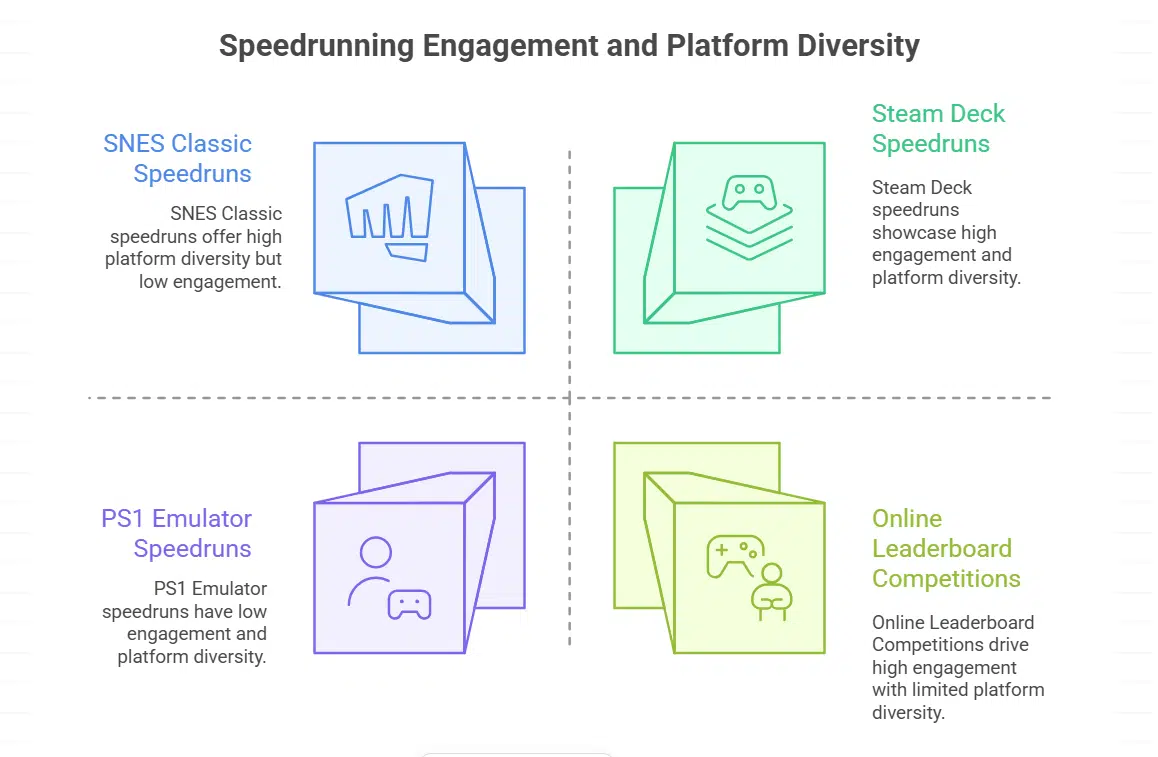
Speedruns test skill and wits. Gamers race through titles like Super Metroid in under five minutes. They use console emulators to clip past bosses. Online leaderboards record times.
Players share videos on streaming platforms. This chase adds fresh thrill to SNES classic or Sega Genesis games. Fans of retro gaming gather to cheer new records. Community forums spark tips and jokes.
Hardcore and casual players love this twist. They hack a run in Earthworm Jim or duck hazards in Super Mario 64 on an N64. Racers push timing rules on a handheld PC or a PS1 emulator.
Gamers tag speedruns on a Steam Deck too. This craft fuels creative play. It sparks nostalgia and invites more readers to subscribe for retro game talk.
Permadeath Runs: One Life, No Second Chances
Permadeath runs ditch all extra lives, forcing you to restart on the first hit. They raise the stakes in retro gaming. Players test skills on classic video games like The Legend of Zelda: A Link to the Past on Super Nintendo Entertainment System or Sonic the Hedgehog 2 on Sega Genesis.
Fans load ROMs on a console emulator, even on a Steam Deck, to fuel the thrill. This one-life rule charms casual and hardcore gamers alike, who seek fresh pain and triumph.
Streamers post clips on Twitch, YouTube, or social media from Nintendo Switch Online + Expansion Pack or Wii U Virtual Console. Communities on Discord or forums compare runs in Street Fighter III, Mega Man Legacy Collections, or Star Wars Jedi Knight II: Jedi Outcast.
Handheld systems and game consoles, from Game Gear to Xbox Series X and Series S, host live challenges. Players trade tips near the home menu, laugh over botched saves, then charge head first into another run.
Randomizers: Shuffling Game Elements for Variety
Randomizers swap items and levels in classic games to keep you on your toes. RetroArch software on Steam Deck, Windows, Linux or macOS can run shuffle add-ons for 2D and 3D classics.
Dolphin app for GameCube or Wii delivers crisp pixels when you add a randomizer to Star Wars: Jedi Knight II or Metroid Prime Remastered. Players wave goodbye to familiar routes once a Sega Genesis Mini 2 ROM throws a curveball at every turn.
Community wizards share code on GitHub, so anyone can jump into a nintendo 64 or super nes challenge. Guide docs explain seed numbers and mod packs, so rookies and vets both get in on the fun.
Retro-gaming chats heat up on Discord and Nintendo Switch Online forums as folks race through twisted maps on Steam Deck, PS4, Xbox 360 or PS2 feeds.
No-Hit or Damage-Free Runs: Avoiding All Damage
Challenge runners often try no-hit runs in retro gaming. They dodge every hit in titles like Gunstar Heroes on Sega Genesis. Players record attempts with a Dolphin emulator or capture on a Steam Deck.
Leaderboards on Nintendo Switch Online list top runs without damage. This style tests skills in Street Fighter III: 3rd Strike and Mega Man Battle Network.
Communities share flawless playthroughs on Libretro and other emulation forums. Gamers chat on Discord, swap tips for Turbografx-16 or SNK collections. Streamers post clips to show off damage-free feats on GameCube, Wii, Switch and PC.
Pure runs add extra thrill to backward compatible titles, spark fresh fun for casual and hardcore fans.
Minimalist Runs: Completing Games with Bare Minimum Resources
Players cut resource use to its bare bones in classic retro games, like carrying one health potion. They limit items, ammo, and special moves to survive boss fights. Many take on this goal with a Steam Deck in hand or a Dolphin emulator on a personal computer.
Backward compatibility on PlayStation 3, PlayStation 5, or Nintendo Switch Online makes old hits fresh again.
Fans share their trial runs on Discord, Reddit, or YouTube channels. Guides pop up on PCMag.com and free blogs to help others learn tricks. Casual and hardcore gamers both love the creativity in these trials.
Nostalgia hits hard when someone beats Street Fighter 30th Anniversary Collection with no special gear.
Self-Imposed Challenges: Creating Custom Rules for Gameplay
Gamers dream up odd rule sets to reboot classic games. You might fire up a Dolphin Emulator on a PC and only wield a slingshot in a GameCube hit. Or strip every upgrade from a Sega Master System cart and race Super Mario on a Nintendo Switch console with no jumps.
Such a twist sparks fresh ideas and revives a retro gaming thrill. This style nudges you back into beloved titles with fresh eyes.
Hardcore fans and casual players both jump in. They post runs on Reddit, Nintendo Switch Online groups, or Steam Deck clips. Other gamers cheer, trade tricks, even tweak the rules.
Online hubs let you compare times, share screenshots, and laugh over epic fails. Creative sparks fly, and each challenge run feels like a brand new quest.
Using Mods to Enhance or Alter Classic Games
RetroArch and the Dolphin engine boost retro gaming graphics with upscaling and fan-made textures. You can hack a Sega Genesis disc image on PC. A GameCube tool unlocks 60fps for classic video games.
A PC emulation toolkit shows how to apply mods on a PS3 disc image. A PC Engine emulator patches TurboGrafx-16 titles. Modding a Star Wars Jedi Knight II: Jedi Outcast fan pack feels like adding hot sauce to a vintage dish.
A single-board computer running RetroPie hosts over 50 console games. Handhelds like Steam Deck or Anbernic RG351P load fan-made patches from digital downloads. A Retroid Pocket 3 can inject new levels into NES cartridges.
A field-programmable gate array handheld adds shaders to Game Boy game cartridges. A home console adapter or multisystem clone console both accept mod files. A Nintendo Switch Online indie release feels fresh with custom skins.
Multiplayer Twist: Co-Op or Versus Modes in Classic Titles
Major remasters add local or online multiplayer to old titles. Nintendo Switch Online charges $20 per year for NES, SNES, Sega Genesis libraries. The Expansion Pass, at over $50, unlocks Game Boy Advance, Nintendo 64, and Genesis games.
Sega Genesis Classics and Street Fighter 30th Anniversary let you spar or team up on a TV. Evercade VS uses cartridges for four-player sessions. Nintendo Entertainment System Mini, Super Nintendo Mini, and Mega SG upconvert sprites to HD and handle two controllers for couch play.
Retro gaming feels fresh on cutthroat or tag team maps. Indie hits like Monster Boy and the Cursed Kingdom add couch co-op quests. Monster Mers drops you into squad matches with a friend.
Gaming handhelds like Steam Deck and Nintendo Switch run these classic games on road trips. Tablets and SteamOS rigs stream local links over Wi-Fi. Dolphin Emulator even brings netplay to Star Wars: Jedi Knight II.
Takeaways
Classic games have stood the test of time because they offer not just nostalgia, but a solid foundation for creativity, skill-building, and pure fun. Exploring unique ways to play—whether through intense challenge runs, inventive self-imposed rules, clever mods, or competitive speedruns—can transform even the most familiar title into a brand-new adventure. These fresh approaches keep your mind sharp, your reflexes engaged, and your sense of discovery alive.
By experimenting with alternative playstyles, you’re not just replaying the same old game—you’re writing your own story within it, finding new strategies, and unlocking unexpected moments of excitement. Plus, with online communities full of players who share your passion, you’ll always have a space to share your achievements, learn from others, and be inspired to try something new.
So, fire up that beloved classic, break free from the traditional rules, and challenge yourself in ways you never imagined. The pixels may be old, but the possibilities are endless—proof that great games never truly stop evolving, as long as you dare to play them differently.
FAQs
1. What is a challenge run in retro gaming?
A challenge run adds rules to classic games play. You might race through a Sega Genesis title with no power ups. On a Nintendo Switch or the Nintendo Entertainment System, you could beat a boss using only a hammer. It breathes new life into old hits.
2. How do I use Nintendo Switch Online to access Nintendo classics?
Open the Nintendo eShop, pick a classic games pack, and hit download. Then fire up your Nintendo Switch and play NES, and Game Boy titles. It feels like a time machine back to arcade days.
3. Can I play GameCube or Wii titles on my PC?
Yes, use the Dolphin emulator for game emulation to run Nintendo GameCube and Nintendo Wii titles, or even PC hits like Star Wars: Jedi Knight II: Jedi Outcast. Load a game file, click play, and feel like the console lives in your PC.
4. Will a Steam Deck or Nintendo Switch 2 handle classic video games?
A Steam Deck can run emulated retro hits, and a Switch 2 may offer cloud play and local fun. Both give you solid handheld console gaming. You can game on trains or in your living room.
5. What gear do I need for a home theater retro setup?
You need a big screen TV or projector and a console like Sega Genesis or TurboGrafx-16/PC Engine. Add speakers or a soundbar for booming tunes. Then pop in a cart or load a ROM and you’re set to relive arcade glory.