Do you feel like bills keep piling up? Maybe you only make minimum payments, or you max out your credit cards just to pay for lunch. These are Warning Signs You Need To Take Control Of Your Debt.
In 2019, U.S. credit card debt reached $930 billion. In this post, you will find seven clear signs of a debt problem. You will learn how to build a spending plan, use a consolidation loan, and get credit help.
Ready to break free?
Key Takeaways
- In 2019, U.S. credit card debt hit $930 billion. Paying only the minimum on a $500 balance can swell interest and push your debt-to-income ratio past the safe 28%, hurting your credit.
- Maxed-out cards, cash advances and overdrafts bring high fees and rates. Lenders like Bank of America may deny new credit or cut your limit, and bounced checks add extra charges.
- Missing payments drove delinquency rates from 5.16% to 5.32% in 2019, and 18- to 29-year-olds hit 9.36%. Under the Fair Debt Collection Practices Act, collectors can garnish wages or seize assets.
- You can get free help from nonprofits like InCharge or the U.S. Trustee Program and follow a debt management plan. Online lenders such as SoFi or Upstart offer consolidation loans under 10%. Canadians can contact Hoyes Michalos and Maryland residents can call 410-260-1392.
- Build a $500 emergency fund and track every dollar in a simple budget. Limit debt payments to 20% of take-home pay and keep your overall debt-to-income ratio under 40%. This cuts stress, breaks the credit trap, and helps you regain control.
You’re Only Making Minimum Payments on Debts
Paying only the minimum on credit card debt feels safe. It hides rising interest costs. A $500 balance can balloon if you pay just the minimum. Interest rates eat away at your bank balance.
Minimum payments that eat more than 20% of take-home pay raise a red flag. Your debt-to-income ratio can spike past the healthy 28%. That shows up on your credit report.
No savings plan follows a minimum-pay approach. Utility bills go unpaid too. Payday loans pile up, driving high-interest debt. A debt consolidation loan or a debt management plan can help.
A credit counseling agency also offers debt relief. Good debt repayment plans clear balances faster. You gain better credit scores and peace of mind.
Your Credit Cards Are Maxed Out or Close to the Limit

Maxed-out credit cards signal a deep debt problem. You shift balances between cards to dodge the truth. No one knows the full amount then. In 2019 consumers carried a record $930 billion in credit card debt.
Lenders deny new credit if you hit your credit limit. A high debt-to-income ratio drags down your credit score.
Using a credit card cash advance to pay bills shows distress. It hikes interest rates and fees. Overdrawing your bank account screams alarm bells. Bounced checks or overdraft protection pull extra charges.
Credit report entries show those hits. Lenders decline personal loan requests at good interest rates.
You Rely on Credit for Everyday Expenses
You swipe a card to buy groceries and pay rent. You pay daily bills with high-interest credit card debt. You take a cash advance to cover gas or utilities. Emergencies like job loss or medical bills push you deeper.
Rising costs outpace wages and drain savings. You close the month with no emergency fund and a low credit score.
Debt experts call this pattern a credit trap. A line of credit or payday loan can look like a quick fix. A debt consolidation loan may cut interest rates but often adds fees. Use a tracker or credit record review to see the full picture.
A nonprofit counseling agency or licensed trustee can guide you back to dry land.
You’re Frequently Missing or Late on Payments
Creditors charge fees when you miss due dates on credit card bills. Many borrowers also tap payday loans or cash advances to cover rising costs. Delinquency rates climbed for young borrowers, reaching 9.36% for ages 18 to 29, and the overall rate rose from 5.16% to 5.32% in 2019.
Debt collectors call after missed payments or bounced checks. Courts can award wage garnishment or repossess property if you skip payments too often. Late entries on your credit report lower your credit score and increase your debt-to-income ratio.
Disputes over unpaid utility bills can strain family ties and increase financial stress.
You Avoid Checking Bills or Bank Statements
Stacks of unopened mail can tell a hidden story. Skipping bank statements each month shows fear. You avoid seeing credit report details. This habit drags down your credit score. It keeps you blind to rising interest rates.
Minimum payments pile up, late payments add fees, your debt-to-income ratio jumps. Fear and embarrassment stop you from calling a debt relief or debt consolidation lender.
Stress eats your peace, it sparks headaches. You hide bills under old magazines. A gap in knowledge about interest rates and credit card interest feels like quicksand. You dodge calls from debt collectors, you delay nonprofit credit counseling, you stall a debt management plan.
Credit counseling can shine light on missed payments, spark a plan with an emergency fund, a consumer proposal or a debt consolidation loan. Take action now, a clear view of your accounts can free your mind.
You’re Receiving Collection Calls or Legal Notices
Your phone rings late at night, a collection agency on the line. These calls mean a lender filed a claim. It sets a hearing date. A judge can let them garnish your wages. Collection calls often target credit card debt or overdue personal loans.
Payday loans, high-interest debt and late payments push you into collections. Laws like the Fair Debt Collection Practices Act give you rights.
Fight the suit in court. Claim the collector broke federal rules. If a judge rules against you, the lender can seize unprotected assets. Some income stays safe under judgment proof laws.
Seek help from a nonprofit credit counseling agency or a licensed insolvency trustee. They suggest a debt management plan or debt consolidation loan.
You Feel Overwhelmed or Stressed About Finances
A heavy heart makes you dodge the mail pile, so you never open a bill. You lie to loved ones about credit card debt, or you hide bank statements and ignore calls from debt collectors.
Skin-crawling embarrassment blocks you from asking for help, and that delay lets high-interest debt grow. Rainy day savings sit in another account, untouched. Loan merger or repayment plan talk stays off your screen.
Disputes with family can flare when you skip talking about your credit score drop or missed payments. Anxiety crashes into your day after a job loss or a medical emergency. That stress can choke off a money help session, even if it could lower interest rates or spark debt relief.
Avoidance drives you deeper into the debt cycle, turning a scare into unmanageable debt.
The Impact of Ignoring Debt Warning Signs
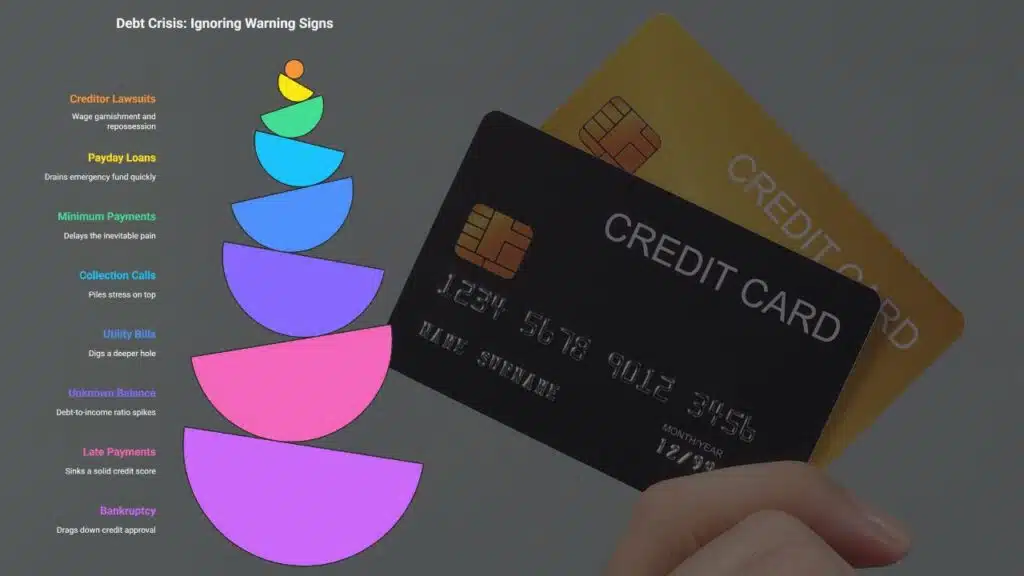
Ignoring early debt signals can trigger creditor lawsuits. National banks may win a judgment and garnish wages or repossess home equity. Carrying multiple payday loans can drain an emergency fund fast, like pouring water into a leaky bucket.
Sticking to minimum payments on credit card debt only delays the pain. Collection calls from debt collectors can ring from dawn to dusk, they pile stress on top of stress. Allowing utility bills to slide only digs a deeper hole.
Not knowing your total balance can spike a poor debt-to-income ratio before you sense the shift. Frequent late payments can sink a solid credit score in months.
2019 saw delinquency rates climb from 5.16 percent to 5.32 percent, partly due to ignored high-interest debt. Bankruptcy can remain on a credit report for seven to ten years, it drags down mortgage approval and new lines of credit.
Licensed insolvency trustee fees can grow if you delay, nonprofit credit counseling agencies often urge action. A debt consolidation loan or a debt management plan can curb runaway interest rates, or you may talk to a debt relief company to explore consumer proposal terms.
Letting bills pile up feels safe, but it only adds more pain, financial trouble compounds like a snowball rolling downhill.
Steps to Take Control of Your Debt
Debt can drain your daily life and erode your credit score. You can fight back with clear steps.
- Gather every statement, from credit card debt and payday loans to student loans, mortgages and utility bills.
- Track every dollar you spend and build a budget that covers debt repayment and living costs.
- Call each creditor, like Bank of America or your card issuers, and ask to lower interest rates or set a payment plan.
- Sign up for debt management with a nonprofit credit counseling agency, where you learn money management and follow a debt management plan.
- Explore a debt consolidation loan through SoFi or your bank to merge high-interest debt, cut interest rates and simplify payments.
- Start an emergency fund of at least five hundred dollars to stop relying on credit for everyday expenses.
- Pull your credit report and check your credit score to catch errors, late payments or signs of identity fraud.
- Send a certified mail notice to debt collectors to state your inability to pay and request no further calls or letters.
- Talk with an InCharge credit counselor or a licensed insolvency trustee for no-judgment guidance on debt relief and debt solutions.
- Consider Chapter 13 bankruptcy as a last option, if debt settlement, a consumer proposal or other debt relief paths fail.
Create a Realistic Budget
Creating a budget gives you a clear view of your cash flow. It cuts stress and frees you from debt traps.
- List all income sources, include paychecks, freelancing revenue and retirement savings withdrawals.
- Track spending with a banking app or workbook, record every purchase from utility bills to cookies.
- Limit debt payments to 20% of net income, this rule shields your cash from high-interest debt.
- Compare interest rates across accounts, group top high-interest balances into a debt consolidation loan or consumer proposal.
- Slash unneeded costs like extra streaming plans and impulse buys, funnel savings into an emergency fund.
- Monitor your debt-to-income ratio, aim for under 40% to keep credit score healthy and dodge collection calls.
- Factor in minimum payments, utility bills and scheduled savings, then set clear spending limits for daily needs.
- Revise your budget monthly, adjust for late fees, rising interest rates and any missed payments.
Explore Debt Consolidation Options
A debt consolidation loan can help you combine multiple credit card balances into one, lower-interest payment. You can shop banks, credit unions or online lenders like SoFi, Upstart, Funding Circle or Lending Club for rates under 10 percent.
Homeowners with equity might tap cash out refinancing to roll a mortgage and credit card balances into one. Household debt jumped by $601 billion in 2019, so you are not alone. You corral high-interest debt into a single pen, so it stops nibbling at your wallet.
A debt management plan stops new charges and links you with a nonprofit credit counseling agency or licensed insolvency trustee. The counselor negotiates lower rates and waives fees with your creditors.
You send one monthly payment to the agency, and they split it among your accounts. This often speeds up payoff and shrinks your total debt cost.
Seek Professional Financial Counseling
Pick a nonprofit credit counseling agency from the US Trustee Program list. They offer money management courses and set up debt management plans that match your budget. The Federal Trade Commission guides you on cutting high interest debt and raising your credit score.
Call the Maryland Court Help Center at 410-260-1392, Monday through Friday, 8:30 am to 8:00 pm. Canadians can seek help from a licensed insolvency trustee. Hoyes Michalos has helped thousands since 1999 with debt relief and financial guidance.
You can request a free credit report and share it with your counselor to build a clear repayment plan.
Build Healthy Financial Habits Moving Forward
Healthy money moves build a secure path.
Simple habits stop financial stress.
- Set weekly savings goals and build an emergency fund to buffer against unexpected costs and break the debt cycle.
- Use a budgeting tool or spreadsheet to track every dollar, spotting high-interest debt and stopping unmanageable debt from growing.
- Check utility bills, bank statements and credit report each month to catch missed payments, late fees and errors early.
- Raise minimum payments on credit card debt to chip away at principal, cut interest rates and boost debt reduction efforts.
- Automate credit card payments and loan checks to avoid late payments, dodge calls from debt collectors and protect your credit score.
- Explore a debt management plan or debt consolidation loan through a nonprofit credit counseling agency for lower rates and simpler repayment.
- Study interest rates and debt-to-income ratio basics to fill gaps in financial knowledge and stop borrowing money that hits your credit limit.
- Consult a licensed insolvency trustee or credit counselor for ongoing debt relief advice, personal support and a clear path forward.
Takeaways
Spotting these signs can save you. Each step you take will cut high interest costs. A clear budget and an emergency fund ease your mind. Call a credit counseling service or a licensed insolvency trustee.
Consider a debt consolidation loan or a debt management plan. Act today to win back your financial freedom.
FAQs
1. What are the warning signs I have a debt problem?
You miss payments, or you pay only the minimum payments on your credit card debt. You lean on payday loans or cash advances to pay utility bills. You max out credit cards, and high-interest debt keeps piling up. These are red flags that your debt-to-income ratio is out of whack.
2. How do high interest rates and minimum payments sink my credit score?
High interest rates on credit card debt and payday loans drive your balance north fast. When you pay only the minimum payments, you hardly dent the debt. The balance drags on your credit report, and your credit score takes a hit. It’s like trying to fill a bathtub with the drain wide open.
3. When should I look into a debt management plan or credit counselling?
If calls from debt collectors wake you up at night, it’s time to act. A nonprofit credit counselling agency or licensed insolvency trustee can show you debt relief options. They may suggest a debt management plan, consumer proposal, or debt settlement to tame unmanageable debt.
4. Is debt consolidation a smart move for debt relief?
A debt consolidation loan or debt consolidation strategy can cut your interest rates, and simplify your payments. But watch the fine print. If you borrow at high interest rates, you could end up deeper in the debt cycle. Pick a plan that fits your budget and long-term financial future.
5. How can I break the debt cycle and build an emergency fund?
Start small, stash a few dollars each week. Even a lump sum of twenty bucks shields you from cash advances and high-interest debt when life throws curveballs. An emergency fund is your safety net. It keeps you from borrowing money when your car needs work or you face a sudden bill.
6. What steps help with debt repayment and protect my financial health?
First, track every dollar you spend. Then tackle high-interest debt first. Make extra payments when you can. Talk to a credit counselling service if you need a roadmap. With steady action, you regain control, boost your credit report, and steer clear of financial stress.