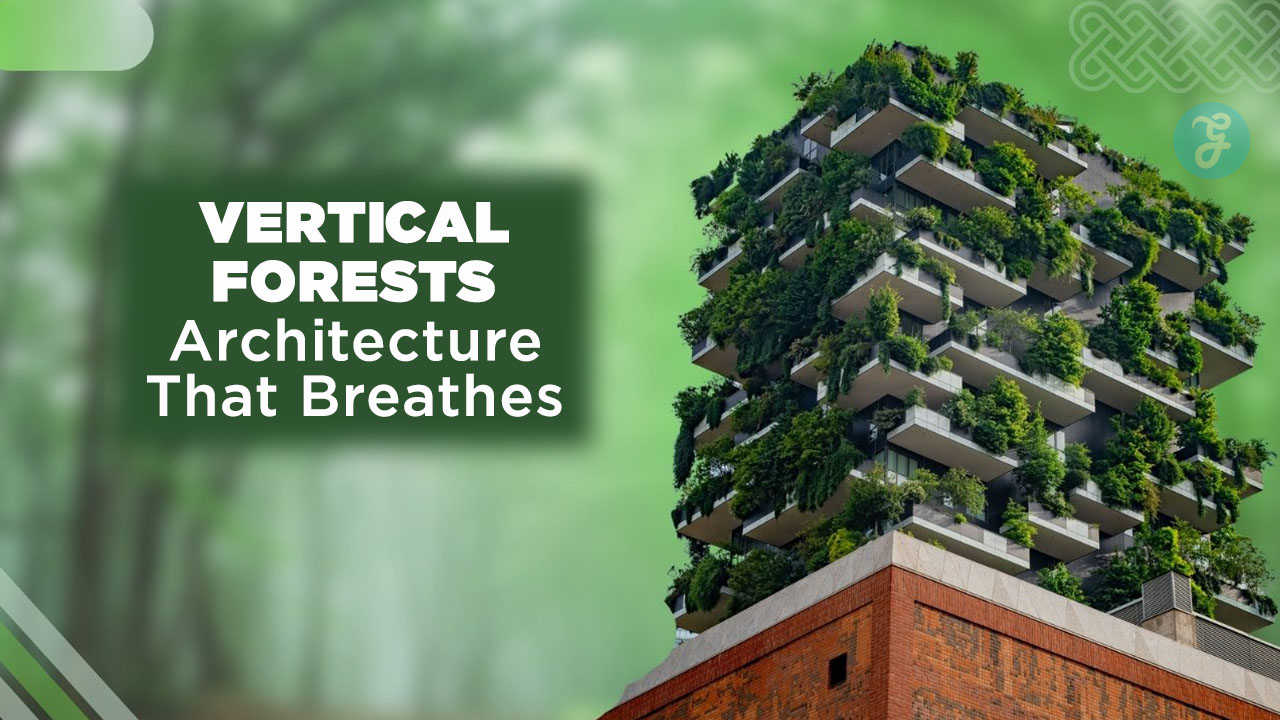
City life can start to feel a little gray, don’t you think? The streets are crowded. Air pollution hangs over buildings. Some kids barely know what fresh air smells like. It’s easy to wish the city had more green spaces, cleaner air, and spots where people could just breathe.
Well, here’s something neat: vertical forests are changing how we build cities. These tall buildings grow thousands of trees and plants right on their walls and balconies. Stick around; this article will show you how vertical forests clean the air, cool down hot streets, and make our lives healthier and happier.
You’ll want to see why these breathing buildings matter for everyone!
What Are Vertical Forests?
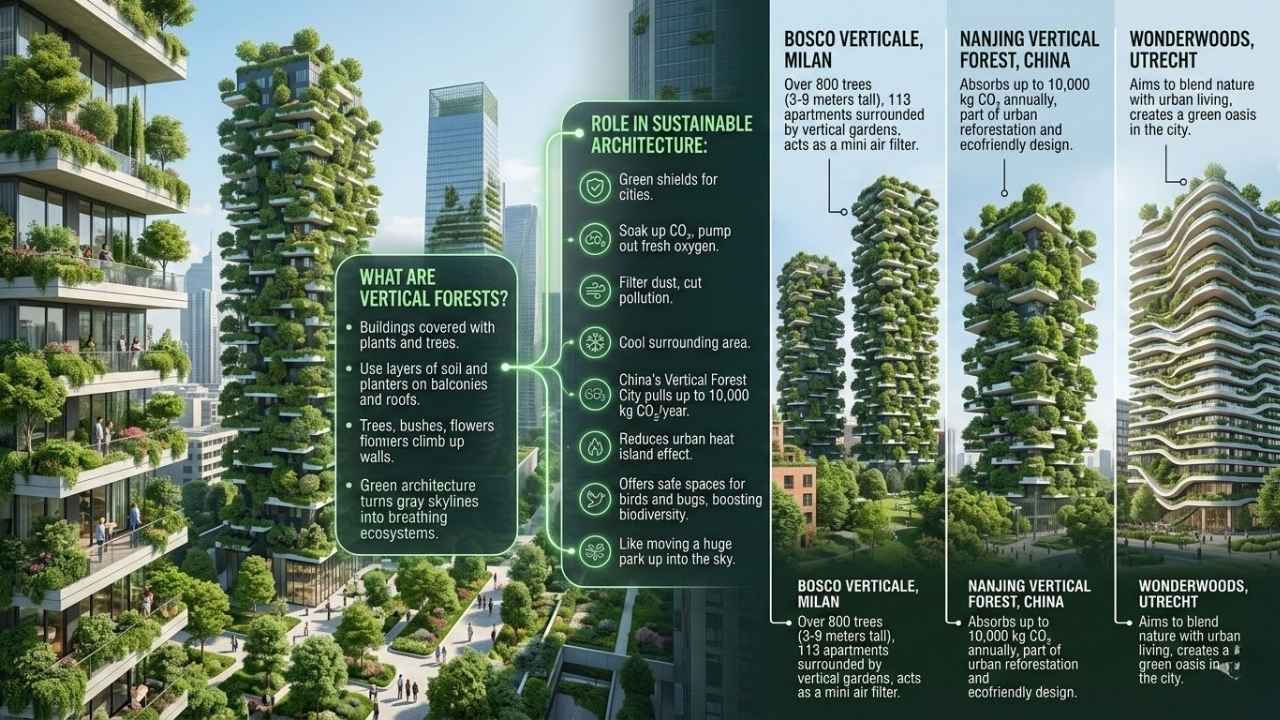
Vertical forests are buildings covered with plants and trees. They bring nature into cities, making urban spaces greener and healthier.
Definition and concept
High-rise buildings can wear a coat of green, like tall trees in the city. These are called vertical forests. They use layers of soil and planters on balconies and roofs to grow hundreds or even thousands of plants.
Trees, bushes, and flowers climb up walls, covering concrete with life.
These living towers do more than look pretty. The plants absorb carbon dioxide from the air around busy streets. Each year, some projects like China’s Vertical Forest City take in up to 10,000 kilograms of CO₂ while giving back clean oxygen.
Bosco Verticale in Milan covers almost 75,000 square meters with greenery and houses over 800 trees between three and nine meters tall. This kind of green architecture turns gray skylines into breathing ecosystems that fight urban pollution every single day.
Role in sustainable architecture
Vertical forests act as green shields for cities. Buildings, like Bosco Verticale in Milan, wear layers of trees and plants that soak up carbon dioxide and pump out fresh oxygen. These structures can filter dust from city air, cut down pollution, and cool the area around them.
In Liuzhou’s Vertical Forest City in China, skyscrapers full of trees pull about 10,000 kilograms of CO₂ from the air each year. This kind of living architecture shrinks the urban heat island effect by blocking extra heat from sticking to buildings.
The greenery even offers safe spaces for birds and bugs right inside busy cities. Over 800 trees line just one vertical forest project with more than 113 apartments wrapped in thick foliage—almost like moving a huge park up into the sky! These efforts help stop concrete sprawl from eating up natural land.
As a result, cities get cleaner air, lower temperatures, richer biodiversity, plus beautiful views all at once—a smart win for ecofriendly design and urban reforestation dreams alike.
Iconic Examples of Vertical Forests
Iconic Vertical Forests stand as green giants in busy cities. Take Bosco Verticale in Milan; its towers are dressed in trees and plants, creating a living skyline.
Bosco Verticale, Milan
Bosco Verticale in Milan stands tall with two residential skyscrapers designed by Boeri Studio. This green building covers almost 75,000 square meters with thick layers of trees and shrubs on every balcony.
Each plant acts as a mini air filter, soaking up carbon dioxide and pumping out oxygen for the whole city block. There are over 800 trees between three to nine meters tall and about 113 apartments surrounded by vertical gardens.
People living here enjoy cleaner air and cooler homes since plants help block dust from pollution and cut the heat that usually bakes concrete buildings. Bosco Verticale brings urban reforestation right into daily life, turning plain towers into living architecture full of birds, insects, and fresh smells after rain.
The project proves ecofriendly design can mix style with environmental innovation in big cities everywhere.
Nanjing Vertical Forest, China
The Nanjing Vertical Forest is a new project in China, aiming to bring nature into the city. This vertical forest will help absorb carbon dioxide and produce oxygen. It can reduce the urban heat island effect too.
With 800 trees that stand between three and nine meters tall, it offers a lush green view. The building will have 113 apartments surrounded by this dense greenery. Each year, these trees can absorb up to 10,000 kg of CO₂.
This project is more than just a building; it’s part of living architecture that promotes urban reforestation and eco-friendly design.
Wonderwoods, Utrecht
Wonderwoods in Utrecht is an exciting vertical forest project. It aims to blend nature with urban living. This building will be draped in greenery, creating a green oasis in the city.
With many trees and plants, it will absorb carbon dioxide and produce clean oxygen.
The design includes 800 trees of various heights, around three to nine meters tall. These trees will help reduce air pollution and lower temperatures during hot days. Wonderwoods is more than just a building; it’s part of a movement toward sustainable architecture and urban reforestation.
People living here can enjoy the benefits of nature right outside their windows while helping protect the environment at the same time.
Benefits of Vertical Forests
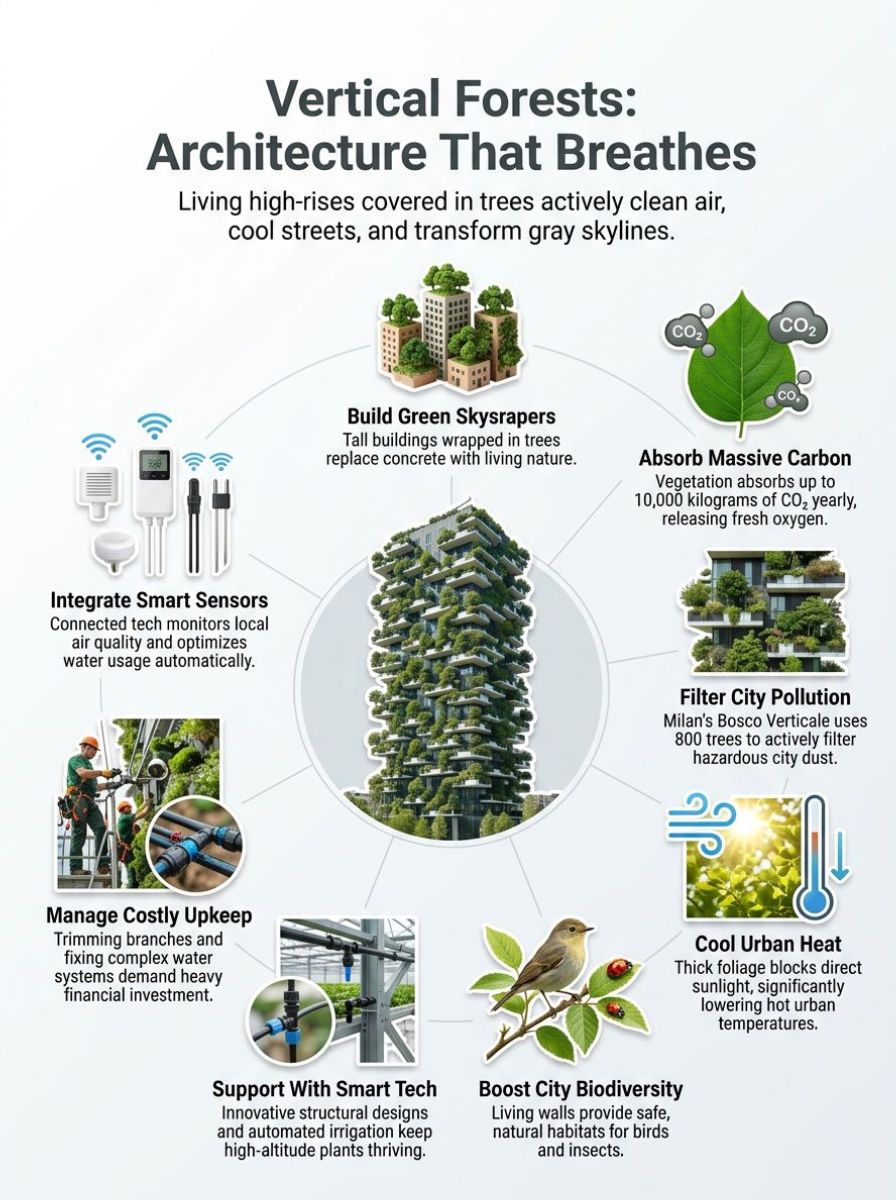
Vertical forests offer fresh air to city dwellers. They help cool down hot streets and bring more life to urban areas, making cities feel greener and friendlier.
Improved air quality
Vertical forests greatly improve air quality. They are filled with trees and plants that absorb carbon dioxide. This process helps filter dust from pollution and produces clean oxygen for us to breathe.
For example, the Vertical Forest City in Liuzhou, China can absorb up to 10,000 kg of CO₂ each year.
These lush green buildings act as natural barriers against air pollution. They reduce outside pollutants while creating a healthier urban environment. The Bosco Verticale in Milan also shows how much greenery can enhance city living by covering almost 75,000 square meters with nature.
These structures beautify our cities and make the air cleaner too!
Reduction of the urban heat island effect
Vertical forests help lower the urban heat island effect. They do this by covering buildings with trees and plants. This greenery acts like a shield against heat. It absorbs sunlight and keeps buildings cooler.
For example, the Vertical Forest in Milan uses almost 75,000 square meters of nature to reduce heat. In China’s Vertical Forest City in Liuzhou, trees can soak up up to 10,000 kg of CO₂ each year while also cutting down on heat.
By bringing nature into cities, vertical forests provide clean oxygen and fight pollution too. They make city life more bearable during hot days. With all this greenery around, urban areas feel fresher and more comfortable for everyone living there.
Biodiversity conservation in cities
Urban areas often lack green spaces, which hurts biodiversity. Vertical forests help bring nature back into cities. They provide habitats for plants and animals. These living buildings support various species, helping them thrive in the city.
Bosco Verticale in Milan is an excellent example. It covers an area of about 75,000 square meters with trees and greenery. This vertical forest produces clean air while supporting wildlife.
China’s upcoming Vertical Forest City will absorb carbon dioxide too, helping to reduce pollution levels. Trees there can take in up to 10,000 kg of CO₂ each year, making a big difference for biodiversity conservation in crowded areas like Liuzhou.
Enhanced aesthetic and mental well-being
Vertical forests improve the look of cities. They bring in green spaces that feel alive. Buildings like Bosco Verticale in Milan showcase trees and plants, creating a beautiful blend of nature and architecture.
This living design helps lift our spirits.
Being close to greenery can boost mental health too. Studies show that plants reduce stress and help people focus better. The presence of trees helps create a calming environment, making urban living easier on the mind.
Spaces filled with nature offer comfort amid busy city life, supporting happiness and well-being for all who live there.
Key Design Features of Vertical Forests
Vertical forests are more than just green walls. They blend nature with buildings, creating living spaces that breathe. Plants grow in thoughtful arrangements, providing beauty and function.
Special water systems keep these plants thriving, while strong structures support them high above the ground.
Arrangement of vegetation and species
Vertical forests use a smart arrangement of plants and trees. This helps create a balance among different species. The Bosco Verticale in Milan has 800 trees that grow from three to nine meters tall.
These plants provide spaces for birds and insects. They also help filter dust and improve air quality.
In China’s Vertical Forest City, the trees can absorb up to 10,000 kg of CO₂ each year. This setup enhances the aesthetic of buildings while also reducing heat build-up in cities.
Proper vegetation placement is essential to making urban areas more livable and green. It transforms buildings into vibrant ecosystems that support both nature and people.
Irrigation and maintenance systems
Irrigation systems are key for vertical forests. They help keep plants healthy and thriving. These systems ensure that trees get the water they need, even high up in a building. For instance, the Bosco Verticale in Milan uses smart irrigation methods to maintain its lush greenery.
Maintenance is just as important. Regular checks make sure plants grow well and stay strong against pests or diseases. Without good upkeep, the beauty of vertical gardens can fade quickly.
In places like China’s Vertical Forest City, workers will monitor over 800 trees to maintain their health. This process helps them absorb carbon dioxide effectively and produce clean oxygen!
Structural innovations for plant support
Vertical forests use smart designs to support plants on buildings. They have special structures that hold trees and plants in place. The Bosco Verticale in Milan has 800 trees, each between three and nine meters tall.
These strong supports help keep the greenery healthy and safe from wind or weather changes.
In China’s Vertical Forest City, the trees will absorb up to 10,000 kg of CO₂ every year. This helps clean the air while providing a sturdy home for urban plants. With these innovations, cities can become greener and more alive with nature.
Challenges and Limitations
Vertical forests face some tough challenges. High maintenance costs can scare off potential projects, while technical issues may slow down their growth.
High maintenance costs
High maintenance costs can be a problem for vertical forests. The trees and plants need care to thrive. Watering them, trimming branches, and replacing dead plants take time and money.
Maintaining the Bosco Verticale in Milan can be expensive, but it brings many benefits.
In China’s new Vertical Forest City, keeping the greenery healthy will also come with costs. While these living buildings help clean air and reduce heat, they require attention to stay beautiful and functional.
Technical difficulties in implementation
Creating vertical forests comes with challenges. These projects often have high maintenance costs. Keeping the plants healthy in a tall building is not simple. The right irrigation systems need to be installed and monitored closely.
Technical difficulties can also arise during construction. Builders may face issues with weight and stability due to all the vegetation. Each plant needs support, which requires innovative designs and materials.
Climate plays a big role too; different regions have unique weather patterns that affect plant choice and growth rates. In places like China’s Vertical Forest City in Liuzhou, these trees will absorb tons of CO₂ each year while also tackling heat, but it takes careful planning to make this work seamlessly in urban settings.
Climate and regional adaptability
Climate impacts how vertical forests grow. Different trees thrive in various climates. For instance, China’s Vertical Forest City can help absorb 10,000 kg of CO₂ each year due to its choice of local plants.
These plants fight pollution and restore clean air.
Vertical forests must adapt to their surroundings for success. In hot areas, dense greenery helps cool buildings by blocking heat from the sun. When cities choose native species, they support local wildlife and boost biodiversity.
Adapting designs can make these living structures a perfect fit for any urban space.
The Future of Vertical Forests
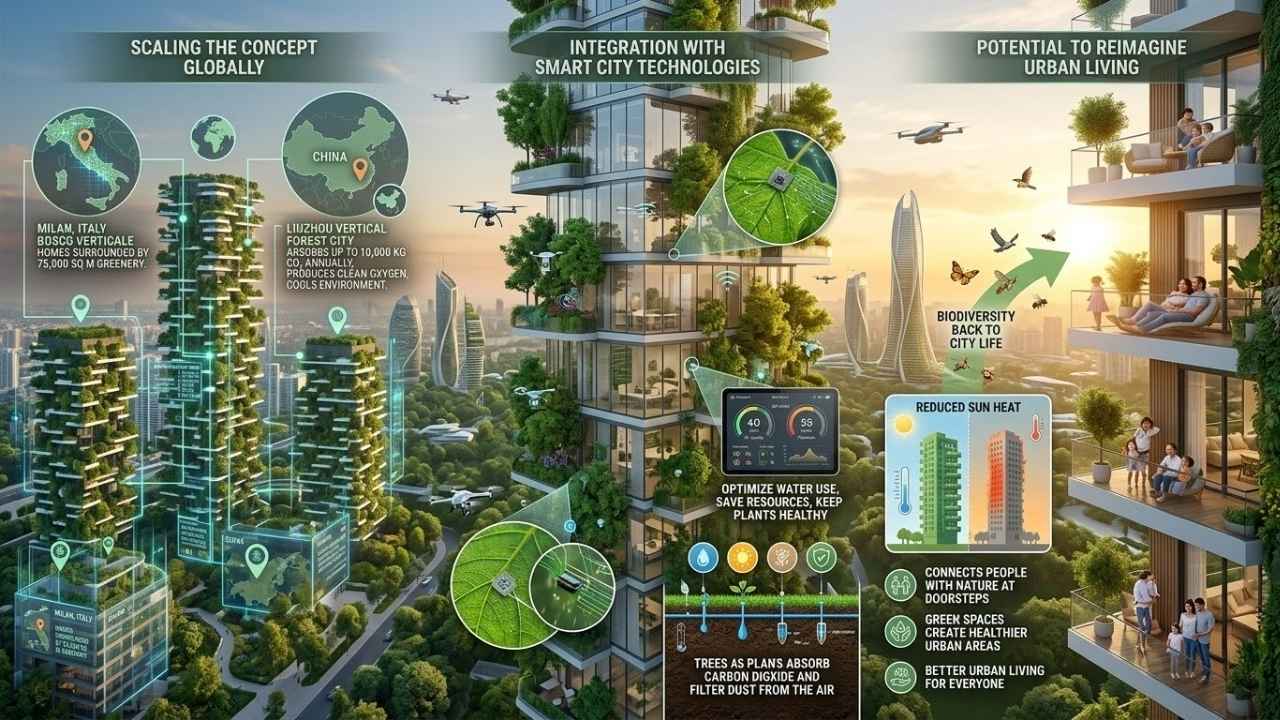
The future of vertical forests looks bright. These living buildings can change how we live in cities. More green spaces mean happier people and healthier air. New tech will help us build them better, too.
Want to learn more? Read on!
Scaling the concept globally
Vertical forests have great potential all over the world. Countries can adopt this design to fight air pollution and improve city life. The Bosco Verticale in Milan serves as an inspiring example.
It offers homes surrounded by 75,000 square meters of greenery.
China is making strides with its first vertical forest in Liuzhou. This project will absorb up to 10,000 kg of CO₂ each year while also producing clean oxygen and cooling the environment.
By integrating green buildings like these, cities can reshape urban living for a healthier future.
Integration with smart city technologies
Smart city technologies fit well with vertical forests. These buildings can connect to sensors that monitor air quality. They help track pollution levels in the area. For example, the trees and plants work together to absorb carbon dioxide and filter dust from the air.
Vertical forests also use smart irrigation systems. These systems optimize water use for the plants, saving resources while keeping them healthy. In Liuzhou’s Vertical Forest City, trees absorb up to 10,000 kg of CO₂ every year.
This creates cleaner air and helps fight against urban heat islands. As cities grow smarter, integrating these innovative designs will reshape urban living.
Potential to reimagine urban living
Vertical forests can change how we live in cities. They add green spaces to urban areas and make them healthier. For example, the Bosco Verticale in Milan covers 75,000 square meters with plants that filter pollution and provide oxygen.
This design is like having many homes surrounded by nature.
China’s new vertical forest city will help combat air pollution too. The trees there can absorb up to 10,000 kilograms of CO₂ each year. These structures reduce heat from the sun while bringing biodiversity back to city life.
Vertical forests connect people with nature right at their doorsteps, making urban living better for everyone.
Final Thoughts
Vertical forests bring nature back to our cities. They are buildings draped in trees and plants, making urban spaces greener. These structures improve air quality and reduce city heat.
By doing so, they create a better living environment for everyone. Learning from examples like Bosco Verticale or the upcoming Liuzhou project shows us how we can change our world for the better. Embracing these green designs is not just smart; it helps us connect with nature too, inspiring us all to build a more sustainable future together.