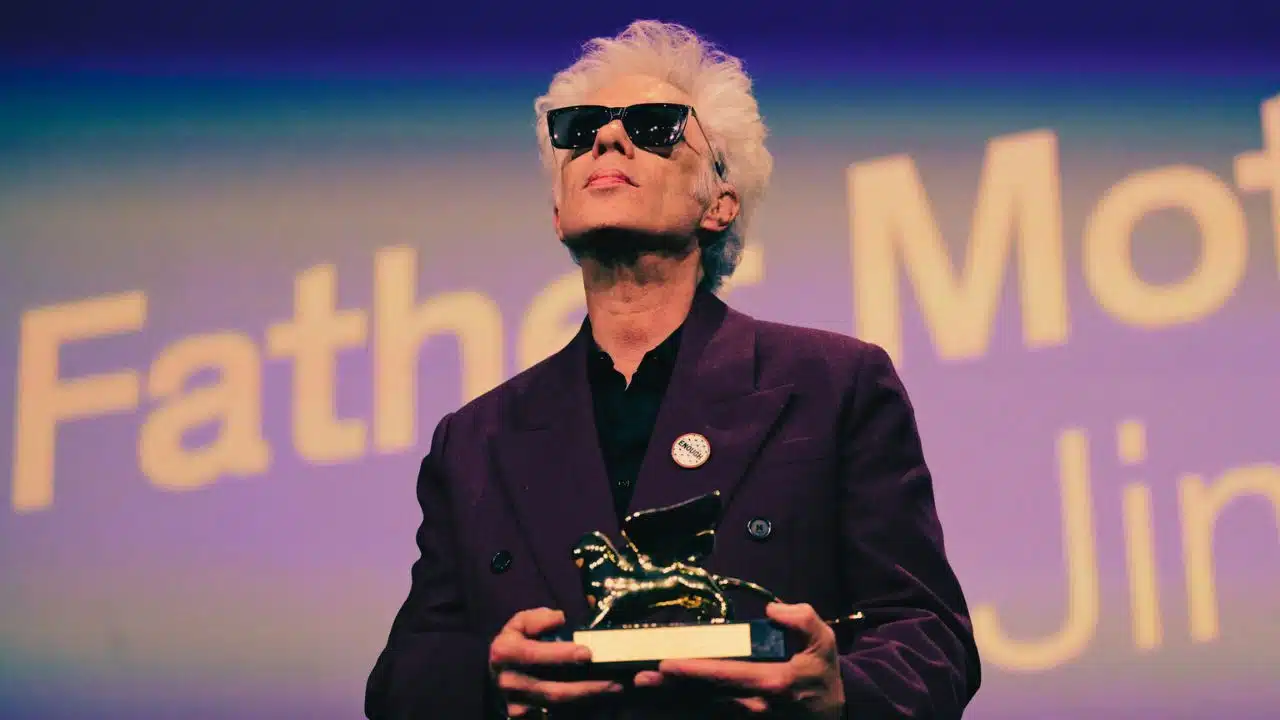
The 82nd Venice Film Festival closed with an unexpected outcome as Jim Jarmusch’s Father Mother Sister Brother was awarded the Golden Lion for Best Film. The American director, known for his distinctive blend of dry humor and meditative storytelling, returned with a film that delicately explores the ties between adult children and their parents.
The triptych narrative, filmed across different cities and cultures, examines family relationships with understated observation rather than grand gestures. Featuring an ensemble cast including Adam Driver, Vicky Krieps, Cate Blanchett, Tom Waits, Charlotte Rampling, Mayim Bialik, Indya Moore, and Luka Sabbat, the film stood out for its intimacy rather than spectacle. The victory came as a surprise since the competition lineup included politically urgent and visually striking films that had drawn far more attention from audiences and critics throughout the festival.
The Voice of Hind Rajab Stirs Audiences and Secures Silver Lion
One of the most talked-about entries was Kaouther Ben Hania’s The Voice of Hind Rajab. The Tunisian filmmaker crafted a docudrama based on real audio recordings from Gaza, focusing on the desperate final phone call of a six-year-old girl trapped in a car riddled with bullets during January 2024.
The film moved viewers profoundly, with many describing it as one of the most emotionally charged works in recent Venice history. It received an extended standing ovation that lasted over 20 minutes at its premiere, and festivalgoers reported that entire sections of the audience were left in tears. The Silver Lion, Venice’s second-most prestigious award, confirmed its critical impact even though many had expected it to win the top prize.
Ben Hania used her platform to spotlight the humanitarian crisis in Gaza. The film became more than art; it became a vessel for bearing witness and demanding accountability, ensuring that Hind Rajab’s voice symbolized the suffering of an entire population.
Other Major Winners: Celebrating Global Diversity
The main competition jury, led by American director Alexander Payne, recognized a wide spectrum of films and talents from around the world.
-
Best Director went to Benny Safdie for The Smashing Machine, an intense biographical drama about MMA fighter Mark Kerr. The film stars Dwayne Johnson in a role that has already generated early Oscar speculation, with critics praising his physically raw and emotionally layered performance. Emily Blunt also features prominently in the cast, adding further weight to the film’s awards season potential.
-
Best Actress was awarded to Chinese star Xin Zhilei for The Sun Rises on Us All. Directed by Cai Shangjun, the film centers on a love triangle set against the backdrop of grueling labor conditions in Guangzhou’s sweatshops. Xin’s layered portrayal of a woman navigating both personal and social pressures was singled out as one of the strongest performances of the festival.
-
Best Actor went to Italian veteran Toni Servillo for his role in Paolo Sorrentino’s La Grazia. Servillo, one of Italy’s most celebrated actors, played a president confronting the end of his time in office, a character study infused with Sorrentino’s signature mix of politics, spectacle, and melancholy.
-
Best Screenplay was awarded to Valérie Donzelli and Gilles Marchand for At Work (À Pied d’Oeuvre), a French drama that tells the story of a once-successful photographer who gives up her career to focus on writing. The decision results in a rapid descent into poverty and precarity, offering a sharp critique of gig economy instability and creative sacrifice.
-
Special Jury Prize was given to Gianfranco Rosi for Below the Clouds, a poetic documentary about Naples that blends urban life, spirituality, and memory. Rosi, already known for works such as Fire at Sea, again demonstrated his ability to capture lyrical images that feel both intimate and universal.
-
Marcello Mastroianni Award for Best Young Actor or Actress was presented to Swiss actress Luna Wedler for Silent Friend. The film unfolds in three interconnected parts and centers on the symbolic presence of a ginkgo tree in a German university town, exploring memory, environment, and the human condition. Wedler’s role was widely praised for its depth and quiet intensity.
Orizzonti and Sidebar Awards Reflect Global Concerns
Venice’s Orizzonti section, dedicated to new discoveries, also presented a strong lineup.
-
Best Film went to En El Camino by David Pablos, a Mexican drama exploring the world of long-haul truck drivers.
-
Best Director was awarded to Indian filmmaker Anuparna Roy for Songs of Forgotten Trees, her debut feature about two migrant women struggling in Mumbai. Roy used her acceptance to speak passionately about the humanitarian situation in Gaza, adding her voice to a growing chorus of political statements at the festival.
The Audience Award was captured by Moroccan filmmaker Maryam Touzani for Calle Málaga, another emotional drama. Touzani also used her spotlight to draw attention to the suffering of mothers in Gaza, reinforcing how political and humanitarian issues permeated this year’s ceremonies.
The Debut Film Award (Lion of the Future) went to Nastia Korkia for Short Summer, an autobiographical tale set during the Chechen war that follows a child living with her grandparents. Korkia spoke about the ongoing war in Ukraine, emphasizing the role of cinema in keeping global attention on conflicts that risk being forgotten.
Political Themes Dominate Venice 2025
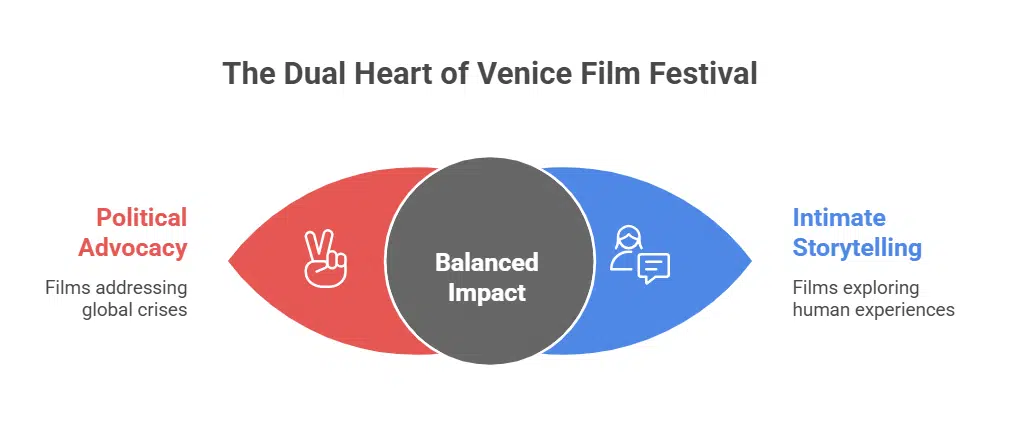
While Venice is known for launching Oscar contenders, this year’s edition was unmistakably marked by political urgency. From Gaza to Ukraine, filmmakers used their platforms to highlight wars, injustice, and humanitarian crises. Even acceptance speeches became acts of advocacy, with several directors openly supporting Palestine and calling for peace.
Although Jarmusch’s film was apolitical in theme, its victory demonstrated the festival jury’s preference for balancing overt political works with quieter explorations of the human condition. This balance is part of what has made Venice unique: it honors both global urgency and the enduring value of intimate storytelling.
A Tribute to Giorgio Armani
The closing ceremony also honored Giorgio Armani, who passed away shortly before the festival ended. Armani Beauty has long sponsored Venice, and the tribute drew a standing ovation. His influence across film, fashion, and art was remembered as an embodiment of the festival’s spirit of interdisciplinary creativity.
Venice and the Road to the Oscars
The Venice Film Festival has become a crucial staging ground for Oscar contenders. In the past decade, films such as The Shape of Water, Birdman, Spotlight, and Nomadland all left Venice before going on to win Best Picture at the Academy Awards.
This year’s lineup included several high-profile premieres expected to factor into awards season, even if they did not win at Venice. Kathryn Bigelow’s nuclear thriller A House of Dynamite, Guillermo del Toro’s gothic Frankenstein starring Oscar Isaac and Jacob Elordi, and Yorgos Lanthimos’s disturbing Bugonia featuring Emma Stone and Jesse Plemons all earned critical buzz. Though none took home a prize, their strong reception suggests they will remain in contention during the upcoming Academy Awards race.
Full List of 2025 Venice Main Competition Winners
-
Golden Lion: Father Mother Sister Brother — Jim Jarmusch
-
Grand Jury Prize (Silver Lion): The Voice of Hind Rajab — Kaouther Ben Hania
-
Best Director: Benny Safdie — The Smashing Machine
-
Best Actress: Xin Zhilei — The Sun Rises on Us All
-
Best Actor: Toni Servillo — La Grazia
-
Best Screenplay: Valérie Donzelli & Gilles Marchand — At Work
-
Special Jury Prize: Below the Clouds — Gianfranco Rosi
-
Marcello Mastroianni Award (Young Actor): Luna Wedler — Silent Friend
Orizzonti Section:
-
Best Film: En El Camino — David Pablos
-
Best Director: Anuparna Roy — Songs of Forgotten Trees
Other Honors:
-
Audience Award: Calle Málaga — Maryam Touzani
-
Debut Film Award: Short Summer — Nastia Korkia
The 2025 Venice Film Festival highlighted the global role of cinema as both art and activism. Jarmusch’s meditative family portrait demonstrated the enduring relevance of quiet storytelling, while films like The Voice of Hind Rajab ensured that urgent political realities were impossible to ignore.
This year’s winners reflect both diversity and contrast: intimate human studies alongside films documenting contemporary wars. As Venice continues its legacy as the most politically conscious of the major film festivals, its decisions once again set the tone for the upcoming awards season and reinforced the power of film to influence cultural conversations worldwide.