
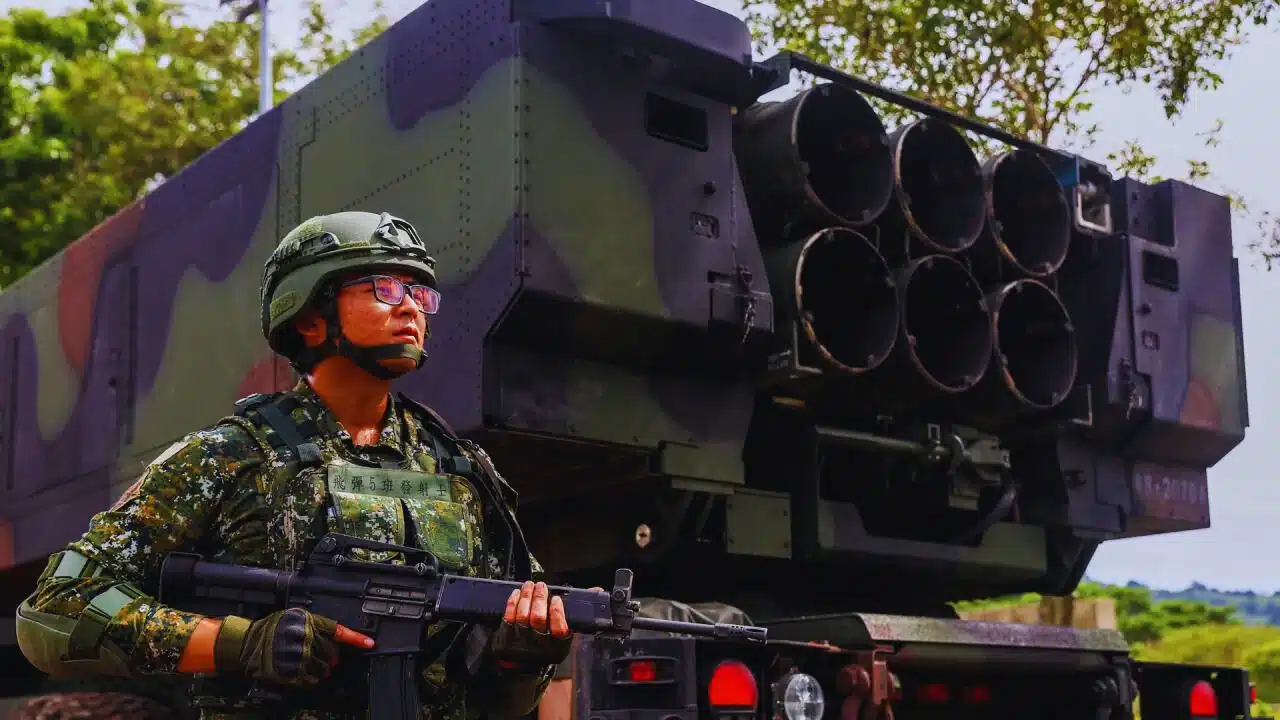
The United States has approved a record US arms sale to Taiwan worth about $11.1 billion, launching the formal congressional notification process for eight packages ranging from long-range rocket systems and artillery to loitering munitions, anti-tank missiles, software, and spare parts.
What Washington approved and why it matters
The U.S. approval covers eight separate Foreign Military Sales (FMS) cases for Taiwan’s de facto embassy in the United States (TECRO). In practical terms, the package focuses on mobile, survivable firepower and battlefield networking—tools designed to help Taiwan respond quickly if conflict erupts, complicate an attacker’s plans, and keep units connected under pressure.
Two items account for most of the total value:
- HIMARS rocket artillery and guided munitions (including ATACMS and GMLRS), which can deliver precision strikes from mobile launchers.
- M109A7 self-propelled howitzers plus ammunition vehicles and precision-guidance kits, which support sustained land defense and counterfire.
Other pieces—like loitering munitions (ALTIUS) and anti-armor missiles (Javelin, TOW)—fit Taiwan’s broader push toward “asymmetric” defense: smaller, harder-to-target systems meant to impose high costs on an adversary.
Breakdown of the eight notified packages
| Package (summary) | Key items (selected) | Estimated value |
| HIMARS | 82 M142 launchers; ATACMS; GMLRS pods; support vehicles & fire-control systems | $4.05B |
| M109A7 artillery | 60 M109A7 howitzers; 60 ammunition vehicles; PGKs; recovery vehicles | $4.03B |
| Tactical Mission Network | TMN plus software/services, comms equipment, hosted/managed services | $1.01B |
| ALTIUS systems | ALTIUS-700M loitering munition systems + ALTIUS-600 ISR systems and support | $1.10B |
| Javelin | 1,050 FGM-148F missiles + launch units and trainers | $0.375B |
| TOW | 1,545 TOW 2B missiles + target acquisition systems | $0.353B |
| Harpoon repair support | radar seekers; return/repair/reship of missiles; training/support | $0.0914B |
| AH-1W parts | spare and repair parts; logistics support | $0.096B |
| Total | ~$11.1B |
How the U.S. arms-sale process works from here
These announcements do not mean the equipment is delivered immediately. They mark a formal stage in the U.S. export process:
- State Department approval and notification to Congress (triggered via DSCA).
- Congressional review window (generally 30 days for most countries under U.S. law).
- If Congress does not block the sale, the U.S. government can proceed to finalize a sales agreement.
- Production, training, integration, and delivery can take years—especially for complex systems and specialized munitions.
What Taiwan gets: capabilities in plain English
HIMARS: fast, mobile long-range precision fires
HIMARS is a truck-mounted launcher that fires pods of guided rockets or missiles. The central value is mobility + precision: it can “shoot and move,” reducing vulnerability to strikes while still reaching key targets.
M109A7: modernized tracked artillery for sustained defense
The M109A7 is a tracked self-propelled howitzer built for modern armored formations. Along with ammunition support vehicles and guidance kits, it strengthens Taiwan’s ability to sustain artillery operations and improve accuracy.
Loitering munitions and anti-tank weapons: layered defense
Loitering munitions can search for targets and strike quickly, while Javelin and TOW provide close-to-mid range anti-armor defense. Together, they reinforce a layered approach that aims to slow advances and raise costs.
Tactical Mission Network: staying connected in a crisis
Software, communications equipment, and managed services are less visible than missiles, but often decisive. A mission network can help units share targeting data, coordinate fires, and improve interoperability.
The political signal—and the immediate friction
Washington frames such sales as consistent with long-standing U.S. policy: helping Taiwan maintain a credible self-defense capability while supporting stability in the region. Taiwan’s government welcomed the move as a boost to deterrence.
Beijing condemned the approvals, arguing that arms transfers to Taiwan violate China’s “one-China” position and increase cross-strait tensions. In past cases, China has responded with diplomatic protests and, at times, announced sanctions or other countermeasures against entities linked to arms sales.
What to watch next
1) Congressional review and timing
Even if the review period ends without a block, the key question becomes how quickly contracts convert into deliverable capability—especially for high-demand systems and munitions.
2) Taiwan’s domestic budgeting and readiness
Taiwan still has to align procurement with legislative approvals, training capacity, basing, and stockpiling. The operational impact depends heavily on funding continuity and force integration.
3) Cross-strait escalation dynamics
Large arms packages can alter perceptions on both sides. Watch for any uptick in military activity, diplomatic moves, or economic pressure in response.
Final thoughts
This record US arms sale to Taiwan is built around a clear theme: more mobile precision firepower, stronger layered defense, and better battlefield connectivity. The immediate next step is political—Congressional review—but the long-term story is operational: how quickly Taiwan can absorb, train on, and field these systems in a way that strengthens deterrence without triggering miscalculation.