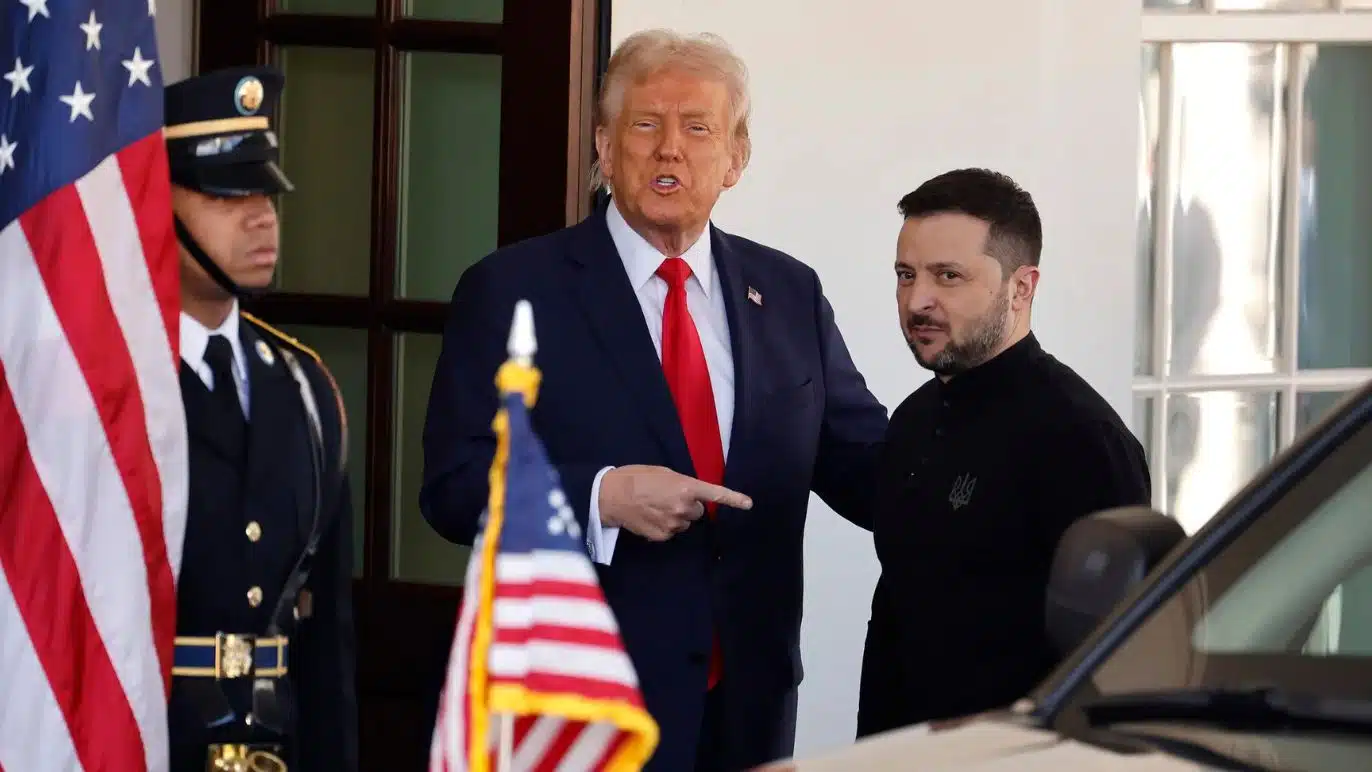
Peace talks between the United States, Ukraine and Russia have hit a hard wall over the future of the Donbas region, leaving Washington and Kyiv publicly aligned but privately split on how far Ukraine can go without conceding core territory. The deadlock has turned Donbas into the central fault line of a wider debate: should the West push for an imperfect peace now, or hold out for a settlement that does not reward Russian territorial gains.
What Is Driving the Deadlock?
At the heart of the impasse is a US‑backed peace framework that still expects Ukraine to give up control over the eastern Donbas, including Donetsk and Luhansk, in exchange for an end to Russia’s full‑scale invasion and long‑term security guarantees. Ukrainian President Volodymyr Zelenskyy has repeatedly rejected any deal that recognizes Russian authority over these territories, framing such concessions as both illegal under Ukraine’s constitution and morally unacceptable after years of war and occupation.
The disagreement is not only about lines on a map but also about who sets the rules of the post‑war European order, with Kyiv insisting that capitulating on Donbas would legitimize Russia’s use of force to revise borders while Washington argues that a controlled compromise could at least stop the bloodshed. US negotiators insist their plan preserves Ukraine’s sovereignty in principle, but critics in Kyiv and Europe counter that the details effectively carve out large chunks of Ukraine as de facto Russian territory under another name.
The US Peace Plan and What It Asks of Ukraine
According to drafts seen by multiple outlets, the original 28‑point US plan envisioned Crimea, Luhansk and Donetsk being acknowledged as effectively Russian, including by Washington, while front lines in Kherson and Zaporizhzhia would be frozen where they are. Because Russia does not fully control all of Donetsk and Luhansk, the plan would require Ukrainian forces to withdraw from parts of Donbas they still hold, creating a neutral, demilitarised buffer zone that would nonetheless be internationally regarded as Russian.
In return, Russia would hand back certain territories it holds outside those five regions and accept restrictions on future offensive operations, while Ukraine would have to significantly downsize its armed forces over time. For many in Kyiv, that trade‑off looks dangerously close to capitulation: Ukraine is asked to surrender heavily defended areas it fought to retain and accept limits on its military, while Moscow locks in much of what it seized after invading in 2022.
“Free Economic Zone” and Buffer Concepts
Facing a backlash, US officials have floated revised ideas, including creating a “free economic zone” in parts of Donbas that Kyiv would vacate militarily but not formally renounce on paper. Zelenskyy recently explained that under one such proposal, Ukrainian troops would pull back from parts of Donetsk region, Russian forces would promise not to enter, and the area would be turned into a demilitarised, special economic zone whose governance remains undefined.
Ukrainian presidential adviser Mykhailo Podolyak has also mentioned the possibility of a demilitarised “buffer zone” in Donbas if both Russian and Ukrainian units withdraw, though he stressed that any such arrangement must be tightly conditioned, with reparations and long‑term security guarantees. Analysts warn that without clear control mechanisms and enforcement, such zones risk becoming legally grey territories that Russia could dominate politically and economically even without uniformed troops on the ground.
Ukraine’s Red Lines on Donbas
Publicly and privately, Kyiv’s position on Donbas has hardened over the past year, shaped by both law and public opinion. Ukraine’s leadership argues that the constitution does not allow ceding territory, and Zelenskyy has repeatedly said Ukrainians are “not ready to give away their land” or recognize occupied areas as Russian. Civil society groups and residents from government‑held parts of Donetsk and Luhansk call proposals to hand over the entire region “absurd,” especially for the roughly 200,000 civilians who still live under near‑constant shelling in Ukrainian‑controlled Donbas.
For many Ukrainians, the Donbas question is also about justice: surrendering the region after mass displacement, atrocities and four years of full‑scale war would feel like erasing the sacrifices of those who fought and died there. Zelenskyy has tried to square this circle by suggesting that, if needed, the question of territorial concessions could be put to a national referendum or decided through elections, arguing that only the Ukrainian people can authorize such a step.
Washington’s Pressure and Diplomatic Calendar
US officials under President Donald Trump insist they are not forcing a deadline on Kyiv but have made clear they want a “full understanding” of Ukraine’s position on the peace plan by around Christmas. Washington’s urgency comes against the backdrop of mounting Russian advances on the front line and stepped‑up strikes on Ukraine’s energy infrastructure ahead of another winter, which US strategists fear could further erode Ukraine’s military and economic resilience.
The US has also linked a future settlement to longer‑term security guarantees for Ukraine, including deepened military cooperation and potentially a pathway short of full NATO membership, after Trump publicly ruled out bringing Ukraine into the alliance. This sequencing — peace deal first, security package second — leaves Kyiv wary that once it gives up territory in Donbas, Western leverage over Moscow will diminish and the promised guarantees might be watered down or delayed.
European Pushback and Fears of Precedent
European governments have reacted coolly to any plan that forces Kyiv to cede the entire Donbas, warning that such terms would reward aggression and destabilise the broader security architecture on the continent. Several European leaders fear the proposed settlement would create a dangerous precedent: if Russia can secure formal recognition of territorial gains after a brutal war, other revisionist powers could try similar tactics elsewhere.
Europe has therefore pushed for revisions that soften or remove the most sweeping territorial concessions, while exploring alternative formulas such as extended timelines, phased withdrawals, and stronger international roles in any demilitarised zones. This has, at times, put Brussels and key European capitals at odds with Washington, as European officials signal solidarity with Ukraine’s insistence on not simply handing over Donbas, even as they share US concerns about a long, grinding war.
Battlefield Reality in and Around Donbas
The deadlock over Donbas is unfolding while fighting in the region remains intense, particularly around key cities and logistical hubs. Russian forces have launched large‑scale mechanised assaults near Pokrovsk and continue offensive operations along several sectors of the eastern front, claiming control of some areas that Ukraine says it still partly holds.
Ukrainian troops have carried out tactical counter‑attacks, regaining some ground in places like the Kupiansk direction, but their gains remain limited compared with the broader Russian push in Donbas. Military analysts note that as long as Russia sees momentum on the battlefield, Moscow has little incentive to compromise on the core demand that all of Donbas be recognized as Russian, reinforcing the political stalemate.
Public Opinion and the Referendum Debate
The idea of a national vote on territorial concessions has emerged as one possible way to break the deadlock between the US plan and Ukraine’s red lines. Zelenskyy has floated the possibility that Ukrainians could decide whether to surrender land to Russia through a referendum or within future elections, framing this as a democratic safeguard in any eventual settlement.
However, early soundings of public opinion suggest strong resistance to giving up Donbas, with many Ukrainians describing it as “absurd” or unacceptable to abandon hundreds of thousands of residents to Russian rule. Organizing a referendum during or immediately after a war also raises serious concerns about security, displacement, and potential interference, with Zelenskyy himself acknowledging that robust security assurances from the US would be needed to prevent Russian meddling.
Security Guarantees vs Territorial Concessions
One of the US arguments for pressing Ukraine on Donbas is that a peace deal could unlock powerful security and economic guarantees that Kyiv would not get while fighting drags on. These could include long‑term military aid, training, advanced air defenses, and integration into Western defence structures short of Article 5 NATO protection, along with large‑scale reconstruction funding.
Yet Ukrainian officials and many analysts warn that such guarantees will be hard to enforce if Russia emerges from the war with an expanded territorial footprint and a de facto veto over Ukraine’s strategic choices from entrenched positions in Donbas. Critics argue that a deal trading land for promises risks replicating the failure of earlier accords, such as the Budapest Memorandum and Minsk agreements, which did not prevent further Russian aggression despite political assurances.
Human and Economic Stakes in Donbas
Before the full‑scale invasion, the wider Donbas region was home to around six million people and was one of Ukraine’s industrial heartlands, with coal mines, steel plants and heavy industry. Years of fighting, occupation and bombardment have devastated much of this infrastructure, but hundreds of thousands of civilians remain in both Ukrainian‑held and Russian‑occupied areas, dependent on fragile supply lines and facing daily shelling.
Relinquishing Donbas would mean permanently losing a significant slice of Ukraine’s industrial base and tax revenue, complicating long‑term reconstruction plans and economic recovery. It would also leave Ukrainians who stayed behind facing an uncertain future under Russian rule, where previous experience in occupied territories has included forced passports, political repression, and aggressive “Russification” policies.
Why the US–Ukraine Rift Matters Beyond Donbas
The deadlock over Donbas is exposing a deeper tension between Washington’s desire to end the war on terms it sees as realistic and Ukraine’s determination to avoid a settlement that undercuts its sovereignty and democratic mandate. How this disagreement is resolved will shape not only Ukraine’s borders but also Western credibility, deterrence against future aggression, and the balance of power in Europe for years to come.
If the US pushes too hard, it risks fracturing its relationship with Kyiv and alienating European partners who are wary of any deal that appears to favour Moscow; if it pushes too little, the war could grind on with rising costs, fatigue and humanitarian suffering. For now, the Donbas question remains the core obstacle to a comprehensive agreement — and until Washington and Kyiv find common ground on territory, the broader peace architecture will remain stuck.