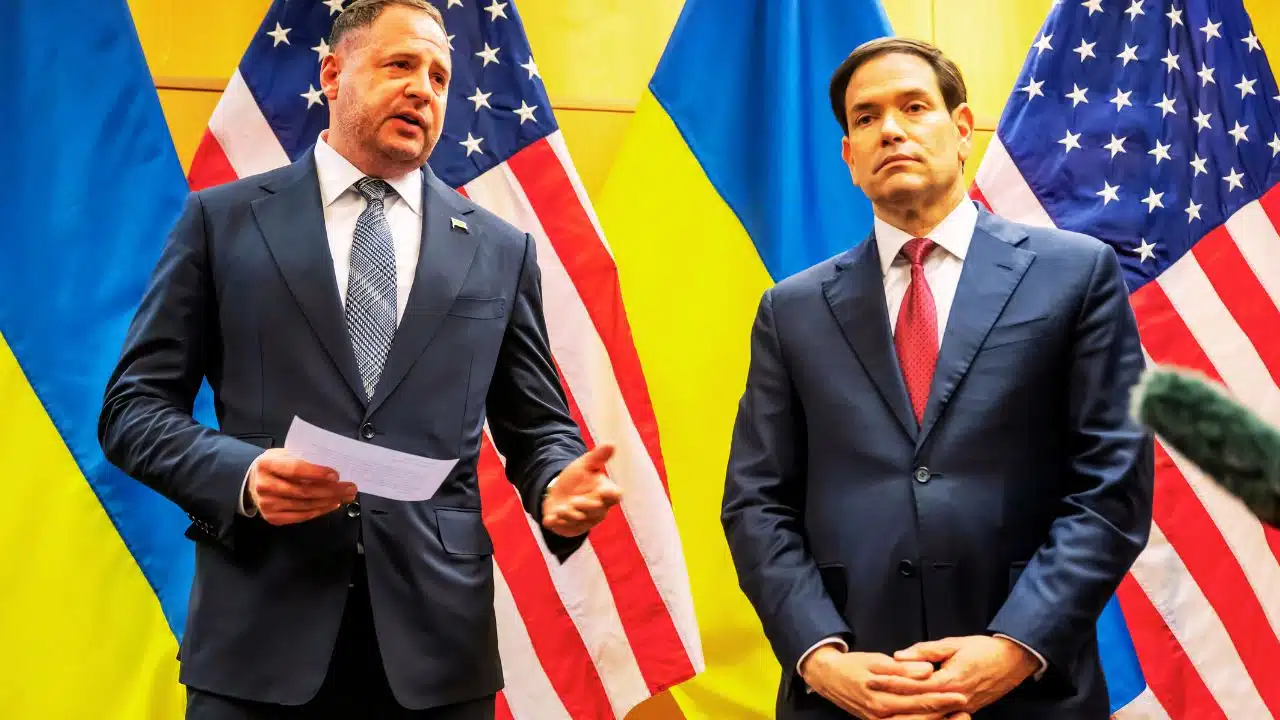
The United States under President Donald Trump has heralded significant advancements in negotiations to end Russia’s war in Ukraine, following high-level talks in Geneva and Abu Dhabi. U.S. officials, including Secretary of State Marco Rubio, described recent discussions as “very favorable,” asserting that only a “handful of outstanding disagreements” remain, which they deem “not insurmountable.” However, a senior Ukrainian official involved in the process revealed deep divides on core issues, challenging the optimistic U.S. narrative amid ongoing Russian strikes on Kyiv.
Recent Diplomatic Momentum
Talks gained traction after U.S. and Ukrainian negotiators met in Geneva over the weekend to revise a controversial 28-point U.S. peace proposal, initially leaked and criticized for favoring Moscow by demanding territorial concessions, military limits, and a NATO ban for Kyiv. Ukraine’s Defense Minister Rustem Umerov announced that Kyiv had agreed to the “core terms” of the updated plan, paving the way for further U.S.-Russia engagements in Abu Dhabi led by U.S. Army Secretary Dan Driscoll. President Trump, speaking aboard Air Force One, expressed confidence that “people are starting to realize it’s a good deal for both parties,” while signaling a potential envoy visit to Russian President Vladimir Putin.
The White House emphasized “tremendous progress” in bringing Ukraine and Russia to the table, with press secretary Karoline Leavitt noting that “delicate but not insurmountable details” require additional trilateral discussions. Ukrainian President Volodymyr Zelenskyy echoed a positive tone, calling the diplomacy “invigorated” and planning a U.S. visit to finalize steps with Trump, though he stressed the need for European support.
Persistent Major Hurdles
Despite the rhetoric, substantial gaps persist on at least three pivotal issues from the U.S. proposal. First, territorial disputes in Donbas loom large: the plan calls for Ukraine to cede control of a “fortress belt” of fortified towns not fully held by Russia, but Kyiv reports only “some progress” without final agreement, rejecting claims of full acceptance.
Second, military caps remain contentious; the original limit of 600,000 personnel has been raised in talks, but Ukraine demands further changes to avoid severe weakening. Third, barring Ukraine from NATO is a non-starter for Kyiv, viewed as granting Russia a veto over alliance expansion and undermining long-term security—red lines defended at great human cost.
These demands align closely with Kremlin preconditions for peace, yet they represent Ukraine’s deepest vulnerabilities, complicating any compromise for Zelenskyy amid domestic political risks.
Ongoing Violence and Skepticism
Russian missile strikes killed at least seven in Kyiv on Tuesday, targeting infrastructure just as talks intensified, underscoring Moscow’s leverage on the battlefield. Kremlin spokesperson Dmitry Peskov awaits the revised plan but remains non-committal, while analysts warn Russia’s potential rejection could stall progress. European allies urge pressure on Moscow, as Ukraine pushes for security guarantees, highlighting the fragile path ahead despite U.S. optimism.