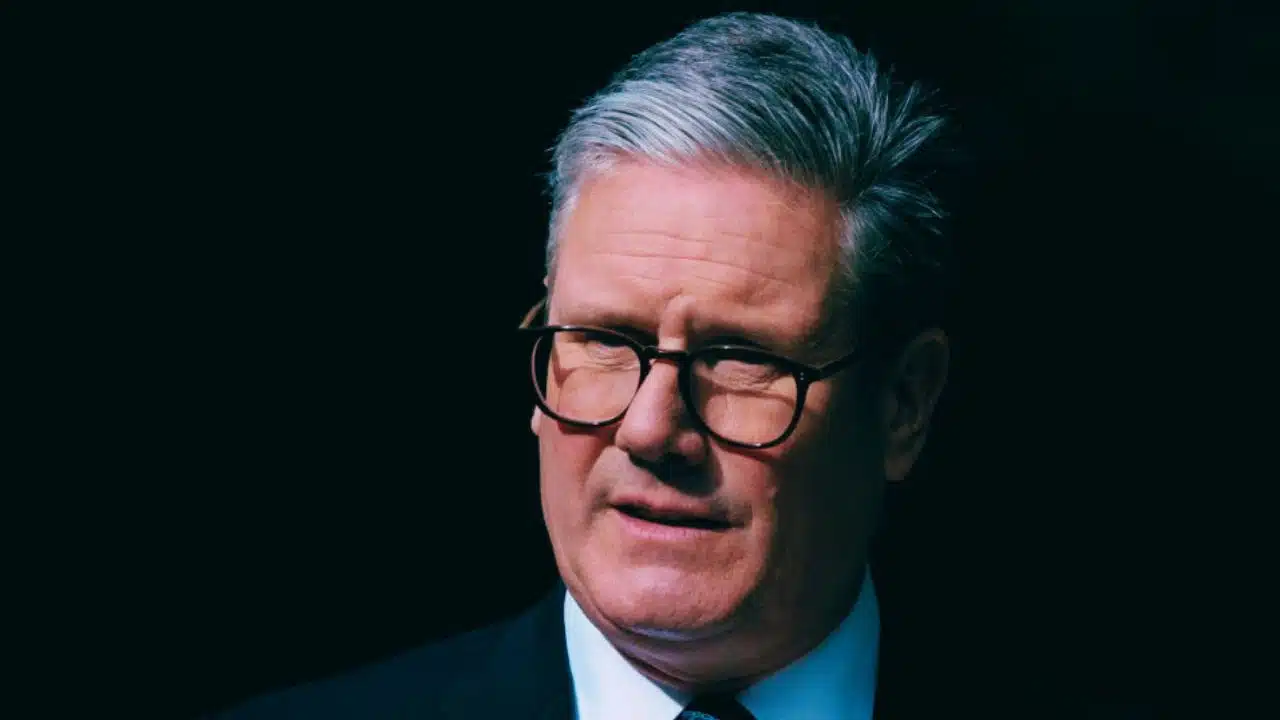
UK Prime Minister Keir Starmer landed in Mumbai early Wednesday for his first official visit to India, a high-stakes, two-day tour aimed at cementing the landmark UK-India Free Trade Agreement (FTA) and accelerating bilateral cooperation in key sectors like technology, defence, and green energy. Accompanied by the largest-ever British trade delegation to the country, Starmer’s visit signals a concerted effort by his government to translate the ambitious trade pact into tangible economic growth and jobs for the UK.
Starmer, who took office in July 2024, was received at Chhatrapati Shivaji Maharaj International Airport by senior Maharashtra government officials, including Chief Minister Devendra Fadnavis. The visit comes just months after he hosted Indian Prime Minister Narendra Modi in London, where the final touches were put on the historic trade agreement.
Key Facts / Quick Take
- Who: UK Prime Minister Keir Starmer on his first official visit to India.
- What: A two-day visit focused on implementing the UK-India Free Trade Agreement, boosting trade and investment, and strengthening strategic ties.
- When: October 8-9, 2025.
- Where: Mumbai, India.
- Why: To operationalize the new FTA, review the ‘Vision 2035’ roadmap for bilateral relations, and explore new avenues for cooperation in technology, defence, and climate.
- Key Statistic: The UK-India FTA is projected to boost bilateral trade by £25.5 billion annually and increase UK GDP by £4.8 billion in the long run.
High-Powered Delegation Signals Serious Intent
Underscoring the economic focus of the visit, Starmer is accompanied by a 125-strong delegation comprising prominent CEOs, university vice-chancellors, and cultural leaders. This marks the largest ever government-led trade mission from the UK to India, featuring industry giants like Rolls-Royce, British Airways, Diageo, and the London Stock Exchange.
The primary objective is to “turbocharge” trade and investment flows following the signing of the FTA in July 2025. Before his departure, Starmer described the deal as more than just a document.
“We signed a major trade deal with India in July – the best secured by any country – but the story doesn’t stop there. It’s not just a piece of paper, it’s a launchpad for growth,” Starmer stated.
His agenda in Mumbai includes a crucial bilateral meeting with Prime Minister Narendra Modi on Thursday, October 9, at the Raj Bhavan. The two leaders are also scheduled to deliver keynote addresses at the 6th edition of the Global Fintech Fest and participate in a CEO Forum at the Jio World Centre.
The Economic Stakes: A Deep Dive into the Numbers
The economic partnership between the two nations is already substantial, but the new FTA is expected to unlock significant further potential.
- Current Trade Volume: Total trade in goods and services between the UK and India stood at £44.1 billion in the four quarters leading up to Q1 2025, an increase of 10.1% from the previous year.
- Projected FTA Impact: The UK government projects the trade deal will increase the UK’s GDP by £4.8 billion and boost wages by £2.2 billion annually in the long term. Bilateral trade is forecast to rise by £25.5 billion per year.
- Scotch Whisky a “Big Winner”: A major beneficiary of the FTA is the Scotch whisky industry. The deal slashes India’s historically high tariffs on whisky from 150% to 75% immediately, with a further reduction to 40% over the next decade. This move is anticipated to boost UK whisky sales to India by an estimated £1 billion a year, creating over 1,000 new jobs in the UK.
Strategic Dialogue: Beyond Trade
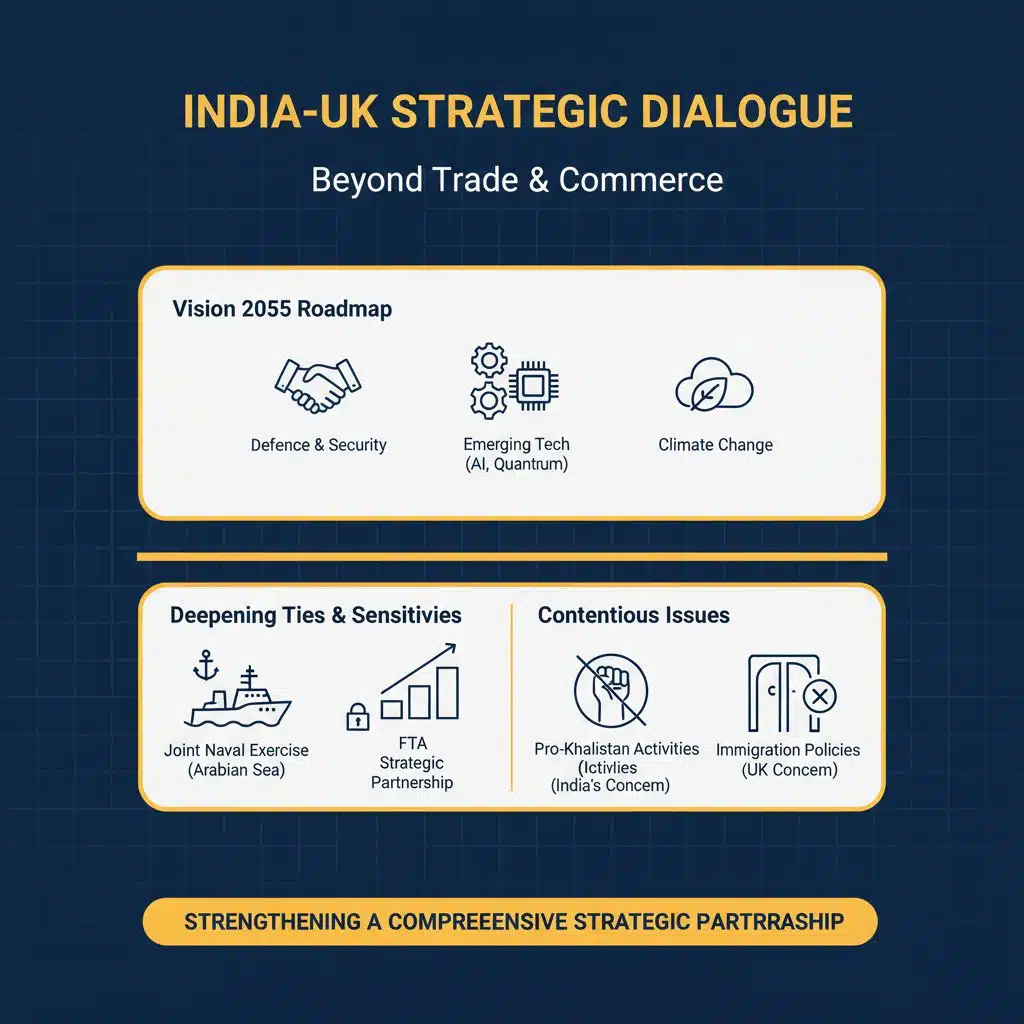
Discussions between Starmer and Modi are expected to extend beyond commerce. The leaders will review progress on the ‘Vision 2035’ roadmap, a 10-year plan designed to strengthen the India-UK Comprehensive Strategic Partnership. Key pillars of this partnership include defence and security cooperation, collaboration on emerging technologies like AI and quantum computing, and joint efforts on climate change.
The visit also coincides with a joint naval exercise in the Arabian Sea, highlighting the deepening defence ties between the two nations. However, sensitive issues may also be on the table. Analysts suggest that India may raise concerns about pro-Khalistan activities in the UK, while the British side faces domestic pressure on immigration policies, a point of contention during the FTA negotiations.
Expert Analysis: Balancing Opportunity and Domestic Politics
Experts view the visit as a critical test for Starmer’s government to demonstrate post-Brexit Britain’s global ambitions. The focus on India, a rapidly growing economy projected to be the world’s third-largest by 2028, is a strategic imperative.
Priyajit Debsarkar, a London-based political analyst, noted the mutual benefits. “The British would be able to access a vast market for goods like alcoholic beverages and cars while exports of small and medium Indian enterprises would gain from more simplified trade regulations,” he said.
However, Starmer must navigate a complex political landscape at home, where his government faces pressure to curb immigration. This has led to a firm stance against expanding visa access for Indian professionals, a key ask from New Delhi during the FTA talks. “That isn’t part of the plan,” Starmer told reporters en route to Mumbai, emphasizing the focus on implementing the existing agreement.
What to Watch Next
The outcomes of the bilateral meetings on Thursday will be closely scrutinized. Key announcements are expected in the areas of technology partnerships and investment deals. The joint address at the Global Fintech Fest will provide a platform for both leaders to outline their shared vision for a future digital and economic partnership.
As the UK seeks to forge a new role on the world stage, the success of this visit and the effective implementation of the India FTA will be crucial in demonstrating its ability to build strong, mutually beneficial relationships with key global powers.