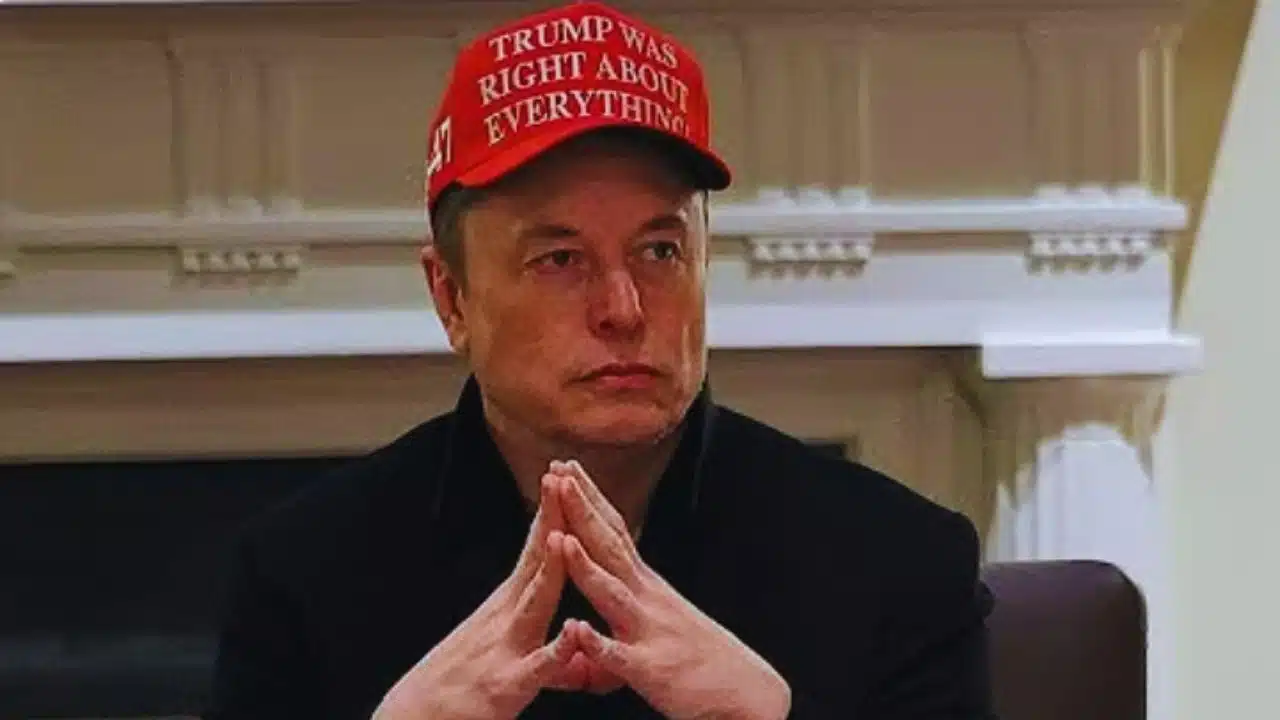
The high-profile fallout between former allies Donald Trump and Elon Musk took an explosive turn this week. Trump, the U.S. President, hinted at potential deportation of Elon Musk, a naturalized U.S. citizen originally from South Africa, while also threatening to use the government’s Department of Government Efficiency (DOGE) to review billions in federal subsidies granted to Musk’s companies.
Trump’s remarks come in the wake of Musk’s renewed criticism of a controversial tax cuts and spending bill that passed the Senate on Tuesday by a razor-thin margin. Musk, the CEO of Tesla, SpaceX, and owner of the social platform X (formerly Twitter), has openly attacked the bill as a financial disaster and political mistake, reigniting a feud that had been simmering since early June.
What Sparked the New Round of Hostilities?
The conflict between Trump and Musk, which had already shown signs of strain, reignited after Musk publicly slammed Trump’s spending bill as “a disgusting abomination.” The $4.5 trillion package includes tax breaks for corporations, infrastructure investments, and military spending increases, but has drawn criticism over its impact on national debt and inflation.
Musk took to X to lambast both parties, calling the Republican Party the “Porky Pig party” for backing the bill and warning that the legislation would lead to long-term economic pain. He further described the GOP’s move as “political suicide,” particularly ahead of the 2026 midterm elections.
Trump, who has often touted the legislation as his “Big and Beautiful Bill,” didn’t take kindly to the criticism. On Tuesday, while addressing reporters, Trump was asked whether he was considering deporting Elon Musk.
His response was ambiguous but provocative:
“I don’t know, we’ll have to take a look,” Trump said, referring to Musk’s immigration status.
“We might have to put DOGE on Elon. You know what DOGE is. DOGE is the monster that might have to go back and eat Elon.”
Later that day, Trump followed up with another warning, this time posted on his Truth Social platform:
“If DOGE looks at Musk, we’re going to save a fortune. No more rocket launches, satellites, or electric car production, and our country would save a fortune.”
“Without subsidies, Musk would probably have to close up shop and head back home to South Africa.”
These remarks, while lacking formal legal grounding, signal a clear escalation in Trump’s rhetoric, suggesting he’s willing to weaponize government power against a former ally who’s now turned critic.
Understanding DOGE: A Tool of Power?
The Department of Government Efficiency (DOGE) was a pet project of the Trump administration, launched with Musk’s backing in early 2025. Billed as a revolutionary approach to cutting bureaucratic waste, DOGE was meant to identify and eliminate inefficiencies across federal agencies.
Musk was heavily involved in DOGE’s formation and early leadership. The initiative was credited—by Trump’s team—with saving over $180 billion in federal expenditures. However, independent analysts estimate actual savings closer to $80–$120 billion, and critics argue the agency lacks oversight and has blurred the lines between public service and political influence.
Musk resigned from DOGE’s advisory board in late May following growing friction with Trump over economic policy, particularly the proposed tax reforms and increased federal spending embedded in the bill that eventually passed this week.
Musk’s Political Maneuvering and America Party Ambition
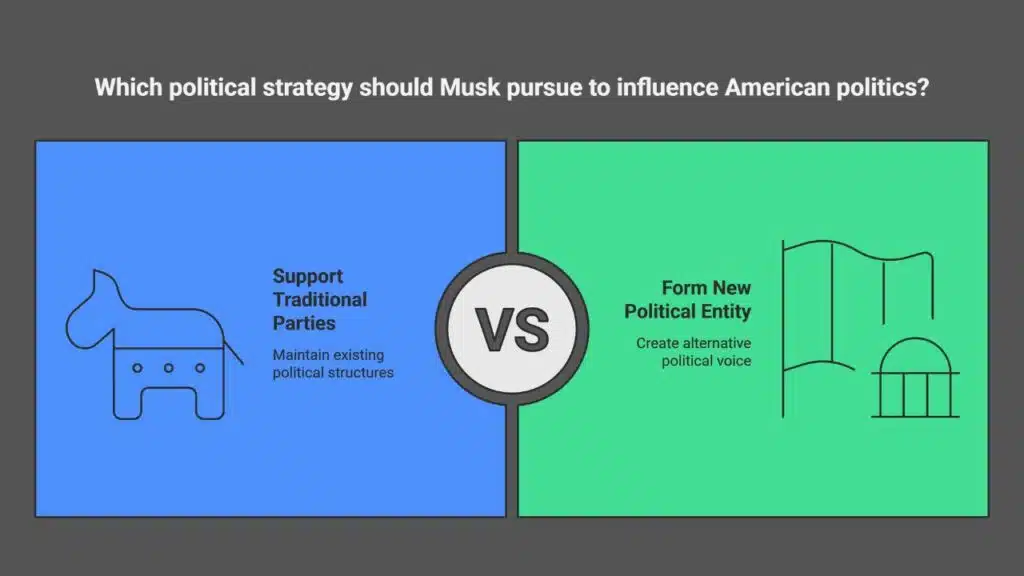
In response to Trump’s threats and the GOP’s support of the bill, Musk has hinted at taking matters into his own hands—politically. On Monday, Musk stated that the U.S. needed “an alternative to the Democrat-Republican uniparty” and hinted at forming a new political entity called the “America Party.”
The billionaire entrepreneur suggested that he might back candidates outside the two traditional parties and help fund primary challenges against Republican lawmakers who supported Trump’s bill.
Musk wrote on X:
“The people actually need a voice. If the GOP can’t stop selling out, it’s time for something new.”
He also confirmed that he would spend less money on political campaigns in the future, a sharp departure from the hundreds of millions he poured into supporting Trump’s reelection campaign in 2024.
Trump’s Retaliation: Playing the Subsidy Card
Trump’s remarks suggest a broader strategy: threatening the lifeline of federal funding and support that many of Musk’s ventures depend on.
Tesla, for example, has benefitted from a range of electric vehicle (EV) subsidies and tax credits, while SpaceX has secured multibillion-dollar contracts with NASA and the Department of Defense to provide satellite launches and space missions.
By targeting these incentives, Trump could apply pressure where it hurts most—Musk’s business empire.
“No more rocket launches, satellites, or electric car production, and our country would save a fortune,” Trump posted, adding that Musk could be forced to “close up shop.”
Though such an action would require legislative and agency cooperation, the rhetoric itself may signal Trump’s willingness to turn long-time allies into political targets if they threaten his agenda.
Can Musk Be Deported?
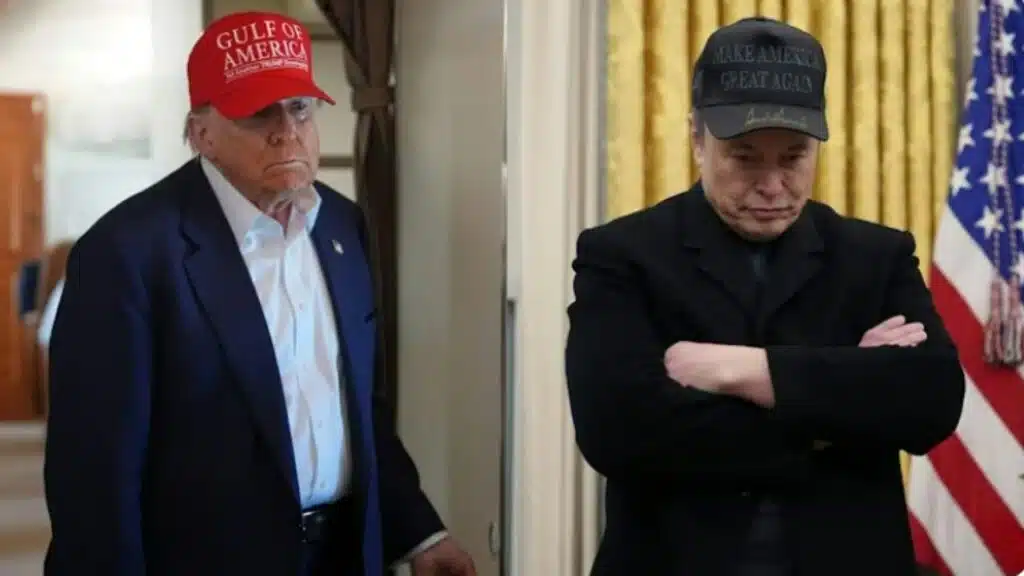
Despite Trump’s comments, deporting Elon Musk would be legally impossible under current U.S. law unless there was proven fraud in his naturalization process—something that has never been alleged.
Musk became a naturalized U.S. citizen in 2002 and also holds Canadian citizenship, which gives him freedom of movement in North America under NAFTA rules. Deportation laws protect naturalized citizens unless they commit major crimes or obtained their citizenship under false pretenses.
According to immigration law experts, Trump’s comment seems more symbolic than actionable—a threat more aligned with political bluster than real legal strategy. However, it has fueled an online firestorm and media scrutiny into Trump’s ongoing feud with the tech magnate.
The Bigger Picture: Political Fallout and Market Implications
The feud could have broader implications for both the Republican Party and the tech industry. As the U.S. approaches the 2026 midterm elections, internal divisions and high-profile disputes like this one threaten to split conservative support.
Musk’s sway among independent voters, libertarians, and young entrepreneurs could pose a challenge to Trump’s efforts to unify the party behind his leadership. Meanwhile, markets are watching closely, especially since SpaceX and Tesla stock movements have historically responded to Musk’s political involvement.
Policy analysts also warn that the politicization of agencies like DOGE could discourage private-sector cooperation with government initiatives, especially in sectors that rely on innovation and public-private partnerships.
What started as a difference of opinion over a spending bill has now become a full-blown public brawl between two of the most powerful men in America. Trump’s remarks about deportation and cutting subsidies are likely attempts to silence a critic and maintain control over his political narrative. Musk, for his part, appears more emboldened than ever, using his platform to challenge what he sees as flawed leadership in both major political parties.
Only time will tell whether this dispute fizzles out—or leads to deeper political consequences in the months ahead.
The Information is collected from ABC News and MSN.