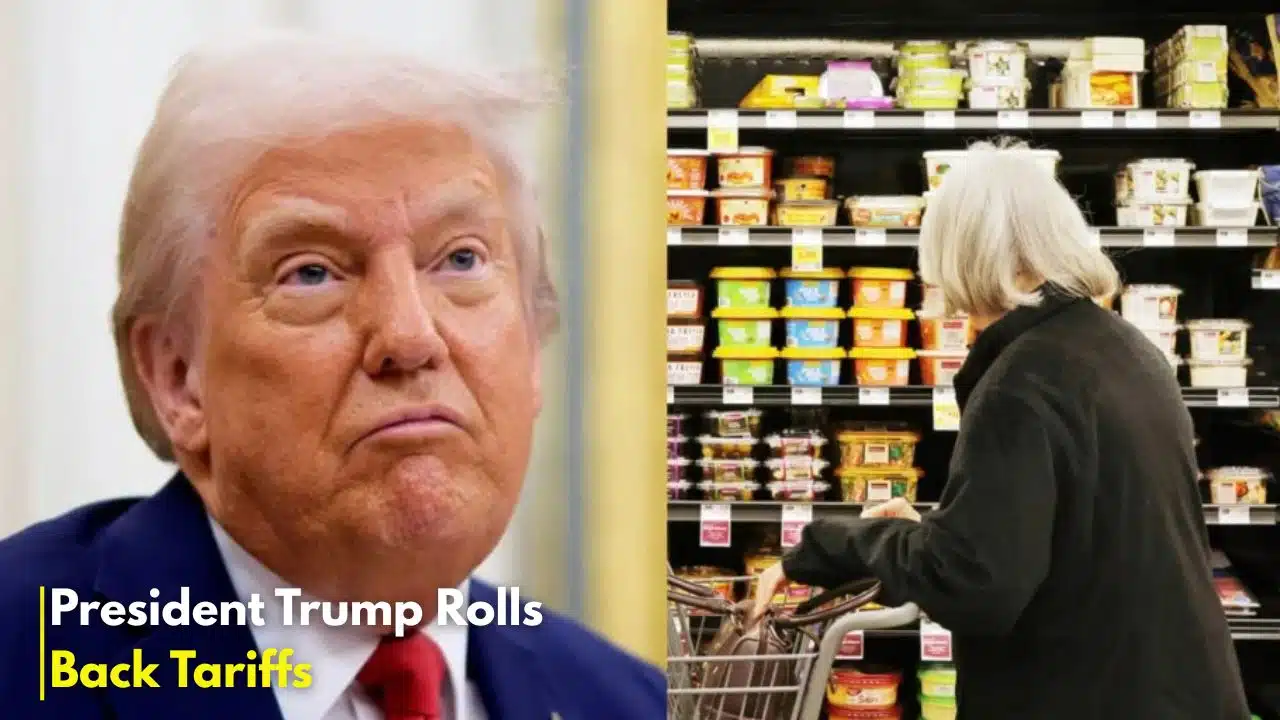
In a stunning reversal of his signature trade policy, President Donald Trump rolled back tariffs on dozens of food products Friday, a move seen as a direct concession to mounting political pressure over the soaring cost of living for American families.
The executive order, signed just weeks before the Thanksgiving holiday, scraps import duties on over 200 agricultural products, including beef, coffee, bananas, tomatoes, and other staples that have seen sharp price hikes.
This “pivot to affordability,” as one Democratic critic labeled it, marks the most significant retreat of the president’s second-term “reciprocal tariff” doctrine. That policy has subjected nearly all U.S. imports to a base-level tariff, a move economists have overwhelmingly argued is a tax paid by U.S. importers and consumers.
Speaking to reporters from Air Force One, President Trump confirmed the move, framing it as a targeted relief measure.7 “We just did a little bit of a rollback on some foods like coffee,” he said.
When pressed on whether his long-defended tariffs had contributed to inflation, the president offered a rare admission. “I say they may, in some cases,” he conceded, before adding his frequent claim that the duties have “to a large extent… been borne by other countries.
The policy shift comes just days after off-year elections where voters in key states cited economic concerns and high prices as their top issue, dealing a series of losses to candidates endorsed by the administration.
Data: The Crushing Cost of the Trade War
The administration’s reversal follows months of stark warnings from economists and mounting anecdotal evidence from consumers. The president’s sweeping levies, which began in early 2025, have raised the cost of nearly all imported goods.
Statistic 1: The Household Burden
Estimates on the direct cost to American families have varied, but consistently point to a significant financial burden.
-
A September 2025 report from the Yale Budget Lab estimated the administration’s tariffs were on track to cost the typical U.S. household an average of $2,400 per year.
-
The Tax Foundation, in a separate analysis, projected a more conservative average tax increase of $1,200 per household in 2025.
While the methodologies differ, the conclusion is the same: the tariffs have acted as a broad-based consumption tax, hitting low- and middle-income families the hardest.9
Statistic 2: Food Inflation by the Numbers
This burden has been most acute at the grocery store. According to the latest data from the USDA’s Economic Research Service (ERS), food prices are rising faster than general inflation.10
| Metric (Aug 2024 to Aug 2025) | Percent Increase |
| All-Items CPI (General Inflation) | +2.9% |
| All Food CPI | +3.2% |
| Food-at-Home (Groceries) | +2.7% |
| Food-Away-from-Home (Restaurants) | +3.9% |
The ERS report noted that prices for categories like sugar and sweets had climbed 5.3% in the past year, while other reports highlighted significant price increases for imported goods like coffee, which one source pegged at a 20% jump. Friday’s rollback targets many of these high-inflation items.11
Statistic 3: The Soaring Tariff Revenue
The cost to consumers has been a boon for U.S. Treasury coffers. By September 2025, U.S. tariff revenue had soared to exceed $30 billion per month.12 This is a more than three-fold increase from the monthly average of under $10 billion in 2024, before the second-term policies took effect ).
This $30-billion-per-month figure illustrates the sheer scale of the funds being extracted from the import economy—costs that economists say are inevitably passed on to businesses and consumers.
Relief from the Aisle, Scorn from the Hill
The announcement drew immediate and sharp reactions, highlighting the economic and political fault lines of the trade war.
The Consumer View
For many Americans, the relief cannot come soon enough.
It is this sentiment the White House is scrambling to address.
Industry and Political Reaction
Industry groups, who have lobbied for months against the tariffs, cautiously welcomed the news. The Food Industry Association issued a statement praising the “swift tariff relief,” calling it “a critical step ensuring continued adequate supply at prices consumers can afford.
Opponents on Capitol Hill, however, called the move a desperate political ploy and an admission of a failed policy.
Analysis: A Broader Unwinding of the Trade War?
Friday’s executive order is not happening in a vacuum. It is the second major tariff concession from the White House this month, suggesting a broader, if reluctant, unwinding of its most hardline trade policies.
The China Deal Context
On November 1, 2025, the White House announced a significant trade deal with China to de-escalate tensions
-
U.S. Concession: The U.S. agreed to lower tariffs on certain Chinese imports (related to fentanyl production) by 10 percentage points and extend other Section 301 tariff exclusions.16
-
China Concession: In return, China agreed to suspend all retaliatory tariffs on a vast swath of U.S. agricultural products, including soybeans, pork, beef, and corn. China also pledged to purchase at least 12 million metric tons (MMT) of U.S. soybeans by the end of 2025.
This deal was a lifeline for U.S. farmers, who had been devastated by Chinese retaliatory tariffs. Friday’s rollback on food items from other countries can be seen as “Phase Two” of this inflation-fighting strategy—first, open the door for U.S. exports, and second, lower the cost of U.S. imports.
The White House also used new “framework trade agreements” with Ecuador, Argentina, Guatemala, and El Salvador as policy cover for the rollback, allowing the administration to frame it as a negotiated win rather than a unilateral surrender to economic pressure
What to Watch Next
Despite the relief measures, economists remain cautious. An analysis from Oxford Economics on November 6 noted that while the new China deal was an improvement, the tariff structure would continue to hinder trade.19 They forecast that global trade volumes would still decline by 0.3% in 2026, and China’s exports to the U.S. were projected to drop by 18% by 2026 as supply chains continue to realign
Furthermore, skepticism abounds over China’s follow-through. As of this week, USDA data shows only 332,000 metric tons of soybeans have been purchased by China since the summit—a fraction of the 12 MMT promised
For the American consumer, the question is how quickly this tariff relief will translate into lower prices at the checkout line. While the order is effective immediately, experts caution that it may be “slow to provide relief,” as it takes time for the cuts to work their way through the complex global supply chain.
Ultimately, Friday’s move is a clear political calculation. The administration has bet that the political damage of admitting its tariffs raised prices is less severe than the continued political damage of voters blaming them for an expensive Thanksgiving dinner.