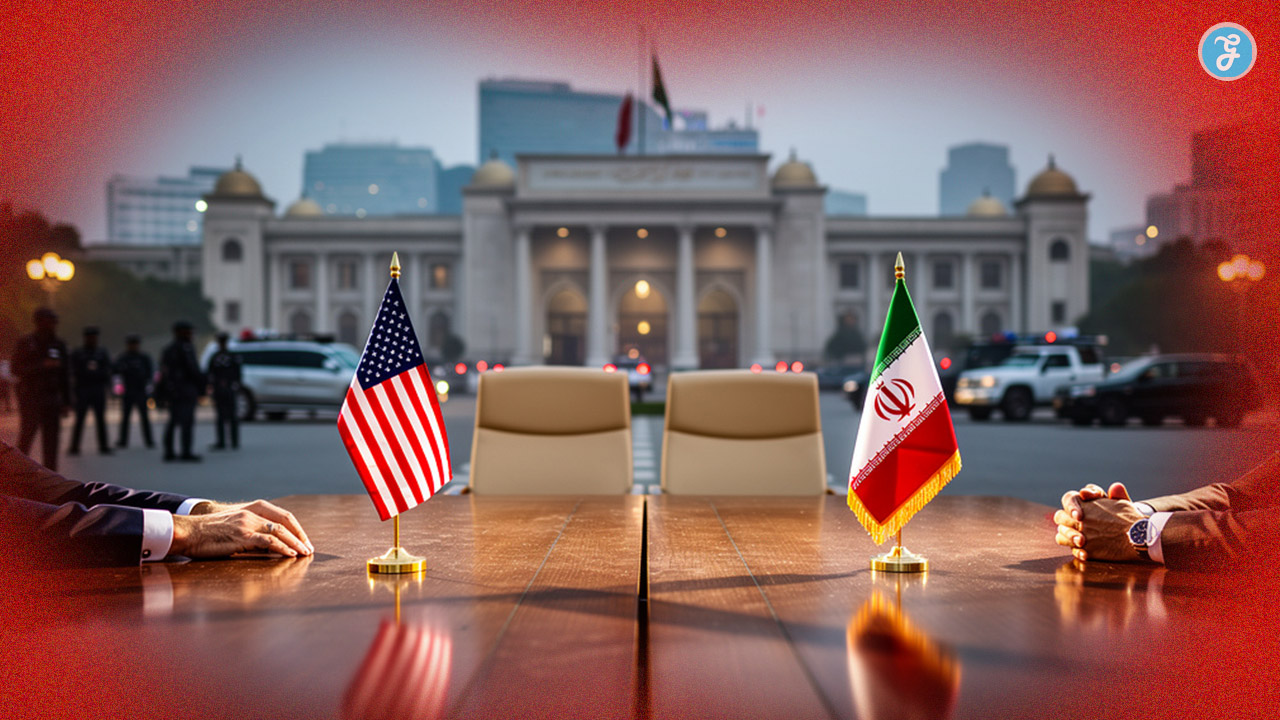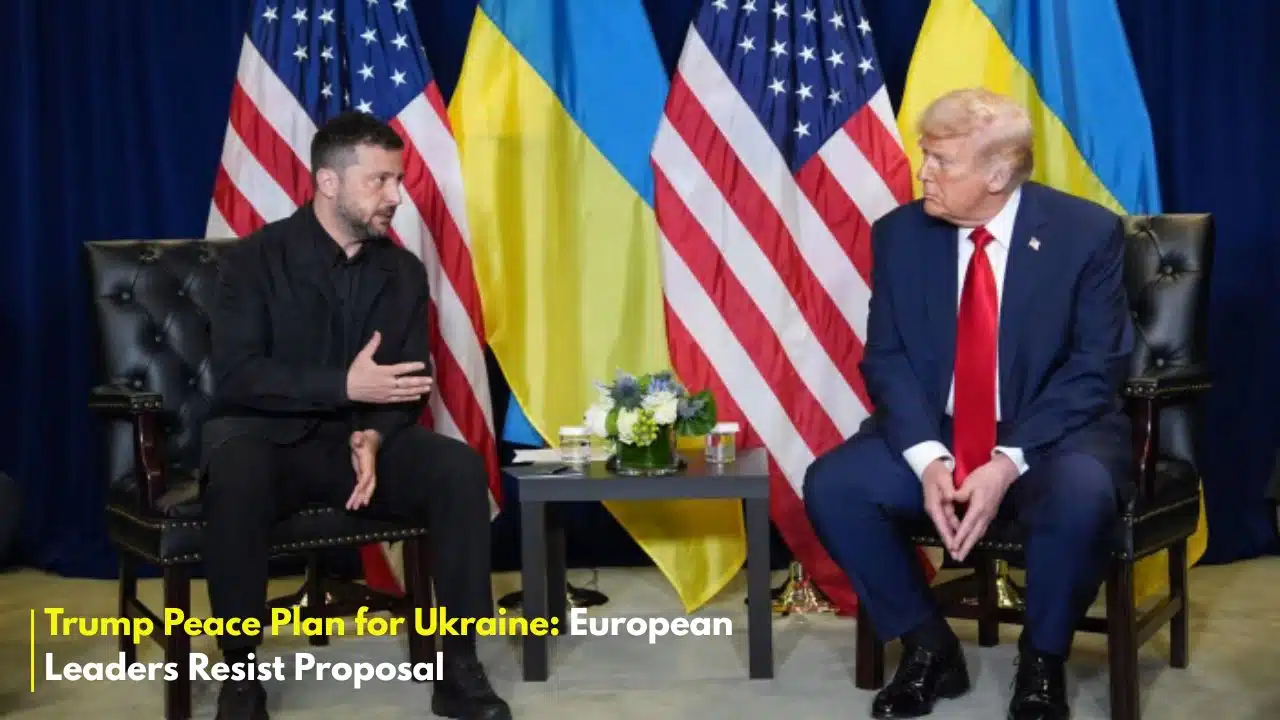
The diplomatic cables are burning, but the warmth is gone. In a series of high-stakes and reportedly combative phone calls over the last 48 hours, President Donald Trump has issued a stark ultimatum to America’s European allies: get behind the White House’s new peace plan for Ukraine, or watch Washington walk away.
As the war in Ukraine grinds through its fourth winter, the transatlantic alliance faces perhaps its most severe fracture since the invasion began. The President’s proposal—a controversial roadmap aimed at freezing the conflict by Christmas—has been met with stiff resistance in Paris, Berlin, and Kyiv, where leaders fear it amounts to a capitulation to Russian aggression in exchange for a temporary and fragile ceasefire.
The plan, crafted by Trump’s inner circle including special envoy Steve Witkoff and senior advisor Jared Kushner, reportedly calls for an immediate freeze of the front lines, the establishment of an 800-mile demilitarized zone (DMZ), and a deferral of Ukraine’s NATO membership for at least two decades. Crucially, the burden of policing this DMZ would fall entirely on European troops, with the U.S. providing neither boots on the ground nor financing for the peacekeeping mission.
“The President has been very clear,” said a senior White House official, speaking on condition of anonymity to discuss the private calls. “The killing has to stop. The money pit has to be closed. Europe talks about strength, but they want American taxpayers to subsidize a stalemate forever. That ends now.”
The “Weak and Decaying” Doctrine
The pressure campaign coincides with a fresh rhetorical assault from the President on the very allies he is asking to enforce the peace. In a blistering interview released earlier this week, Trump characterized Europe as “weak,” “decaying,” and “destroying itself,” specifically targeting the leadership of Germany and France.
Those comments have soured the mood in European capitals just as U.S. diplomats are trying to secure buy-in for the 28-point peace proposal.
During a call with French President Emmanuel Macron on Tuesday, Trump reportedly dismissed concerns about long-term security guarantees for Ukraine, insisting that the sheer “size” of the Russian military made a total Ukrainian victory impossible. “Size will win, generally,” Trump is said to have told a stunned Macron, a phrase that has since echoed anxiously through the halls of the Élysée Palace.
For Macron, who has spent the last year attempting to position himself as the bridge between Trump’s “America First” doctrine and European security interests, the call was a cold shower. French officials privately describe the conversation as “brutal” and “transactional,” with the U.S. President showing little patience for arguments about international law or the inviolability of borders.
“We are being asked to police a peace that we did not negotiate, on terms we do not believe will hold, for a war we believe is existential,” said one high-ranking EU diplomat in Brussels. “And we are being insulted while we are asked to do it.”
The Plan: A Freeze, Not a Fix
Details of the administration’s proposal, which have leaked steadily over the past week following meetings in Miami, paint a picture of a deal designed for speed rather than sustainability.
The core tenets include:
-
Territorial Concessions: While not legally recognizing Russia’s annexation of the Donbas and Crimea, the plan would accept the de facto Russian control of these territories indefinitely.
-
The Demilitarized Zone: A buffer zone along the current line of contact, heavily fortified but patrolled by European peacekeepers.
-
The NATO Question: A written guarantee that Ukraine will not join the NATO alliance for a period of 20 years, a concession long demanded by Vladimir Putin.
-
The Leverage: A threat to cut off all U.S. military aid to Ukraine if Kyiv refuses to negotiate, paired with a threat to increase aid significantly if Moscow refuses the terms.
“It’s a classic real estate squeeze,” says Fiona Hill, a former National Security Council official and Russia expert. “You squeeze the weaker party until they have no choice but to sign. The problem is, this isn’t a property deal in Manhattan. This is the security architecture of Europe. If you freeze the conflict now, without ironclad guarantees, you are just giving Russia time to rearm and finish the job in three years.”
The sticking point for European leaders is the lack of U.S. commitment to enforcing the peace. By insisting that European troops man the DMZ, Trump is effectively outsourcing the most dangerous component of the deal. German Chancellor Olaf Scholz, whose government is already navigating a precarious domestic political landscape, has reportedly told Washington that sending German soldiers to stand guard on the frozen front lines of Eastern Ukraine is a “political non-starter” without full U.S. participation.
Kyiv’s “Most Difficult Moment”
Nowhere is the dread more palpable than in Kyiv. President Volodymyr Zelenskyy, facing exhausted troops and a Russian military that has made its largest territorial gains in a year, finds himself in a vice grip.
The atmosphere in the Ukrainian capital is tense. Following the recent dismissal of his powerful chief of staff amidst internal shakeups, Zelenskyy’s circle has shrunk. The negotiations in Miami, led by Defense Minister Rustem Umerov, were described by Ukrainian officials as “constructive” but “exceptionally difficult.”
Trump publicly expressed frustration this week, stating he was “a little disappointed” that Zelenskyy had not yet fully embraced the proposal. “His people love it, but he isn’t ready,” Trump told reporters, a comment that was read in Kyiv as a direct threat to bypass the Ukrainian President if necessary.
Zelenskyy’s hesitation is rooted in survival—both political and national. Accepting a plan that cedes the Donbas and bars NATO membership would be seen by many Ukrainians as a betrayal of the tens of thousands of soldiers who have died defending that very land.
“If Zelenskyy signs this, he risks a coup,” says a Kyiv-based political analyst. “If he doesn’t sign it, he risks losing the American artillery shells that keep the Russians from taking Kharkiv. It is an impossible choice.”
In a video address late Wednesday, Zelenskyy attempted to thread the needle, stating that Ukraine and Europe were preparing a “refined” version of the peace plan to present to Washington. “We are ready for peace,” he said, looking visibly tired. “But it must be a real peace, not a pause before a new invasion. We will not trade our sovereignty for a phantom promise.”
The European Counter-Proposal
European leaders are scrambling to assemble a unified response before the arbitrary “Christmas deadline” the White House has reportedly floated.
British Prime Minister Keir Starmer, French President Macron, and German Chancellor Scholz are coordinating on a counter-proposal that would focus on “credible security guarantees.” They are arguing that if Ukraine cannot join NATO, it must receive binding bilateral defense treaties from the U.S., UK, France, and Germany—agreements that would treat an attack on Ukraine as an attack on them.
However, the Trump administration has shown little interest in such entanglements. Vice President J.D. Vance, a vocal critic of U.S. involvement in Ukraine, has repeatedly argued that Europe must “stand on its own two feet.”
This philosophical divide is widening. While the U.S. administration views the war as a drain on resources and a distraction from the threat of China, European capitals view it as the frontline of their own defense.
“The American view is that the war is over there,” said Polish Prime Minister Donald Tusk. “Our view is that the war is right here. If we accept a bad peace, we are next.”
The Russian Calculus
Hovering over the frantic diplomacy is the silence of the Kremlin. While Vladimir Putin has signaled a willingness to talk, Russian officials have publicly stated there are “points we cannot agree to” in the U.S. plan.
Intelligence reports suggest Putin believes time is on his side. With Russian forces advancing in the Donetsk region and the Western alliance fracturing, he may see little incentive to freeze the conflict now unless the terms are overwhelmingly in his favor.
Some analysts fear that Trump’s eagerness for a deal is being exploited by Moscow. “Putin sees that the U.S. is desperate to wash its hands of this,” says a diplomat at the OSCE. “He will take the concessions, sign the paper, and then wait for the Americans to leave. Once the U.S. is out, he knows the Europeans will struggle to hold the line alone.”
There are also concerns about the “business” aspect of the peace push. Reports have surfaced of back-channel discussions involving U.S. and Russian business interests, eyeing the potential for post-war reconstruction contracts and the lifting of sanctions. The involvement of figures like Witkoff, a real estate mogul with no diplomatic experience, has raised eyebrows in Europe, where leaders worry that Ukraine’s sovereignty is being traded for future business deals.
A Winter of Discontent
As December deepens, the window for a diplomatic breakthrough is closing. The front lines are freezing in the literal sense, as snow begins to cover the trench networks of the Donbas, but the geopolitical heat is rising.
The coming days will be decisive. European foreign ministers are set to meet in Brussels on Friday to finalize their common position. Meanwhile, another delegation from Kyiv is expected in Washington early next week.
For now, the phone lines between the White House and European capitals remain open, but the conversations are becoming shorter and sharper. The alliance that has underpinned Western security for 75 years is being tested not just by an adversary in the East, but by a fundamental disagreement within the West itself about what “peace” actually means.
Is it merely the absence of gunfire? Or is it the presence of justice?
President Trump has made his choice clear: he wants the shooting to stop, and he wants it to stop now. It remains to be seen whether Europe and Ukraine can convince him that a peace built on surrender is no peace at all.
Key Components of the Dispute
1. The Security Guarantee Void
The single biggest point of contention is Article 5-style protection. Europe and Ukraine argue that without the U.S. nuclear umbrella or NATO membership, Russia will simply regroup and attack again in 2-3 years. Trump’s team argues that “Europe is rich enough” to build its own deterrent wall.
2. The “Boots on the Ground” Dilemma
The concept of European peacekeepers patrolling a DMZ is fraught with danger. If Russian proxies fire on French or German troops, would NATO respond? The plan is vague on the rules of engagement, leading European generals to fear they are walking into a trap.
3. The Economic Leverage
Trump has hinted that if Europe doesn’t play ball, trade tariffs could be the next weapon deployed. This linkage of security policy with trade disputes—referencing the “decaying” European economy—has infuriated German officials, who see it as blackmail.
4. The Political Clock
Trump wants a “win” to announce in his first year. Zelenskyy needs to survive. Putin is waiting for the West to crumble. The timelines are mismatched, creating a volatile environment where miscalculation is likely.
Voices from the Crisis
“We cannot have a Munich moment in 2025. We know where appeasement leads.” — An anonymous Foreign Minister from a Baltic state.
“Size will win, generally. It’s time to be realistic.” — Attributed to President Donald Trump in conversation with Emmanuel Macron.
“We are ready to discuss peace. We are not ready to discuss suicide.” — A senior advisor to President Zelenskyy.
What Happens Next?
The immediate focus shifts to the upcoming EU summit, where leaders will try to present a “United Front” to Washington. However, cracks are already visible. Hungary and Slovakia have signaled openness to the Trump plan, while Poland, the Baltics, and the UK are urging total rejection of any territorial concessions.
Zelenskyy’s “refined” plan is expected to be a counter-offer: agreeing to a ceasefire only if the U.S. deploys tripwire forces or provides massive, legally binding guarantees—a direct challenge to Trump’s isolationist instincts.
As the holiday season approaches, the world waits to see if the guns of Europe will fall silent, and if so, at what price.