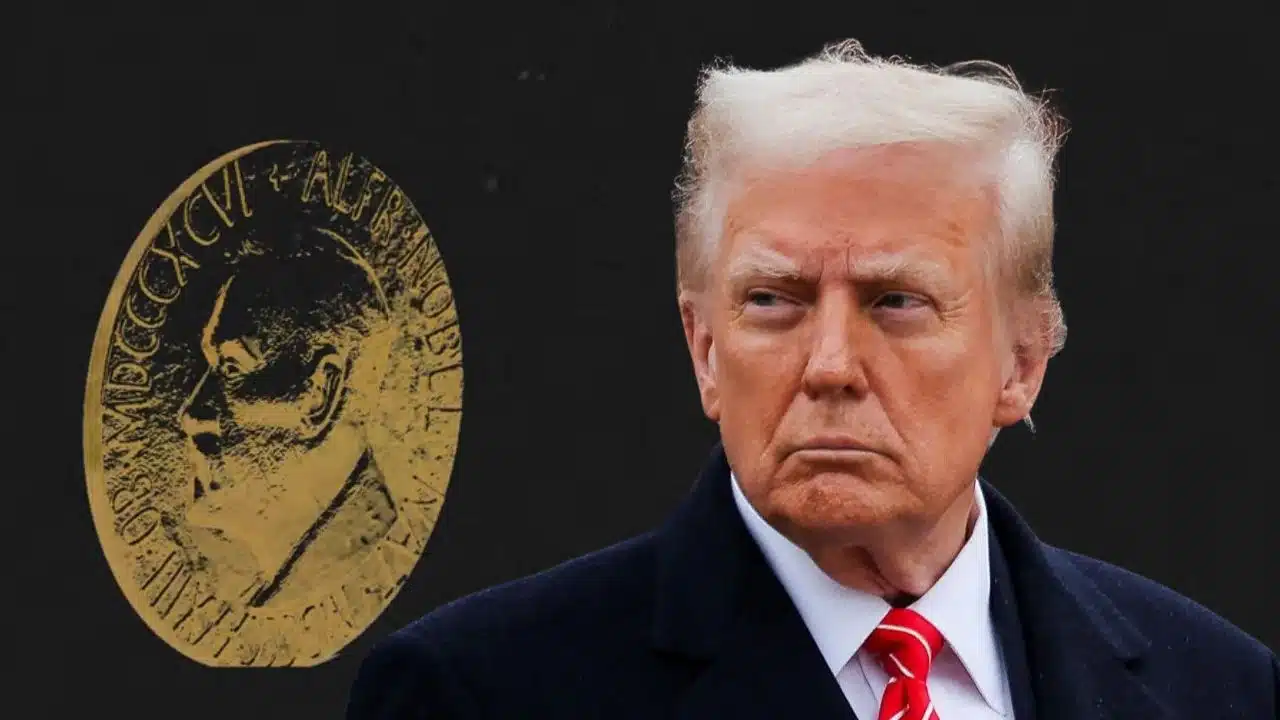
With the Nobel Peace Prize announcement imminent, speculation is rife, yet experts maintain that a win for U.S. President Donald Trump is “completely unthinkable.” Despite his own assertions that he “deserves” the award for his diplomatic efforts, a deep chasm exists between his “America First” foreign policy and the core tenets of the prestigious prize.
The Norwegian Nobel Committee is set to announce the 2025 laureate on Friday, October 10th, from a pool of 338 candidates. While the full list of nominees remains secret for 50 years, Trump’s desire for the prize is well-documented. He has frequently touted his role in brokering normalization agreements in the Middle East and his direct engagement with North Korea as evidence of his peacemaking prowess. However, Nobel experts, historians, and analysts almost universally agree that his chances are virtually non-existent, citing a fundamental misalignment between his actions and the ideals championed by the committee.
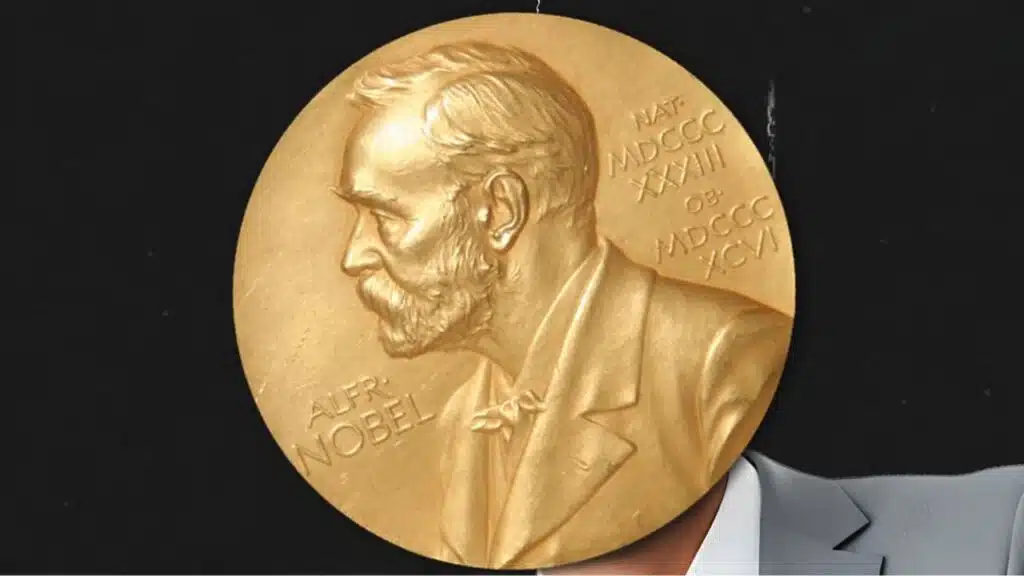
At the heart of the skepticism lies Trump’s consistent preference for unilateral action over multilateral cooperation, a cornerstone of the Nobel Peace Prize’s philosophy. The prize, as outlined in Alfred Nobel’s will, is intended for those who have done the “most or the best work for fraternity between nations, for the abolition or reduction of standing armies and for the holding and promotion of peace congresses.”
“The Nobel Peace Prize is about defending multilateral cooperation, for example in the UN… and Trump breaks with that principle, he follows his own path, unilaterally,” Oeivind Stenersen, a historian who has extensively researched the prize, told AFP (Agence France-Presse). This sentiment is echoed by numerous observers who point to Trump’s withdrawal from key international agreements such as the Paris Climate Accord, the Iran nuclear deal (JCPOA), and the UN Human Rights Council as direct contradictions to the spirit of the award.
A Divisive Style Clashes with Nobel Ideals
Beyond policy, Trump’s “divisive style” and rhetoric are seen as antithetical to the prize’s emphasis on fostering global fellowship. “When you look at previous winners who have been bridge-builders, embodied international cooperation and reconciliation: These are not words we associate with Donald Trump,” Theo Zenou, a historian and research fellow at the Henry Jackson Society, noted in an interview with the Associated Press.
Critics argue that his administration has often exacerbated international tensions rather than calming them. This includes engaging in trade wars, particularly with China, and strained relations with traditional allies in Europe and North America. Furthermore, his administration’s questioning of the value of longstanding alliances like NATO has caused significant concern among those who see such institutions as vital for maintaining global peace and security.
What are the Achievements?
Supporters of Trump’s nomination point to the Abraham Accords, a series of normalization agreements between Israel and several Arab nations, as a significant foreign policy achievement. They also highlight his historic meetings with North Korean leader Kim Jong Un as a de-escalation of nuclear tensions.
However, even these accomplishments are viewed with a critical eye by some Nobel watchers. Karim Haggag, head of the Stockholm International Peace Research Institute (SIPRI), suggests the committee will need to “assess whether there have been clear examples of success in that peacemaking effort.” While the Abraham Accords are noteworthy, the broader Israeli-Palestinian conflict remains unresolved. Similarly, despite the high-profile summits, North Korea’s nuclear program has continued to advance.
A Focus on “Forgotten” Conflicts
Many experts believe the Nobel Committee is more likely to turn its attention to less publicized but equally devastating conflicts and the humanitarian efforts within them. Henrik Urdal, Director of the Peace Research Institute Oslo (PRIO), has suggested that organizations like Sudan’s Emergency Response Rooms, which provide aid in a war-torn region largely overlooked by the international community, are strong contenders.
This focus on grassroots, humanitarian work stands in stark contrast to the high-level, personality-driven diplomacy of Donald Trump. The prize has a history of honoring individuals and organizations that work tirelessly, often at great personal risk, to alleviate human suffering and build peace from the ground up.
While Donald Trump has expressed a strong desire to be recognized with the Nobel Peace Prize, the consensus among experts is that his presidency has been characterized by a go-it-alone approach that is fundamentally at odds with the award’s core principles of multilateralism and international cooperation. As the world awaits the announcement from Oslo, the prevailing view is that the committee will look elsewhere to honor those who have truly worked to build “fraternity between nations.”
The Information is Collected from NDTV and Yahoo.