Introduction: Many clinics wrestle with managing patient records online and staying HIPAA compliant. Modern CMS platforms can link to electronic medical records, handle patient portals, and boost data security.
This post lists ten top platforms, from Drupal to HubSpot CMS, all built for secure hosting, CRM integration, and telehealth tools. Find your best fit.
Key Takeaways
- The article reviews 10 top CMS platforms for U.S. healthcare – Contentful, Sanity, Sitecore, Drupal, Remedy CMS, Adobe Experience Manager, Kentico, Joomla, HubSpot CMS, and WordPress plugins – all built for HIPAA compliance, CRM/EHR integration, secure hosting, telehealth tools, and multilingual support.
- Providers should weigh 12 key factors when choosing a CMS: HIPAA compliance; EHR/EMR connections (Epic, Cerner); secure hosting (AWS, Azure); mobile access for teleHealth; simple user interface; MACRA/MIPS certification; data analytics/reporting; open-source vs. commercial licensing; AI/ML features; patient portals and engagement tools; CRM integration (Salesforce Health Cloud); and multilingual capabilities.
- Small clinics benefit from open-source systems like Drupal and Joomla (no license fees, rapid custom templates, AWS/Azure hosting), while large health networks need enterprise suites such as Sitecore and AEM (load balancing, regional data centers, marketing automation, data-driven personalization). Headless CMSs like Contentful offer fast API-first workflows.
- Specialized platforms add real value: Sanity enables real-time, multi-user editing with audit trails; Remedy CMS tracks staff credentials and EHR audits; Kentico and HubSpot CMS merge marketing automation with patient outreach; WordPress plugins deliver e-prescribing, clinical decision support, and secure patient portals.
What makes Contentful a flexible and API-driven CMS for healthcare?

A headless CMS that talks to systems by API makes life simple. Its API-first design lets devs link apps, patient portals, mobile tools, and telehealth solutions. Teams connect electronic health records, lab system integration, and CRM integration with simple REST calls or the data query language.
It works like a Lego set for code. Developers grab content without digging through templates. They spin up new pages in minutes and scale across clinics.
Cloud hosting gives 24/7 access and security audits for HIPAA compliance. Providers log in from tablets or phones in rural health or large hospitals. Data remains encrypted, and patient privacy ranks high.
AI tools for clinical decision support can plug in via webhooks and run data analytics on patient care. This zero-template, fast, and flexible model boosts operational efficiency for accountable care organizations and health maintenance organizations.
How does Sanity enable real-time collaboration in content management?
Sanity runs on a cloud content repository. It offers secure hosting for healthcare CMS. It gives multi-user access on the web. It stores each edit in real time. It logs changes for audit trails.
It meets HIPAA compliance with data security controls. It lets staff set roles and permissions. It links with CRM integration and EHR systems. It automates workflows and cuts protocol clashes.
It saves time on remote patient monitoring docs. It can push updates to patient portals instantly. It feeds health information exchange networks. It reduces duplicate work and low burns out for nurses.
Studio uses a simple, user-friendly interface. It shows fields in clear blocks. It cuts clicks and boosts ease of use. Staff can work in parallel on telehealth solutions guides. They see edits live and chat in toolbars.
They sync with health data pipelines. They use query language and development kit to fetch items. Editors can add multilingual capabilities in minutes. They can tie patient engagement tools to e-prescribing pages.
Teams pull forms into revenue cycle management dashboards. They link data analytics from mobile apps for healthcare to content. Support teams stay on top of updates. They keep patient safety pages current.
This cuts errors in clinical informatics guides.
How does Sitecore create personalized experiences for healthcare providers?
Sitecore taps into patient data via a data analytics platform. It pulls info from electronic health records, lab reports, and appointment logs. Then it applies segment analysis to group users by needs.
The CMS injects personalized messages on patient portals and email campaigns. Providers see customized tips on medication schedules or follow-up visits. This setup enhances patient engagement tools and drives improved outcomes.
This platform meets HIPAA requirements and MACRA/MIPS certification for regulatory compliance. Secure hosting, strong protocols, and encrypted data management protect patient privacy.
Admins craft workflows by specialty, from oncology to pediatrics, through a simple interface. Scalability is achieved with load balancing and regional data centers. Marketing automation integrates with CRM, EMR systems, and telehealth features for seamless care coordination.
Websites and portals offer multilingual support to serve diverse populations. This enterprise content management solution improves communication and delivers data-driven decision support for personalized patient journeys.
Why is Drupal a good open-source and customizable CMS for healthcare?
Drupal is an open-source cms, so it costs no license fees and suits both small clinics and large hospitals. It lets teams shape charting flows that mirror electronic health record (ehr) platforms like Praxis EMR, while adding custom fields for progress notes.
Administrators build audit-ready pages that meet HIPAA compliance and other regulatory standards. Designers craft patient portals and forms without any template restriction, so each unit can follow its own daily workflow.
Drupal connects to CRM integration, EHR systems like Epic Systems, and telehealth solutions. Developers set up secure hosting and data security modules, so patient data stays locked down.
A global community pushes out regular updates and security patches, boosting reliability. Providers tap into data analytics and multilingual capabilities to reach diverse patients.
What healthcare needs does Remedy CMS specifically address?
Remedy CMS helps hospitals cut wasted hours and steer clear of IT headaches. It tracks staff credentials, meets hipaa compliance, and flags expiring certifications. Managers can assign shifts, balance workloads, and optimize asset use.
Data security stays rock solid. The platform logs EHR changes from Epic, audits each update, and builds detailed reports for regulators. Admin teams then focus on patient care, not paperwork.
Leaders use the tool for risk management and strategic planning. It pulls data from electronic health records and inventory software to spot chokepoints in telehealth solutions and patient portals.
Staff train on new rules via built-in modules, so they stay ready. The system scales from single clinics to large care networks, with multilingual capabilities. It also syncs with Salesforce CRM, boosting patient engagement tools and helping care facilities improve service.
What features make Adobe Experience Manager (AEM) an enterprise-grade CMS?
AEM shines as a healthcare cms that tames dozens of tools and data sources daily. It packs clinical, administrative, and financial functions under one roof. It links electronic health records (ehr), patient portals, virtual visit platforms, and crm integration in one dashboard.
Doctors tap a user-friendly, mobile-ready interface to update digital charts on the go, cutting appointment delays.
Security ranks top in this platform, with HIPAA compliance, secure hosting, and strong encryption on every file. Data analytics and reporting modules surface quality metrics, support regulatory compliance, and guide risk reduction.
Teams add marketing automation and patient engagement tools for care reminders and multilingual alerts. Adobe ships updates and support each week, so big hospitals stay current. Major healthcare organizations trust AEM for scale, uptime, and data security.
How does Kentico integrate marketing with CMS for healthcare?
Kentico merges content management with marketing automation in one healthcare cms. The cloud hosting links EMR systems to patient portals and practice management solutions. It runs HIPAA compliance scans to guard data security.
Teams use customizable templates to launch online marketing campaigns fast. The mobile friendly design reaches patients on laptops, phones, and tablets. Built in analytics dashboards use data analytics to track patient engagement and acquisition.
CRM integration lets providers sync health informatics and appointment systems. Secure hosting deploys campaigns across email, social networks, and site banners. The software logs each interaction for performance evaluations and quality improvement.
Regulatory compliance from the health insurance portability and accountability act follows every workflow. Marketers can measure outreach impact, adjust budgets, and boost patient care.
Why is Joomla an affordable and versatile CMS option for healthcare?
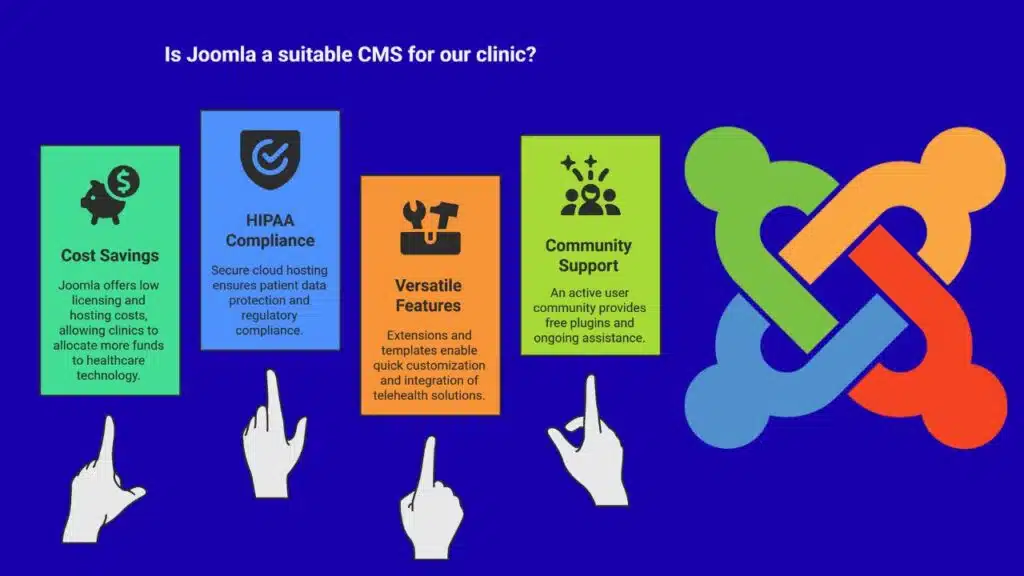
Joomla costs little to license. Clinics save on hosting and in-house IT. Free core code lets small teams focus on patient care. A HIPAA compliant cloud protects records with Amazon Web Services or Microsoft Azure services.
Extensions add e-prescribing and medication management fast. Staff learn navigation in under an hour. Open-source cost savings let clinics budget more for healthcare technology.
Clinics tweak pages with custom templates in minutes. A built-in patient portal and live chat boost patient engagement tools. Telehealth solutions integrate without complex coding.
Templates also enable multilingual capabilities without extra fees. Data analytics dashboards show performance at a glance. CRM integration links the CMS to major EHRs and health IT platforms.
Marketing automation modules sync with HubSpot CMS and email platforms. IT teams applaud secure hosting that meets regulatory compliance standards. An active user community offers free plugins and ongoing support.
This healthcare CMS fits clinics on tight budgets.
What healthcare plugins enhance HubSpot CMS’s marketing focus?
Healthcare providers can tap specialty-specific templates inside HubSpot CMS to target moms, seniors, or pediatric patients, giving emails a personal touch. The plugins link practice management modules and patient portals straight into the CRM integration.
Teams see appointment details, EMR links, and billing info right inside marketing automation tools, cutting manual steps and maintaining secure hosting under hipaa compliance rules.
Hospitals can add multilingual capabilities, bringing patient materials in Spanish, Mandarin, or Arabic, to widen reach and improve patient engagement.
Telehealth integration tools add virtual care options to that hub, so doctors can send chat invites and hold video sessions without leaving the dashboard. An analytics platform plugin tracks clicks, form fills, and call conversions.
It feeds data analytics into a report that shows marketing ROI, patient care trends, and funnel leaks. Compliance management modules offer audit logs, consent tracking, and encryption checks for regulatory compliance.
Automated appointment scheduling cuts phone tag, while e-prescribing modules manage secure orders for meds. A patient feedback widget pops up surveys on the portal, capturing insights that highlight care quality and spark word of mouth.
How do healthcare plugins improve WordPress for medical providers?
Plugins link EHR platforms and lab systems over secure hosting, so staff pull test results without leaving the dashboard. They add hipaa compliance features, encrypt data and log every access.
Patient portal plugins let patients view health records online, book visits and join telehealth sessions. Quality reporting tools track CMS compliance standards and flag performance gaps.
AI-driven plugins offer clinical decision support and workflow automation to ease charting.
ePrescribing modules send scripts to pharmacies in one click, cutting admin time. Mobile accessibility plugins let doctors and patients tap records on phones. Customizable charting and documentation tools match each department’s style and speed data capture.
What key factors should healthcare providers consider when choosing a CMS?
A CMS shapes care work and patient trust. Clinics need systems that fit strict standards.
- Ensure HIPAA compliance to lock down patient data and meet The Health Insurance Portability and Accountability Act.
- Check EHR connections with Epic or Cerner to sync electronic medical records (EMR) and cut manual entry.
- Review secure hosting options like AWS, Azure, or managed service providers (msps) to stop breaches and meet regulatory compliance.
- Test mobile access for telehealth solutions so staff can log in via smartphones and tablets.
- Assess user-friendly interface with single-screen navigation to speed chart reviews and ease workflows.
- Verify MACRA and MIPS certification to support managed health care reporting and reimbursement.
- Examine data analytics and reporting modules to track meaningful use and guide quality improvement.
- Pick an open-source CMS or a commercial platform that links to laboratory, billing, and EHR systems to streamline health information technology workflows.
- Seek AI and machine learning features for predictive patient care and future-ready healthtech.
- Support patient engagement tools like portals and reminders for test results and wellness outreach.
- Look for CRM integration such as Salesforce Health Cloud to manage patient outreach and digital marketing.
- Factor in multilingual capabilities to serve diverse populations and boost care facility reach.
Takeaways
Each platform fits different staff sizes. Contentful gives fast API-driven content. The open-source system brings flexible layouts. Sitecore helps create custom portals with CRM integration.
The low-cost option stays ideal for small clinics. HubSpot CMS ties marketing automation to patient outreach. The enterprise suite suits large health networks with secure hosting. All those solutions meet HIPAA compliance and boost patient engagement.
Providers choose based on data security, multilingual capabilities, and telehealth solutions. You gain a strong digital foundation that grows with care needs.
FAQs
1. What is a healthcare CMS?
A healthcare CMS is an enterprise content management system for healthcare organizations and systems. It helps manage website info, patient portals, telehealth solutions, and digital health record links. Think of it as a Swiss army knife for your digital front door.
2. Why must a CMS support the Health Insurance Portability and Accountability Act and data security?
It must meet regulatory compliance for the Health Insurance Portability and Accountability Act, also called HIPAA compliance. It uses secure hosting, data security measures, encryption, compliance standards, and audits. That shields patient care data from prying eyes.
3. How do CRM integration, marketing automation, and messaging service improve patient engagement?
CRM integration links your patient data with your site, so you can send tailored messages. Marketing automation frees up staff time for real care. Messaging service brings reminders and tips right to phones. That combo drives patient engagement and boosts adherence.
4. What makes a patient portal user-friendly?
It gives easy access to health files and test results fast. It offers multilingual capabilities so no one feels lost. It packs telehealth solutions and patient engagement tools into a clear layout. If it slows down, patients might flee like birds at dawn.
5. Should I choose an open-source CMS or managed services?
Open-source CMS gives more flexibility, but you need IT skills for secure hosting and regulatory compliance. It lets you steer the ship if you have a strong IT crew. Managed services offers outsourcing, updates, and 24/7 support. It’s like hiring a captain for your digital vessel, so your health workforce stays focused on care.
6. How does a marketing hub platform fit into healthcare technology?
The marketing hub platform has a user-friendly interface and built-in CRM integration. It can connect to your digital health record, also called an electronic medical record. It links with telehealth solutions, data analytics, and other data sources. It boosts patient engagement and streamlines patient care.