Every year, September 5 holds a special place in the hearts of millions of Indians as Teacher’s Day, a day dedicated to celebrating the contribution of teachers who shape the minds and values of generations. In 2025, this day once again becomes an opportunity for students, parents, and communities to pay tribute to educators who go beyond textbooks, instilling knowledge, discipline, and life skills that last a lifetime.
Why is Teacher’s Day Celebrated on September 5?

The date—September 5—was not chosen at random. It marks the birth anniversary of Dr. Sarvepalli Radhakrishnan, one of the greatest scholars, philosophers, and statesmen of modern India. Dr. Radhakrishnan served as India’s first Vice President (1952–1962) and later as the second President (1962–1967).
When he assumed the presidency, his students and friends approached him to celebrate his birthday in a grand manner. However, Dr. Radhakrishnan humbly declined a personal celebration and suggested that the day should instead be observed across the country as a day to honor teachers. He believed that the true architects of a nation are its teachers, and they should be recognized for their selfless dedication.
Moved by his vision, the Government of India in 1962 officially declared September 5 as Teacher’s Day. Since then, this tradition has continued every year across schools, colleges, and universities.
Who Was Dr. Sarvepalli Radhakrishnan?
Dr. Radhakrishnan was born on September 5, 1888, in Tiruttani, Tamil Nadu. Coming from a modest background, he excelled in academics and went on to become a renowned philosopher with a specialization in comparative religion and philosophy.
- He studied philosophy at Madras Christian College and later served as a professor at several prestigious institutions including the University of Mysore, University of Calcutta, and Oxford University.
- He became Vice-Chancellor of Andhra University and Banaras Hindu University, leaving behind a strong legacy in the field of education.
- His philosophical works on Hinduism, Vedanta, and comparative religion gained global recognition and helped bridge Indian thought with Western philosophy.
Dr. Radhakrishnan was not only an academician but also a statesman. Apart from his presidential tenure, he also served as India’s Ambassador to the Soviet Union during a crucial time in the early Cold War period.
In recognition of his lifelong dedication, he was awarded the Bharat Ratna, India’s highest civilian award, in 1954. He was also nominated multiple times for the Nobel Prize in Literature and Peace.
Above all, Dr. Radhakrishnan firmly believed that education is the backbone of a nation and that teachers are the guiding lights who inspire generations.
Teacher’s Day 2025: Significance of the Celebration
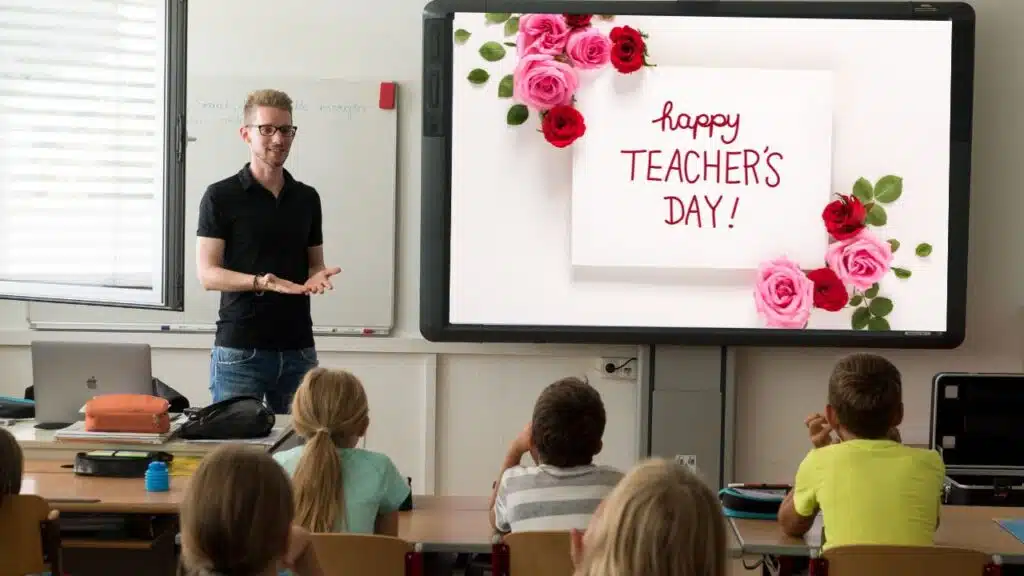
Teacher’s Day is more than just a formal observance—it is a reminder of the powerful role teachers play in shaping the future of society. Their work extends beyond classrooms, influencing careers, ethics, values, and the very character of individuals.
- Acknowledging Educators’ Role: Teachers bridge the gap between knowledge and real-life application. They are role models who prepare students not only for academic success but also for the challenges of adulthood.
- Nation-Building Through Education: As Dr. Radhakrishnan emphasized, education is essential for national progress. By nurturing curiosity and moral responsibility, teachers help build a generation capable of driving social and economic development.
- Strengthening the Student-Teacher Bond: This day also reflects the mutual respect between students and teachers, highlighting how learning is a shared journey.
How is Teacher’s Day Celebrated in India?
Celebrations vary from one institution to another, but they share a common theme of respect and gratitude. Across India, students take the initiative to express appreciation in creative ways.
- Role Reversal Activities: In many schools, senior students dress up as teachers and conduct classes for juniors. This playful reversal not only entertains but also helps students understand the responsibilities teachers shoulder every day.
- Cultural Programs: Singing, dancing, poetry recitals, and skits are organized to celebrate the bond between teachers and students.
- Speeches and Essays: Students prepare speeches and essays reflecting on the importance of teachers in their lives. Competitions are often held to encourage creative expression.
- Gifts and Tokens of Love: Handmade greeting cards, flowers, and thoughtful gifts are presented by students as a gesture of gratitude.
- Honoring Retired Teachers: Many institutions also take this opportunity to honor senior and retired teachers who have dedicated decades of their lives to education.
In recent years, digital celebrations have also become popular, with online greetings, video messages, and social media campaigns highlighting inspiring educators.
When Was the First Teacher’s Day in India?

The first official Teacher’s Day was celebrated in 1962, the very year Dr. Radhakrishnan took office as President of India. What began as a thoughtful request from him has grown into a nationwide movement of gratitude and respect.
Since then, the tradition has been deeply embedded in Indian culture, making September 5 one of the most significant days in the academic calendar.
Teacher’s Day in a Global Context
While India marks Teacher’s Day on September 5, other countries celebrate on different dates:
- World Teachers’ Day, observed globally on October 5, was established by UNESCO in 1994. It recognizes the rights and responsibilities of teachers worldwide and emphasizes the importance of quality education.
- Countries like the United States, China, and the UK celebrate Teacher’s Day on different dates, but the underlying principle remains the same—acknowledging teachers as the foundation of learning and growth.
Teacher’s Day 2025: A Day of Gratitude
Teacher’s Day 2025 is not just about celebrating educators with flowers and cards—it is about recognizing their lasting impact. Every lesson taught, every value instilled, and every spark of curiosity ignited by a teacher has a ripple effect on society.
By remembering Dr. Sarvepalli Radhakrishnan’s vision, India continues to uphold the belief that education is not just about academics, but about building character and shaping the future.