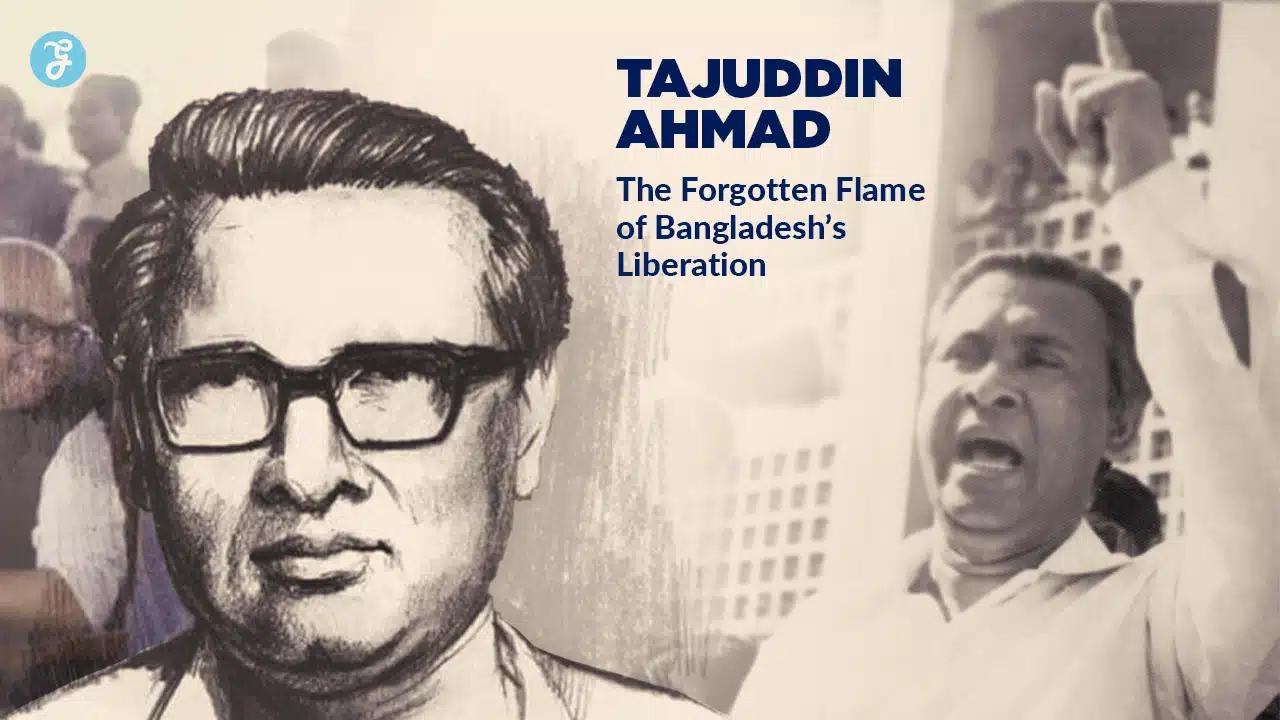
When a man renounces all familial bonds and risks his life out of pure love for his motherland—and in return, is rewarded with blame and denial—what more can he expect from life? In the light of reality, such a man must spend his days in solitude, with nothing but his bare hands and boundless patriotism.
Tajuddin Ahmad at a Glance
Born in Kapasia, Gazipur on July 23, 1925, Tajuddin’s political journey began in the 1940s with the Muslim League youth wing. He played a significant role in the 1952 Bengali Language Movement and helped draft the iconic “six-point” demand in 1966, which became the signature charter of East Pakistan’s autonomy.
As Awami League General Secretary from 1966, he breathed life into the party, articulated its vision, and was imprisoned multiple times fighting dictatorship.
As a chief organizer during the 1970 electoral victory and the subsequent non-cooperation movement, his strategic planning, diplomacy, and dialogue with Yahya Khan showcased his frontline leadership
The Silent Commander of Liberation
In March, 1971, as Dhaka, the former capital of East Pakistan, burned and millions fled to India, Tajuddin Ahmad, then General Secretary of the Awami League, made a perilous journey to India. There, amid uncertainty and global indifference, he built the backbone of the Mujibnagar Government, the Bangladesh Government-in-Exile, on April 10, 1971. With Bangabandhu imprisoned, Tajuddin accepted the role of Prime Minister, not out of ambition, but out of duty.
Tajuddin was the strategic mind behind the coordination of the freedom fighters (Muktibahini), the negotiations with Prime Minister Indira Gandhi, and the push for international recognition of Bangladesh’s cause. Without his clarity, calm, and conviction, the war effort may have been chaotic and fractured.
He understood diplomacy as deeply as he understood sacrifice. Under his leadership, Bangladesh received India’s military and humanitarian support, diplomatic recognition, and Soviet backing through the Indo-Soviet Treaty of Peace and Friendship (August 9, 1971)—a move that would prove crucial in resisting American and Chinese pressure on behalf of Pakistan.
After Liberation: Tajuddin’s Moral Politics
When Bangladesh achieved independence in December 1971, Tajuddin could have claimed glory. Instead, he quietly returned to serve in Bangabandhu’s cabinet. As Finance Minister, he laid the foundation for economic reconstruction, nationalized key industries, and emphasized self-reliance. He resisted foreign dependency, famously refusing the conditional offers of international agencies that demanded policy compromises.
His politics were deeply rooted in moral clarity, secularism, and people-first governance.
Conflict, Resignation, and Martyrdom
Over time, Tajuddin’s vision began to clash with rising sycophancy and political opportunism around Bangabandhu. In October 1974, he resigned from the cabinet, disillusioned but still loyal.
In late July 1975, he warned Bangabandhu of conspiracies brewing within the military and requested reinstatement to help counter the threat. Tragically, Bangabandhu was assassinated on August 15, 1975, and Tajuddin was arrested days later by the same regime that killed his leader.
On November 3, 1975, in the infamous Jail Killing, Tajuddin Ahmad, along with Syed Nazrul Islam, Mansur Ali, and A.H.M. Qamaruzzaman, was brutally murdered inside Dhaka Central Jail. The best minds of the nation were eliminated in silence.
The Metaphor of Light and Shadows: Artificial Light vs. Natural Truth
Today, artificial lights created by science and technology seem to make natural sunlight insignificant to many. Yet without sunlight, life itself stands endangered. At night, we bathe in the soft glow of electric bulbs—the greatest gift of science. Even the moonlight that lights our world is but a reflection of the sun’s radiance.
In our towering cities, rooms in crowded buildings remain deprived of sunlight. Electric bulbs become the only substitute. In these closed quarters, longing for sunlight feels futile. Living amid so much artificiality, our awareness of the divine light seems to wither, like ripe fruit falling from its stem.
Historical Truth vs. Fabricated Narratives
Some self-serving conspirators have tried to replace the truth of history with artificial narratives. They install synthetic lights in place of the sun’s brilliance. But even artificial light is generated from solar energy—without sunlight, it too is lifeless.
Yet people, locked away in rooms without natural light, continue to obsess over man-made brightness. They remain preoccupied with artificial glows and forget the life-giving power of sunlight.
Why then, when someone attempts to reduce the contributions of another, do we let falsehoods override truth and reality?
The War Leader in the Shadows
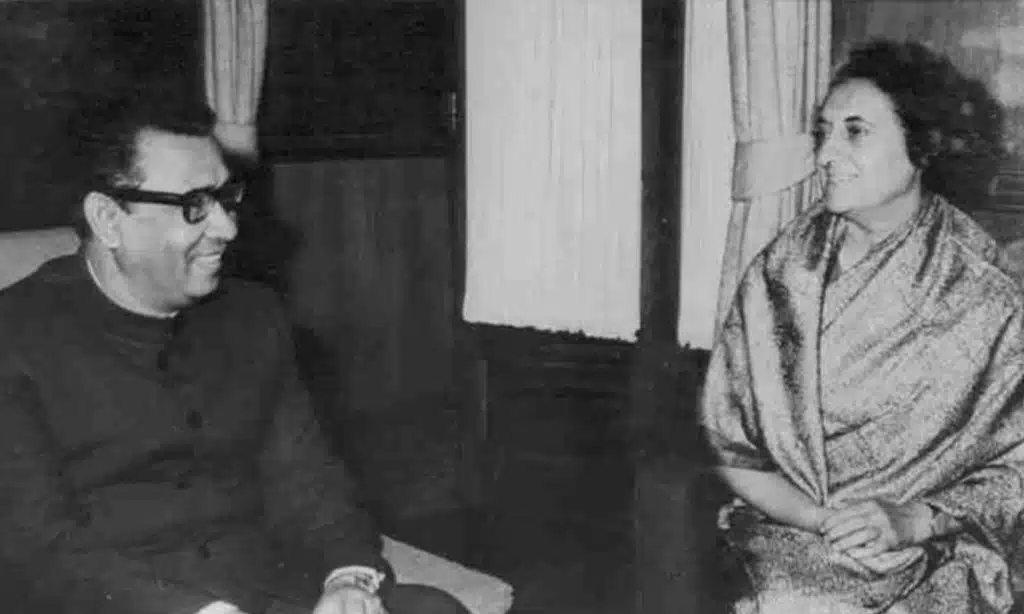
It was under the brave leadership and profound patriotism of Tajuddin Ahmad that the Bengali nation regained the vitality of its liberation struggle. He is the great patriot who, in today’s Bangladesh, is submerged in deep shadows amid the glare of artificial light. To say this is neither false nor irrational.
Uneven Recognition and Party Politics
One sacrifices everything for the country, while another is adorned with fame, comparisons, and honors. Within our national life, the Awami League and their so-called intellectual allies remain immersed in the constant glorification of Bangabandhu Sheikh Mujibur Rahman, striving to place him next to God in the minds of the new generation.
It is as if Bangabandhu alone fought the invading Pakistani forces, single-handedly winning Bangladesh’s eternal independence and sovereignty, while the other leaders merely watched.
The Night of Hesitation: A Missed Moment of Leadership on March 25, 1971
Bangabandhu, thinking of his family and himself, hesitated to take a visible role coordinating the Liberation War or to go underground, fearing being labeled as India-dependent or anti-Pakistan.
Was his patriotism only meant for inspiring speeches and fiery declarations? Would unarmed, helpless citizens begin their resistance just through thundering words?
Tajuddin’s Independence Declaration
In 1966, it was Tajuddin Ahmad—a visionary leader—who drafted the Bengali freedom charter of Six Points, based on collective party decisions. Bangabandhu was an extraordinary orator who, after 1947, stood at the frontlines with Suhrawardy and Bhashani. But in times of political, economic, or strategic crisis, Bangabandhu often leaned on Tajuddin’s intelligence and insight for advice.
Bangabandhu was emotionally driven, often egotistic and impulsive, preferring his own decisions over others’ counsel. A clear example came on March 25, 1971.
That evening, with President Yahya Khan gone back to West Pakistan, a crisis emerged. Tajuddin Ahmad, along with other leaders, gathered at House 32, Bangabandhu’s residence. Tajuddin drafted a short declaration of independence and requested Bangabandhu to read it on tape. Bangabandhu remained silent and declined.
This account came from Mujibnagar government representative Moeedul Hasan and later appeared in the book “Muktijuddher Purobapor Kothopokothon.” According to Tajuddin’s version, the declaration he prepared read: “Pakistani forces have launched a sudden attack. They have started oppression everywhere. Under such circumstances, I, Sheikh Mujibur Rahman, declare the independence of Bangladesh as the elected President.”
Tajuddin pleaded, “Mujib Bhai, you must read this now. Who knows what will happen tomorrow? If we are all arrested, no one will know what to do. We’ll copy and spread it. If possible, we’ll broadcast it.”
But Bangabandhu said, “This could be used as evidence against me. The Pakistanis could charge me with treason.”
Tajuddin, visibly angry and hurt, left House 32 around 9 PM. As he exited, Awami League’s publicity secretary Abdul Momin asked, “Why are you leaving in anger?” Tajuddin replied, “Bangabandhu isn’t even willing to take this minor risk, even though an attack is inevitable.”
He continued, “Even after repeated requests, even tonight, he won’t flee. He refused to sign or record this short declaration. How will this movement survive if our top leader is so hesitant?”
Carrying the War on His Shoulders
Thus began Tajuddin’s lone journey to organize the Liberation War, carrying the weight of uncertainty and the pain of rejection.
When Bangabandhu refused to go underground, Tajuddin had to act without clear direction. He couldn’t even give his family proper farewells. He left home with Barrister Amir-ul Islam and Dr. Kamal Hossain. Three days later, through a trusted messenger, he sent a note to his wife Zohra Tajuddin, which read:
“I’m gone. I couldn’t say it when I left. Forgive me. With the children, blend into the lives of the 75 million people. I don’t know when we’ll meet again. Perhaps after Bangladesh is free.”
Such was his deep patriotism. A man who rejected all personal attachments to dedicate himself wholly to the nation’s cause.
A Diplomat, Organizer, and Strategist
At times of national crisis, those who cut off all ties for the nation’s sake are the true patriots. And Tajuddin Ahmad was just that. He was the one meeting leaders worldwide, attending one diplomatic meeting after another to gather support for Bangladesh.
He made all members of the provisional government promise that they would not lead a family life until the country gained independence—a promise he himself upheld fully. Young Awami League leader Sheikh Fazlul Haque Moni, Bangabandhu’s nephew, strongly opposed Tajuddin becoming Prime Minister. Internal conflicts and indecision within the party made organizing the Liberation War immensely difficult for him.
Diplomatic Success and Internal Struggles
Still, he remained firm in his decisions. After the Indo-Soviet Treaty was signed on August 9, 1971, a new gateway opened for support. Tajuddin, encouraged by India, tried to form a National Liberation Front with other pro-independence political forces. But Acting President Syed Nazrul Islam disagreed, and the plan collapsed.
Nevertheless, Tajuddin’s fruitful negotiations with Indira Gandhi removed India’s limitations in helping Bangladesh. Under his leadership, freedom fighters received weapons and training, Indian forces participated directly, and leftist organizations under leaders like Comrade Moni Singh brought Soviet support. This strengthened Bangladesh’s path to victory.
Post-War Cold Shoulders After the Return of Bangabandhu
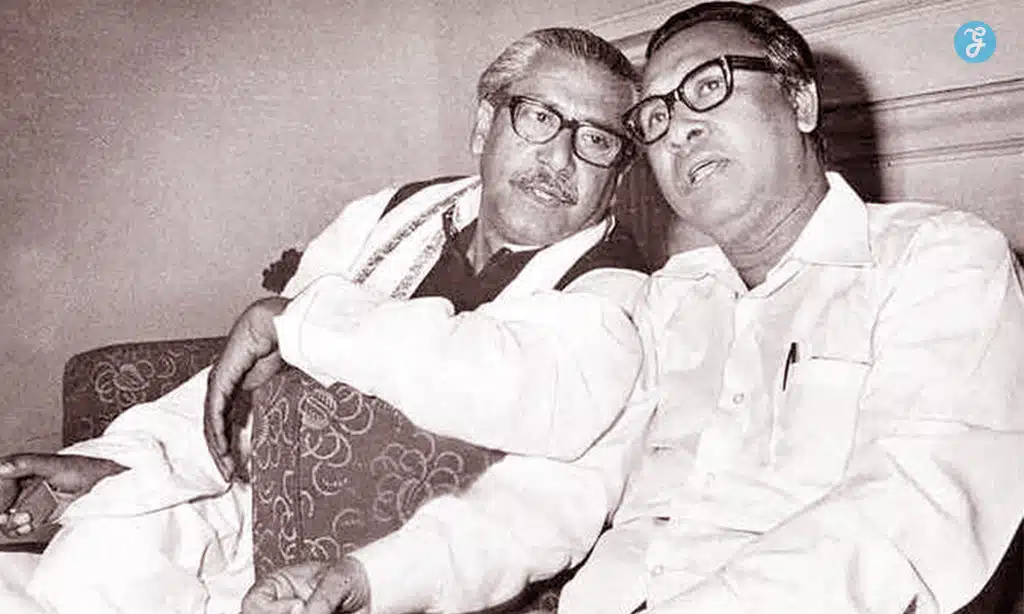
When Bangabandhu was freed from prison, India offered him an aircraft via London. But to please Western powers, he returned on British Airways instead. After his return, Bangabandhu never once asked Tajuddin, Syed Nazrul Islam, Captain Mansur Ali, or AHM Kamaruzzaman how they had led the liberation war.
Later in 1972, Tajuddin, along with Dr. Kamal Hossain, drafted Bangladesh’s constitution, embedding its four pillars—secularism, nationalism, socialism, and democracy—from the spirit of the Liberation War.
Despite being the war’s helmsman, Tajuddin was forced to resign from the cabinet on October 26, 1974, due to policy differences with Bangabandhu. Tajuddin valued ideals above personal relationships.
The Final Days of a Forgotten Hero: A Farewell with No Return
On the morning of his resignation, with tearful eyes, he told a secretary, “I never thought of myself. I saw Bangladesh through Bangabandhu.”
Later, to former East Pakistan Chief Minister Ataur Rahman Khan, Tajuddin said, “There are accusations against me. Mujib Bhai wants stronger ties with America. I do not.”
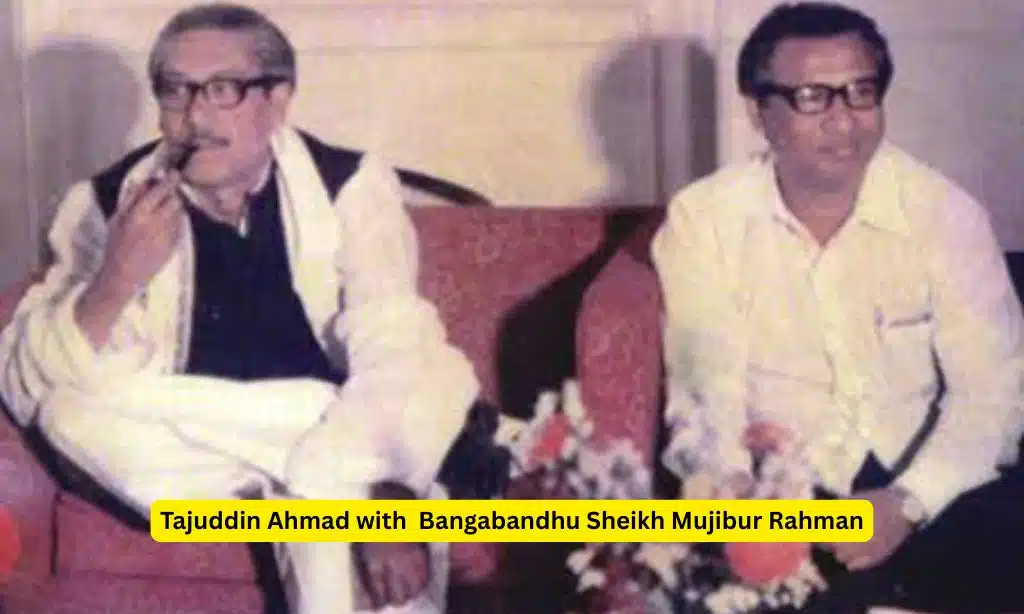
Tajuddin loved and respected Bangabandhu like no other, but Bangabandhu could not truly recognize the unmatched contributions of this principled, selfless man. This failure cast a long shadow over the nation.
Vision for a Just Bangladesh
To build Sonar Bangla (Golden Bengal), Tajuddin envisioned an economy rooted in justice and equality. A secular man, he said:
“Bangladesh will be a secular state. Let a new world be built here for the poor and suffering. Let us pledge to rid the country of hunger, disease, unemployment, and ignorance.”
To inspire the youth, he declared:
“Talk less. Reflect on whether you are actually doing what you speak of.”
This priceless quote should guide today’s politicians.
A Warning Ignored, A Tragedy Ensued
The same Khandaker Mushtaq, who had opposed Tajuddin throughout the war, conspired to lead Bangabandhu down a path of communalism and pro-Pakistan appeasement. In July 1975, Tajuddin learned that certain military groups were planning to assassinate Bangabandhu. Despite being out of cabinet, he warned Bangabandhu on August 13, 1975 finally by the request of Indira Gandhi. But Bangabandhu ignored him and clung to those who later betrayed him.
On August 15, 1975, Bangabandhu and his family were assassinated brutally. Tajuddin wept, telling his wife:
“If I had been in the cabinet, no one would have dared to harm Bangabandhu. My only regret is that Mujib Bhai never knew who his true friends were.”
Final Sacrifice in Prison
Afterward, Tajuddin and the other national leaders were imprisoned. Before his arrest on August 22, he told his family, “Think of this as me leaving forever.”
Unshaken, he left his wife, three daughters, and a son. On November 3, 1975, in Dhaka Central Jail, Tajuddin Ahmad, Syed Nazrul Islam, Mansur Ali, and Kamaruzzaman were brutally killed by bullets and bayonets—betrayed by Mushtaq and treacherous army officers.
Legacy Beyond Silence
Tajuddin Ahmad’s legacy is not in grand speeches or statues. It is in the infrastructure of our independence. In the disciplined war effort. In the international alliances formed. In the ethics of governance. And in his utter devotion to Bangabandhu, to whom he said, “I never thought of myself. I saw Bangladesh through your eyes.”
His daughter, Simin Hossain Rimi, once recalled: “He died like he lived—honest, uncorrupted, and unbending.”
Bangladesh still struggles to honor his memory properly. His name is often missing from textbooks, his contributions overlooked in official ceremonies. But history has a way of returning to the truth.
Takeaways: The Torch That Lit the Path
Even 54 years after independence, Bangladesh has not yet written a full and honest history of its Liberation War. If the missing war-time diaries of Tajuddin are ever found, they will reveal many truths.
He never claimed credit for his actions. Loving (Bangla Maa) Mother Bengal deeply, he said:
“Let my name be erased, but let Bangladesh live on.”
He remained selfless and dedicated until the very end. Without the light received from Tajuddin, Bangabandhu Sheikh Mujibur Rahman could not have shone as brightly as history remembers.
Worshiping Mujib while forgetting Tajuddin is false and empty. Tajuddin was the lonely burning flame of patriotism—a timeless ideal whose very birth gave life to Bangladesh’s glorious struggle for freedom.
References:
- Rounaq Jahan, “Bangladesh Politics: Problems and Issues,” UPL, 1980.
- Moeedul Hasan, “Muldhara 71,”
- Simin Hossain Rimi, “Amar Baba Tajuddin Ahmad”
- Simin Hossain Rimi, “Itihaser Pata Theke”
- World Bank Reports on Bangladesh (1974–75), and Amartya Sen’s work on the Bengal famines.
- Lawrence Lifschultz, “Bangladesh: The Unfinished Revolution,” Zed Books, 1979.
- AK Khandkar, Moidul Hasan and SR Mirza, “Muktijuddher Purbapor”
- Dr. Harun Ur Rashid, Ashfaque Ul Alam, Dr. Majharul Islam, “Jatio Char Neta”
- Motiur Rahman, “Itihaser Sotto Sondhane” ; An interview with J.N. Dixit [Page: 164- 180]
- Motiur Rahman, “Itihaser Sotto Sondhane” ; An interview with Syeda Zohra Tajuddin [Page: 51- 63]