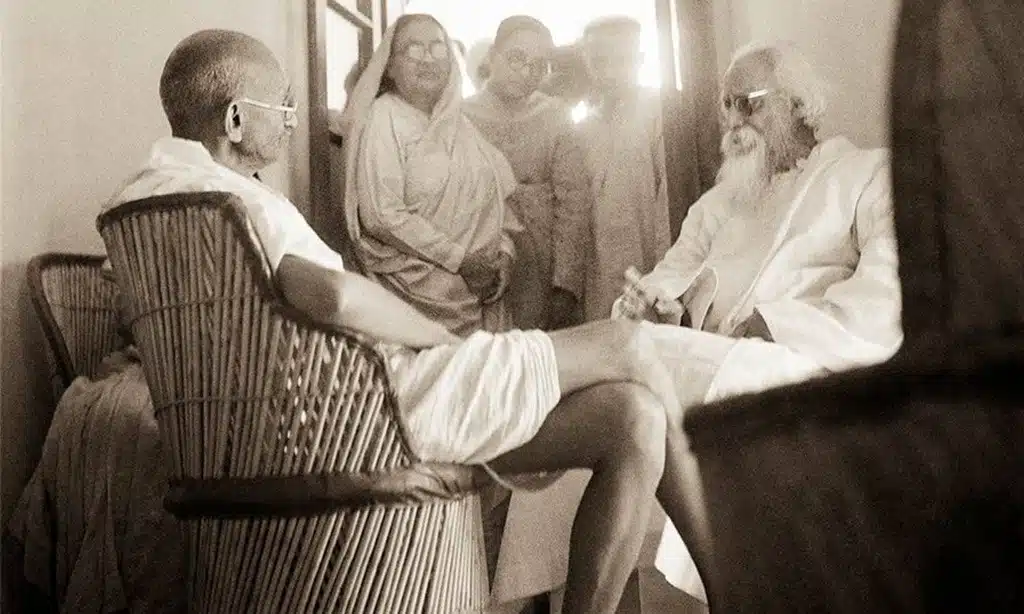
Today, May 8, 2024 (25 Boishakh, 1431) is the 163rd birthday of Rabindranath Tagore. His birthday is celebrated as “Rabindra Jayanti” in Bangladesh and India. He wrote the national anthems of both countries. Rabindranath Tagore reshaped Bengali literature and music, as well as Indian art, with contextual modernism in the late 19th and early 20th centuries.
Rabindranath Tagore and Mahatma Gandhi were two very important people in India’s history. Tagore was a famous poet, writer, and thinker, while Gandhi was a leader who fought for India’s freedom from British rule. They both played a big part in shaping India’s future, and their friendship had a huge impact on the country’s struggle for independence. In this article, we will look at how their relationship changed each other and the Indian freedom movement. This article is a tribute to the 163rd birthday of Rabindranath Tagore.
TL;DR
This article, written as a tribute to Rabindranath Tagore’s 163rd birthday (May 8, 2024), explores the profound friendship between Tagore and Mahatma Gandhi and its impact on the Indian freedom movement. Despite their different backgrounds and occasional disagreements on topics like nationalism and industrialization, Tagore and Gandhi shared a deep bond, common values, and a vision for India’s future.
They influenced each other’s thinking, collaborated on important projects, and found emotional support in their friendship. Their legacy continues to inspire people worldwide, showcasing the power of friendship, leadership, and working together for a common goal in shaping society and history.
The First Meeting and Initial Impressions
Tagore and Gandhi first met in 1915 when Gandhi went to visit Tagore’s school in a place called Santiniketan in West Bengal. At that time, Gandhi was already a well-known leader, while Tagore was a respected poet and thinker.
Tagore liked Gandhi’s simple way of living and how much he cared about poor people. Gandhi, on the other hand, admired Tagore’s wisdom and creativity. They quickly became friends and started sharing ideas about what India should be like in the future.
| Year | Event |
|---|---|
| 1915 | Tagore and Gandhi first meet at Santiniketan |
Gandhi wrote about his first impression of Tagore, saying, "I had the privilege of meeting Rabindranath Tagore. I was struck by his deep love for the country and his anxiety to see it free from all bondage." (Gandhi, 1955, p. 224)
Philosophical and Ideological Similarities
Even though Tagore and Gandhi came from different backgrounds, they shared a lot of the same beliefs and values. They both believed in non-violence, which means they didn’t want to use force or harm others to get what they wanted. Instead, they thought people should protest peacefully against things that were unfair. They also wanted to help poor people and make society more equal for everyone.
Both of them thought education was very important and that everyone should have the chance to learn. Tagore and Gandhi also had a strong spiritual side, which means they were always looking for truth and trying to understand the meaning of life.
Tagore wrote about their shared beliefs, saying, "Mahatmaji and I have differences of opinion, but what is wonderful is that in spite of these differences, we can meet each other without the least effort. This is because our ideals are the same." (Tagore, 1921, p. 7)
Differences and Debates
Although Tagore and Gandhi agreed on many things, they also had some differences of opinion. Tagore didn’t like nationalism very much, which is the idea that people should be very loyal to their own country. He thought it could be harmful. Gandhi, however, believed that nationalism was necessary for India to become free from British rule.
They also disagreed on some political issues, like the Non-Cooperation Movement. Gandhi supported this movement, but Tagore had some doubts about it. Another difference was their view on industrialization, which means using machines and factories to make things. Gandhi wanted to focus on industries in villages, while Tagore saw the benefits of using modern technology. Even though they didn’t always agree, they always respected each other’s views and kept an open mind.
| Topic | Tagore’s View | Gandhi’s View |
|---|---|---|
| Nationalism | Against | In favor |
| Non-Cooperation Movement | Doubtful | Supportive |
| Industrialization | In favor | Against |
Gandhi acknowledged their differences, stating, "I know that there is a fundamental difference of outlook between us. But this difference fortunately does not affect our personal relations." (Gandhi, 1931, p. 232)
Mutual Influence and Exchange of Ideas
Tagore and Gandhi learned a lot from each other and influenced the way each other thought. Gandhi often used Tagore’s songs and prayers in his ashrams, which were places where people lived and worked together, and also in political meetings. This helped spread Tagore’s ideas to more people. Tagore, on the other hand, supported Gandhi’s social and political campaigns and wrote about them in his essays and letters.
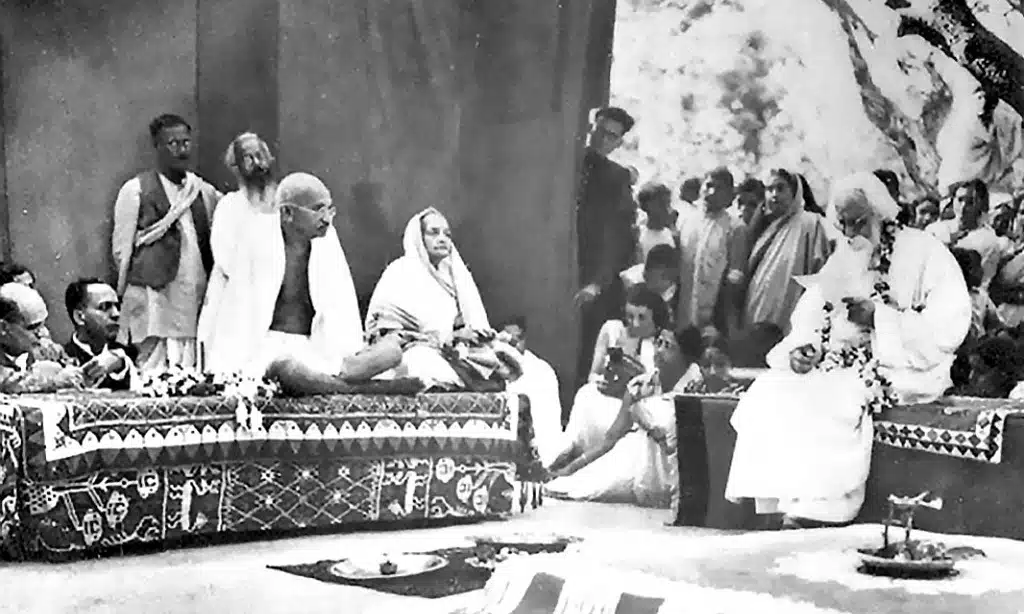
They had many deep talks about religion, politics, and social issues, which helped to shape what they each believed. Tagore and Gandhi also worked together on some important projects, like the All India Village Industries Association, which tried to help villages develop and grow.
Tagore praised Gandhi's influence, saying, "Mahatma Gandhi has shown us the way by which we can, without using any kind of force, bring about the rule of justice and goodwill in this world." (Tagore, 1930, p. 119)
The Santiniketan Connection
Tagore’s school in Santiniketan was a special place for both him and Gandhi. Gandhi visited the school several times and liked its unique way of teaching, which focused on creativity, nature, and learning to do things on your own. The school also became an important place for the Indian freedom movement, with many students and teachers getting involved in the struggle.
Tagore’s ideas about education had a big influence on Gandhi, who later started his own schools based on similar ideas. The meetings between Tagore and Gandhi at Santiniketan were important because they showed how deep their friendship was and how much they shared the same values. If you want, you can also read Tagore’s Memories with Nagor River.
Gandhi reflected on his visits to Santiniketan, stating, "Santiniketan has become a place of pilgrimage for me. I have visited it several times and I hope to visit it again." (Gandhi, 1946, p. 336)
Personal Bond and Emotional Support
Apart from their connection through ideas and politics, Tagore and Gandhi also had a strong personal friendship. Tagore was like a wise older brother to Gandhi, and Gandhi looked up to him with great respect and love. They supported each other during hard times, like when Tagore lost his wife and daughter, or when Gandhi faced problems in his political work.
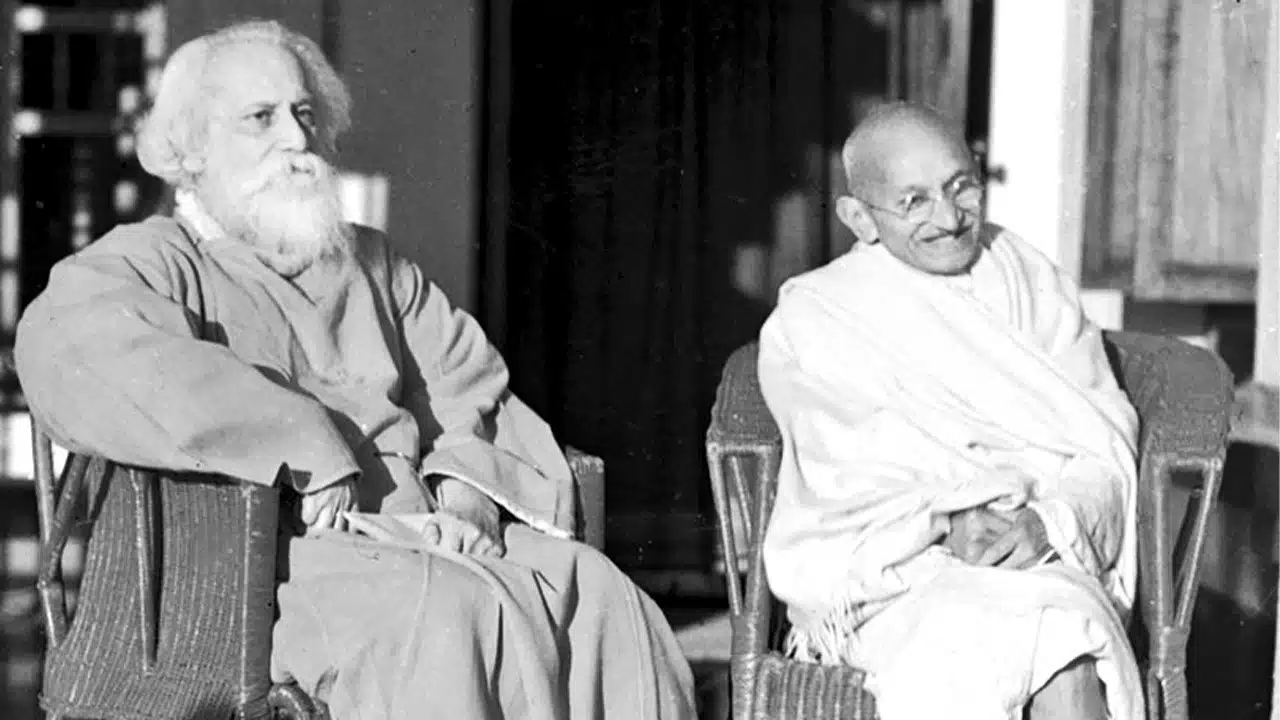
Even when they disagreed on some things, their friendship never changed. They kept writing letters to each other and meeting whenever they could, even when they were very old.
Tagore expressed his affection for Gandhi, writing, "I have a deep love for Mahatma Gandhi. I admire him for his sincerity, his compassion and his humility." (Tagore, 1940, p. 315)
Legacy and Impact on Indian Freedom Struggle
The friendship between Tagore and Gandhi had a huge impact on India’s struggle for freedom. Their ideas and actions inspired millions of people to join the movement and fight for their rights. Tagore’s poems and songs became very important for the freedom movement, while Gandhi’s ideas of non-violence and peaceful protest became the main ways people fought against British rule.
After India became independent in 1947, the new government used many of the ideas that Tagore and Gandhi had supported, like democracy, which means people can vote for their leaders, secularism, which means people of all religions are treated equally, and social justice, which means everyone is treated fairly. Today, their legacy continues to inspire new generations of Indians to work for a better society.
Jawaharlal Nehru, India's first Prime Minister, said, "Gandhi and Tagore, two great men of India, have influenced the thought of vast numbers of people in this country and outside." (Nehru, 1949, p. 87)
Takeaways
The friendship between Rabindranath Tagore and Mahatma Gandhi was very special and had a big impact on India’s history. Even though they had some differences, they shared a deep bond and a common vision for what India could be like in the future. Their ideas and actions shaped the Indian freedom movement and continue to inspire people all over the world today. By learning about their relationship, we can understand important lessons about friendship, leadership, and how to change society for the better. Tagore and Gandhi’s legacy reminds us that great things can happen when people work together for a common goal.
References:
- Gandhi, M. K. (1931). Young India (1927-1931). Navajivan Publishing House.
- Gandhi, M. K. (1946). Harijan (1933-1946). Navajivan Publishing House.
- Gandhi, M. K. (1955). The Story of My Experiments with Truth. Navajivan Publishing House.
- Nehru, J. (1949). The Discovery of India. The John Day Company.
- Tagore, R. (1921). Nationalism. Macmillan and Co.
- Tagore, R. (1930). The Religion of Man. George Allen & Unwin.
- Tagore, R. (1940). Letters to a Friend. George Allen & Unwin.
These sources provide direct quotes and insights from Gandhi, Tagore, and other important figures, which help to illustrate their friendship and its impact on India’s history.