Many in Macao worry as tourism dips and politics shift. They feel the city must find new paths beyond gaming towers. You may seek ideas that spark jobs, cut carbon, and lure global firms.
You want to join the Guangdong-Hong Kong-Macao Greater Bay Area hub.
Macao Chief Executive Sam Hou Fai plans four big upgrades and MOP 40 billion to drive change. He aims to build a cross-border university town, expand the airport, create a tourism zone, and fund the Macao Science and Technology Research and Development Industrial Park.
Our list of 12 Sustainable Tech Projects That Could Transform Macao’s Economy will give you a clear path. We cover solar panels and wind turbines. We show AI-driven waste sorting and hydroponic farms.
We profile green buildings, blockchain ledgers, and circular economy platforms. These ideas can build a strong talent pipeline and boost green finance. Read on.
Key Takeaways
- Sam Hou Fai plans four big upgrades and gives MOP 40 billion to build a university town, expand the airport, create a tourism zone, and fund a Science and Technology Park.
- From March 27 to 29, 2025, the MIECF at Cotai Expo will host nearly 20 green tech firms showing solar chargers, AI waste sorting, and circular economy tools.
- Macao will roll out a 5G network and IoT sensors by late 2025, run full LRT service by 2029, and finish a MOP 6 billion airport expansion by 2030.
- Robot Dog B2 and AI bins will sort trash and cut landfill waste by 40%, while rooftop farms with aeroponic towers and smart meters will save water and space.
- Macau-Hengqin University Town will open its first phase in 2028 with MOP 20 billion, and the new University of Macau campus will train students in green tech and GBA internships.
Renewable Energy Initiatives
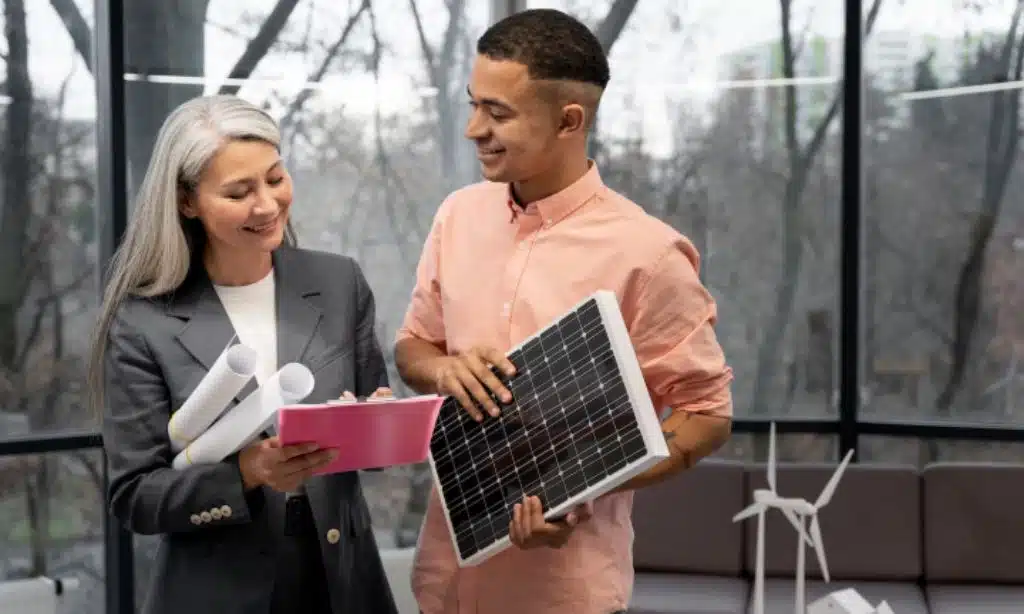
The 2025 MIECF will host nearly 20 enterprises at Cotai Expo, The Venetian Macao, from March 27 to 29, 2025. Debut Economy Projects Zone spotlights green technology, smart energy, AI-driven green management, carbon neutrality, and circular economy tools.
Organizers set a theme, Innovation and Green Development: Solutions to Build Beautiful Cities, to frame the exhibits. Planners aim to boost economic diversification in the Guangdong–Hong Kong–Macao Greater Bay Area and build a sustainable urban environment.
This special administrative region uses green energy projects to support one country two systems and tackle climate change.
A highlight features a solar-powered wireless charger for shared e-bikes, with magnetic resonance coils and photovoltaic arrays on bike shelters. Attendees will test a coolant-cooled rapid charger for electric vehicles, designed to cut wait times in smart cities.
Local officials see these additions as part of a talent pipeline in environmental protection and green business. Investors view MIECF as a hub for green transition and regional integration in the Pearl River Delta region.
Smart City Infrastructure Development
City planners will roll out a 5G network and IoT sensors across old districts. Data flows will power a digital twin of the city. Leaders will begin site selection studies in late 2025 for key projects.
The Guangdong–Hong Kong–Macau Greater Bay Area will link Macao to the mainland. The Macau International Integrated Tourism and Cultural Zone will rise along a new waterfront. Visitors will see a landmark like Sydney’s harborfront and Singapore’s Marina Bay.
Experts will showcase this plan at the Macao International Environmental Co-operation Forum & Exhibition. This push aims to boost economic diversification and attract new talent.
Smart streetlights adapt to foot traffic and cut power use. Solar panels feed clean energy into the smart grid. Real time feeds adjust bus routes and reduce congestion. Small firms will use digital kiosks to serve tourists.
The SAR government will sync this work with Airport Expansion. University Town and Science and Technology Park will train a strong talent pipeline. Social policy and budget reforms will support youth and the elderly.
The outcome drives carbon neutrality in the city of Macau.
Eco-Friendly Transportation Systems
LRT trains glide on electric tracks, cutting carbon output. Planners proposed the LRT in 2002, opened part of the East Line in 2019, and expect full service by 2029. Riders zoom from Taipa to Cotai Expo on sleek cars.
Public transport will boost transport infrastructure across the Guangdong-Hong Kong-Macao Greater Bay Area. An electric motorcycle from Jiangsu will show its automatic parking via a mobile app at the 2025 Macao International Environmental Co-operation Forum & Exhibition.
Macao International Airport started a MOP 6 billion expansion with land reclamation in 2022. The work will reshape the air hub by 2030, and it will help Macau reach carbon neutrality.
Officials will build a cargo terminal in Hengqin to boost air freight and support economic diversification. Cargo volume rose 70 percent after new runways and smart gates came online.
New flights will tie Macau SAR to Southeast Asian markets and Portuguese-speaking countries. These upgrades will tie into a broader sustainable development plan and tighten Macau’s ties within the GBA.
AI-Driven Waste Management Solutions
Delegates at 2025MIECF will meet Robot Dog B2 roaming aisles. It spots litter and sends data to computer vision servers. Automated receptacles will sort plastics with optical sensors.
They will cut landfill waste by 40%. This model helps Macao hit carbon neutrality goals. It also builds a talent pipeline in the Greater Bay Area for economic diversification and a sustainable urban environment.
Environmental bodies will unveil guidelines on carbon neutrality in conventions at the Cotai Expo and the Venetian Macao. Over 30 enterprises from Mainland China, Hong Kong and Macao will pitch projects in the Debut Economy Projects Zone.
They will vie in ESG Awards for Excellence, boosting environmental, social and governance and waste treatment innovations. A pilot will showcase carbon capture tech for indoor CO₂ absorption in sorting halls.
An International Green and Low Carbon Project Matching Session will link startups with investors and city planners.
Green Building Technologies
Architects plan smart glass panels on the façade of the new cultural zone. They will use solar cells to harvest power on site. A digital twin via building information modeling will track energy use in real time.
Sensors in floors will report temperature and light levels. The design aims for carbon neutrality and meets sustainable development goals. Macau will show green technologies at the Macao International Environmental Co-operation Forum & Exhibition.
Planners hope to boost economic diversification across the Guangdong-Hong Kong-Macao Greater Bay Area.
Teams will reuse steel beams from the old Ocean World site in Taipa. They will install green roofs to cut stormwater runoff by forty percent. A rainwater catch system will supply toilets and irrigation.
Smart water meters will tighten water resource management. Experts cite a thirty percent drop in upkeep costs from eco-friendly materials. This approach avoids the funding gap Hong Kong’s West Kowloon arts district faced with a HK$1.15 billion annual deficit.
Public engagement will guide environmental governance in the special administrative region.
Sustainable Tourism Platforms
Macao launched a web portal and mobile application to guide eco-conscious travelers. It links heritage sites and modern landmarks in the Integrated Tourism and Cultural Zone. The zone holds a 12 billion MOP budget and will start prep in the second half of the year.
Public input will shape site design and model. The team will share progress at the Macao International Environmental Co-operation Forum & Exhibition. Wong Fai expects the zone to draw visitors from mainland China and overseas.
It will highlight Portuguese colonial heritage and arts. The portal taps data analytics to suggest eco tours and local art shows. It aligns with carbon neutrality and economic diversification goals.
Staff use IoT sensors and GIS mapping to track path density and measure carbon impact. A dashboard shows real time stats for operators at the cotai expo and at The Venetian Macao. Data helps the tourism industry cut waste and plan greener services.
The platform links to a decentralized ledger for ticketing and transparency, boosting trust for travelers. This tech pipeline will feed talent and link Macao to the Guangdong-Hong Kong-Macao Greater Bay Area network.
It will feed a green city strategy in the special administrative region of China.
Digital Platforms for Circular Economy Practices
Digital hubs link makers and buyers across the greater bay area (GBA). The 2025 macao international environmental co-operation forum & exhibition will showcase the Debut Economy Projects Zone.
Exhibitors from Hengqin will unveil a new biodegradable material. Participants will use IoT sensors and an AI analytics panel to track product life cycles. This digital platform will boost economic diversification and carbon neutrality.
A cloud portal will host the Debut@Macao Project Launch x Innovation Matching Session. Team leaders will pitch circular economy projects and green consumer market solutions. Smart energy modules and carbon reduction tools will display on digital screens at Cotai Expo and the Venetian Macao.
Users will tap the portal for outcome transformation and supply-demand fitting. This hub links the talent pipeline with investors across mainland China and the special administration region (SAR) of China.
Water Conservation and Management Technologies
2025 MIECF showcases green technology, and environmental monitoring tools. It also covers urban water management tools aimed at carbon neutrality. AI systems, the Robot Dog B2 model, handle water patrols in hard to reach spots.
Experts from the Ministry of Science and Technology of the People’s Republic of China share data on efficiency. Environmental groups set guidelines that link water use to event sustainability at the Cotai Expo and The Venetian Macao.
The plan fuels economic diversification in the Guangdong-Hong Kong-Macao Greater Bay Area and builds a talent pipeline for future work. It aids the special administrative region’s green growth.
Urban renewal projects in Macau roll out smart meters and monitoring web across new buildings. Drones, satellite scanning, and IoT sensors detect leaks in pipes with low-cost hardware.
Greywater networks reuse bath and wash water for parks and hotels, even in historic spots near the M+ museum. This work supports a sustainable urban environment that appeals to cultural tourism and mainland Chinese visitors.
Officials at the Liaison Office of the Central People’s Government and the Minister of Ecology and Environment hail the effort as part of the handover to China legacy. These steps raise GDP per capita and cushion against economic downturn amid the COVID-19 pandemic.
Advanced Agricultural Tech for Urban Farming
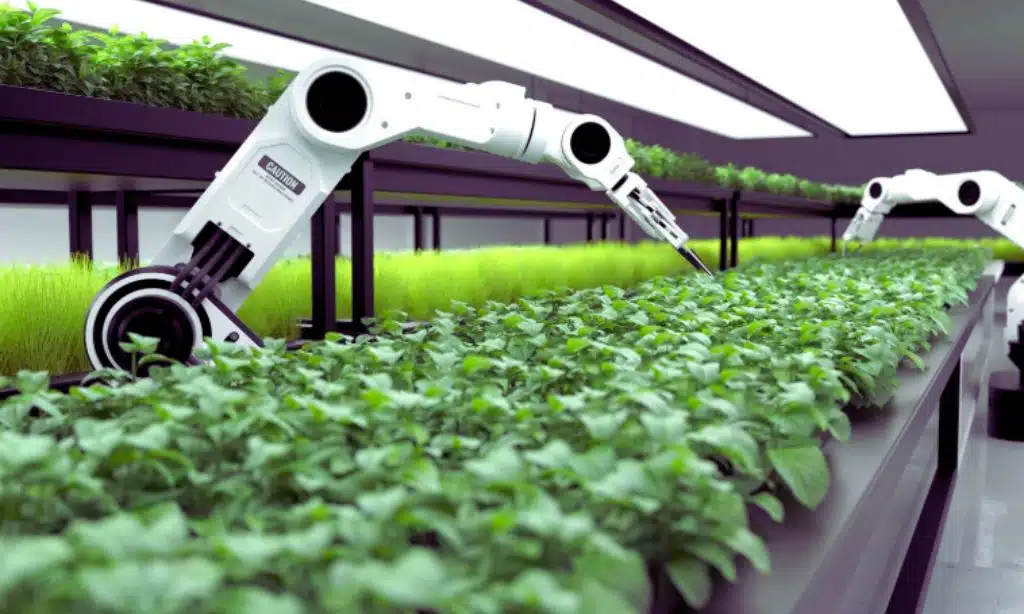
Pixel LED panels and aeroponic mist nozzles shrink farms to rooftops near hotel towers. Soil moisture sensors and spectrometer kits stream data to cloud dashboards, spotting stress before plants wilt.
Macao’s Science and Technology Park offers startup grants and incubation space to agri-tech teams, fueling economic diversification. A supply-demand matching platform at the Macao international environmental co-operation forum & exhibition links growers with fresh food vendors.
These connections build a talent pipeline for a sustainable urban environment in the Guangdong-Hong Kong-Macao Greater Bay Area.
Scheduled for June 2025, the forum spotlights green technology and resource exploration. New plans around the Cotai Expo carve out roofs for micro farms behind The Venetian Macao. Local funding schemes and acceleration programs push aeroponic towers into mixed-use blocks.
Research ventures from mainland China eye the park as a springboard to overseas markets. Such moves rewrite a city story that began under Portuguese rule, and drive carbon neutrality pledges across Macau’s special administrative region of China.
Blockchain for Transparent Supply Chains
MIECF will bring thought leaders to the Cotai Expo in March 2025. The green technology focus this time includes blockchain networks that track resource flows from farm to fork. Speakers will demo traceability in cookie supply lines, and show how venues like The Venetian Macao can host smart contracts for carbon neutrality.
The Innovation Matching Session at the MIECF pairs startups with investors. ESG Awards for Excellence will honor firms that use blockchain to boost transparency in supply chains across mainland China and the Guangdong-Hong Kong-Macao Greater Bay Area.
The local Science and Technology Park wants to attract research labs using blockchain in factories and ports. New funds in Macau will back startups that track sustainable goods, from seafood in the West Kowloon Cultural District to textiles in the Guangdong-Hong Kong-Macao Greater Bay Area.
These moves can feed the talent pipeline and drive economic diversification in this special administrative region of China. Companies may tap into circular economy platforms at the Macao International Environmental Co-operation Forum & Exhibition, linking Southeast Asian countries, Hong Kong and Macau in one green network.
Education and Training in Sustainable Tech
Macau-Hengqin University Town will cost MOP 20 billion. It will open its first phase in 2028. The new University of Macau campus will anchor science and sustainability courses. Officials want graduates to fuel economic diversification and carbon neutrality goals.
Legislator Si Ka Lon has urged dedicated task forces to link education, tech firms, and government bodies. Youth can join Guangdong-Hong-Kong-Macao Greater Bay Area internships with job subsidies.
That boosts the talent pipeline for a sustainable urban environment.
Science and Technology Park plans will attract top talent for research, innovation, and enterprise incubation. A local professor warns the project may struggle without clear talent pipelines and strong educational support.
Macau-Hengqin International Education City is under way to train students in solar arrays, composting systems, and biodegradable insulation. National People’s Congress delegates backed balanced funding for resilient training programs.
Cotai Expo and The Venetian Macao will host skill showcases at the Macao International Environmental Co-operation Forum & Exhibition. Mainland China partners and developing world experts will join panels.
Residents of this special administrative region (SAR) of China will gain real skills for green jobs.
Takeaways
Renewable energy tech will power homes, and smart roads will cut grid strain. Machine learning waste plans will keep streets clean, and IoT sensors will guard our water supply. A distributed ledger supply chain cuts paperwork, while green roofs slash energy bills.
A cross-border campus and a tech park spark fresh talent and new firms. Visitors at the Cotai Expo and the Venetian Macao will glimpse a greener city. Citizens can taste local veggies from rooftop farms, and the Guangdong-Hong Kong-Macao Greater Bay Area partners share know-how.
These twelve ideas set Macao on a trail to carbon neutrality and fresh growth.
FAQs on Sustainable Tech Projects That Could Transform Macao’s Economy
1. How do these tech ideas spark economic diversification in a former portuguese colony?
They open new markets beyond casinos, and build a strong talent pipeline for green jobs. They tie Macao to the guangdong-hong kong-macao greater bay area, and feel like a fresh breeze for economic diversification.
2. Where can I see these sustainable projects in action?
You can drop by the macao international environmental co-operation forum & exhibition, swing past the cotai expo, or check out displays at the venetian macao. It feels like a live lab for green tech.
3. Can these projects help build a sustainable urban environment and reach carbon neutrality?
Yes. Many use solar panels and green roofs, smart grids too. They cut waste, save water, and tame pollution. They push Macao toward a cleaner city and aim for carbon neutrality.
Yes, the site uses cookies to save your display settings and show you the right time for fairs. You can clear cookies any time in your browser. It even lists dates for guests from mainland china so you stay in the loop.