You can build a sustainable workplace without turning your workday into a big project. Most offices lose money through wasted electricity, unnecessary printing, and single-use supplies.
When you fix those leaks, you cut your carbon footprint, reduce clutter, and make it easier for people to do the right thing.
This guide gives you clear steps on sustainable alternatives in the office, from LED lighting and smart thermostat settings to a paperless office plan, e-waste recycling, and better waste management.
Key Takeaways
- The U.S. Department of Energy says quality LED bulbs use at least 75% less energy than incandescent bulbs, and ENERGY STAR estimates certified smart thermostats save about 8% on heating and cooling bills.
- Start with “default” upgrades such as LED lighting, motion-activated light switches, sleep settings on computers, and a smart thermostat to reduce energy consumption.
- Make a paperless office practical with print controls, digital approvals, and recycling stations for the paper you still need.
- Run e-waste recycling and electronics donation with data security built in, using certified recyclers and clear chain-of-custody steps.
- Design waste reduction for real behavior: paired landfill, recycling bins, and compost bins where waste happens, with labels people understand.
- Support low-carbon commuting with public transit perks, a bike rack plan, and virtual meetings that reduce travel without hurting collaboration.
Practical Steps to Build Sustainable Alternatives in the Office

The fastest way to improve an eco-friendly office is to set better defaults: make the low-waste choice the easiest choice, then track progress so the changes stick.
Quick-Start Checklist for a Week
- Pick a small green team (2 to 5 people) and give them one job: ship quick wins, then report results monthly.
- Upgrade your top energy drains first: lighting, plug loads (phantom power), and heating and cooling schedules.
- Put waste management on rails with simple recycling stations, compost bins (if your hauler accepts them), and clear signs.
- Lock in a paperless office workflow for approvals, invoices, and onboarding, then restrict “nice-to-print” printing.
- Choose one commuting perk to launch first, like public transit passes or secure bike parking.
1) Build a Green Team that Can Prove Results
A green team works best when it runs like a small operations group, not a suggestion box.
Use a simple scorecard that tracks energy consumption (kWh), paper orders, landfill pickups, and e-waste recycling weight.
- Set one target per quarter: for example, reduce printer pages by 15% or add recycling bins to every print area.
- Assign owners: one person for energy, one for waste reduction, and one for supplies procurement.
- Report “money saved” next to “waste reduced”: that keeps the program tied to cost savings, not just intentions.
- Run short campaigns: a two-week print reduction sprint beats a vague yearly goal.
EPA’s WasteWise program has long encouraged organizations to set goals and track waste prevention and recycling, and in a 2019 EPA program update, the agency reported participants prevented and diverted 247 million tons of materials over the program’s lifetime, with billions in avoided landfill fees.
2) Cut Energy Use First: Lighting, Plug Loads, and Climate Control
If you want a greener office fast, start with lighting and HVAC settings. These changes reduce energy consumption without asking people to work all day.
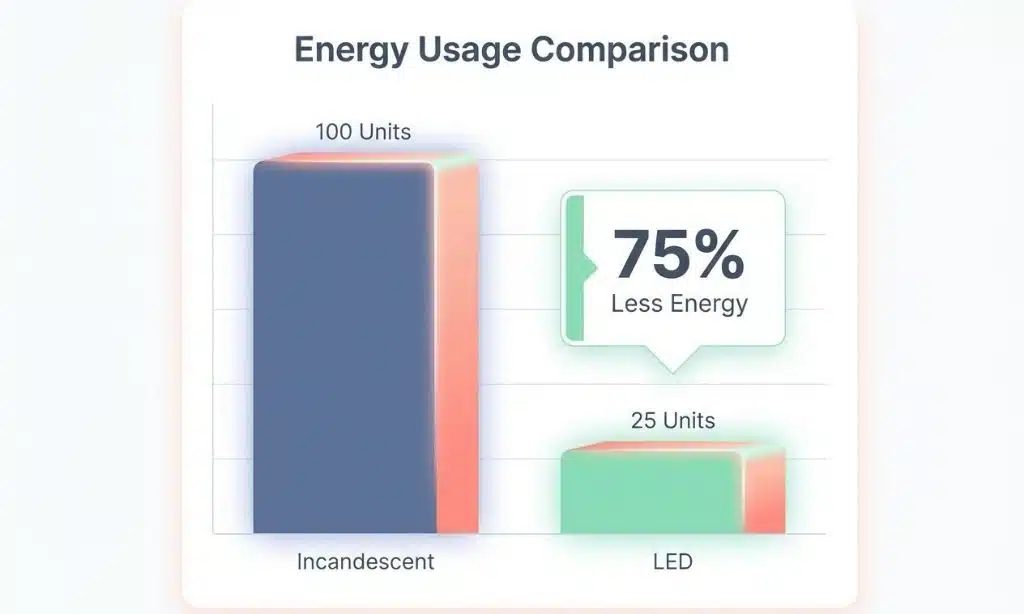
The U.S. Department of Energy notes that LED lighting uses at least 75% less energy than incandescent lighting and can last up to 25 times longer, and ENERGY STAR says certified smart thermostats save about 8% on heating and cooling bills.
| Upgrade | Why it works | Do this next |
|---|---|---|
| LED lighting | Lower electricity use and less heat from artificial lighting, which can ease air conditioning load. | Replace the most-used fixtures first: open office areas, conference rooms, and reception. |
| Motion-activated lighting | Stops lights from running in low-occupancy areas. | Install sensors in restrooms, storage rooms, copy rooms, and break areas. |
| Smart thermostat | Reduces heating and cooling when spaces are empty, while protecting comfort during peak hours. | Set an occupied schedule, then add a holiday and weekend setback plan. |
| Smart power strips | Cuts phantom power from monitors, chargers, and desk gear. | Standardize power strips for desks, printer stations, and shared conference AV. |
How Can Workplaces Reduce Their Environmental Impact Effectively?
Focus on a short list of high-impact changes, then standardize them across the office. You will reduce waste and emissions, and you can support employee morale by making sustainability feel achievable.
- Make energy savings automatic: upgrade to LED bulbs, add motion-activated light switches, and tighten heating and cooling schedules.
- Reduce plug-load waste: use smart power strips and enforce sleep settings on monitors and computers to cut phantom power.
- Reduce paper at the source: set print defaults, require secure release, and move approvals to digital tools.
- Design waste stations: pair recycling bins with landfill bins, and add compost bins where food waste is generated.
- Protect data while reducing landfill waste: run e-waste recycling with certified partners and documented pickup.
- Support low-carbon commuting: improve public transit and bike options, and expand virtual meetings where they fit.
- Choose safer products: standardize non-toxic cleaning products and durable, refillable supplies.
- Use natural daylight: open blinds, manage glare, and reduce artificial lighting where daylight is enough.
- Keep indoor plants realistic: use them for comfort and aesthetics, and treat ventilation and cleaning as the real air quality controls.
3) Move to a Paperless Office Without Losing Control
A paperless office is less about banning printing and more about removing the reasons people print in the first place. Make digital the default for approvals, forms, and records, then make printing slightly harder than clicking “share.”
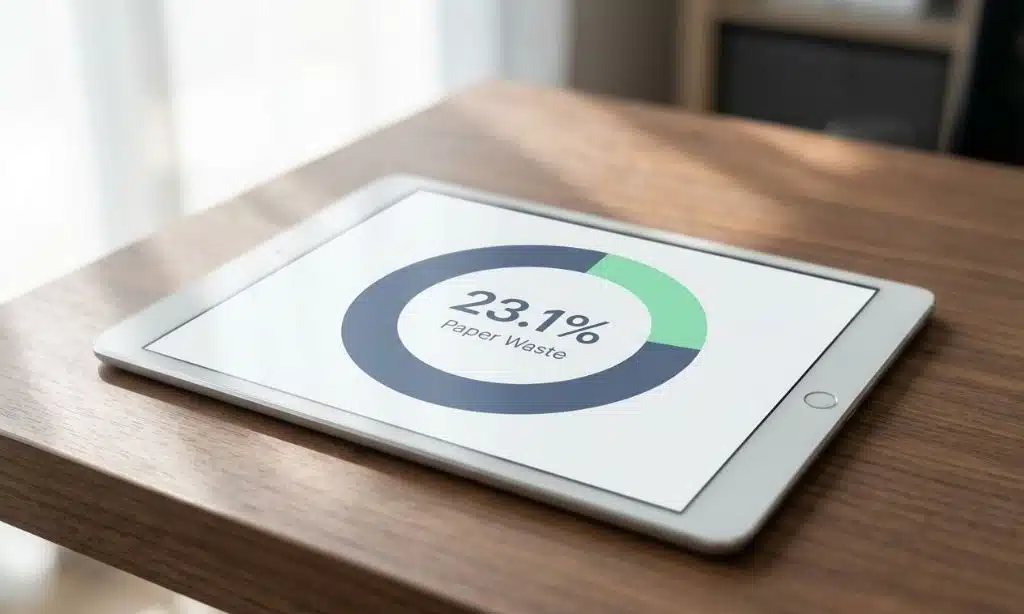
EPA’s materials data shows paper and paperboard made up 23.1% of U.S. municipal solid waste in 2018, and it still matters because it is both a major waste stream and a major purchasing cost.
What Are Ways to Reduce Paper Use and Improve Recycling at Work?
- Set printer defaults: duplex and black-and-white by default, with color printing allowed only when required.
- Use secure badge release: this stops abandoned print jobs and cuts toner waste.
- Digitize “repeat” documents first: onboarding packets, expense reports, invoices, and HR forms.
- Use better meeting habits: share an agenda link, display slides on screens, and capture notes in a shared doc.
- Buy smarter paper for what remains: choose recycled paper or FSC-certified options, and track purchasing so you can see progress.
- Place recycling bins where paper is created: near printers, mail stations, and supply rooms, not just in the kitchen.
4) Make E-Waste Recycling Safe, Secure, and Routine

E-waste recycling should be a scheduled business process, not an occasional closet cleanout. Your goal is two-fold: reduce landfill harm and protect private data from drives, copiers, and devices.
SERI notes that R2v3 is the current version of the R2 Standard, with facilities having until June 30, 2023 to transition, and this gives you a practical filter when choosing an IT asset disposition partner.
How Do You Select Sustainable Office Supplies and Products?
- Pick certified recyclers for electronics: Ask if your partner is certified to R2v3 or e-Stewards, and confirm how they handle downstream vendors.
- Require documented data handling: Request written proof of data destruction for drives and data-bearing devices.
- Separate “reuse” from “recycle”: Route newer laptops and monitors to refurbishment or electronics donation, and send broken items to certified recycling.
- Plan pickups: Quarterly e-waste recycling pickups keep storage rooms from becoming toxic junk drawers.
- Include peripherals: Collect cables, batteries, printers, and toner in the same program so nothing ends up in a landfill bin.
Pro tip: If a device ever touched customer or employee data, treat it like a security project. Build chain-of-custody into your e-waste recycling process, and do not rely on “we recycle responsibly” claims without a recognized certification.
5) Waste Management that People Will Actually Follow (Plus Composting)
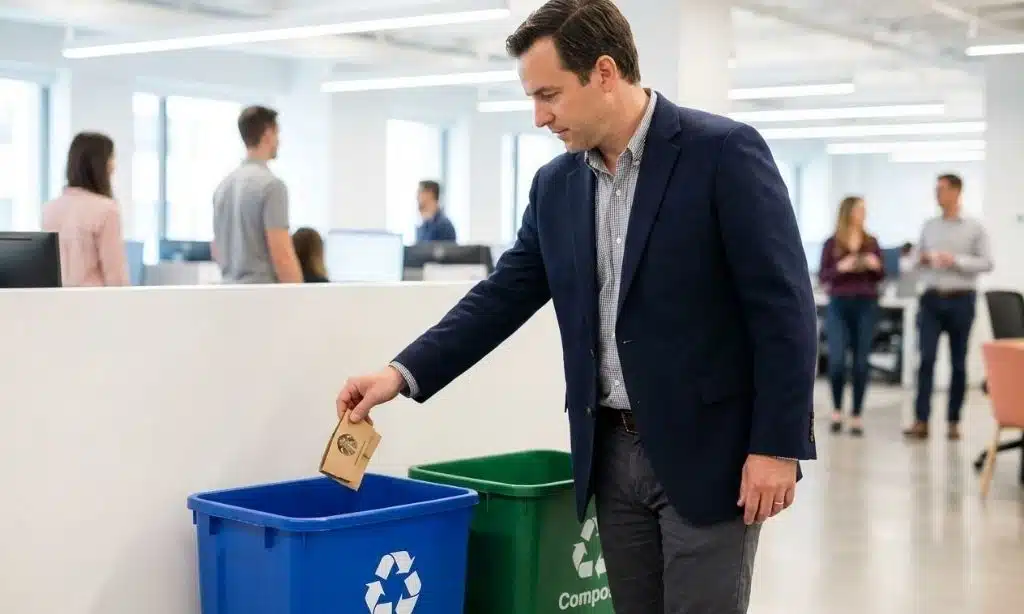
Waste reduction works when your setup matches how people move through the office. Place recycling stations where waste is created, and use consistent labels across floors and rooms.
EPA reports that food is the single most common material sent to landfills at 24.1% of U.S. municipal solid waste and that in 2019 only 5% of wasted food was composted.
What Strategies Can Minimize Waste Generated in the Office?
- Standardize stations: put landfill, recycling bins, and compost bins together so people do not have to “hunt” for the right bin.
- Label with examples: add 3 to 5 “yes” items and 3 to 5 “no” items per bin, based on what your office actually uses.
- Remove the worst disposables: stock reusable cups and reusable plates, and then stop ordering single-use items for meetings.
- Create a reuse shelf: binders, folders, and office supplies can be reused before someone buys new.
- Reduce food waste at the source: order smaller catering quantities, offer half portions, and store leftovers safely for next-day meals.
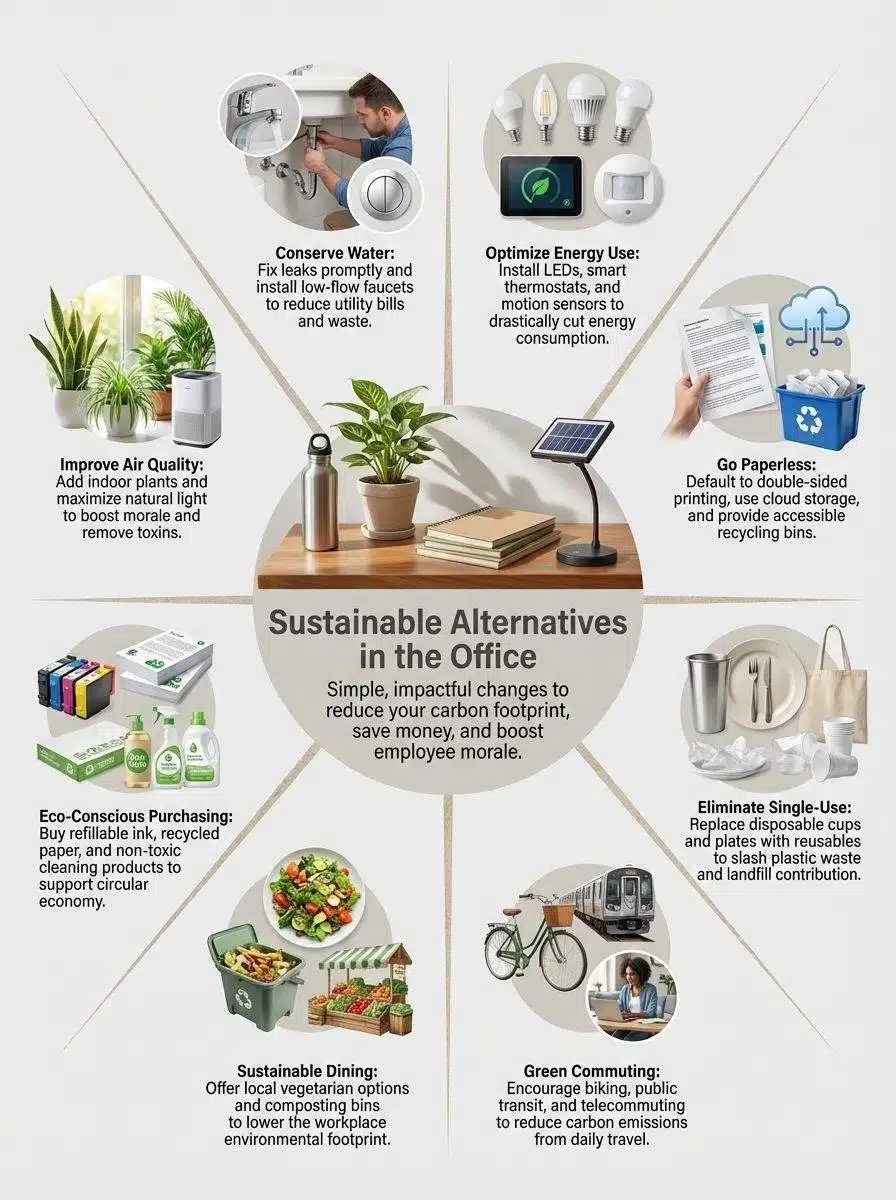
How Can Offices Provide Sustainable Food Choices for Employees?
Start by reducing food waste, then improve what you serve.
- Offer a clear plant-forward option: a strong vegetarian or vegan choice at every catered meeting makes it easier for people to choose lower-impact meals.
- Make reusables the default: keep durable plates, real cutlery, and washable containers in the kitchen.
- Compost what is unavoidable: if your hauler supports it, compost bins near food areas keep scraps out of landfills.
What Initiatives Encourage Reuse and Recycling in Office Settings?
Keep the program simple, then reinforce it through systems, not speeches.
- Run a monthly mini-audit: check contamination (trash in recycling bins), then adjust signs and bin placement.
- Use plantable business cards sparingly: reserve them for events where a physical card is truly needed, and use digital sharing for everything else.
- Offer a small incentive: reward teams that hit waste reduction targets, like the lowest print pages per person.
- Make circular economy choices visible: list which items are refillable, reused, repaired, or refurbished so people see the system working.
6) Sustainable Transportation that Reduces Commuting Emissions

Your commuting policy can be one of your biggest carbon footprint levers, especially if your office has a long daily commute pattern. Offer at least one alternative that feels genuinely convenient.
The American Public Transportation Association has stated that public transportation saves 63 million metric tons of carbon dioxide annually in the United States, and it also reports that 56% of transit buses now run on alternative fuels.
What Are the Best Eco-Friendly Transportation Options for Employees?
- Public transport and public transit: subsidize passes, share route tools, and align core hours with local schedules.
- Bike support: add a secure bike rack area and consider lockers or a changing space for regular riders.
- Carpool programs: offer priority parking and a simple signup system to cut single-occupant trips.
- Electric vehicles: if you install charging, publish a clear policy for access and time limits so it stays fair.
- Walking to work: for nearby staff, make it pleasant with safe paths, lighting, and weather-friendly entry areas.
7) Indoor Plants, Air Quality, and Non-Toxic Cleaning Products
Indoor plants can make a workspace feel calmer, but they should support your air quality plan, not replace it. Ventilation, humidity control, and cleaning practices do the heavy lifting for comfort and safety.
OSHA guidance points to office comfort ranges of about 68 to 76 degrees Fahrenheit and 20% to 60% relative humidity, and EPA says its Safer Choice label covers nearly 2,000 cleaning products as of September 2025.
How Do Office Plants Contribute to a Greener Work Environment?
- Use low-care plants: snake plants and pothos handle office schedules well and still improve the look of the space.
- Place plants where they help people: near workstations and meeting rooms, with access to natural light where possible.
- Avoid overwatering: standing water can create odors and attract pests, so use pots with drainage and a simple care schedule.
How Do You Choose Safer Cleaning Without Guesswork?
- Standardize purchasing: choose non-toxic cleaning products that carry the Safer Choice label, then make those the default options for janitorial teams.
- Reduce disposable wipes: microfiber cloths and reusable tools cut disposables and usually clean better when laundered correctly.
- Ventilate during cleaning: schedule heavy cleaning for low-occupancy hours and increase fresh air where your building allows it.
8) Conserve Water With Low-Cost Fixtures and Simple Habits
Water savings in an office often come from small upgrades that run all day, like faucets and toilets. You also reduce the energy used to pump and heat water, which supports energy conservation goals.
EPA’s WaterSense program states that faucets using a maximum of 1.5 gallons per minute can reduce sink flow by 30% or more from the standard 2.2 gallons per minute.
What Are Effective Techniques for Conserving Water at Work?
- Fix leaks fast: create a simple reporting channel and track repairs in a maintenance log.
- Install sensor faucets or aerators: they reduce waste from taps left running.
- Use dual-flush toilets where practical: reduce water use for liquid waste.
- Right-size landscaping: use native plants and water-wise landscaping to cut irrigation needs.
9) Telecommuting and Virtual Meetings as Carbon Footprint Tools
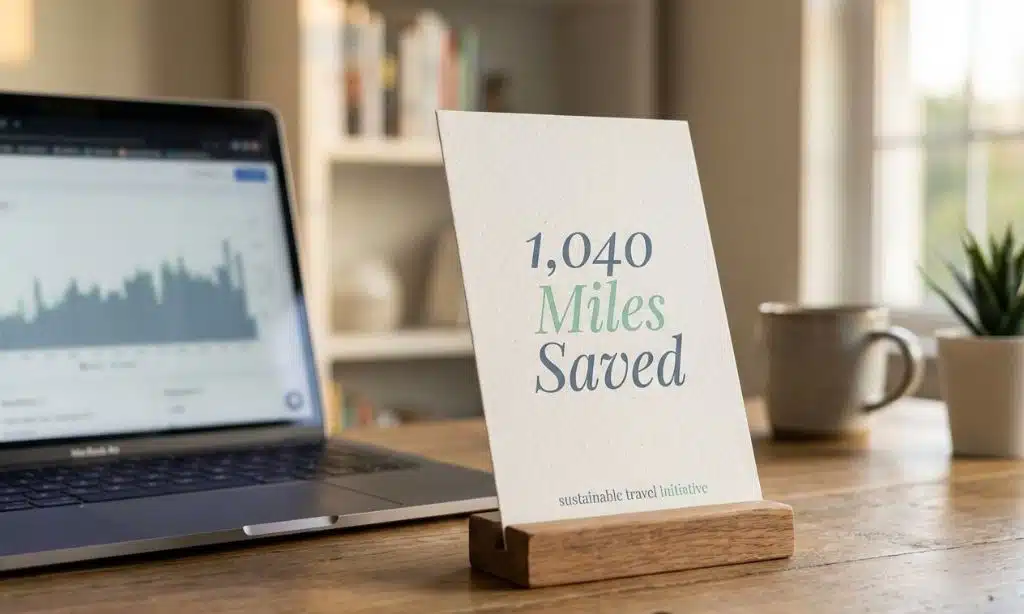
Telecommuting reduces commuting emissions, and it can cut office energy consumption when you align building schedules with occupancy. It works best when you design it, not when it happens randomly.
EPA’s greenhouse gas equivalencies methodology uses a 2022 average of 10,917 miles traveled per passenger vehicle per year and a weighted average fuel economy of 22.8 miles per gallon, which gives you a grounded way to estimate commute-related emissions.
How Does Supporting Telecommuting Help Lower Carbon Footprints?
- Pick predictable remote days: stable schedules let facilities teams adjust heating and cooling and reduce energy consumption.
- Reduce desk-side waste: fewer in-office days usually mean fewer disposables, fewer deliveries, and less food waste.
- Make meetings default to virtual when travel is the only reason: use in-person time for work that truly benefits from being together.
If someone avoids a 20-mile roundtrip commute one day per week, that is about 1,040 fewer miles per year. Multiply your avoided miles by your vehicle’s grams of CO2 per mile (or use a conservative estimate from EPA’s vehicle emissions data) to turn telecommuting into a measurable carbon footprint reduction.
Final Words
Small changes at work can cut your carbon footprint and protect budgets at the same time. Start a green team, then standardize the basics: recycling bins, compost bins (where available), and an e-waste recycling process that protects data.
Upgrade LED lighting, set a smart thermostat schedule, and use smart power strips to reduce energy consumption across heating and cooling. Support public transit, add a bike rack, and use virtual meetings to reduce travel, then keep the momentum with monthly tracking.
When you treat sustainability as a repeatable system, your sustainable workplace gets greener and leaner without adding friction to the day.
FAQs on Sustainable Alternatives in the Office
1. How can we start a sustainable office today?
Start by going paperless, adding recycling bins and compost bins, and using reusable cups and reusable plates. Add indoor plants and bring in natural light, plus switch to LED lighting and energy-efficient lighting.
2. How do we cut energy use and save money?
Turn off phantom power with smart power strips and set a smart thermostat for the air conditioning. Use motion-activated light switches, and favor natural daylight over extra lights to boost energy efficiency and cost savings.
3. What should we do with old electronics?
Set up e-waste recycling and encourage electronics donation so devices are reused or recycled. This supports the circular economy and cuts carbon emissions.
4. Do green choices help staff and customers?
Yes, a green office and a green team raise employee morale and build customer loyalty. Small perks like a bike rack, safe walking-to-work options, or support for public transit also help.
5. What renewable energy options fit an office?
Consider solar panels, wind energy, or geothermal energy to cut your carbon footprint and combat climate change. Even partial renewable energy use shows corporate sustainability and lowers carbon emissions.
6. How do we keep the office eco-friendly day to day?
Use non-toxic cleaning products or eco-friendly cleaning products and cleaning cloths like microfiber, choose sustainable office supplies, and try virtual meetings to reduce travel. Offer plantable business cards, track waste reduction, and protect privacy when you use shared devices or cookies on office systems.