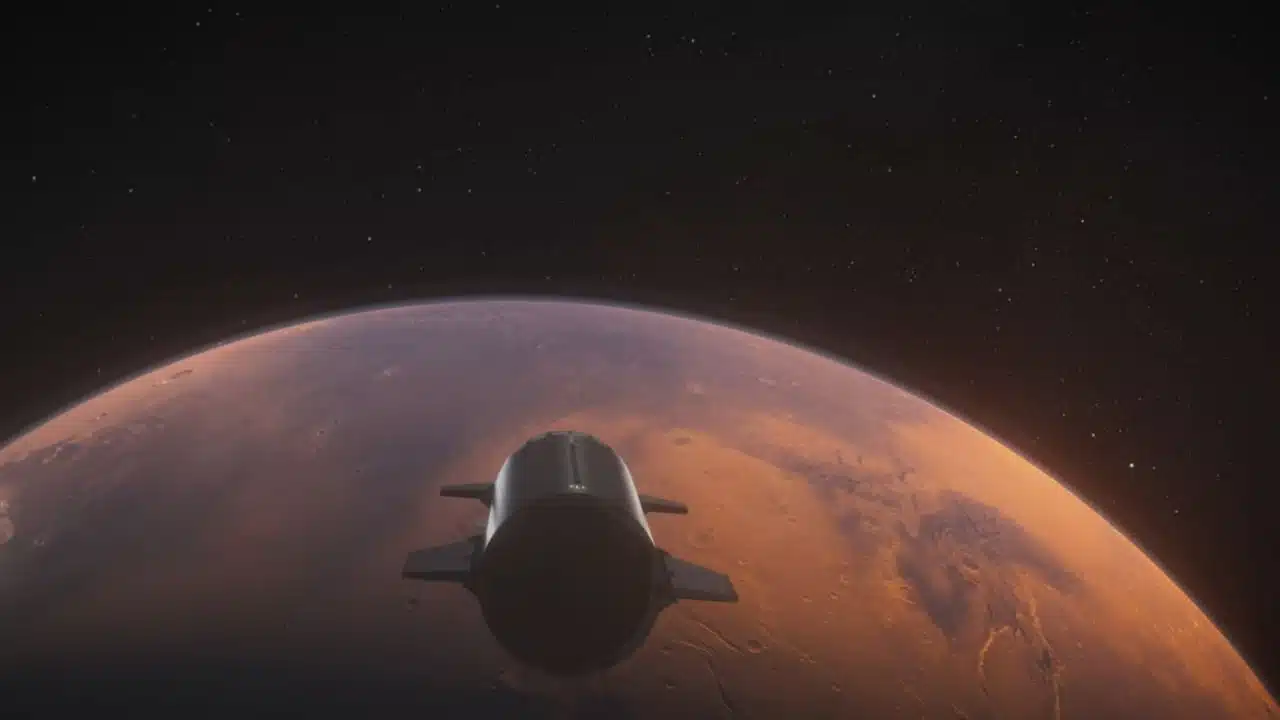
Elon Musk’s vision of building a multiplanetary future for humanity has always been closely tied to Starlink, the ambitious satellite internet service run by SpaceX. But on August 18, 2025, Musk faced yet another challenge when Starlink suffered a widespread outage, leaving customers across multiple continents without reliable internet access.
Reports from Downdetector, a site that monitors real-time digital outages, showed that problems began surfacing around 1:30 p.m. ET. Within minutes, thousands of Starlink users began complaining about sluggish connections, intermittent drops, and in many cases, complete blackouts.
This disruption comes at a time when Musk has been promoting Starlink not only as a tool for global connectivity on Earth but also as the backbone of communications for future Mars colonies. With Musk often describing Starlink as the “funding ticket” for humanity’s survival beyond Earth, such service interruptions highlight the fragility of a system designed to carry such monumental ambitions.
How the Outage Unfolded
The outage appeared suddenly, impacting users across the United States first, before spreading to other regions. Major cities such as Dallas, San Francisco, Phoenix, Chicago, Atlanta, Minneapolis, and Washington, D.C. saw widespread reports of downtime.
But the disruption was not limited to North America. South America, the United Kingdom, and parts of Australia were also hit, making the blackout a global-scale event.
For customers, the timing felt especially frustrating. Several noted online that this was the second outage within just a few weeks. Many took to Musk’s social media platform, X, to voice concerns. One user wrote that the service had faced more outages in the last month than in the previous five years combined, while another pointed out that the previous July 25 outage was never fully explained by SpaceX.
What Customers Pay for Starlink
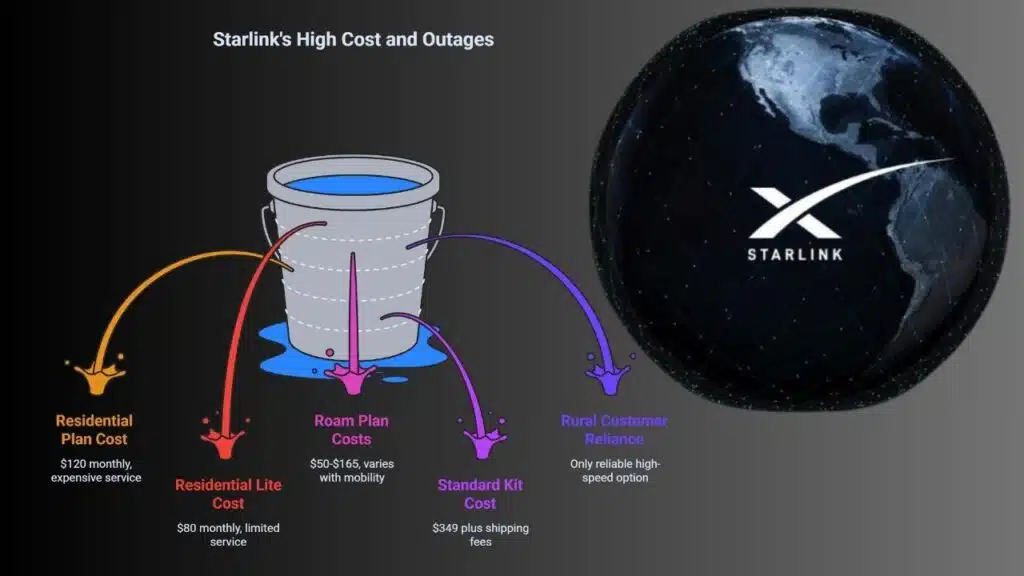
The incident is especially painful for subscribers given Starlink’s premium pricing model.
- Residential plan: $120 per month
- Residential Lite plan: $80 per month
- Roam plans: $50 to $165 per month, depending on mobility features
- Standard Starlink kit: $349 plus shipping
For many customers in remote or rural areas, Starlink is often the only reliable high-speed option. That dependency means outages like this are more disruptive than similar problems with traditional cable or fiber providers.
Financial Stakes: A $137–150 Billion Enterprise
Starlink is not just another internet provider; it’s one of Musk’s most valuable assets.
Industry analysts estimate that the service could be valued at $150 billion when considering market demand, subscriber growth, and future expansion into mobility and government contracts. While SpaceX has not disclosed exact daily revenue, it is understood that Starlink generates millions per day from its global subscriber base of more than six million users across 140 countries.
Musk has also been clear that Starlink profits are intended to fund SpaceX’s Mars program—a project he often describes as essential for the survival of human civilization. In his words, “Starlink profits are being used to pay for humanity getting to Mars.”
This outage, though temporary, serves as a reminder that Musk’s $137 billion “ticket to Mars” still faces significant technical hurdles.
Musk’s Larger Vision: Internet on Mars
Back in May 2025, Musk unveiled his latest SpaceX roadmap, detailing how Starlink will play a critical role in enabling life on Mars.
Highlights of that plan included:
- Deploying Starlink satellites around Mars to provide connectivity for future colonists.
- Using Tesla Optimus humanoid robots in Mars missions, with a test landing targeted for 2026.
- Shipping enough equipment and resources to ensure that if Earth-based support missions are interrupted, Martian settlements can remain self-sustaining.
Musk argued that having two strong, independent planets—Earth and Mars—would be key to protecting civilization from extinction events such as asteroid strikes, nuclear wars, or pandemics.
In his own words, “Having two strong, self-sustaining planets will be critical for the long-term survival of civilization. A multiplanetary existence could extend humanity’s lifespan tenfold.”
But outages like the one on August 18 raise questions: if Starlink can go down on Earth, how reliable will it be on Mars—where survival depends on flawless communication?
Customer Frustration and Reliability Concerns
Reactions online were swift and sharp. Customers highlighted the contradiction between Musk’s ambitious space colonization goals and the recurring service reliability issues back on Earth.
Some expressed concern that outages were happening with increasing frequency, while others asked whether the company would offer compensation or credits for downtime—an issue that Starlink has rarely addressed publicly.
For households that rely on Starlink for remote work, emergency communications, or rural connectivity, service interruptions can have serious real-world consequences.
Starlink’s Global Importance
Despite the frustrations, Starlink remains a critical infrastructure project.
- It is widely used by rural communities with limited internet access.
- It has been deployed in conflict zones, including Ukraine, where it has played a vital role in maintaining communication lines.
- Governments and agencies have increasingly relied on Starlink for emergency response during hurricanes, wildfires, and natural disasters.
This growing dependence means that each outage is not just an inconvenience but a global issue of resilience and security.
Looking Ahead: Challenges for Musk and SpaceX
For Elon Musk, the August 18 outage is more than a technical hiccup—it’s a reputational setback.
Starlink is positioned as the future of internet connectivity, a backbone for global communications, and a financial pillar for SpaceX’s Mars ambitions. But frequent outages raise concerns among customers, investors, and policymakers about the network’s reliability.
Moving forward, SpaceX will need to:
- Improve network redundancy to prevent global blackouts.
- Communicate transparently with customers about causes and fixes.
- Reassure governments and investors that Starlink can serve as dependable infrastructure—both on Earth and potentially on Mars.
The outage on August 18, 2025, was one of Starlink’s most disruptive in recent months. It highlighted the challenges of scaling a global satellite network while raising questions about Elon Musk’s ability to use Starlink revenue as the financial engine for humanity’s journey to Mars.
While service was eventually restored, the incident left customers frustrated and analysts wary. For Musk, it was another reminder that building a future among the stars will require not only bold vision but also reliable systems here on Earth.
The Information is Collected from Sky News and MSN.