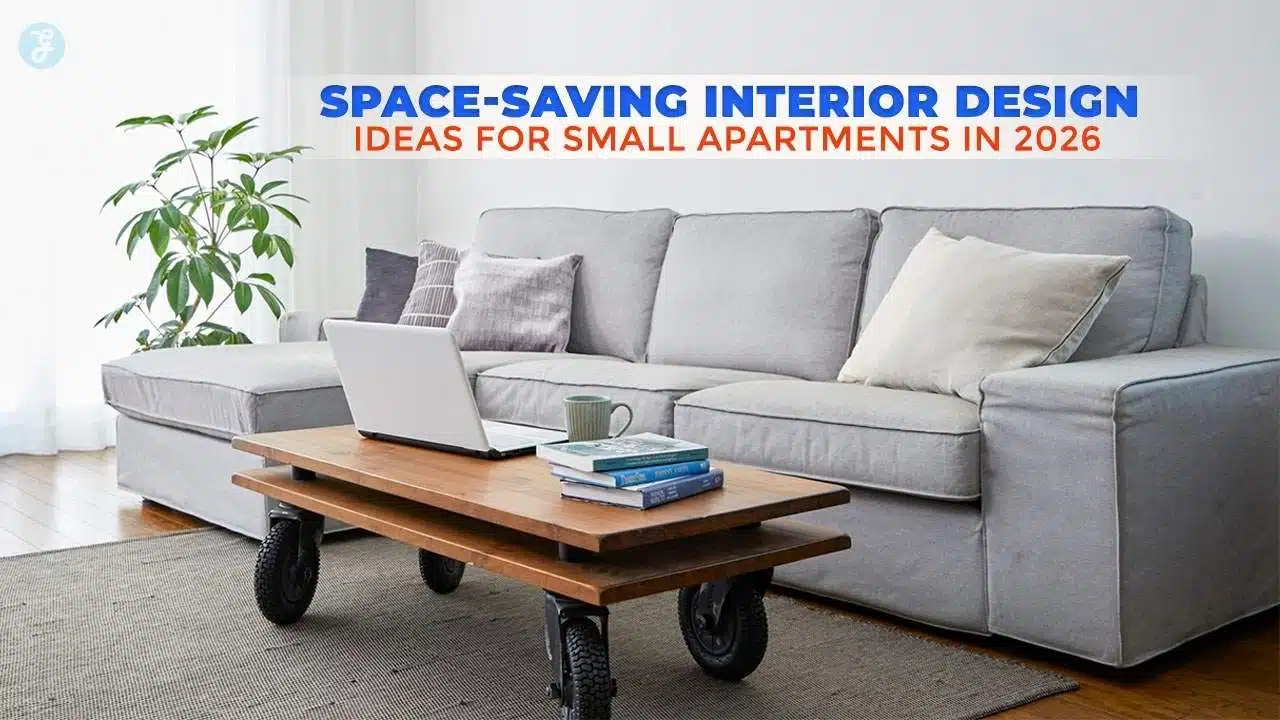
Urban apartments keep getting smaller. Rents and purchase prices move in the opposite direction. In response, designers now treat every square metre as a strategic asset. Instead of simply shrinking traditional layouts, they rethink how people live, work, relax, and host in one compact volume. Also, it became a space-saving interior design trend.
By 2026, trend forecasts show a clear shift toward adaptable layouts, multifunctional furniture, and more personalized interiors. Spaces feel warmer and more tactile, yet remain highly efficient. This is good news for small-apartment dwellers. The right space-saving interior design ideas for small apartments can transform even a modest studio into a calm, flexible home.
The ideas below draw on these emerging trends. They combine hard-working storage, smart technology, and warm, layered style. The aim is practical: maximize your usable space while keeping rooms breathable, comfortable, and future-ready.
Rethinking Layouts: Space-Saving Interior Design Ideas for Small Apartments
Start With Flexible Zones Instead of Fixed Rooms
The old open-plan formula often leaves a small apartment feeling like one big, blurred room. Designers in 2026 lean instead toward flexible zones. Each zone has a clear purpose, but nothing is fully closed off. A sofa backs onto a slim console to define the living area. A rug and pendant light mark the dining corner. A desk sits in a shallow alcove, visually separated by color or a change in flooring.
This approach respects how people actually live in small spaces. A single room may host video calls in the morning, a workout at lunchtime, and guests at night. When you plan zones by activity, you can slide between these modes without dragging furniture around every few hours.
Begin with circulation. Sketch the main routes from the door to the kitchen, bedroom, bathroom, and windows. Keep those paths as clear as possible. Once the main flows are set, fit zones around them. Place storage pieces outside the walkways. Push bulky items, like tall wardrobes, against dead walls where they won’t block natural light.
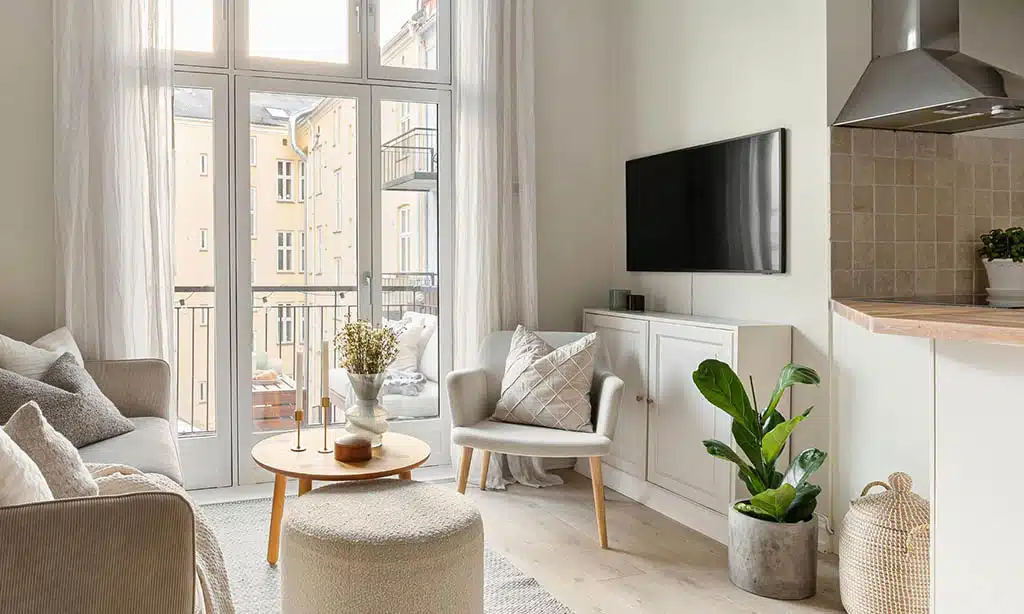
Circulation First: Leave Space to Move
It is tempting to line every wall with storage. Yet the hardest-working small apartments often feel surprisingly open. That is because designers prioritize how the body moves through space.
Leave at least a shoulder’s width between the edge of the bed and the wall. Allow someone to pull out a dining chair without hitting another piece of furniture. Make sure interior doors can fully open or replace them with sliding versions. When movement is easy, the apartment feels larger, even if the footprint has not changed.
Multifunctional Furniture for Future-Proof Small Apartments
One Piece, Many Jobs
Multifunctional furniture has become a staple in small apartment interior design 2026. Sofa beds with integrated storage, Murphy beds that fold up behind shelving, and lift-top coffee tables that convert into workstations all free up floor space during the day.
Look for pieces that handle at least two roles elegantly. A narrow console table can extend into a full dining table when guests arrive. An ottoman can hide spare bedding and act as extra seating. A wall bed with a fold-down desk lets a studio function as an office by day and a bedroom at night.
The best designs conceal their complexity. Mechanisms should feel smooth and safe. Visual lines should stay clean, without bulky handles or exposed hinges. When closed, each piece should sit quietly in the room, supporting the warm minimalism that defines many 2026 interiors.
Algorithmic Ergonomics and Smart Comfort
Furniture makers are also using data and digital modeling to refine ergonomics. Sofas, lounge chairs, and task seating now follow algorithmic profiles based on posture and pressure mapping. For small apartments, this matters. You might use one chair for working, reading, and relaxing.
Look for compact, modular seating that supports the spine, keeps feet flat on the floor, and offers rounded edges rather than sharp corners. Curved silhouettes, which are popular in current trend forecasts, soften tight spaces and make it easier to move around low tables or TV units without bumping into them.
Building Up, Not Out: Using Vertical Space
Storage Walls and Tall Units
When floor area is limited, height becomes your best ally. Many small apartment storage ideas now focus on turning one wall into a full-height storage system. Think floor-to-ceiling cabinets with a mix of closed doors, open shelves, and a niche for the TV or desk.
Tall wardrobes that wrap around door frames or windows pull storage into previously wasted strips of space. Shallow cabinets above doorways or along the hallway can hold seasonal items, suitcases, or bulky bedding. Because these units rise upward instead of outwards, they leave more floor area free for movement and seating.
To keep the room from feeling heavy, vary the rhythm of solid and open sections. Combine closed cupboards at the bottom with lighter, open shelving higher up. Match cabinet fronts to the wall color for a quieter look, or pick a wood veneer that adds warmth without visual clutter.
Ladder Desks, Loft Beds, and Over-Door Ideas
Vertical thinking extends into sleeping and working zones, too. Loft beds with integrated desks and wardrobes beneath them are no longer reserved for children’s rooms. In a studio, raising the bed creates a usable floor zone for a compact office, lounge, or dressing area below.
Ladder desks and rail-based shelving systems are fixed to the wall, barely touching the floor. They create slim workstations, mini libraries, or bar areas. Over-door racks and ceiling-mounted storage solutions let you hang bikes or seasonal clothing high up, freeing space at ground level.
The trick is moderation. Choose a few strategic vertical interventions rather than covering every wall with shelves. This preserves breathing space and supports a calm, ordered atmosphere.
Sliding, Folding, and Pocket Solutions
Doors That Don’t Steal Floor Space
Traditional swing doors consume valuable space as they open and close. Sliding, folding, or pocket doors give that space back. In a small apartment, replacing the bathroom or bedroom door with a sliding panel can open up a whole corner for a shelving unit or dresser.
In kitchens, sliding pantry doors or bi-fold fronts make it easier to reach storage in tight layouts. Glass or ribbed panels allow light to pass between rooms while preserving privacy. For wardrobes, sliding fronts avoid the problem of doors blocking the bed or nightstand when open.
Look for high-quality tracks and hardware. Smooth operation is essential in compact spaces, where a stiff door quickly becomes a daily frustration. Choose finishes that match the wall or echo your main furniture tones so the doors blend into the architecture rather than shouting for attention.
Fold-Down Surfaces and Wall-Mounted Desks
Wall-mounted desks, drop-leaf tables, and fold-down counters create work and dining areas that disappear when not in use. A narrow wall table in the hallway can flip up to serve as a bar when friends visit. A drop-front cabinet hides a laptop and cables during off hours.
These solutions are especially powerful in micro-apartments. You can maintain clear circulation most of the day and only occupy the center of the room when you truly need a surface. Pair fold-down elements with light, stackable stools or dining chairs that slide under a bench to keep the floor clear.
Built-In Storage and Integrated Joinery
Hidden Capacity Under, Over, and Behind
Space-saving interior design ideas for small apartments often come down to what you can hide in plain sight. Built-in benches with lift-up tops along a window wall can store linens or books while offering seating. Platforms under the bed can hold drawers. Even the toe-kick space beneath kitchen cabinets can host slim pull-out trays for baking sheets or cleaning supplies.
Recessed niches shaved into thicker walls can cradle bedside lamps, books, or toiletries, removing the need for bulky tables. In living rooms, low built-in units under windows double as radiator covers, storage, and seating. The more functions you stack into one plane, the less freestanding furniture you need.
Custom Millwork for Micro-Apartments
In the smallest apartments, custom joinery can be transformative. Designers sometimes create a single fitted “cube” that includes a wardrobe, shelving, a fold-down bed, and a sliding table. When the bed is stored, the volume reads as a clean, continuous wall.
While bespoke work costs more upfront, it often replaces multiple pieces of furniture and can dramatically increase resale value. For renters, modular flat-pack systems that mimic built-ins offer a similar effect without permanent changes. Stick to one main material and a restrained color palette so the joinery feels architectural, not like a stack of cabinets.
Light, Color, and Mirrors That Expand Space
Warm Minimalism for Small Apartments
In 2026, minimalism does not mean stark white boxes. Warm minimalism combines clean lines with soft neutrals, textured fabrics, and natural materials. This approach suits small apartments particularly well because it keeps visual noise low while adding comfort.
Swap cold greys for creamy whites, taupes, and clay tones. Use oak, rattan, linen, and wool to create tactile contrast. Keep patterns subtle and large-scale rather than busy and small. The eye reads the room as calmer and more expansive.
Lighting is critical. Layer ambient, task, and accent lighting rather than relying on a single overhead fixture. Slim floor lamps, wall sconces, and under-cabinet strips brighten corners and make ceilings feel higher. Smart bulbs that adjust color temperature through the day support mood and productivity without extra fixtures cluttering surfaces.
Refined Layering Without Visual Clutter
“Refined layering” is another phrase appearing in 2026 forecasts. It describes a curation of textures, finishes, and a few strong pieces rather than a jumble of decor. For small apartments, this means choosing three or four key textures and repeating them across the space.
A wool rug, linen curtains, and a timber coffee table might form the core. A single statement chair in a deeper color acts as a focal point. Mirrors play a supporting role, reflecting light and visually enlarging the room. Place a mirror opposite a window or at the end of a narrow hallway to extend sightlines.
Edit often. If a new object comes in, consider whether something else should leave. This discipline keeps layering intentionally rather than drifting into clutter.
Micro-Zones for Hybrid Living
Pocket Offices, Study Nooks, and Media Corners
Remote and hybrid work remain a reality for many city residents. Small apartments therefore need dedicated work zones, even if they are tiny. The goal is psychological separation rather than extra square footage.
Tuck a shallow desk into an alcove, wardrobe, or unused corner. Use a slim-back task chair that slides neatly under the surface. Overhead shelves hold documents and tech, while a pinboard or artwork marks the zone as distinct.
For a living area that doubles as a media space, mount the TV on the wall and run cables through the wall or within slim trunking. A narrow media console can house routers and consoles behind closed doors, keeping the room tidy.
Soft Partitions Instead of Walls
Soft partitions divide space without heavy construction. Floor-to-ceiling curtains can separate sleeping and living areas while remaining easy to draw back. Open shelving units act as room dividers that still allow light to pass.
Console tables placed behind a sofa subtly signal a change in zone and offer extra storage. Low screens or plants can edge a workspace, providing a small degree of privacy for video calls without blocking ventilation or views.
Smart Tech That Disappears Into the Design
Seamless, Space-Saving Smart Home Features
Smart home technology increasingly blends into interiors rather than sitting on every surface. Compact hubs, integrated speakers, and app-based controls free shelves from a tangle of cables and devices.
In a small apartment, this matters. Wall-mounted speakers or ceiling-integrated options replace floor-standing units. Smart plugs let you control multiple lamps without bulky power strips. A single, discreet router placed high on a shelf can cover the entire home.
Climate and Light Control for Tiny Footprints
Smart thermostats and climate sensors help regulate temperature efficiently, which is useful in compact spaces that heat up or cool down quickly. Automated blinds or smart curtain tracks can open and close with sunrise and sunset, improving sleep without requiring any extra hardware on the floor.
Because control happens through phones or minimal wall switches, you avoid banks of switches and dimmers cluttering small walls. The result is a streamlined, contemporary look that aligns with the broader move toward calm, wellness-focused interiors.
Biophilic Touches and Wellness Corners
Bringing Nature Into Small Apartments
Even the most space-efficient apartment can feel flat without natural elements. Biophilic design – bringing nature indoors – remains a strong trend and scales nicely to tiny homes.
Use vertical planters or wall-mounted pots to keep floors free. A slim ladder shelf near a window can host trailing plants, while a single large plant can anchor a living area. Natural materials such as jute rugs, wooden side tables, and stone or ceramic accessories reinforce the connection to nature.
These touches soften the geometry of built-in storage and multifunctional furniture, making the home feel more human and less mechanical. They also support mental well-being, an increasingly important goal in interior design.
Mini Wellness Nooks
You do not need a dedicated room to carve out a wellness corner. A comfortable chair, small side table, and floor lamp in a quiet corner can become a reading or meditation nook. A soft throw, cushion, and low-level lighting distinguish it from the rest of the living area.
In bedrooms, consider blackout curtains, breathable bedding, and dimmable bedside lights. Together with good acoustic control, these elements help a small room feel like a retreat rather than a storage closet with a bed.
Thresholds and Balconies as Extra Rooms
Entryways That Work Hard
The threshold sets the tone for the whole apartment. In small homes, it often doubles as a storage, coat room, and drop zone. A slim bench with hidden storage gives you somewhere to sit while putting on shoes and a place to hide clutter.
Wall hooks or a simple rail keep outerwear off the floor. A shallow shelf for keys and mail, paired with a mirror, makes the entrance both functional and visually larger. Good lighting in this area prevents the apartment from feeling cramped the moment you step inside.
Balconies, Bay Windows, and Juliet Rails
Outdoor or semi-outdoor areas, however tiny, can act as bonus rooms. A narrow balcony can host a fold-down table and stackable chairs, turning into a breakfast spot in the morning and a reading nook at night. Weather-resistant cushions and plants extend the biophilic theme outdoors.
Even a Juliet balcony or deep window ledge can become a micro lounge with a custom cushion and a small side table. Treat these edges as part of the floor plan rather than as decorative extras. They offer much-needed psychological breathing room in dense urban settings.
Pulling It Together: Planning Space-Saving Interior Design for Small Apartments
How to Prioritize Investments
When budgets are tight, tackle changes in a logical order. Start with layout and circulation. Decide where each key activity – sleeping, working, dining, relaxing – will happen and how you will move between them. Next, address lighting so the apartment feels bright and layered. Only then invest in major storage and furniture pieces.
Multifunctional furniture for small spaces often costs more than standard items, so choose pieces that genuinely support your lifestyle. If you rarely host large dinners, a console-to-dining table might be unnecessary, while a high-quality sofa bed could transform daily life.
Final Thought: Future-Proofing for 2026 and Beyond
Interior design trends for 2026 highlight adaptability, sensory comfort, and personal expression. If you live in a small apartment, you are already working within clear limits. The advantage is focus. Each new object or change must earn its place.
By combining space-saving interior design ideas for small apartments – from flexible layouts and multifunctional furniture to warm minimalism, refined layering, and smart technology – you can create a home that feels both efficient and deeply personal. The result is not just a clever floor plan, but a space that supports how you want to live in the years ahead.