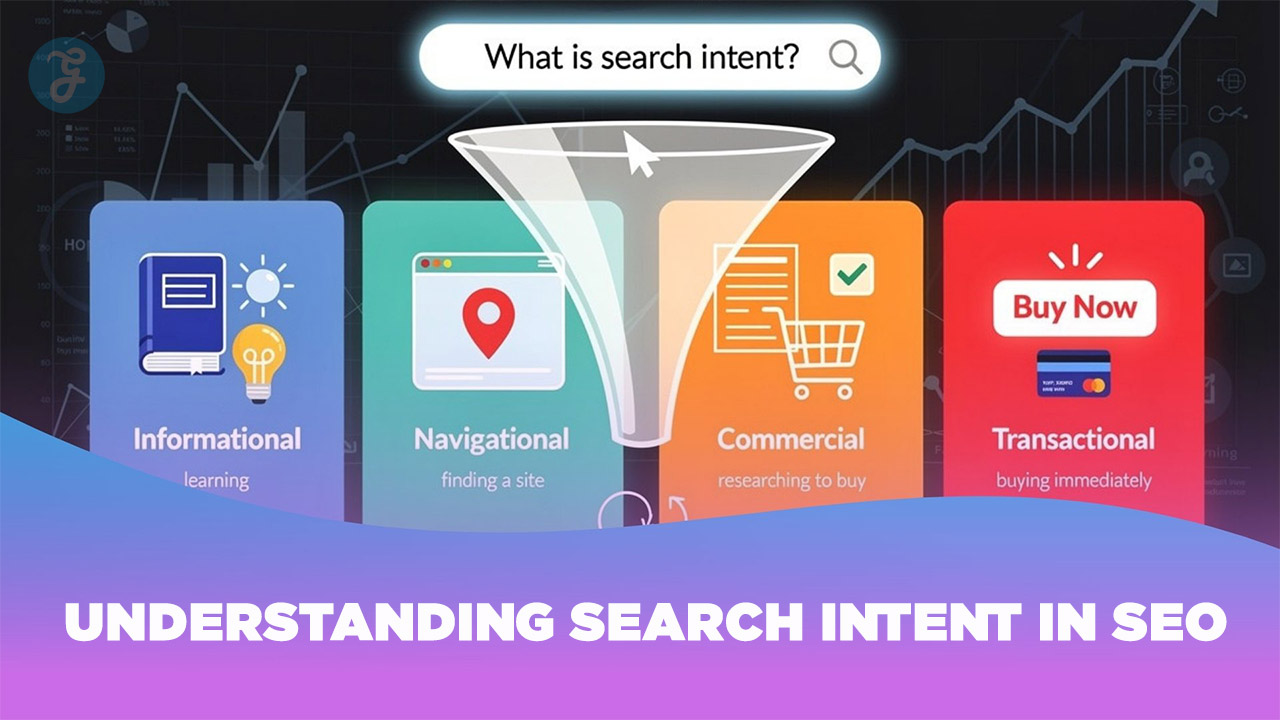
Ever search for answers online and find yourself falling down a rabbit hole of unrelated links? Maybe you just wanted quick facts about spaghetti sauce, but you ended up one click away from buying an expensive pasta maker. This mismatch is common. It happens because many websites miss the real reason behind your search.
Here is the reality. Most people type in questions because they want to learn, not just buy. But if your content does not match what users want, they leave fast.
Grab a coffee and let’s turn those random clicks into happy customers.
What Is Search Intent?
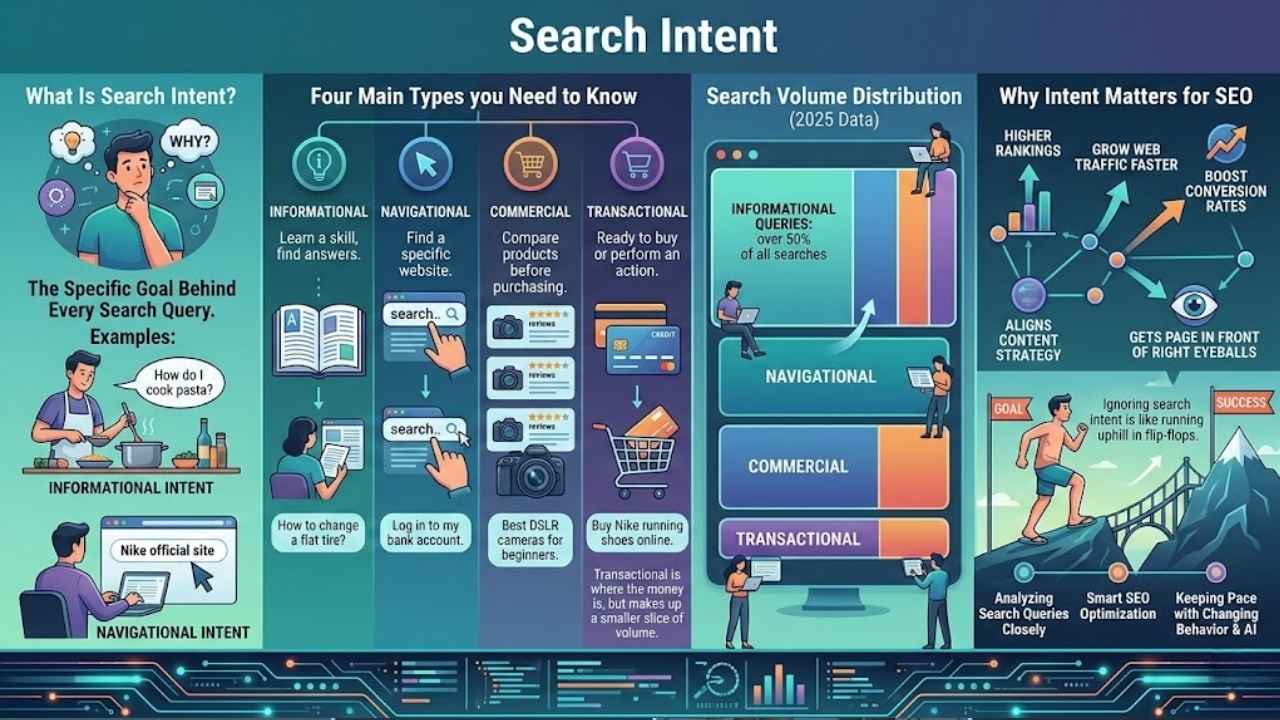
Search intent is the “why” behind every search query. It is the specific goal a user has in mind when they type words into Google. For example, if someone asks “How do I cook pasta?” they have informational intent because they want to learn a skill.
Sometimes people just want to find a specific website. If they type “Nike official site,” that is navigational intent.
There are four main types you need to know: informational, navigational, commercial, and transactional. While transactional searches are where the money is, they actually make up a smaller slice of the total volume. In fact, informational queries make up over 50% of all searches according to 2025 data.
Understanding this concept helps digital marketing teams target audiences better. When you align your content strategy with user intent, you get your page in front of the right eyeballs. This can grow your web traffic faster than almost any other tactic.
Why Is Search Intent Important for SEO?
Matching user intent sits at the center of strong SEO strategies. Google and other search engines value results that solve exactly what people want. This means understanding query intent can boost your web traffic and conversion rates fast.
If your content answers a specific need, you get rewarded with higher rankings. For instance, helping someone buy shoes when they are ready to purchase is a win. Helping them learn about shoe materials when they are just browsing is also a win.
“Ignoring search intent is like running uphill in flip-flops. It makes reaching your goals harder than necessary.”
Businesses that focus on accurate keyword analysis gain an edge by creating content users need right away. Content tuned to match information-seeking searches catches readers early. Meanwhile, optimized product pages turn interest into real sales.
As AI shapes how people ask questions and shop online, keeping pace with changing search behavior is vital. Smart SEO optimization hinges on analyzing search queries closely to hit the bullseye every time someone turns to Google for help.
Types of Search Intent
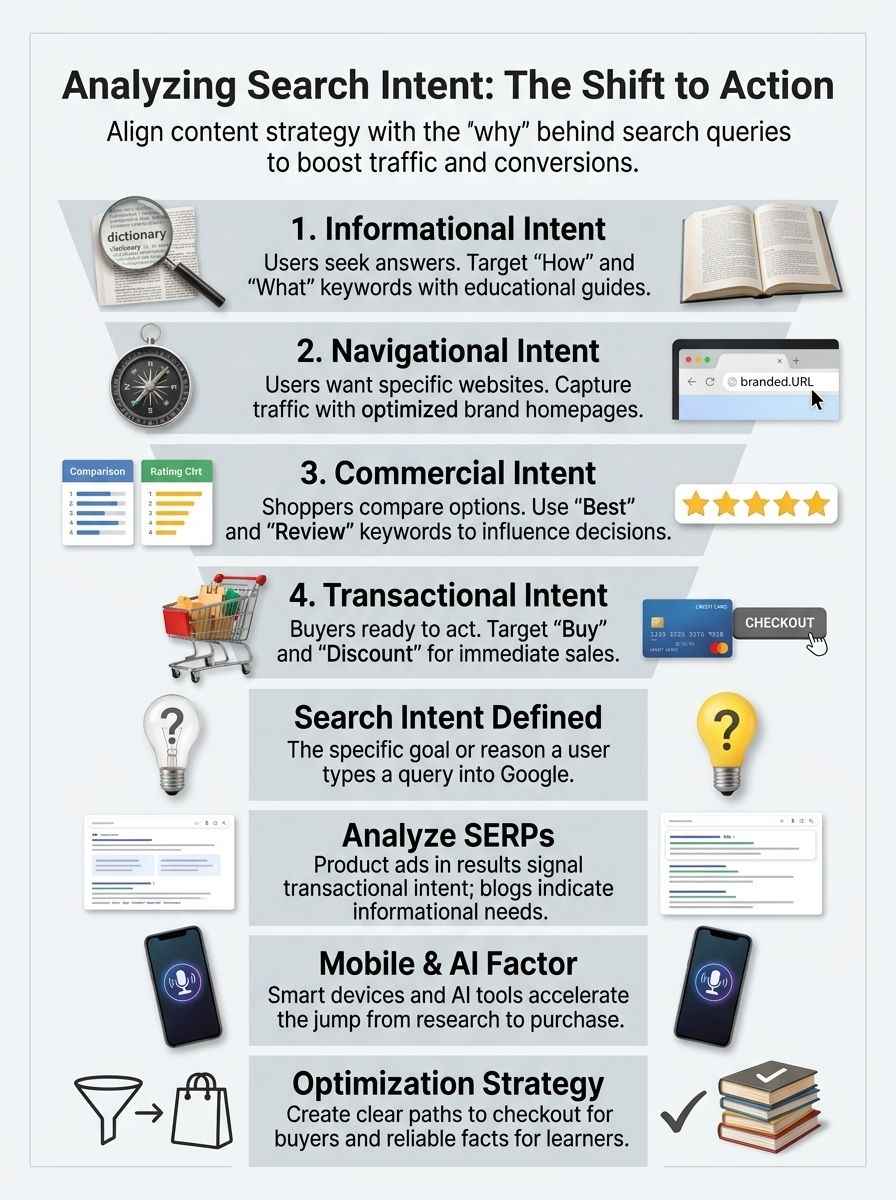
There is more than one way people search. Knowing these types can change how you shape your content.
| Intent Type | User Goal | Example Keywords |
|---|---|---|
| Informational | Want to learn something | “How to,” “What is,” “History of” |
| Navigational | Want a specific site | “Facebook login,” “Apple support” |
| Commercial | Researching before buying | “Best laptops,” “Semrush vs Ahrefs” |
| Transactional | Ready to buy now | “Buy Nike shoes,” “Coupon code” |
Informational Intent
People use search engines to learn something new or find clear answers. Informational intent drives the majority of queries at the early stage of a customer journey. Users here are seeking educational content and facts.
For example, folks might type “How does SEO impact web traffic?” or “What is keyword analysis?” They crave information that satisfies curiosity without pushing for a sale.
Websites capitalizing on informational search intent often see higher engagement. Articles, how-tos, guides, and FAQs match these searches well. Digital marketing teams value this because it draws in audiences looking for reliable data.
Users show navigational intent when they type search queries to reach a specific website or page. For example, someone searching “Instagram login” clearly wants the Instagram sign-in page. They are not looking for tips on creating an account.
Navigational searches often include brand names like “Amazon” or specific product pages. This kind of user intent boosts direct web traffic.
Search engines know these patterns well and put official websites at the top of search engine results. Matching this intent helps ensure your brand appears exactly when loyal users look for you.
Commercial Intent
People with commercial intent want to find products or services before making a final decision. They are almost ready to buy but may compare options, check reviews, or look for deals.
Common keywords include “best laptop 2026” or “top running shoes.” Out of all four types, commercial searches sit just between curiosity and checkout. This is often called the “investigation” phase.
This kind of query often leads to higher conversion rates for businesses using smart digital marketing strategies. Creating content that compares options can help you capture readers in this critical middle stage.
Transactional Intent
Users with transactional intent are ready to take action. Their search queries often include keywords like “buy,” “order,” or “subscribe.” These are the folks looking to complete a transaction fast.
While these queries have lower volume than informational searches, they have the highest revenue potential. Stores and service sites love these visits because they drive sales.
For example, typing “buy running shoes online” shows stores like Nike and Zappos right away. This strong focus on action means businesses need SEO strategies that speak directly to this intention.
The Shift Between Informational and Transactional Intent
People search for answers and then often switch gears to look for something they can buy. This change happens fast. Curiosity can turn into action in the blink of an eye.
Google calls this complex space between the first trigger and the final purchase the “Messy Middle.” Users loop between exploring options and evaluating them. Here are the key factors driving this shift:
- Mobile Habits: Mobile devices make it easier to buy products with just a few taps.
- Smarter Algorithms: Search engines like Google use AI to understand if you want to learn or buy.
- Specific Tools: SEO strategies now rely on tools like Semrush or Ahrefs to spot transactional phrases.
- Zero-Click Searches: Many users get their answer directly on the results page and move straight to a buying decision.
- Content Strategy: Brands now realize sales-focused content pulls in visitors ready to spend money.
- Voice Search: Smart assistants push users toward quick actions like “where to buy” versus “how it works.”
- Generative AI: Tools like ChatGPT and Google’s AI Overviews help shoppers get instant answers, nudging them to decide faster.
- Instant Gratification: Customer expectations have shifted toward fast solutions over long explanations.
The Role of AI in Changing User Behavior
AI shapes how people search for answers and buy products. It tracks user intent in real time and learns from every search query. Algorithms spot if you want information or plan to make a purchase.
Digital marketing experts use this data to update SEO strategies quickly. Smart tools predict what users need next. Personalized results boost conversion rates as sites serve up content that fits your goal.
By 2026, a significant portion of transactional queries reflect AI’s influence. This change impacts everything from keyword analysis to the layout of search engine results pages.
How to Identify Search Intent
Match the words people use in their search with what they want. Take a close look. Patterns tell you more than random guesses ever could.
Analyze Keyword Modifiers
Spotting keyword modifiers helps you figure out user intent fast. These are the specific words people add to their main topic.
Words like “how,” “best way,” and “guide” often show informational intent. People want answers, tips, or steps. On the other hand, words like “buy,” “discount,” “shipping,” or “deal” reveal transactional intent.
Keyword modifiers also highlight the shift between information search and buying action. For example, a query with “vs” signals comparison. This taps into commercial intent just before a user decides to buy.
Examine the SERPs
Check the Search Engine Results Pages (SERPs) to see what ranks at the top. This is the most accurate way to see what Google thinks the user wants.
If most results are blog posts or guides, users probably want information. But if you see a row of Shopping ads or product listings, search intent is transactional. These patterns help shape your SEO strategies.
Look for clues in titles and meta descriptions too. “How to fix a leaky faucet” signals informational intent. “Buy faucet replacement parts” screams transactional intent loud and clear.
Use SEO Tools for Smarter Analysis
You do not have to do this manually. Professional tools can tell you what people search for and why.
Semrush’s Keyword Magic Tool has a specific “Intent” column that labels keywords as I, N, C, or T. This saves you hours of guessing. Similarly, Ahrefs Keywords Explorer offers a “Clicks” metric. This helps you see if people are actually clicking through or just reading the answer on Google.
Analyzing keyword patterns with these platforms uncovers shifts between searches. You can track how often users move from reading up on a product to actually buying it.
Optimizing Content for Search Intent
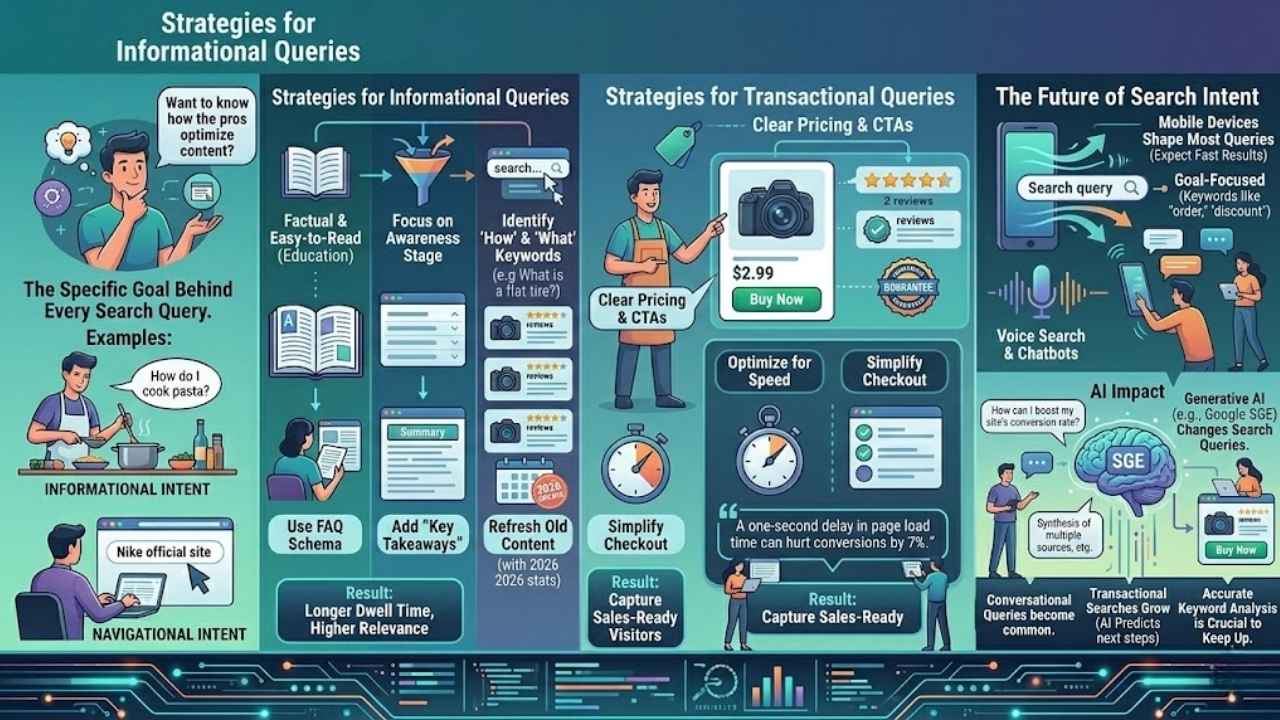
Crafting content to match a user’s real goal can boost clicks and keep people on your page longer. Do you want to know how the pros do it?
Strategies for Informational Queries
Answering informational queries calls for clear, factual, and easy-to-read content. Focus on providing educational resources that connect with users at the awareness stage. Use keyword research to spot popular terms such as “how” or “what.”
Target the actual questions people ask. Visual aids like diagrams or charts help readers digest new ideas quickly.
- Use FAQ Schema: This code helps search engines display your answers directly in the results.
- Add “Key Takeaways”: Summarize the main points at the top for busy readers.
- Refresh Old Content: Update your posts with 2026 stats to keep them relevant.
Engaged visitors spend more time on helpful pages. This lifts web traffic and signals strong relevance to search engines.
Strategies for Transactional Queries
Match transactional search intent by creating pages that make it simple to buy. Use clear product names, prices, and strong calls to action like “Buy Now.”
Add trust signals such as reviews, star ratings, and guarantees. Display real-time inventory if possible because shoppers want answers fast.
“A one-second delay in page load time can hurt conversions by 7%. Speed is a feature, not just a technical detail.”
Streamline checkout steps to avoid drop-offs. Cut friction at every click. Fast-loading pages help too. Use SEO tools to track the high-performing queries bringing sales-ready visitors straight through your digital front door.
The Future of Search Intent in SEO
Get ready for a wild ride. The future of search intent in SEO promises new trends, smarter technology, and surprises that will keep marketers on their toes.
Emerging Trends in Search Behavior
Mobile devices now shape most search queries. Users expect fast results anywhere and anytime. This pushes people to seek quick answers.
People have become more goal-focused. They use specific keywords like “order” or “discount” more frequently. Voice search and chatbots are part of daily routines for millions.
AI tools influence how people phrase questions. Modern systems can track as users shift between searching for information and making decisions. For example, someone might read about a product’s features first and then immediately speak a purchase query into their phone.
The Impact of Generative AI on Search Intent
Generative AI has changed how users interact with search engines. Tools like Google’s AI Overviews (SGE) can answer questions in detail. They pull information from many sources at once.
Search queries now look more conversational. People may type “How can I boost my site’s conversion rate?” instead of just “conversion rate tips.” This shift pushes creators to focus on matching user intent even more closely.
Transactional searches have grown as AI connects shoppers directly to products. With generative AI predicting next steps, businesses must rethink their strategies. Accurate keyword analysis is now crucial to spot what users want while keeping up with constant changes.
Final Thoughts
Search intent shapes every search query. It guides the journey from hunting for info to making a purchase. Spotting whether your visitor wants facts or is ready to buy is a game changer. It can mean more clicks, longer visits, and higher conversion rates for your site. These strategies work fast and you do not need fancy tech skills.
Just pay attention to keywords, user behavior, and the mix of results in search engines. Even small tweaks in content optimization can drive big changes. Experience in helping businesses grow shows that simply listening to what users truly want is the most profitable strategy a company can adopt.