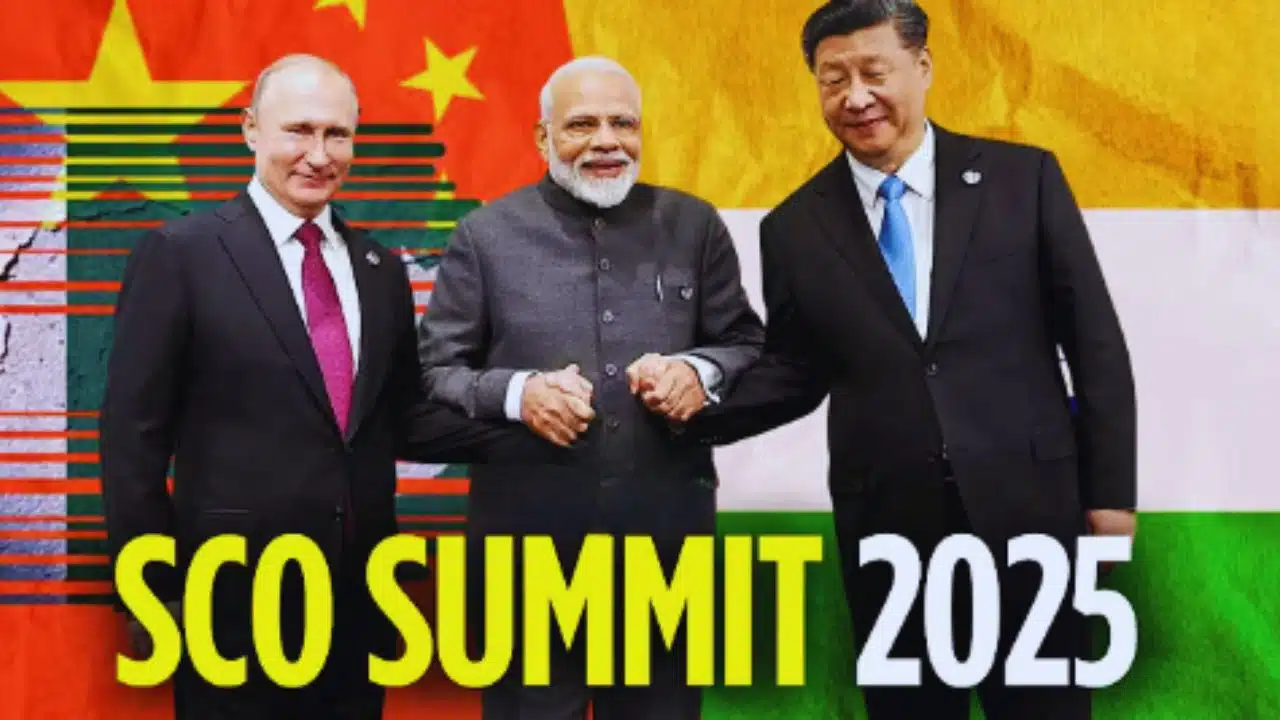
China welcomed leaders from across Asia, the Middle East, and Europe as the Shanghai Cooperation Organization (SCO) summit opened in Tianjin on Sunday, August 31, 2025. The two-day meeting has drawn leaders from more than 20 nations, making it one of the most high-profile international gatherings hosted by China this year.
The SCO today includes China, India, Russia, Pakistan, Iran, Kazakhstan, Kyrgyzstan, Tajikistan, Uzbekistan, and Belarus as full members. Sixteen more countries, from Turkey to Egypt, participate as observers or dialogue partners. What began in 2001 as a regional security forum has grown into a large multilateral bloc that now covers cooperation in counter-terrorism, energy, trade, and infrastructure development.
High-Profile Leaders in Attendance
Chinese President Xi Jinping began receiving leaders on Saturday, setting the stage for a summit meant to highlight China’s role as a hub for multilateral diplomacy. Among the first to arrive were:
- UN Secretary-General António Guterres, who emphasized China’s role in supporting global cooperation and multilateral institutions.
- Egyptian Prime Minister Mustafa Madbouly, representing a North African perspective at the summit.
- Turkish President Recep Tayyip Erdoğan, underlining Turkey’s ambitions as a Eurasian bridge.
- Iranian President Masoud Pezeshkian, who joined discussions amid renewed international focus on Tehran’s nuclear program.
The guest list also includes Central Asian presidents, Middle Eastern partners, and representatives from dialogue states, making this a truly cross-regional summit.
Modi’s Return to China After Seven Years
One of the most notable developments is the arrival of Indian Prime Minister Narendra Modi, who is visiting China for the first time since 2018. His trip comes after years of tense relations following the 2020 border clash in the Himalayas that froze bilateral ties.
Modi’s schedule includes a direct meeting with Xi Jinping, where both sides are expected to discuss confidence-building measures. These include restoring direct commercial flights, resuming Kailash Mansarovar pilgrimages, relaxing visa restrictions, and improving trade and investment mechanisms. According to Indian media reports, the two sides also touched on sensitive issues such as rare earth cooperation and border management, with both leaders committing to resolve disputes peacefully.
Just before leaving for China, Modi spoke with Ukrainian President Volodymyr Zelenskyy, reaffirming India’s stance on the need to restore peace and stability in Europe. The call was widely seen as a balancing act before his anticipated meeting with Russian President Putin.
Putin’s Agenda in Tianjin
Russian President Vladimir Putin also arrived in Tianjin for what Chinese media described as a “rare extended visit.” His presence underscores Moscow’s deepening strategic partnership with Beijing at a time when Russia faces continued Western sanctions over its war in Ukraine.
Putin is expected to hold talks with several key leaders:
- With President Erdoğan of Turkey, focusing on the war in Ukraine and regional stability in the Black Sea.
- With Iranian President Pezeshkian, to discuss Iran’s nuclear program amid fresh moves by Britain, France, and Germany to reimpose UN sanctions on Tehran.
Russia’s Foreign Ministry has already warned that such sanctions could trigger “irreparable consequences,” setting the stage for strong discussions on nuclear security and Western pressure during the summit.
Xi Jinping’s Diplomatic Showcase
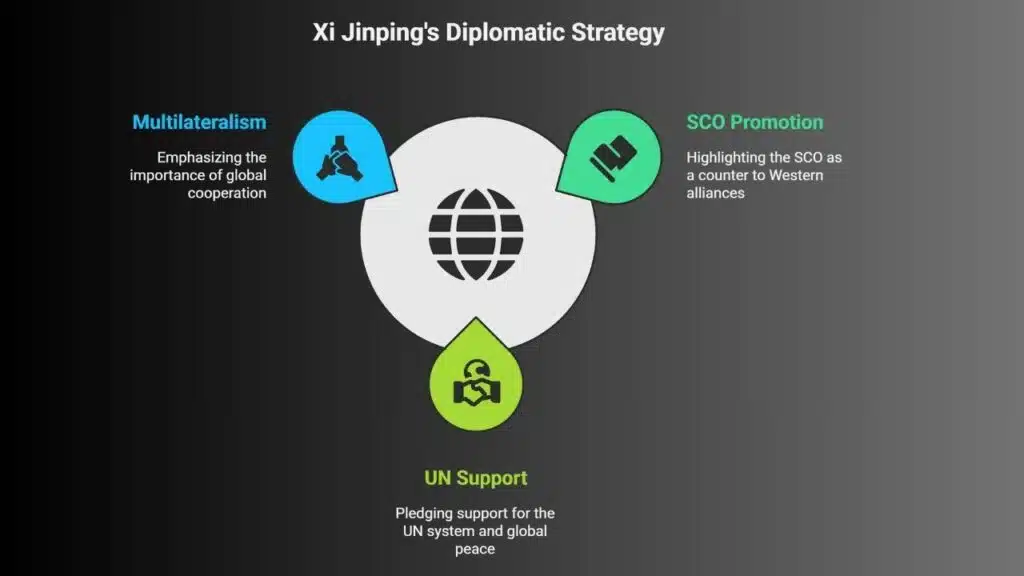
For Xi Jinping, the Tianjin summit is more than a routine multilateral gathering—it is a platform to highlight China’s leadership in building a “multipolar world order.” Beijing has promoted the SCO as a bloc that can balance Western-led alliances like NATO and the EU.
On the sidelines of the summit, Xi met UN Secretary-General Guterres, pledging support for the United Nations system and reiterating China’s vision of global peace and development. Guterres, in turn, stressed that China’s commitment to multilateralism is vital at a time when global cooperation faces unprecedented strain.
Broader Geopolitical Context
The SCO summit comes at a time of global tension:
- India and China are cautiously exploring ways to normalize relations after years of confrontation.
- Russia and China are tightening their partnership as both face tariffs, sanctions, and strategic competition from the United States.
- Iran’s nuclear issue has resurfaced as a global flashpoint.
- Developing nations are increasingly looking to groupings like the SCO as alternatives to Western-dominated platforms.
Analysts see Tianjin 2025 as a turning point, where the SCO is no longer just a security bloc but a stage for wider economic, trade, and political coordination among Global South countries.
Military Parade in Beijing to Follow
Once the summit concludes, many leaders will head to Beijing for a military parade marking 80 years since the end of World War II and China’s resistance against Japanese aggression. About 26 foreign leaders are expected at the parade, including North Korea’s Kim Jong Un.
This sequence of events will provide China with an extended diplomatic spotlight, further reinforcing its ambition to lead not just in Asia but across the Global South.
Why It Matters
The 2025 SCO summit is shaping up as a pivotal moment in global diplomacy. Key takeaways include:
- China’s ambition: Using the SCO to project itself as a hub of international cooperation and a counterbalance to Western alliances.
- India-China thaw: A cautious reopening of dialogue after years of mistrust, with practical steps like visas and trade ties.
- Russia’s role: Reasserting its global position despite economic sanctions, with support from Beijing and SCO allies.
- Iran and security issues: Renewed debates around nuclear programs and sanctions, adding urgency to regional diplomacy.
- Global South solidarity: The summit demonstrates how developing nations are increasingly asserting their voice in shaping global governance.
The Information is Collected from BBC and MSN.