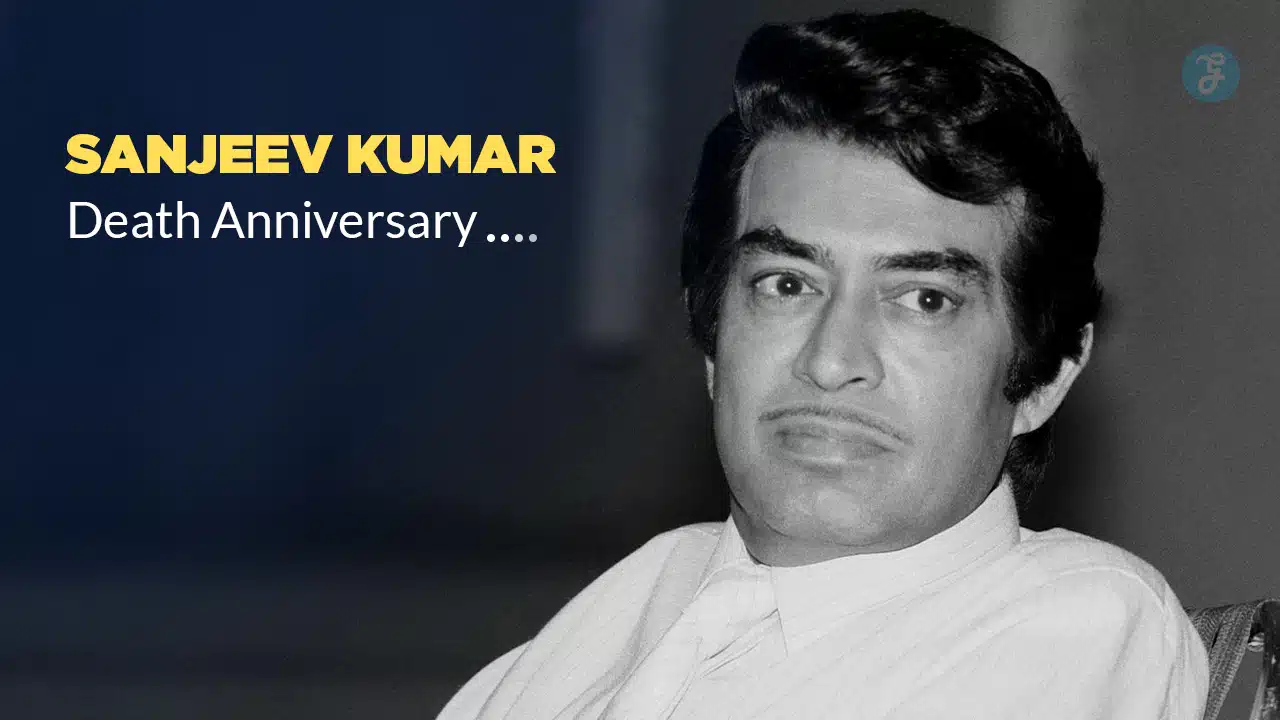
Does it ever feel like the best actors leave us way too soon? On the Sanjeev Kumar Death Anniversary, it’s hard not to feel a mix of pride for his incredible work and a little bit of sadness for what could have been.
He had this amazing way of making you laugh, cry, and think, sometimes all in the same movie.
Here’s something incredible: after Sanjeev Kumar passed away, more than ten of his films were released. His performances were so timeless that his work continues to inspire actors across Indian cinema even today. This blog will walk you through the key moments of his life and career, what made him such a special force in film history, and why he is remembered so fondly every year.
Let’s remember a legend who is never truly gone.
Key Takeaways
- Sanjeev Kumar passed away from a massive heart attack on November 6, 1985, at the young age of 47.
- He won two National Film Awards for Best Actor for his roles in “Dastak” (1970) and “Koshish” (1972).
- Contrary to popular belief, he won three Filmfare Awards for “Shikar” (1969), “Aandhi” (1976), and “Arjun Pandit” (1977).
- Over ten of his movies were released after his death, with the last one, “Professor Ki Padosan,” hitting screens in 1993, eight years after he passed.
- His iconic roles include Thakur in “Sholay,” playing nine different characters in “Naya Din Nai Raat,” and his celebrated double role in “Angoor.”
- Tributes continue to pour in for him, from social media posts by actors like Jackie Shroff to a commemorative postage stamp released by India Post in 2013.
Early Life and Career of Sanjeev Kumar
Born Harihar Jethalal Jariwala, the man who would become Sanjeev Kumar began his journey on the stage. He started his acting career with the Indian People’s Theatre Association (IPTA) and later joined the Indian National Theatre. From the very beginning, he had a unique talent for playing characters well beyond his years. In fact, at just 22, he convincingly portrayed an old man in a stage adaptation of Arthur Miller’s “All My Sons.”
This skill for transformation quickly caught the attention of directors in Bollywood. He made his film debut with a small role in 1960’s “Hum Hindustani,” but his first lead role came in 1965 with “Nishan.” It wasn’t long before he was sharing the screen with the biggest names in the industry, including Dilip Kumar in “Sangharsh,” and working with legendary filmmakers like Yash Chopra.
His early career was a whirlwind of diverse roles, effortlessly moving from intense drama to lighthearted comedy. This set the foundation for a filmography that would become a masterclass in versatility.
Iconic Performances
Sanjeev Kumar had an incredible ability to light up the screen, shifting from one genre to another with an ease that few actors possessed. Fans still rave about his extraordinary range in classics like “Naya Din Nayi Raat” and his comedic timing in “Pati Patni Aur Woh.”
What are Sanjeev Kumar’s most memorable Bollywood roles?
It’s almost impossible to pick just a few, but some roles have become legendary in Indian cinema.
- Sholay (1975): As the stoic and vengeful Thakur Baldev Singh, he created one of the most unforgettable characters in film history. Though he was only 35 at the time, he played the older, armless police officer with immense gravitas.
- Naya Din Nai Raat (1974): In a stunning display of versatility, he played nine different roles in a single film, a feat that cemented his reputation as a powerhouse performer.
- Angoor (1982): His dual role in this comedy, based on Shakespeare’s “The Comedy of Errors,” is considered a masterclass in comic timing. In 2013, Forbes India included his performance in its list of the “25 Greatest Acting Performances of Indian Cinema.”
- Koshish (1972): Alongside Jaya Bhaduri, he played a deaf and mute man, delivering a powerful and heart-wrenching performance that relied purely on expression and emotion.
“Normally great acting performances are associated with tragedy… It is not often that a comic role gets this status. The one exception is Sanjeev Kumar’s double role in Angoor… where he makes you joyful with effortless acting and amazing comic timing.” – Forbes India
How did Sanjeev Kumar showcase versatility across different genres?
Sanjeev Kumar was like a chameleon, able to slip into any character and make it his own. He could play an old man in “Sholay” one moment and a charming young lover in “Seeta Aur Geeta” the next, making every role feel authentic.
His ability to tackle any genre was unparalleled. In comedies like “Pati Patni Aur Woh,” his timing was impeccable, while thrillers like “Qatl” showed his intense, serious side. He even collaborated with the legendary director Satyajit Ray on “Shatranj Ke Khilari” (1977), playing a chess-obsessed nobleman with understated perfection. This role demonstrated his willingness to take on unconventional and challenging parts that many mainstream actors might have avoided.
Renowned writer and director Gulzar, who worked with him on nine films including “Aandhi” and “Mausam,” often cast him as older characters, trusting his ability to bring depth and wisdom to the screen. It was this trust from top filmmakers and his fearless approach to acting that made him a true gold standard for versatility in Indian film.
Awards and Recognitions
Sanjeev Kumar’s incredible talent didn’t go unnoticed, as he earned some of the highest honors in Indian cinema. His trophy shelf was a testament to his dedication and the powerful impact of his performances.
Which National Film Awards did Sanjeev Kumar receive?
Sanjeev Kumar was honored with two National Film Awards for Best Actor, one of the most prestigious awards in the country.
- Dastak (1970): His first win came for his moving portrayal of a struggling artist navigating a complex and heartbreaking living situation.
- Koshish (1972): He won his second award for his profound performance as a deaf and mute man, showcasing his ability to convey deep emotion without saying a single word.
These awards celebrated his incredible range and his courage to take on roles that pushed the boundaries of mainstream Hindi cinema.
What Filmfare Awards did Sanjeev Kumar win during his career?
While some sources incorrectly state he never won a Filmfare Award, Sanjeev Kumar actually took home the iconic “Black Lady” trophy three times.
| Year | Award | Film |
|---|---|---|
| 1969 | Best Supporting Actor | Shikar |
| 1976 | Best Actor | Aandhi |
| 1977 | Best Actor | Arjun Pandit |
He was nominated a total of 14 times, a clear indication of how consistently brilliant his work was. These wins, especially for intense roles in films like “Aandhi” and “Arjun Pandit,” solidified his status as one of the most respected actors of his generation.
Sanjeev Kumar Death Anniversary: Untimely Demise
Sanjeev Kumar’s brilliant career was cut tragically short, leaving a void in Indian cinema that is still felt today. His passing was a shock to fans and the film fraternity, who mourned the loss of a true artist.
What was the cause of Sanjeev Kumar’s death?
Sanjeev Kumar died of a massive heart attack on November 6, 1985. He had been struggling with a congenital heart condition, a health issue that tragically ran in his family. Many of the men in his family, including his two brothers, also passed away at a young age from heart-related problems.
He had suffered his first heart attack years earlier and even underwent bypass surgery in the United States. Despite medical advice, he continued to live life fully, a decision that his friends believe contributed to his early death.
How old was Sanjeev Kumar when he passed away?
Sanjeev Kumar was only 47 years old when he died. His death was especially poignant because he was known for so often playing characters much older than his actual age. In a chilling interview, he had once predicted he wouldn’t live past 50, which made his passing all the more haunting for those who knew him.
He left behind a legacy of incredible performances, but also a feeling of immense loss for all the characters he never got the chance to play.
Posthumous Releases
Even after his death, Sanjeev Kumar’s presence continued to grace the silver screen. More than ten of his films were released posthumously, a rare and remarkable occurrence that speaks to his prolific career and dedication to his craft.
Which films starring Sanjeev Kumar were released after his death?
The releases kept his memory alive for fans who were still grieving his loss. Each film felt like a final gift from the legendary actor.
The last film to be released was “Professor Ki Padosan” in 1993, a full eight years after his passing. At the time of his death, the film was only 75% complete. The filmmakers had to creatively alter the script in the second half to account for his character’s absence, a testament to how much they wanted to complete his final work.
Another significant posthumous release was K. Asif’s epic, “Love and God.” This film had a famously long and troubled production, starting way back in 1963. After the deaths of its original lead actor and director, the film was finally released in an incomplete form in 1986, just months after Sanjeev Kumar himself had passed away.
Legacy and Impact
Sanjeev Kumar left an indelible mark on Indian cinema, and his influence continues to inspire actors and filmmakers to this day. His commitment to his craft and his fearless approach to acting set a standard that many still strive to achieve.
How did Sanjeev Kumar influence Indian cinema?
Sanjeev Kumar redefined what it meant to be a leading man in Bollywood. He was never afraid to take on unglamorous or unconventional roles, choosing characters that challenged him as an artist. His ability to play a simple clerk in “Arjun Pandit” and then nine different characters in “Naya Din Nai Raat” showed a generation of actors what was possible.
His work is still studied by younger stars who admire his versatility. In 2022, his nephew Uday Jariwala and author Reeta Ramamurthy Gupta released a biography titled “Sanjeev Kumar: The Actor We All Loved,” ensuring his story and contributions are remembered by new generations.
What tributes have been paid to Sanjeev Kumar by the film industry?
The love and respect for Sanjeev Kumar remain strong. Actors like Jackie Shroff often post heartfelt tributes on his death anniversary, sharing clips from his iconic films. Beyond social media, his legacy has been formally recognized in several ways.
- In 2013, India Post released a commemorative postage stamp in his honor to celebrate 100 years of Indian Cinema.
- In his hometown of Surat, Gujarat, a road and a school have been named after him.
- The city of Surat also inaugurated the Sanjeev Kumar Auditorium in 2014, a state-of-the-art venue for cultural events that stands as a tribute to one of its most famous sons.
Takeaways
Sanjeev Kumar truly gave Indian cinema some of its most memorable moments. Whether he was making us laugh in “Angoor” or bringing a tear to our eye in “Koshish,” his performances were always genuine and deeply felt.
Years after he’s been gone, his work continues to captivate audiences and inspire actors. Watching one of his films is like reconnecting with an old friend, warm and unforgettable.
His story is a powerful reminder that true artists are never really gone; their magic lives on long after the final curtain falls.
FAQs on Sanjeev Kumar Death Anniversary
1. Who was Sanjeev Kumar, and why is his death anniversary significant in Indian cinema?
Sanjeev Kumar, remembered on his November 6th death anniversary, was a masterful actor in Indian cinema known for his incredible versatility and for winning two National Film Awards. He could convincingly play characters far beyond his years, bringing a unique depth to every role he took on.
2. What are some unforgettable movies starring Sanjeev Kumar?
He left a legacy of unforgettable films, including the action epic Sholay, the moving drama Koshish, and the delightful comedy Angoor. His roles in Seeta Aur Geeta and Arjun Pandit also remain fan favorites, showcasing his incredible range.
3. How did Sanjeev Kumar influence future actors in Indian cinema?
He inspired a generation of actors, like Anil Kapoor, by showing that quiet, natural performances could be more powerful than traditional heroism.
4. Why do fans still talk about Professor Ki Padosan during tributes to Sanjeev Kumar?
Professor Ki Padosan is special because it was released in 1993, nearly eight years after his death in 1985. This posthumous film gave fans a final, bittersweet look at his beloved comedic talent.