You hear a drip, then a splash under the sink. Your heart sinks, too. Maybe you jiggle the handle on your toilet again. Leaking faucets and running toilets sneak up at the worst times.
Many homeowners, just like you, face these plumbing problems every year.
One fact is clear: Some simple fixes can save money and stress if done yourself. But some repairs are risky or complicated without the right skills or tools.
This guide explains which DIY plumbing repairs are safe for most people to try and which ones need help from a pro. If you want fewer headaches with home plumbing repairs, keep reading!
Safe DIY Plumbing Repairs
Fixing a leaky faucet, repairing a running toilet, unclogging drains, and adjusting the water heater temperature are easy DIY plumbing repairs that you can handle at home. Minor blockages and simple plumbing fixes like these can often be solved without professional help.
Fixing a Leaky Faucet
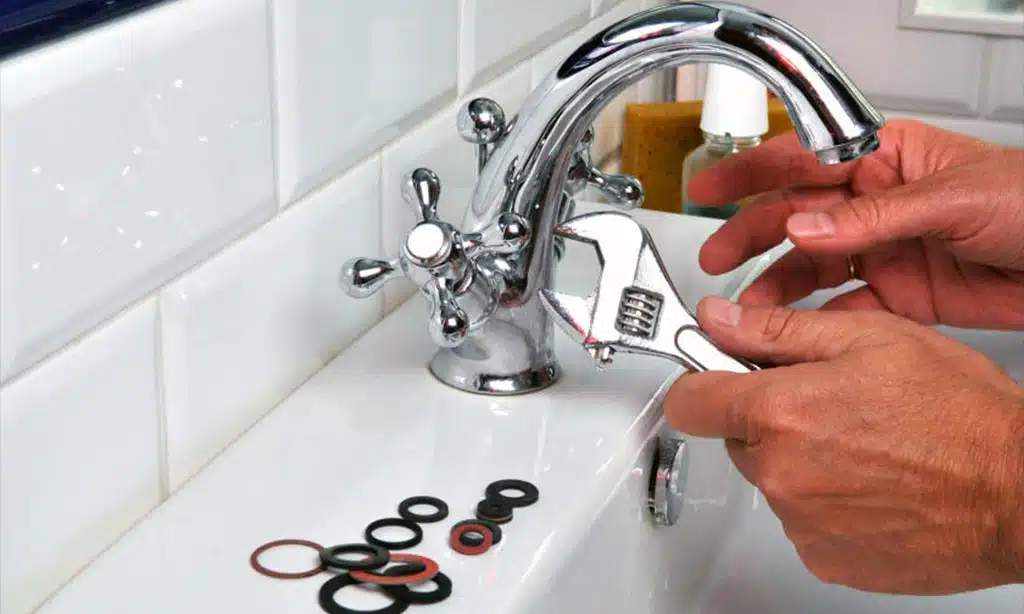
Fixing a leaky faucet saves water and money. It’s a simple DIY project you can do at home.
- Find the right tools. You need a wrench, screwdriver, and maybe some plumber’s tape.
- Shut off the water supply to your faucet. This prevents a mess while you work.
- Take the faucet apart to see where the leak comes from. Look for worn-out parts.
- Replace any damaged parts you find. Rubber washers often wear out in faucets.
- Put the faucet back together. Make sure everything is tight but not too tight.
- Turn the water back on and check if the leak has stopped. Adjust as needed.
- If it still leaks, take it apart again. Double-check all parts and connections.
- Sometimes, cleaning can fix a leak. Dirt or buildup might cause leaks too.
This task shows you how small fixes can make big improvements. Always try simple repairs before calling a pro.
Repairing a Running Toilet
Repairing a running toilet is a common DIY plumbing task. Many people can fix this issue without needing professional help.
- Shut off the water to the toilet. This step stops the water flow, making it safe to work on.
- Take off the lid from the toilet tank. Doing this allows you to see inside and find what’s wrong.
- Check the flapper. A loose or damaged flapper often causes toilets to run.
- If the flapper is broken, replace it with a new one. This part is easy to find at home improvement stores.
- Adjust the float. Sometimes, if the water level is too high, it keeps running. Move the float arm down so the water stops at the right level.
- Make sure there are no leaks between the tank and bowl. Tighten any loose bolts or replace worn washers.
- Turn back on the water supply and flush. Watching how it fills can tell you if you fixed it or if more work is needed.
- Listen for any sounds of water running after the tank has filled; silence means success.
This task doesn’t require lots of tools or time. Most people have what they need at home already. Plus, fixing a running toilet yourself saves money and avoids an unnecessary call to a plumber.
Unclogging a Drain
Unclogging a drain is something many of us face. It’s a common issue but can often be fixed without calling for help.
- First, grab a plunger. Make sure it has a good seal around the drain opening. Pump it up and down quickly.
- If that doesn’t work, try a mixture of baking soda and vinegar. Pour half a cup of baking soda down the drain, followed by half a cup of vinegar. Wait an hour, then rinse with hot water.
- A plumber’s snake is another tool you can use. Insert it into the drain and turn it until you feel resistance, then push to clear the blockage.
- Check the P-trap under the sink if the clog is there. Place a bucket underneath to catch water and unscrew the P-trap. Remove any debris and screw it back in place.
- Keep hair catchers in your showers and sinks to prevent future clogs.
- Always run plenty of hot water down the drain after any unclogging attempt to clear away any remaining debris.
Doing these steps can often fix minor blockages without needing professional help.
Adjusting the Water Heater Temperature
Adjusting the water heater temperature can help conserve energy and prevent scalding. It’s a straightforward task that you can manage on your own without calling a professional. Here’s how to do it:
- Turn off the power supply to the water heater.
- Locate the thermostat on the water heater.
- Use a screwdriver to modify the temperature setting according to your preference.
- Turn the power supply back on and wait for the water heater to reach the new temperature setting.
Keep in mind, setting the temperature too high could lead to scalding, while setting it too low may not provide sufficient hot water for your needs.
Plumbing Repairs That Require a Professional
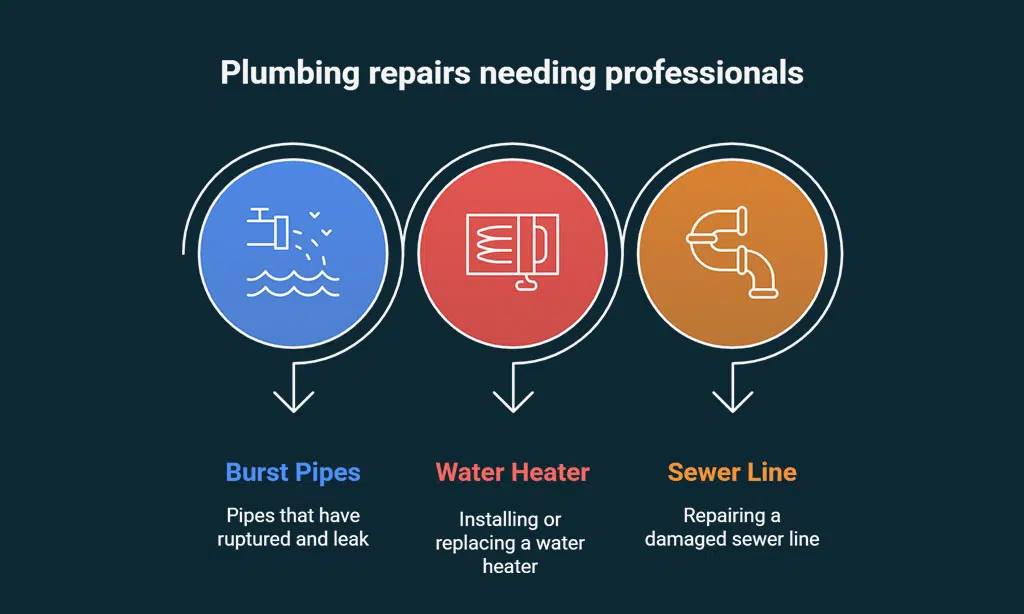
Plumbing Repairs That Require Professional Assistance: For burst pipes, water heater installation or replacement, and sewer line repair, it’s crucial to seek the expertise of a professional. Read the full blog post to understand why!
Burst Pipes
Burst pipes can cause serious water damage in your home. This could lead to extensive and expensive repairs if not addressed promptly. Calling a professional is crucial for burst pipes, as they require technical expertise and specialized equipment to fix the issue correctly.
Handling this on your own could result in further complications and potential water damage.
Water Heater Installation or Replacement
Water heater installation or replacement is best left to professional plumbers. DIY attempts can lead to complications and potential damage due to the intricate nature of the task.
It’s essential to recognize when a job demands professional expertise, such as ensuring proper diagnosis and compliance with local codes. Professional handling is necessary for major pipe installations and addressing extensive water damage.
Weighing the advantages and disadvantages of seeking help for these intricate tasks is crucial. Professional assistance also provides access to the appropriate tools and equipment required for a dependable repair or installation.
Recognizing that certain plumbing projects may appear straightforward but may actually necessitate expert attention will save you time, money, and future problems. Therefore, it is recommended to seek professional plumbers when dealing with water heater installations or replacements rather than taking on potentially challenging do-it-yourself repairs.
Sewer Line Repair
Sewer line repair should be left to the professionals. DIY fixes for sewer lines can lead to more damage and costly repairs down the road. Handling this on your own could result in serious complications, including environmental hazards and health risks due to exposure to raw sewage.
It’s important not to take chances when it comes to such significant home plumbing repairs. Professional plumbers have the necessary expertise and equipment to tackle these complex tasks efficiently and effectively.
Keep in mind that DIY plumbing maintenance is possible for minor blockages or simple fixes like leaky faucets, but when it comes to major pipe installations and addressing extensive water damage, seeking professional help is advisable.
It’s crucial not only for maintaining a functional home but also for safeguarding against potential hazards that could arise from mishandling such critical repairs.
Takeaways
In wrapping up, we’ve learned that some plumbing repairs can be tackled by homeowners to save on service calls and solve simple issues like leaky faucets, running toilets, and minor blockages.
However, we’ve also emphasized the importance of knowing when it’s time to call in a professional for tasks like burst pipes, water heater installation or replacement, and sewer line repair to avoid potential complications.
While DIY fixes offer practical solutions for basic tasks like adjusting water heater temperatures or unclogging drains, handling major installations or extensive damage should be left to the pros.
By evaluating the advantages and disadvantages of DIY plumbing repairs and understanding their limits, you can make informed decisions that lead to efficient problem-solving without compromising safety or causing further damage.
If you’re seeking more guidance or expert help with your plumbing needs beyond what we’ve discussed here today; feel free to explore additional resources and seek professional assistance tailored towards resolving complex issues effectively while ensuring overall peace of mind in maintaining your home.