
Does work sometimes feel like a race with no finish line? You are definitely not the only one feeling that way. Most of us want more time to rest and find new ideas. Short vacations just do not cut it anymore. Here is something interesting to consider.
Companies that offer a Sabbatical Policy see happier employees who stay longer. They also do better work. I am going to walk you through exactly what a Sabbatical Policy is. We will look at why it is becoming the most talked-about perk of 2026.
You will see how this benefit helps both workers and companies solve big problems. Stick around if you want your job, and your life, to feel fresh again.
What Is a Sabbatical Policy?
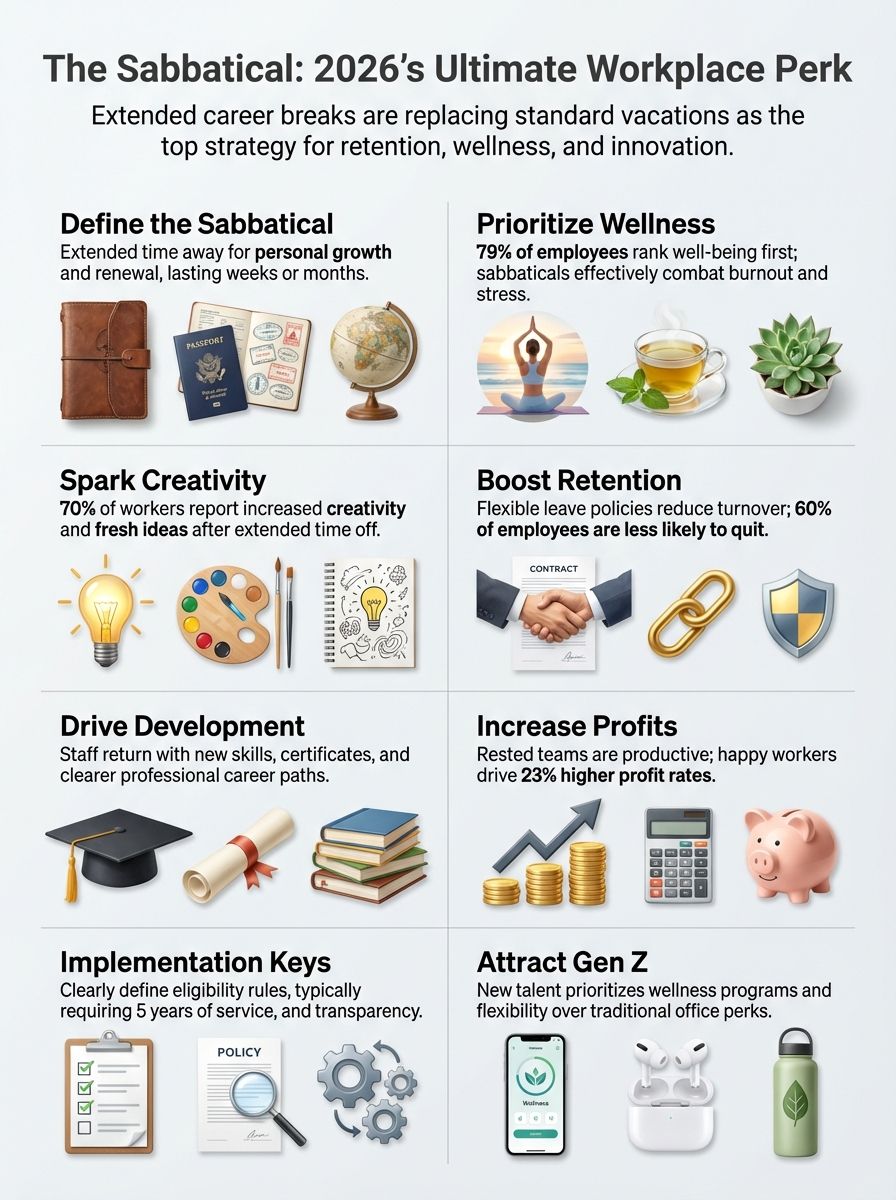
A sabbatical policy allows employees to take an extended break from work without losing their position. It gives people a chance to pause, recharge, and return with fresh ideas or new skills. Think of it as hitting the reset button on your career rather than quitting to find something new.
Definition of a sabbatical
A sabbatical is a planned, extended break from work. During this time, employees step away from their usual jobs for weeks or months. While the concept started in academia, modern businesses are adopting it rapidly. Some companies pay workers during this leave, while others do not.
Sabbaticals may last anywhere from four weeks to a full year. Many people use this time to recharge or learn new skills. Others focus on mental health and well-being. Some might travel or spend more time with family. Unlike short vacations or sick days, sabbaticals offer full renewal and support long-term work-life balance. In 2026, more businesses view sabbaticals as an essential employee benefit that helps fight burnout.
Here are the core characteristics that define a true sabbatical:
- Duration: It is significantly longer than a standard vacation, typically lasting at least four consecutive weeks.
- Job Security: The employee has a guaranteed role waiting for them upon return.
- Purpose: It is often tied to personal growth, rest, or upskilling rather than just leisure.
- Tenure-Based: It is usually a reward earned after a specific period of service, such as five or seven years.
Differences between sabbaticals and other types of leave
Sabbatical leave gives employees a long break to rest or learn. This is usually several weeks or months. Most other types of leave, like sick days or personal days, are much shorter. Sick leave covers health needs. Vacation is for relaxing for a week or two. Family leave supports people caring for loved ones or newborns.
These breaks help, but they do not give deep renewal. A 2024 study by the Society for Human Resource Management (SHRM) found that while vacations provide temporary relief, the positive effects often fade within three days of returning. Sabbaticals aim for a lasting change in perspective.
Companies use sabbaticals to reward loyalty and boost employee retention. People who take them often grow in both work skills and mindfulness. Standard paid time off rarely offers this chance for professional development or career growth. Sabbaticals show that businesses value well-being and ambition beyond just regular employee benefits.
Why Sabbatical Policies Are Gaining Popularity
More people want jobs that care about their happiness. They do not just want a paycheck. Companies are listening. Now, sabbaticals are sprouting up everywhere.
Rising focus on employee well-being
People crave a better work-life balance. Companies see the results of providing it. More leaders now offer mental health days and flexible hours. Sabbatical policies speak volumes about this shift to caring for employees’ well-being. These changes help workers avoid burnout and keep their spark alive.
Managers notice that happier people do more meaningful work. Paid time off, like sabbaticals, makes teams feel valued. Employees who return after a break often show renewed energy and fresh ideas. This approach keeps talent around longer. It builds a positive workplace culture focused on employee benefits and real wellness.
“The ‘Great Gloom’ of recent years showed us that employees aren’t just tired; they are emotionally exhausted. A sabbatical isn’t a vacation; it’s a structural intervention to prevent total collapse.”
Combatting burnout and fostering creativity
Long hours and endless tasks can wear down even the best workers. A paid leave of absence gives employees real time to pause. It lets them recharge their minds completely. Microsoft Japan famously tried a four-day workweek in 2019, and productivity shot up by 40%. Sabbaticals take that concept further by offering a deeper disconnect.
Google lets staff take unpaid career breaks. This leads to more fresh ideas and better team energy. Rested brains spark creativity. Many experts say that new skills or hobbies found on break can boost job performance. Stepping away from daily stress often fuels ambition. It creates excitement when returning.
This keeps companies strong. Happy teams dream bigger. They share lively ideas with others at work. Next, let’s look at why a good sabbatical policy can help keep top talent around for years.
Increasing demand for work-life balance
People want more time for family, friends, and themselves. Busy jobs and a fast-paced life make it hard to relax. Many employees now ask for flexible work hours. They want paid time off to care for their mental health and well-being.
A survey from FlexJobs in 2025 showed that 82% of workers picked work-life balance as their top wish when looking for new jobs. Big tech companies like Intel and Microsoft already offer sabbatical leave after a set number of years. This shift pushes other workplaces to rethink how they treat employee benefits.
Time away gives staff room to reflect. They can pursue hobbies or travel without risking job security. People value freedom at work just as much as pay raises today.
Benefits of Offering a Sabbatical Policy
People come back from a break with fresh ideas. They have more energy. Companies get happier teams. Workers feel inspired to learn and grow.
Improved employee retention
A sabbatical policy gives workers a real reason to stay. More than 80% of employees say perks like paid time off and career breaks matter when they pick jobs, according to Glassdoor’s 2025 survey. Time away for renewal keeps staff happy. It lowers stress and helps them feel valued. Workplaces with strong employee benefits see fewer team members walk out the door.
Burnout leads good people to quit fast. Giving folks a chance to refresh boosts job satisfaction. It supports work-life balance. Companies like Adobe saw turnover drop by 10% after launching their sabbatical program. A simple break builds loyalty. It saves hiring costs and keeps your best hands on deck longer.
According to recent data from Gallup, the cost of replacing an individual employee can range from one-half to two times the employee’s annual salary. Retaining a veteran employee through a sabbatical is financially smarter than recruiting a new one.
Enhanced professional development
Loyal employees bring knowledge. New skills keep teams winning. A long leave of absence gives people time to learn and grow outside of daily job tasks. Some use the break to earn a certificate. Others train in another field.
Others volunteer or try freelance work. This boosts their ambition. It sharpens problem-solving skills. This renewal period helps workers return refreshed. They are ready for more challenges at work. Many gain fresh ideas that spark change. This boosts productivity across the whole team.
Here are just a few skills employees often bring back from sabbaticals:
- Language Fluency: Gained from immersive travel.
- Leadership perspective: Gained from leading volunteer projects or non-profits.
- Technical Certifications: Gained from intensive bootcamps that require full-time focus.
- Cross-cultural communication: Gained from international exposure.
Companies see a stronger workplace culture. Staff become better leaders with new tools in their belt. Skills gained during sabbatical can push both personal growth and company success forward at lightning speed.
Boosted morale and engagement
Staff who take a sabbatical come back refreshed. They are ready to give their best. People feel valued and trusted if they can step away for a while. They know their return is welcome. Workers become more cheerful. They are eager to pitch in each day.
Some even share new skills or stories from their career break. This sparks ideas across the team. Workplaces with these leave perks see high spirits last longer. Absence makes hearts grow fonder. People miss work friends and routines. They return with more pep in their step.
Smiles get wider. Meetings feel lighter. Everyone’s energy spreads across departments. Managers spot fast improvement in job satisfaction rates soon after such breaks begin rolling out each year.
Potential Challenges of Sabbatical Policies
Sometimes, giving people long breaks leaves extra work on others’ plates. Scroll down to see how smart companies handle that.
Managing workload during employee absence
Shifting work during a staff sabbatical can stretch teams thin. Some companies cross-train employees. This way, anyone can step in and pick up tasks quickly. Managers may spread projects across groups. They might delay less urgent goals until the employee returns.
Clear plans keep things running like clockwork. A short leave should not break workplace culture. It should not slow productivity boost efforts. Open talks help everyone know what to expect. They know where they fit in. Good planning means nobody feels lost or burnt out from extra duties. This keeps job satisfaction high for all involved.
Pro-Tip from the trenches: Experienced HR managers suggest using tools like Loom to record video walkthroughs of complex tasks before leaving. A written manual is good, but a video of the process is often far more helpful for the person covering the role.
Ensuring fairness and transparency
Covering for absent employees often raises questions about fairness. Clear rules, shared with all staff, help prevent confusion. Companies should set simple eligibility benchmarks so everyone gets equal treatment. Open communication builds trust in the process.
Team members need to understand how leave requests get approved. They need to know what steps are needed. Posting guidelines online or including them in employee handbooks keeps things out in the open. This helps avoid misunderstandings down the road.
How to Create an Effective Sabbatical Policy
Set clear rules. Pick the right length and pay options. Spark real excitement. Curious how to make your policy shine? Keep reading.
Eligibility criteria
Most sabbatical policies set clear rules for who can take leave. Companies often require employees to complete at least five years of full-time service before applying. Some places may lower this to three years if talent retention is a big goal. Those with strong job performance or great attendance records tend to move up the list.
Contractors and new hires do not usually qualify for this perk. Some programs give priority to staff in critical roles. Others check that the employee’s work is easy to cover during their break. This ensures business productivity stays high. Policies spell out these details so everyone knows what it takes.
Duration and compensation options
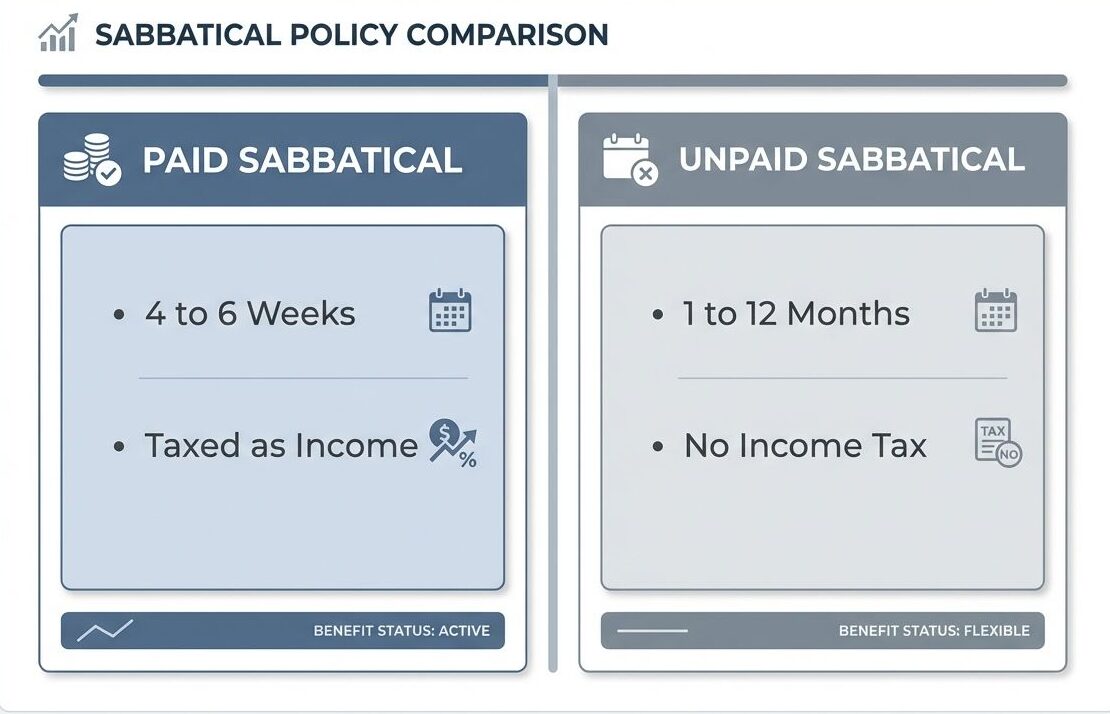
Sabbaticals often last from one month to one year. This depends on the company policy and an employee’s service length. For example, some firms allow a six-month break after every seven years of work. Others offer just four weeks off after five years. Paid time off is common in tech and finance jobs, but not all sabbaticals come with full pay.
Some employers offer partial pay. Others keep benefits such as health insurance during leave. A few give unpaid career breaks but still guarantee your job when you return. This makes it easier to focus on mental health or skill-building without money worries.
| Policy Type | Typical Structure | Best For |
|---|---|---|
| The “Refresher” | 4 weeks fully paid after 5 years. | High-growth tech companies focusing on preventing burnout. |
| The “Scholar” | 3-6 months unpaid (or partial pay) for education. | Roles requiring constant upskilling or certifications. |
| The “Loyalist” | 8 weeks fully paid after 10 years. | Traditional corporate structures value long-term tenure. |
Options like these help create a fair workplace culture for everyone who needs a break. Next comes setting clear rules so employees know how to apply for their renewal time away.
Clear guidelines for application and approval
Once the length and pay are set, clear steps for time-off requests help everyone. Each company should write out who can apply. They must state how long in advance workers must put in their request. They also need to list what details employees need to share.
These rules save time. They stop confusion about employee benefits. Managers often have a checklist for work-life balance leave forms. They look at workload, project deadlines, and team size before saying yes or no. Good systems keep things fair as skills get shared around. Someone takes a career break for renewal or mindfulness. Clear rules mean smoother planning and less stress on both sides of the desk.
Examples of Sabbatical Policies in Action
Some companies offer paid breaks for staff to rest and recharge. This sparks real change in their lives. Real stories show workers coming back sharper and happier. They are ready to tackle fresh challenges.
Successful corporate sabbatical programs
Adobe gives employees a paid sabbatical after every five years. Staff can take up to six weeks off for rest or learning. Salesforce lets workers apply for unpaid leave for personal growth, while maintaining benefits. Patagonia supports renewal by granting employees up to two months away with full pay if they join an environmental project.
Each company notices more happiness at work. They see stronger job satisfaction and better mental health. Tech firms such as Google offer unpaid career breaks. This lets staff recharge or pursue new skills without losing their jobs. Leaders say people return with fresh ideas and energy after time away from daily tasks. These programs promote flexibility and loyalty. They help companies keep top talent in a fast-changing workplace culture.
Case studies from various industries
It is not just big tech. McDonald’s corporate employees are eligible for an eight-week paid sabbatical for every 10 years of full-time service. This perk is legendary in the industry for retaining senior leadership.
HubSpot offers a four-week paid sabbatical after five years. They even include a “sabbatical bonus” to ensure employees actually spend the time doing something fun rather than just paying bills. Teachers in many school districts get a sabbatical every seven years for rest or further study. Law firms use this policy too. It helps lawyers chase professional growth while keeping stress away.
Startups now test shorter renewal periods. Some offer three-month leaves after five years of service. In healthcare, some hospitals offer paid pre-retirement breaks to trained nurses. This helps them return refreshed instead of quitting early. These policies spark job satisfaction. They boost morale across fields from software engineering to retail management.
Why the Sabbatical Policy Is the Perk of the Future
A sabbatical can make a job offer feel like winning the golden ticket. Companies with this perk will stand out in any crowded talent race.
Adapting to changing workforce priorities
Workers today want more than just a paycheck. They look for workplaces that value mental health and flexibility. They want a real work-life balance. More people ask for paid time off and career breaks to prevent burnout. In 2026, companies with strong employee benefits attract top talent fast.
Many young professionals, especially Gen Z, seek jobs offering renewal and growth. They do not just want steady hours at a desk. Sabbatical policies answer these needs by supporting ambition and fresh skills. Firms see boosted morale and job satisfaction as a result. Smart businesses use this perk to stay ahead in talent acquisition. They shape a better workplace culture.
Staying competitive in talent acquisition
Shifting needs at work push companies to offer better perks. Sabbatical policies now help attract fresh talent who want more than regular paid time off. They want more than a basic leave of absence. Many job seekers look for flexibility. They want professional development and mental health support in their career choices.
A sabbatical policy stands out from the pack. It shows that an employer cares about retention. It highlights employee benefits and work-life balance over the long run. Offering this perk can boost your spot on top job lists. It draws ambitious minds looking for renewal without jumping ship every few years. A well-timed break can spark new skills and energy. It makes your workplace buzz with creativity again.
Final Thoughts
Sabbatical policy gives workers a real break from their jobs. Unlike typical paid time off, these career breaks help boost well-being. They also spark new ideas. Teams who use them see happier staff and stronger skills. They also see fewer people leaving for other jobs.
Setting up such a policy is simple if you follow clear steps for fairness. Could your workplace benefit from fresh energy? To learn more about how sabbaticals can change work culture for the better, check out company stories online.
Taking a break may be just what your team needs to hit their goals this year.