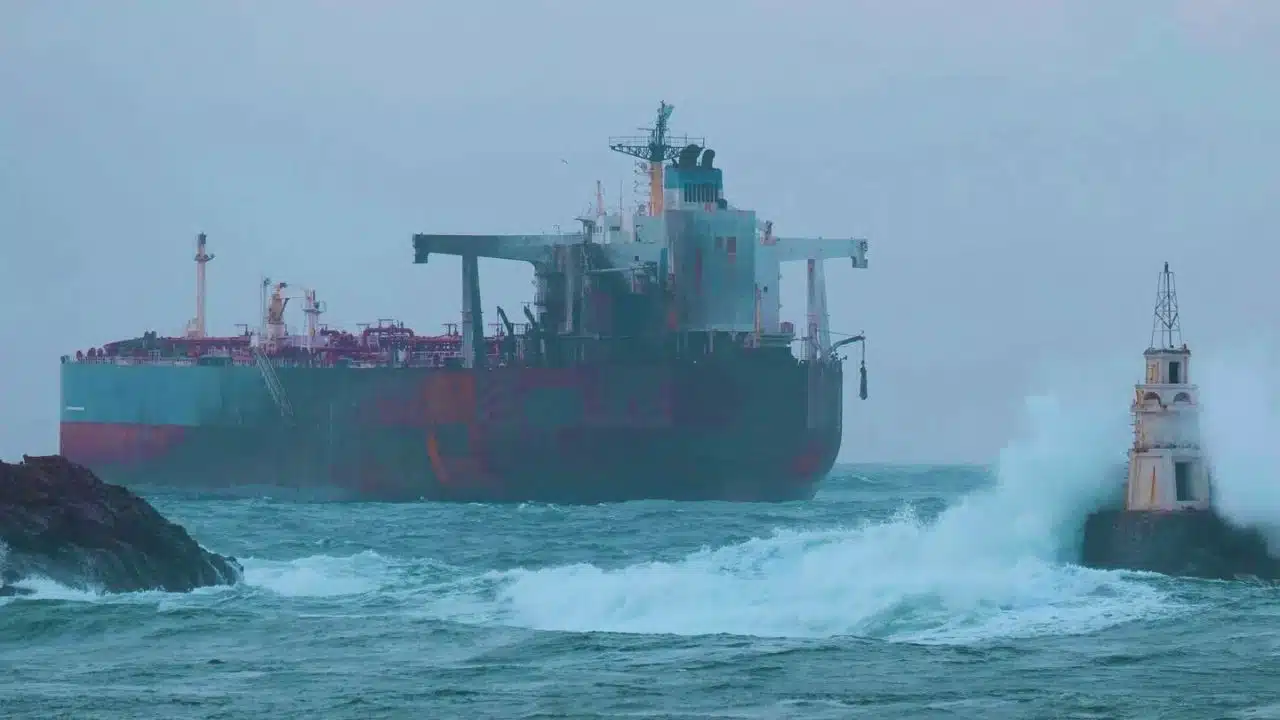
A sanctioned oil tanker linked to Russia’s shadow fleet is stranded off Bulgaria’s Black Sea coast after a suspected Ukrainian naval drone strike left the vessel damaged and drifting near the resort town of Ahtopol.
Bulgarian maritime authorities, border police and the navy have launched a high-risk operation to secure the ship and its crew in rough winter seas, while diplomats trade accusations over how the crippled tanker entered Bulgarian waters.
The tanker, named Kairos, is a 274‑meter, 149,000‑ton crude carrier that Western governments say has been used to move Russian oil in defiance of international sanctions imposed over Moscow’s war in Ukraine. Flying a Gambian flag but previously registered under Panamanian, Greek and Liberian flags, the 2002‑built vessel was placed under European Union sanctions in July and later blacklisted by the United Kingdom and Switzerland.
Key facts at a glance
- Ship: Oil tanker Kairos, sanctioned and linked to Russia’s shadow fleet.
- Flag: Gambian‑flagged at the time of the incident, with a complex past flag history.
- Location: Anchored/grounded less than a nautical mile (around 700–800 meters to about 1 mile) off the Bulgarian town of Ahtopol in the Black Sea.
- Crew: 10 people of mixed nationalities on board, all reported in good condition but requesting evacuation.
- Cargo: The tanker was sailing empty, without crude oil cargo, from Egypt toward Russia’s Novorossiysk port when it was struck.
- Risk level: Authorities say there is no immediate threat to the environment, but stress that severe weather and damage to the ship make the situation volatile.
How the tanker ended up off Bulgaria
According to Bulgarian and international reports, the Kairos was hit by suspected Ukrainian naval drones on 28 November in Turkey’s Exclusive Economic Zone in the Black Sea, where it caught fire while sailing in ballast from Egypt to the Russian port of Novorossiysk. Ukrainian and allied sources have described the strike as part of a broader campaign to cripple Russia’s oil export infrastructure and the network of tankers that help Moscow bypass price caps and shipping restrictions.
After the attack, a Turkish tugboat took the damaged tanker under tow and began moving it northward, but worsening weather in early December complicated the transit. On Friday, 5 December, the Kairos entered Bulgarian territorial waters from the south under tow; shortly afterward the tug released the towline and turned back toward Turkey, leaving the powerless ship to drift toward the Bulgarian coast before it dropped anchor and then ran aground close to shore.
Timeline of key events
| Date (2025) | Location | Event |
| 28 Nov | Black Sea, off Turkey | Kairos reportedly hit by suspected Ukrainian naval drones and catches fire while en route from Egypt to Novorossiysk without cargo. |
| 28 Nov–early Dec | Turkish EEZ / high seas | Turkish authorities and tugs respond; the damaged tanker is taken under tow in rough conditions. |
| 5 Dec (Fri) | Near Ahtopol, Bulgaria | Kairos enters Bulgarian territorial waters under tow; the Turkish tug then releases the vessel, which drifts and anchors roughly 700–800 meters to about a mile off the coast. |
| 5–6 Dec | Off Bulgaria’s Black Sea coast | Bulgaria’s maritime authority, border police and navy begin a rescue and monitoring operation in heavy seas. |
Bulgarian officials say they detected the tanker entering their waters but initially struggled to make radio contact with the crew, who later confirmed that 10 people were aboard and asked to be taken off the vessel. The episode has sparked immediate questions in Sofia about why a Turkish tugboat towed a damaged, sanctioned tanker into European Union waters without prior diplomatic coordination.
Rescue efforts and environmental risk
Bulgaria’s Maritime Administration, supported by the navy and border police, has deployed vessels, aircraft and coastal monitoring systems to keep the Kairos under constant surveillance while preparing an evacuation of the crew. Officials say they are tracking the tanker’s position via radar and coastal thermal cameras, while maintaining radio contact with those on board, who reportedly have food and water supplies sufficient for around three days.
Rumen Nikolov, a senior official at the Bulgarian Maritime Administration, has stated that the ship is currently stable despite strong winds and waves and that there is no threat to the crew or the environment as long as weather conditions do not deteriorate further. Authorities emphasize that the tanker is not carrying crude oil and that visible damage appears to be above the waterline, reducing the risk of an immediate spill, although any large damaged vessel near shore remains a potential hazard if its structural integrity worsens.
Key technical and safety details of Kairos
| Detail | Information |
| Type | Crude oil tanker (used in Russia-linked shadow fleet). |
| Length / Tonnage | About 274 meters long; roughly 149,000 tons deadweight. |
| Built | 2002, with several previous flag registrations. |
| Current cargo | Sailing empty (ballast) at time of drone strike. |
| Distance from Bulgarian coast | Around 700–800 meters to about 1 mile off Ahtopol. |
| Reported pollution status | No leaks detected; authorities say no immediate environmental threat. |
Rescue teams have been forced to pause some operations due to gale‑force winds and high seas but say they will move to evacuate the crew and tow the ship to a safer anchorage once conditions improve. Bulgarian officials have left open the possibility of bringing specialized salvage teams if necessary, a complex task given the ship’s size, damage and legal status under sanctions.
Shadow fleet, sanctions and what comes next
Western governments and maritime analysts have long warned about a growing shadow fleet of older tankers, often sailing under flags of convenience and opaque ownership structures, used to move Russian crude outside the reach of G7 price caps and EU sanctions. By targeting ships such as the Kairos and another tanker named Virat in separate naval drone attacks, Ukraine aims to raise the cost and risk of transporting Russian oil, which remains a key source of funding for Moscow’s war effort.
Bulgaria’s government has signaled anger that a Turkish tugboat brought a damaged, sanctioned tanker into its waters, with officials saying they will seek explanations through diplomatic channels while continuing to coordinate with Ankara and other partners on how to handle the vessel. Turkey’s foreign minister, Hakan Fidan, has separately warned that repeated attacks on Russia‑linked tankers in the Black Sea pose broader risks for all coastal states and commercial shipping in the region.
For now, Bulgarian authorities insist that their priority is to stabilize the situation, protect the crew and coastline, and then tow the Kairos to a secure location once the weather allows. EU and UK sanctions already limit the tanker’s ability to access insurance and ports, increasing the likelihood that the damaged vessel could face detention, lengthy legal disputes or even scrapping after it is moved away from the Bulgarian shore.