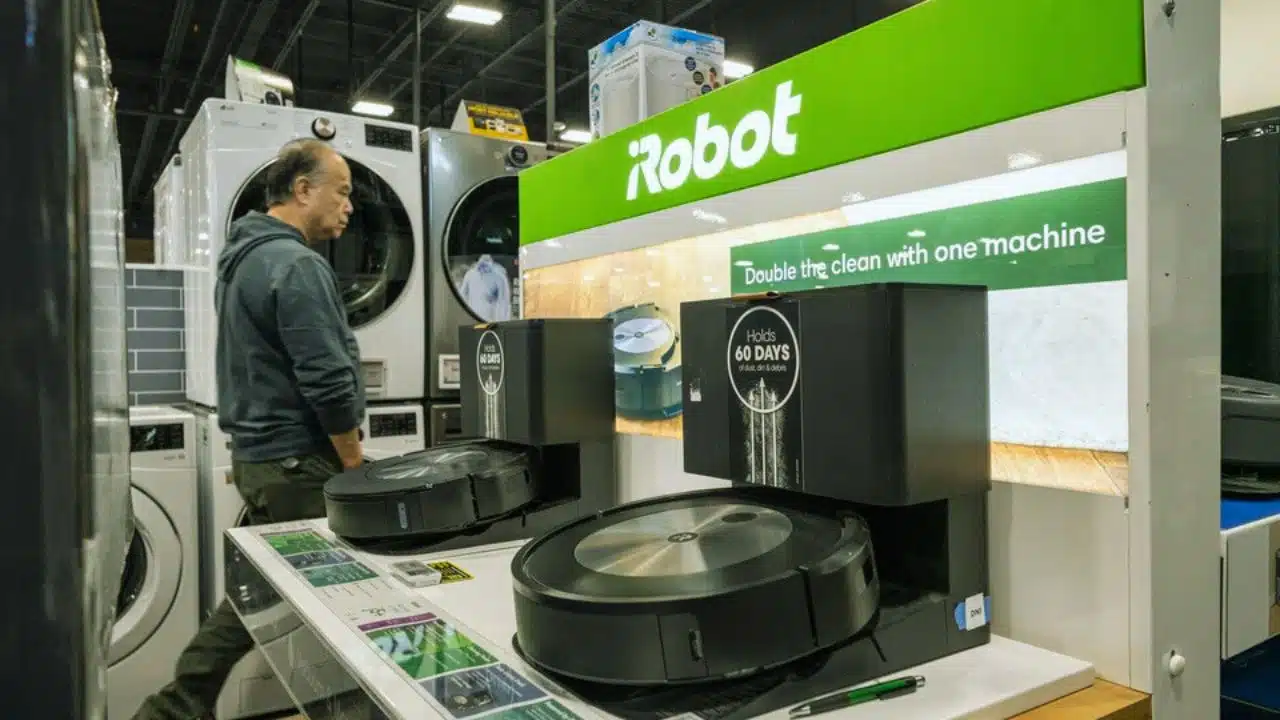
iRobot, best known for its Roomba robot vacuums, has filed for Chapter 11 bankruptcy protection in the US as part of a pre-packaged restructuring that would transfer ownership to its main supplier and lender, Shenzhen PICEA Robotics Co., Ltd., along with Santrum Hong Kong Co., Limited. The company says it expects to complete the court-supervised process by February 2026 and continue operating during the restructuring.
The company entered a pre-packaged Chapter 11 process in Delaware that would hand control to Shenzhen PICEA Robotics and Santrum Hong Kong, while iRobot says customer support will continue.
Lead
Roomba maker iRobot filed for Chapter 11 bankruptcy protection on December 14, 2025, in the US District of Delaware, setting up a court-supervised restructuring that would make the company privately held under new ownership. Under a restructuring support agreement, iRobot’s primary contract manufacturer and secured lender, Shenzhen PICEA Robotics Co., Ltd., together with Santrum Hong Kong Co., Limited, is set to acquire 100% of the equity of the reorganized company. iRobot said it expects the process to conclude by February 2026 and that the plan is designed to keep the business operating during the case.
iRobot’s announcement underscores how quickly competitive pressures and financing constraints can reshape a once-dominant consumer robotics brand, and it marks a turning point after years of declining performance and strategic uncertainty. The transaction also shifts a well-known US smart-home hardware name into the hands of a China-based manufacturing partner that already played a central role in building iRobot products.
What iRobot filed and what it agreed to
iRobot said it entered into a Restructuring Support Agreement with PICEA and Santrum that sets the terms for a pre-packaged Chapter 11 process. The company said the deal would delever its balance sheet by awarding PICEA 100% of the reorganized company’s equity interests. iRobot also said its existing publicly traded shares are expected to be canceled and that common shareholders should not expect any recovery if the court approves the plan.
If the transaction closes as described, iRobot would become a private company wholly owned by PICEA and would no longer be listed on Nasdaq or any other national stock exchange. Court filings and news reports described the case as a pre-packaged Chapter 11, a structure typically used when a company negotiates key terms with major stakeholders before filing to shorten the process.
What it means for customers, employees, and partners
iRobot said it intends to keep operating in the ordinary course during the bankruptcy process, with no expected disruption to app functionality, customer programs, product support, or partner relationships. The company said it filed customary first-day motions aimed at allowing continued operations, including paying employees and vendors through the process. iRobot’s notice process is being administered by claims agent Stretto, which the company said will provide routine court notices to interested parties.
For Roomba owners, the key near-term question is service continuity, and iRobot’s statement is that ongoing product support and app services will continue while the case proceeds. For retailers and supply-chain partners, the company’s message is that existing relationships and fulfillment should continue as the restructuring moves through court approval.
Why the buyer is a “Chinese firm”
The acquiring group identified by iRobot is Shenzhen PICEA Robotics Co., Ltd. and Santrum Hong Kong Co., Limited, described by the company as its primary contract manufacturer and secured lender. iRobot’s release describes PICEA as a global manufacturer and service provider of robotic vacuum cleaners, with research and development and manufacturing facilities in China and Vietnam. News coverage also characterized PICEA as iRobot’s main manufacturer and lender in the transaction.
Key figures
The bankruptcy plan follows mounting financial strain tied to iRobot’s debt load and supplier obligations, as indicated in filings and reporting tied to its lender and manufacturing relationships. In a separate disclosure cited by Bloomberg, Carlyle sold roughly $191 million of iRobot debt (principal and interest) to Santrum, a subsidiary of Shenzhen PICEA Robotics, as iRobot faced rising bankruptcy risks. That same reporting said PICEA was owed about $161 million by iRobot, with part of that amount past due at the time referenced.
Financial snapshot (reported figures)
| Metric | Figure | What it signals |
| Expected end date for pre-packaged Chapter 11 | February 2026 | Target timeline for court-supervised restructuring. |
| Buyer / new owner (post-reorg) | Shenzhen PICEA Robotics + Santrum Hong Kong | Supplier-lender taking control through court process. |
| Equity outcome for current common shareholders | Expected cancellation; no recovery | Public shareholders likely lose their investment if plan confirmed. |
| Debt sold to Santrum (PICEA subsidiary) | About $191 million (principal + interest) | Debt consolidation under buyer-linked entity ahead of restructuring. |
| Assets and liabilities range (court filing, per report) | $100 million to $500 million | Signals mid-sized balance sheet under severe stress. |
| Approx. number of creditors (court filing, per report) | 50,001 to 100,000 | Large stakeholder base typical of consumer-product companies. |
Timeline
iRobot’s restructuring comes after a period in which the company’s market value and strategic options narrowed, including a high-profile acquisition attempt that did not close. Reuters previously reported that the collapse of iRobot’s planned sale to Amazon for $1.4 billion increased pressure on the company’s finances and debt obligations. By late 2025, reporting tied to filings and lender moves showed iRobot’s debt increasingly concentrated with entities linked to PICEA.
| Date | Event | Why it mattered |
| 2002 | iRobot introduced the first Roomba robot vacuum. | Helped define the consumer robot vacuum category. |
| Jan 31, 2024 | Reuters detailed fallout after the planned $1.4 billion Amazon acquisition collapsed. | Left iRobot facing debt pressure as a standalone company. |
| Dec 1, 2025 | Bloomberg reported Carlyle sold about $191 million of iRobot debt to Santrum (a PICEA subsidiary). | Put a large portion of debt with the eventual buyer-linked entity. |
| Dec 14, 2025 | iRobot announced a pre-packaged Chapter 11 filing and restructuring deal in Delaware. | Set a path to transfer ownership to PICEA/Santrum via court process. |
| By Feb 2026 (expected) | iRobot expects to complete the Chapter 11 process. | Would finalize ownership change and delisting outcome. |