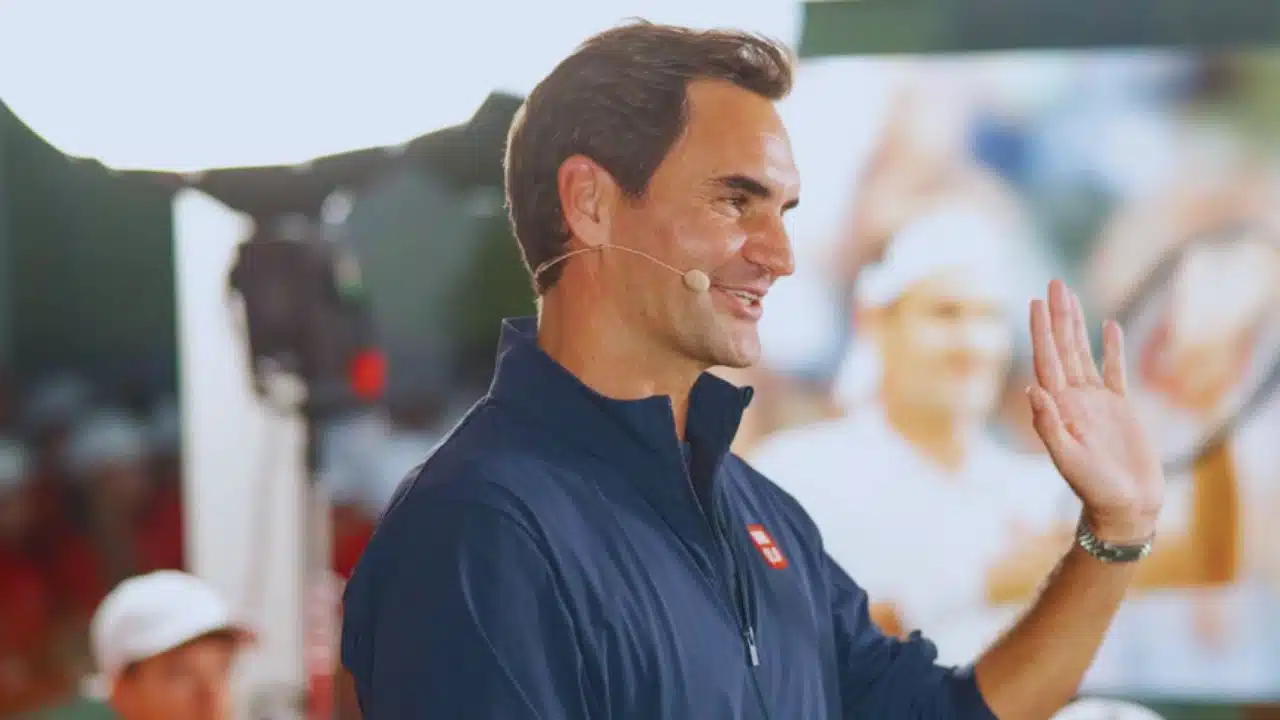
Roger Federer, the Swiss tennis icon and the first man to claim 20 Grand Slam singles titles, earned a well-deserved spot in the International Tennis Hall of Fame during his inaugural year of eligibility. The announcement, made on November 19, 2025, celebrates a career that not only redefined excellence in men’s tennis but also captivated global audiences with its blend of athletic prowess and graceful artistry. Federer, who stepped away from professional tennis in 2022 after a storied run, secured 103 tour-level singles titles—ranking second all-time in the Open Era behind Jimmy Connors’ 109—and held the ATP world No. 1 ranking for a record 310 weeks, including an unmatched streak of 237 consecutive weeks at the top.
This induction recognizes Federer’s profound influence on the sport, from his technical mastery to his role in elevating tennis’s popularity worldwide. His journey, marked by resilience through injuries and intense rivalries, set new benchmarks for longevity and consistency. As the sole inductee in the Player Category for the Class of 2026, Federer’s selection underscores his unparalleled legacy, drawing praise from peers, historians, and fans alike.
Emotional Announcement at the Heart of Swiss Tennis
The moment Roger Federer learned of his election unfolded at the Swiss Tennis Association headquarters in Biel, Switzerland—the very venue where he first picked up a racket as a child and began honing his skills. Surrounded by more than 20 fellow Hall of Famers, including mentors and idols like Stefan Edberg and Boris Becker, the surprise call turned into a touching tribute. Edberg, a six-time Grand Slam champion who coached Federer later in his career, and Becker, the three-time Wimbledon winner whose baseline power Federer emulated early on, led the congratulations via video, with Becker hailing him as “the most important sportsman of all time.”
Young Swiss players, representing the next wave of talent, witnessed the event, creating a poignant full-circle moment that highlighted Federer’s enduring inspiration. The association, which has nurtured countless talents since its founding in 1895, served as a symbolic backdrop, reminding everyone of Federer’s grassroots origins in a country with a modest tennis tradition. This gathering of legends and aspiring stars emphasized how Federer’s humility and accessibility have kept him connected to tennis’s community, even post-retirement.
Federer later shared that the setting amplified the honor, noting the presence of the younger generation as a reminder of his own beginnings. The event’s intimacy contrasted with his global fame, showcasing the personal bonds that have defined his interactions in the sport. Such moments reinforce why Federer remains a beloved figure, bridging eras through shared passion for tennis.
Inside the Hall of Fame Voting and Eligibility Rules
Federer’s unanimous support in the voting process made him the standout choice, as he was the only player to surpass the 75% threshold required for induction in the Player Category. Eligibility kicks in five years after a player’s last professional match, placing Federer on the ballot for 2026 following his 2022 retirement at the Laver Cup. The voting panel comprises roughly 140 members, including tennis journalists, historians, current and former Hall of Famers, and key industry figures who evaluate nominees based on their on-court achievements, sportsmanship, and contributions to tennis’s growth.
To add a democratic touch, fan votes from the official International Tennis Hall of Fame website factor in, with the top three fan-favored candidates receiving bonus points toward their total—up to 5%—to influence the final tally. An independent accounting firm oversees the count for transparency, ensuring the process remains credible and unbiased. Federer’s first-year success, far exceeding the minimum, reflects his broad appeal and the consensus on his transformative impact, from record-breaking performances to promoting the sport through exhibitions and philanthropy.
This structured system, in place since the Hall’s modern voting began in 1990, honors players who embody tennis’s highest ideals. Past inductees like Pete Sampras and Andre Agassi underwent similar scrutiny, but Federer’s swift entry highlights his exceptional status. The process also includes categories for contributors, with broadcaster Mary Carillo joining the Class of 2026 for her influential work in tennis media.
Federer’s Heartfelt Reaction to the Milestone
In a statement released through the International Tennis Hall of Fame, Federer expressed profound gratitude, saying, “It’s a tremendous honor to be inducted into the International Tennis Hall of Fame and to stand alongside so many of the game’s great champions. To be recognized in this way by the sport and by my peers is deeply humbling.” He went on to reflect on his appreciation for tennis’s rich history, crediting predecessors like Edberg and Becker for shaping his approach.
The 44-year-old added that the announcement’s location at Swiss Tennis, amid young players, felt especially meaningful, evoking the excitement of his early days. I look forward to visiting Newport next August to celebrate this special moment with the tennis community,” he concluded, signaling his eagerness to share the occasion with fans and fellow players. Federer’s words, delivered with characteristic poise, reveal a man who views the induction not as an endpoint but as a continuation of his commitment to tennis.
Reactions poured in from across the tennis world, with Edberg calling it a “fitting tribute” and Becker emphasizing Federer’s role in modernizing the game. Even rivals like Rafael Nadal and Novak Djokovic offered congratulations, underscoring the respect that transcends competition. This outpouring affirms Federer’s status as a unifying force in a sport often defined by individual battles.
Tracing the Highlights of an Iconic Career
Federer’s career, spanning from his ATP debut in 1998 to his farewell in 2022, epitomized dominance and elegance, particularly during the Big Three era alongside Rafael Nadal and Novak Djokovic. He claimed his maiden Grand Slam at Wimbledon in 2003, edging Mark Philippoussis in straight sets to launch a dynasty that saw him win 20 majors—the first man to do so—before Nadal reached 22 and Djokovic 24. His haul featured a men’s record eight Wimbledon titles (2003-2007, 2009, 2012, 2017), six Australian Opens (2004, 2006-2007, 2010, 2017-2018), five U.S. Opens (2004-2008), and one French Open (2009), securing a career Grand Slam shared by only seven other men in history.
Pivotal moments defined his path, such as the 2009 Wimbledon final against Andy Roddick, a grueling five-set marathon totaling over 16 hours across two days, where Federer broke Pete Sampras’ record of 14 majors with his 15th. He also notched 28 ATP Masters 1000 titles, six ATP Finals crowns (2003, 2004, 2006, 2007, 2010, 2011)—second only to Djokovic’s seven—and an Olympic doubles gold with Stan Wawrinka in Beijing 2008, plus a singles silver in 2012. Federer’s serving prowess shone with 11,478 career aces (third all-time), while his 1,251 match wins rank second in the Open Era.
Unique feats abound: He won two different majors five years in a row each—Wimbledon from 2003-2007 and U.S. Open from 2004-2008—the only player, male or female, to achieve that. Federer reached finals at 10 straight majors from 2005-2007, winning eight, and strung together 23 consecutive semifinals from 2004-2010, the men’s record. His longevity impressed, with 18 year-end top-10 finishes (tied for most with Nadal and Djokovic), 15 straight years of at least one title (2001-2015), and 50+ wins in 16 seasons—the Open Era men’s high. In 2006 alone, he captured 12 titles, including three majors and the ATP Finals.
Off-court, Federer’s sportsmanship earned him a record 13 Stefan Edberg Awards (2004-2009, 2011-2017), part of 40 total ATP honors. He spent 14+ years in the top 10 (734 weeks, third all-time) and ended nine years as No. 1 (2004-2010, 2012, 2018). Even late-career triumphs, like his 2017 Australian Open win at age 35 over Nadal, defied expectations amid knee issues. His style—fluid one-handed backhands, precise volleys—turned matches into spectacles, influencing coaching and equipment innovations.
The rivalry with Nadal, especially their 40 clashes (24-16 for Nadal), and Djokovic (27-23 for Djokovic) pushed boundaries, with Federer adapting from serve-and-volley to baseline grinding. His 2009 French Open victory, after four final losses to Nadal, completed the Grand Slam and silenced critics. Federer’s foundation has raised over $90 million for education in Africa and Switzerland, extending his impact beyond courts.
Anticipation Builds for the 2026 Induction Ceremony
The Class of 2026 will be enshrined during the Induction Celebration weekend of August 27-29, 2026, at the International Tennis Hall of Fame in Newport, Rhode Island—a coastal gem hosting the event since 1954 amid its pristine grass courts. This prestigious affair draws thousands, featuring speeches, exhibits, and matches that honor inductees’ legacies. Federer will share the spotlight with Mary Carillo, whose decades as a commentator and journalist have enriched tennis coverage for outlets like ESPN and HBO.
Newport’s historic setting, tied to the U.S. National Championships’ origins, adds gravitas, with the Hall’s museum showcasing artifacts like Federer’s rackets and trophies. Expect tributes from a star-studded lineup, including Martina Hingis, Billie Jean King, and Lleyton Hewitt, who have lauded his elegance and integrity. The ceremony often includes enshrinement plaques and a parade, allowing fans to celebrate up close.
Federer has voiced enthusiasm for the event, viewing it as a communal milestone. With Djokovic still active and chasing more records, the induction will contrast Federer’s completed chapter with the ongoing Big Three saga. It promises to inspire visitors, ensuring his story motivates future stars exploring the Hall’s interactive displays.