

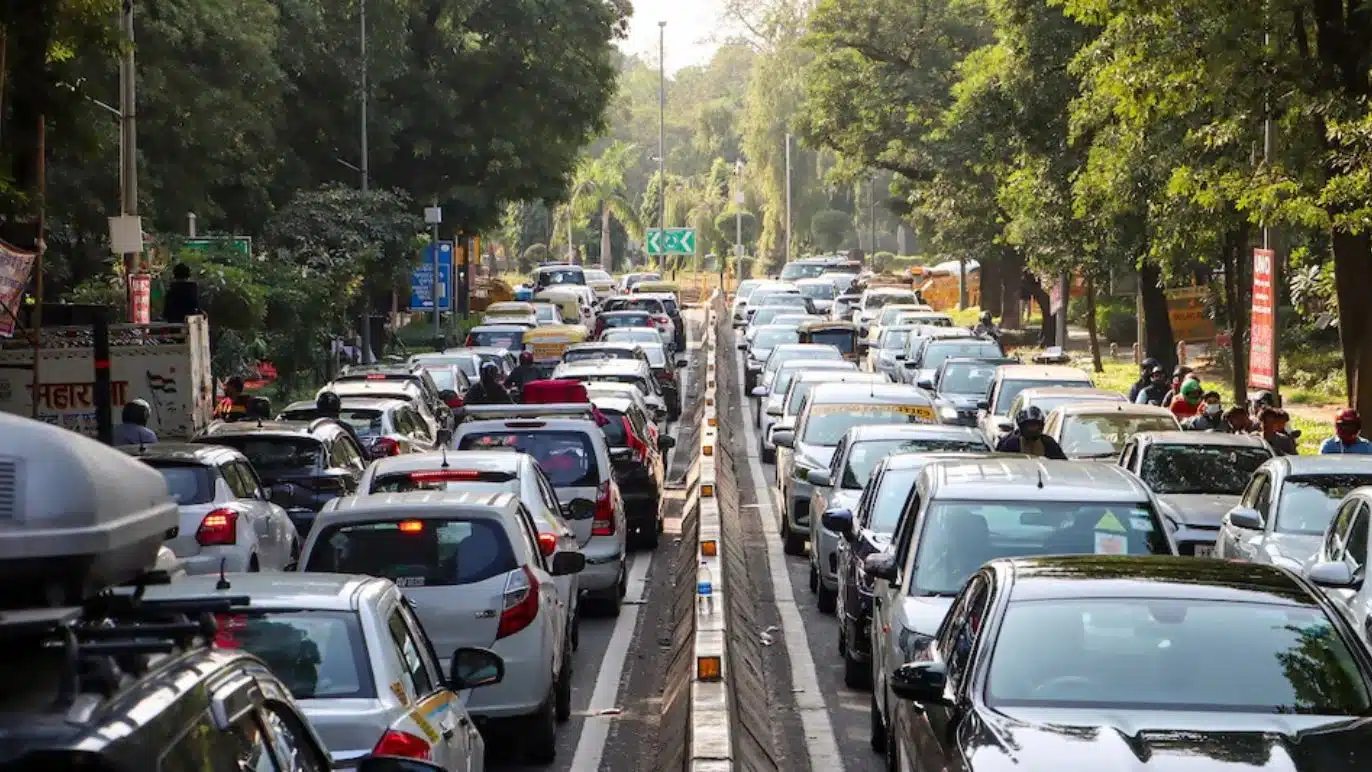
India’s passenger vehicle market is poised to close 2025 with all‑time high retail sales of around 4.6 million units, marking a strong double‑digit jump over 2024 and underscoring the growing aspiration and purchasing power of Indian consumers. This milestone comes despite a sluggish first half of the year, with a sharp rebound in demand from the festive season, tax cuts on compact SUVs, and a wave of new launches tipping the market into record territory.
Record Year for India’s Car Market
Industry estimates suggest that India’s passenger vehicle (PV) market will end 2025 with about 4.6 million units retailed, up roughly 10.5% from around 4.12 million units in 2024. This performance cements India’s position among the world’s most dynamic car markets, combining strong domestic consumption with a rapidly evolving product mix led by compact SUVs.
Executives tracking retail trends say that in the 11 months to November, sales had already touched close to 3.9 million units, with December expected to add around 550,000 units and push the total to the 4.6‑million mark. That late surge significantly outpaced the cautious, low single‑digit growth forecasts many carmakers had pencilled in at the start of the year, when macroeconomic concerns and high interest rates were expected to cap discretionary spending.
What Fueled the 4.6 Million Surge?
Multiple demand‑side and policy‑side factors converged to drive the record year in auto sales. Industry data and commentary point to a few key forces behind the surge:
-
GST cut on compact SUVs
A reduction in the effective tax rate on compact SUVs, timed ahead of the main festive season, sharply improved the value proposition of one of India’s hottest vehicle segments. The move lowered on‑road prices and unleashed pent‑up demand among urban and semi‑urban buyers who had been waiting for price relief before upgrading. -
Festive season boost
The core festive months once again acted as a powerful demand accelerator, aided by dealer discounts, exchange bonuses, and extended warranty schemes. Automakers front‑loaded production and inventory in anticipation of strong footfall, and retail data from October onwards indicate a sustained pick‑up that carried into the final quarter of 2025. -
Shift to SUVs and feature‑rich models
SUVs continued to dominate India’s passenger vehicle landscape in 2025, with compact and mid‑size SUVs capturing a growing share of bookings at the cost of entry‑level small cars. Consumers displayed a marked preference for feature‑rich models—equipped with connected tech, larger infotainment screens, advanced safety features, and automatic transmissions—even at higher price points. -
Rural and Tier‑II/Tier‑III demand
While urban centres led the recovery, improving farm incomes and broader economic normalisation helped revive demand in rural and semi‑urban pockets, especially for CNG and compact SUV models perceived as more fuel‑efficient and durable. Dealers in several states reported better enquiry levels in the second half of the year compared with early 2025, when sentiment had been subdued. -
Better financing access
Competitive auto loan schemes, flexible tenures, and marginally easing interest rate expectations supported consumer confidence. Banks and non‑bank lenders increasingly targeted salaried and self‑employed buyers with pre‑approved offers, simplifying purchase decisions during the festive window.
EVs Hit New Highs, But Mass Market Still Prefers ICE
Electric vehicle sales in India’s passenger car segment also reached new highs in 2025, but their share remains modest relative to internal combustion engine (ICE) vehicles.
-
Record EV volumes, modest share
Retail EV car sales are estimated at about 193,000 units for 2025, up from roughly 176,430 units the previous year, implying growth of around 9–10%. Yet, even after this increase, EVs still account for only about 4% of the total passenger vehicle market, underscoring how early India still is in the adoption curve. -
“Push‑led” rather than “pull‑driven”
Analysts describe EV growth as heavily “push‑led,” driven by incentives, discounts, and supply‑side enthusiasm rather than a fully organic consumer pull. According to JATO Dynamics, EVs have proven attractive to early adopters, but the larger “early majority” segment remains wary due to concerns over charging infrastructure, resale value, and long‑term battery performance. -
Petrol, diesel and CNG maintain edge
Petrol, diesel, and CNG vehicles continue to dominate in terms of volume because they offer a familiar ownership pattern, broader refuelling infrastructure, and lower upfront prices in most segments. The sharp rise in CNG variants across hatchbacks and compact SUVs also offered a middle ground to cost‑conscious buyers seeking better running economy without moving to full battery electric options. -
Tesla entry and local EV push
The year will also be remembered for the formal arrival of Tesla in India and an aggressive EV push by domestic and joint‑venture brands such as Tata Motors, Mahindra & Mahindra and JSW MG Motor India. New launches, higher localisation, and better‑specified models have begun to expand consumer choice, particularly in premium and mid‑range segments.
Segment Winners and Laggards
The 4.6‑million‑unit headline figure masks divergent trends across body styles and price bands.
SUV dominance and mainstream brands
-
SUVs—especially compact and mid‑size—once again captured the largest slice of incremental demand in 2025. Price‑corrected compact SUVs benefited the most from the GST rate cut, with a pronounced spike in retail momentum during the festival months and year‑end offers.
-
Key mainstream brands such as Maruti Suzuki, Tata Motors, Mahindra & Mahindra and Hyundai Motor India continued to rely heavily on SUV portfolios to drive growth and defend market share. Several of these players also used CNG and hybrid variants to widen their appeal among value‑conscious households and fleet buyers.
Luxury cars lose some steam
-
India’s luxury car segment, typically defined as vehicles priced above ₹50 lakh, registered a much more modest pace of growth in 2025 relative to the broader mass‑market boom. Industry estimates indicate that luxury sales are expected to reach around 52,000 units, reflecting growth of barely 1.6% for the year.
-
Analysts point to a combination of factors—including higher acquisition costs, global supply disruptions for certain premium components, and cautious spending among affluent buyers—as reasons why luxury vehicles underperformed even as the broader market hit new records. This stands in contrast to the robust appetite for upper‑mid segment SUVs and feature‑rich mass‑market models.
Small car pressures
-
Entry‑level small cars continued to face pressure from both ends: aspirational buyers shifted upwards into compact SUVs and premium hatchbacks, while price‑sensitive customers weighed two‑wheelers or deferred purchases. The rising regulatory and safety requirements have also made it harder for manufacturers to keep entry‑level price points attractive without eroding margins.
Key Numbers at a Glance
| Indicator | 2024 (est.) | 2025 (est.) | Change/Comment |
|---|---|---|---|
| Total PV retail sales | ~4.12 million units | ~4.6 million units | ~10.5% growth year‑on‑year |
| EV car sales | ~176,430 units | ~193,000 units | ~9–10% growth; ~4% PV share |
| Luxury car sales (≥₹50 lakh) | ~51,200 units (approx.) | ~52,000 units | ~1.6% growth, lagging PV market |
| PV market share of EVs | ~4% | ~4%+ | Still early‑stage adoption |
| Retail PV sales Jan–Nov 2025 | – | ~3.9 million units | Sets up strong December finish |
| Expected December 2025 retail sales | – | ~550,000 units | Pushes total to record level |
Industry Mood: From Caution to Optimism
At the start of 2025, many automakers projected only low single‑digit growth in wholesale volumes, citing concerns over inflation, interest rates, and the fading of earlier post‑pandemic pent‑up demand. Through much of the first half, dispatches to dealers reflected this caution, and inventories were tightly managed as companies waited for clearer signals.
From October onwards, however, the tone shifted as both wholesale and retail sales began advancing at a faster clip. Executives describe the fourth quarter as a period of “fast and furious” pickup in showroom traffic, aided by sustained promotional activity, tax relief on key SUV models, and improving consumer confidence around income prospects.
Looking beyond 2025, the expectation in industry circles is that this momentum will carry into the new year, though possibly at a more moderated pace as the base effect of the 4.6‑million record year kicks in. Automakers are also keeping a close eye on regulatory shifts, fuel price trends, and the trajectory of EV incentives, all of which will shape product and capacity planning.
Structural Shifts Behind the Numbers
The 2025 record is not simply a short‑term spike; it rests on structural shifts that have been re‑shaping India’s car market over the past few years.
-
Rising incomes and aspirations
A growing middle class with higher disposable incomes continues to fuel multi‑car households and upgrades from two‑wheelers to cars, particularly in emerging urban centres. Cars are increasingly viewed not just as mobility tools but as lifestyle and safety investments, encouraging buyers to stretch budgets for better‑equipped models. -
Urbanisation and commuting patterns
Rapid urbanisation, longer commutes and patchy public transport in many cities have kept personal vehicle ownership attractive, despite congestion and parking challenges. Ride‑hailing and shared mobility have added some elasticity to demand, but have not fundamentally dislodged the desire for privately owned vehicles, especially in families with children or elderly members. -
Policy and regulatory drivers
Over the last decade, tighter emission norms and safety regulations have pushed manufacturers to modernise platforms, enhance safety equipment, and improve fuel efficiency. Recent tax tweaks—such as the GST cut on compact SUVs—have also reshaped segment economics, providing sudden tailwinds to certain body styles and disincentives to others. -
Technology and connectivity
Connected car features, smartphone integration, over‑the‑air updates and advanced driver assistance systems are increasingly influencing purchase decisions in the mid and upper segments. This technology layer is helping automakers justify higher price points and differentiate offerings in an intensely competitive market.
Challenges Behind the Boom
Despite the celebratory headline of 4.6 million units, the industry faces several challenges that could influence growth trajectories in the coming years.
-
Pressure on entry‑level affordability
Rising input costs, compliance with safety and emission regulations, and currency fluctuations have pushed up ex‑showroom prices over time, making entry‑level cars significantly more expensive than a few years ago. This has contributed to a demand drag in the most price‑sensitive segments, where buyers are struggling to reconcile aspirational needs with stretched budgets. -
EV ecosystem gaps
While EV volumes are rising, the supporting charging infrastructure, financing models, and residual value ecosystem are still evolving. Range anxiety and concerns around long‑term battery performance continue to deter a large segment of potential buyers, especially those without private parking or reliable access to chargers. -
Global supply and macro risks
The industry remains exposed to global disruptions in semiconductor supplies, raw material prices, and logistics chains, which can trigger production bottlenecks and longer waiting periods. Moreover, any significant shifts in interest rates or broader economic conditions could quickly dampen consumer sentiment in a market where a substantial share of purchases is financed. -
Luxury and premium sensitivity
The sluggish growth in the luxury segment highlights how higher‑ticket discretionary purchases can be more sensitive to global macro shocks, currency fluctuations, and wealth‑effect dynamics. This may prompt premium manufacturers to recalibrate local assembly, pricing, and product strategies even as mass‑market players ride the volume wave.
Outlook: Can the Momentum Hold?
Industry projections heading into 2026 indicate cautious optimism, with expectations that India’s car market will remain on a growth path, albeit from a much higher base after the 2025 record.
S&P Global Mobility, in a broader outlook released earlier, projected Indian light vehicle sales to continue expanding in 2025 from 2024 levels, supported by ongoing urbanisation and income growth. The actual performance—now tracking at around 4.6 million units—appears to be meeting or even surpassing those expectations, signalling that demand fundamentals remain robust.
Over the medium term, the trajectory of EV adoption, fuel prices, and regulatory interventions on emissions and safety will be critical swing factors. Automakers are expected to deepen localisation, expand EV and hybrid portfolios, and invest in digital retail and after‑sales platforms as they compete for share in what is increasingly one of the world’s most contested car markets.
For now, though, 2025 will be remembered as the year India’s passenger vehicle market defied early‑year caution, rode a festive‑season wave, and set a new benchmark with 4.6 million cars driving out of showrooms across the country.






























