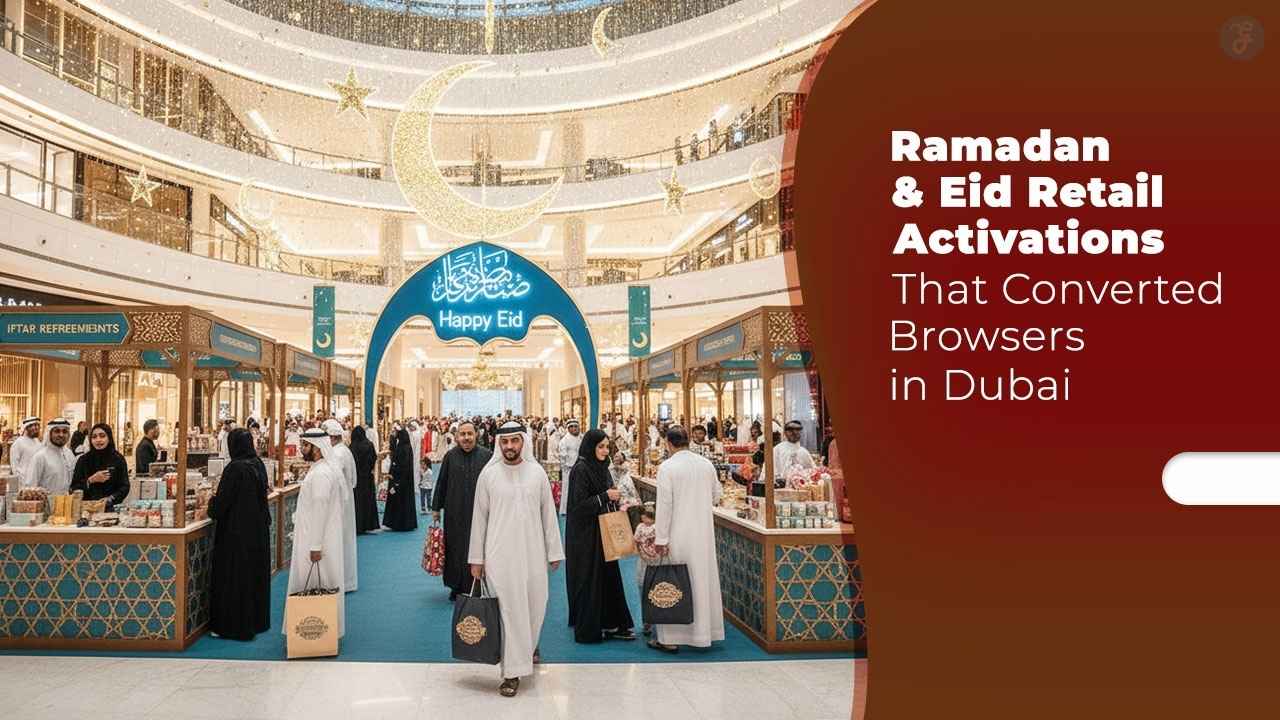
The retail landscape in the UAE is preparing for another record-breaking season, but for brands looking to capitalize on Ramadan retail activations Dubai, the rules of engagement are shifting. As we look toward the Holy Month in 2026, simply hanging lanterns and offering flat discounts is no longer enough to capture the attention of a sophisticated, value-driven market. With retail spend in the UAE projected to climb significantly, the competition is fierce, but the opportunity is massive for brands that understand the nuances of the season.
The challenge for most retailers in Dubai isn’t footfall—malls like The Dubai Mall and Mall of the Emirates are consistently packed from Iftar until the early hours of the morning. The challenge is conversion. How do you turn the thousands of “window shoppers” drifting through the atrium into active buyers? The answer lies in moving beyond transaction-based marketing to experience-based activations that resonate with the core values of Ramadan: charity, community, and tradition. This guide details nine specific strategies to transform your browsing traffic into loyal revenue for the 2026 season.
Key Takeaways: Winning Ramadan 2026
-
Shift to “Suhoor Hours”: The retail clock resets during Ramadan. Your operational peak is now 9:00 PM to 2:00 AM. Adjust staffing, geofencing ads, and flash sales to own the night.
-
Charity is the New Discount: In 2026, value-driven shoppers prefer brands that integrate Zakat/Giving directly into the product (e.g., “Buy One, Give One”) over standard percentage-off deals.
-
Experience Over Transaction: To convert mall browsers, you must stop them in their tracks. Use Gamification (Virtual Iftars), Personalization (Calligraphy stations), and Immersion (VR Heritage tours) to increase dwell time.
-
Bridge the O2O Gap: Mobile is the browsing tool; the store is the experience center. Aggressively promote Click-and-Collect to solve logistics bottlenecks before Iftar.
-
Personalization Wins Gifting: For luxury and fashion, customization (engraving, embroidery, styling) is the primary driver for high-ticket Eid gifts, moving inventory faster than generic stock.
Understanding the 2026 Dubai Ramadan Shopper
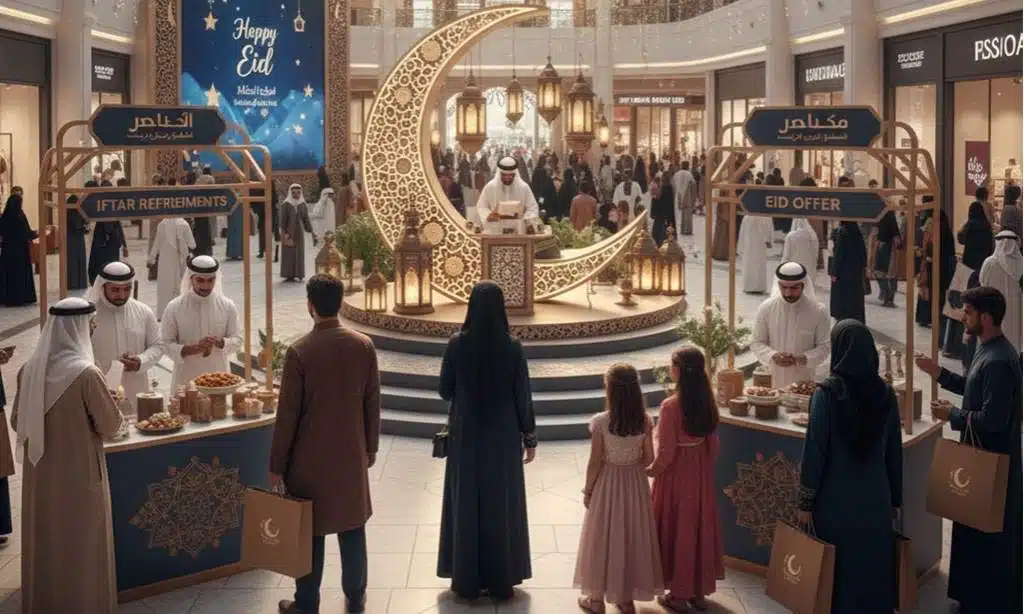
Before diving into specific activations, it is crucial to understand who you are selling to. The psychology of the consumer changes drastically during the Holy Month. In 2026, we are seeing a peak in “conscious consumerism”—shoppers are prioritizing brands that align with ethical values and provide genuine utility over those that simply push excess consumption.
The “Golden Hours” of Retail
One of the most critical operational shifts required for successful Ramadan retail activations Dubai is adjusting to the “Suhoor Surge.” Unlike the rest of the year, where footfall tapers off after 10:00 PM, Ramadan sees a unique nocturnal economy.
The Shift in Peak Shopping Hours (Regular vs. Ramadan 2026):
| Time Window | Regular Season Behavior | Ramadan Season Behavior | Retailer Action Required |
| 10:00 AM – 4:00 PM | Moderate traffic; errands. | Low traffic; fasting hours. | Focus on B2B sales or operational restocking. |
| 5:00 PM – 7:00 PM | Peak rush hour/commute. | “The Dead Zone” (Iftar prep). | Close non-essential counters; prepare staff for night shift. |
| 7:00 PM – 9:00 PM | Dinner / Leisure. | Iftar & Prayer time. | Low conversion; optimize online ads for mobile browsers. |
| 9:00 PM – 2:00 AM | Traffic ceases. | The Golden Hours (Peak). | Maximum staff on floor; interactive activations live. |
The Value-Driven Shift
Data suggests that over 75% of UAE consumers feel more positively toward brands that engage in charitable activities during Ramadan. This isn’t just about “Corporate Social Responsibility” (CSR) checkboxes; it’s about integrating benevolence into the shopping journey. Shoppers in 2026 are looking for “Eid marketing strategies 2026” that allow them to give back effortlessly.
9 Retail Activations That Drive Conversion
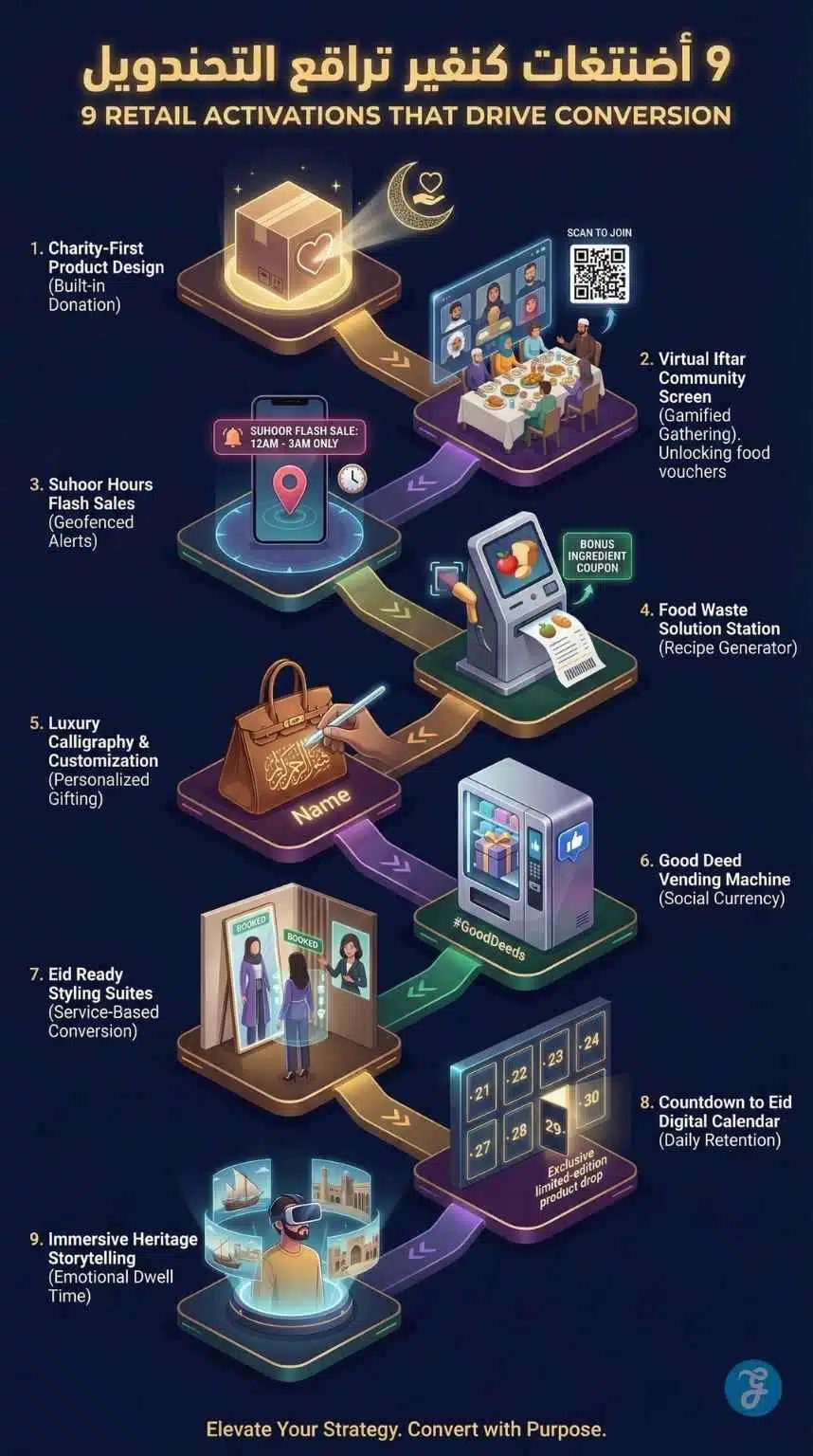
These nine strategies are designed to disrupt the “autopilot” browsing mode of mall visitors. They leverage technology, psychology, and tradition to stop customers in their tracks and encourage interaction.
1. The “Charity-First” Product Adjustment
The most powerful driver of conversion during Ramadan is the desire to do good (Zakat/Sadaqah). Instead of asking for a donation at checkout (which adds friction), build the charity into the product.
The Strategy:
Re-engineer a best-selling product specifically for the Holy Month where the physical form of the product represents the charitable act.
-
The Execution: If you sell luxury candles, create a limited edition “Light for Light” set. For every candle bought, a solar lamp is donated to a refugee camp. The packaging should feature a tracker showing exactly where the donation is going.
-
Why It Converts: It removes the guilt of luxury spending. A browser debating a purchase is more likely to convert when the purchase fulfills a religious or moral obligation.
2. The “Virtual Iftar” Community Table
In an era of hyper-individualism, Ramadan remains a communal event. Retailers can capitalize on this by creating digital gathering spaces within physical stores.
The Strategy:
Install a large interactive screen or an Augmented Reality (AR) mirror at the storefront. This acts as a “Virtual Iftar Table.”
Features of the Virtual Iftar Activation:
| Feature | Description | Conversion Mechanic |
| Gamification | Users scan a QR code to “seat” themselves at the digital table. | Captures customer data (email/phone) for retargeting. |
| The Unlock | Once the table is “full” (e.g., 10 people join), a reward unlocks. | Encourages groups to participate together; creates urgency. |
| The Reward | A 20% discount or a “Buy 1 Get 1” voucher for immediate use. | Drives immediate footfall from the screen to the checkout counter. |
3. “Suhoor Hours” Flash Sales (Geofencing)
To effectively execute Ramadan retail activations Dubai, you must meet the customer where they are: on their phones, late at night.
The Strategy:
Utilize geofencing technology to push notifications to app users who are within 500 meters of your store between midnight and 3:00 AM.
-
The Execution: “Awake for Suhoor? So are we. Visit [Brand Name] in the next 30 minutes for an exclusive ‘Midnight Collection’ preview and a complimentary coffee.”
-
Why It Converts: It targets the “bored browser” demographic—people walking around the mall post-Iftar looking for entertainment. It creates a “Velvet Rope” effect where the offer feels exclusive to the night owls.
4. The “Food Waste” Solution Station
Food waste is a major topic of concern during Ramadan. Smart grocery and homeware retailers can position themselves as partners in sustainability.
The Strategy:
Set up an interactive kiosk titled “The Suhoor Chef.” Shoppers input the leftovers they have in their fridge (e.g., “Rice, half a chicken, yogurt”).
-
The Execution: The AI-powered kiosk prints out a creative recipe to repurpose those leftovers for Suhoor. Critically, the recipe will likely require one fresh ingredient (e.g., a specific spice or herb) which the retailer sells. The kiosk prints a coupon for that specific item.
-
Why It Converts: It offers high value (solving a problem) and drives a specific, low-friction purchase that often leads to a larger basket size.
5. Luxury “Calligraphy & Customization” Pop-ups
For high-end retailers, Ramadan consumer behavior UAE leans heavily towards gifting. A generic luxury item is less appealing than a personalized gesture.
The Strategy:
Transform a section of the floor into an “Artisan Studio.” Hire a local calligrapher to work live on-site during peak hours (9 PM – 1 AM).
Customization Options by Sector:
| Retail Sector | Customization Idea | Value Add |
| Fragrance | Engraving the recipient’s name in Arabic on the bottle. | Turns a product into a keepsake. |
| Leather Goods | Hand-painting traditional geometric art on tags/bags. | Creates a “one-of-a-kind” exclusive. |
| Fashion | Embroidering initials or Eid greetings on cuffs/scarves. | Increases emotional attachment to the garment. |
6. The “Good Deed” Vending Machine
This activation generates massive social media buzz and footfall, serving as a powerful lead magnet.
The Strategy:
Install a vending machine in a high-traffic area near your store. The machine does not accept cash or cards. It accepts “Good Deeds.”
-
The Execution: The user selects a product (a sample-size perfume, a branded accessory, or a discount voucher). To dispense it, they must post a pledge on Instagram or TikTok using your campaign hashtag (e.g., #BrandNameGivesBack). The machine detects the hashtag usage via API and dispenses the gift.
-
Why It Converts: It creates User Generated Content (UGC) at scale. The free gift serves as a “tripwire” that brings them into the main store to redeem a full purchase using the voucher included with the sample.
7. “Eid Ready” Styling Suites
As Eid approaches, anxiety about “what to wear” increases. This is particularly relevant for fashion brands targeting Gen Z and Millennials.
The Strategy:
Offer a “Style Concierge” service. This isn’t just a changing room; it’s a booking-based appointment system.
-
The Execution: Shoppers fill out a quick style quiz online. When they arrive, a curated rack of “Eid marketing strategies 2026″ looks is waiting for them in a private suite, complete with refreshments.
-
Why It Converts: The commitment of booking an appointment signals high intent. Once a customer tries on a curated outfit that fits, the conversion rate is often above 60%, significantly higher than browsing traffic.
8. The “Countdown to Eid” Digital Advent Calendar
Retention is key during the long month. You want shoppers returning to your store (or app) multiple times.
The Strategy:
Adopt the “Advent Calendar” model but tailor it for the last 10 nights of Ramadan (the most spiritual and high-traffic period).
-
The Execution: “10 Days, 10 Drops.” Every night at 8:00 PM, a new limited-edition product or aggressive offer is revealed. It is available only for 24 hours.
-
Why It Converts: It builds a habit loop. Customers check your brand daily to see “what’s new,” increasing the likelihood of impulse buys and reducing the chance they will shop with a competitor.
9. Immersive Heritage Storytelling
Modern consumers, especially tourists and expats in Dubai, crave cultural context.
The Strategy:
Use projection mapping or VR headsets to transport customers to “Old Dubai” or historical Islamic sites.
-
The Execution: A corner of the store is darkened. Projectors display a 360-degree view of the Deira Creek in the 1970s or the architecture of Alhambra. The narrative weaves in the history of the product (e.g., the history of Oud or silk).
-
Why It Converts: It increases “dwell time.” Studies show a direct correlation between the time a customer spends in-store and the amount they spend. By emotionally connecting them to the heritage of the region, you elevate the product from a “commodity” to a piece of history.
Omnichannel Integration: The O2O Bridge
Successful Ramadan retail activations Dubai are not isolated to the physical store. They must bridge the gap between Online and Offline (O2O). In 2026, the mobile phone is the remote control for the physical shopping experience.
The “Click-and-Pray-and-Collect” Model
Logistics in Dubai can be a nightmare just before Iftar due to traffic. Smart retailers are pushing “Click and Collect” aggressively.
Optimizing O2O for Ramadan:
| Touchpoint | Strategy | Benefit |
| Social Media | Promote “In-Store Exclusives” that cannot be bought online. | Drives physical footfall from digital ads. |
| App Notification | “Your basket is waiting.” Reserve items online, try on in-store. | Reduces return rates; guarantees item availability. |
| In-Store Kiosk | “Out of stock? Ship to home.” Endless aisle technology. | Saves the sale even if inventory is low. |
Luxury Market Specifics: Targeting the HNWI
For luxury brands, the approach must be subtler. High-Net-Worth Individuals (HNWIs) in Dubai are inundated with offers. To cut through the noise, luxury retail Ramadan campaigns must focus on privacy and exclusivity.
-
The Private Majlis: Instead of a public sale, invite top-tier clients to a private Suhoor in a VIP suite. The products are displayed subtly as part of the decor, not on racks.
-
The Concierge Service: Offers “Home Viewing” services where a selection of goods is brought to the client’s home before Iftar for them to select in privacy.
3 Pitfalls to Avoid in Your 2026 Strategy
Even well-intentioned campaigns can backfire if they fail to respect the cultural nuances or operational realities of the season. Avoid these common errors to protect your brand reputation.
1. Cultural Tokenism vs. Authenticity Slapping a crescent moon on a standard ad campaign is no longer sufficient. In 2026, consumers can spot “Rainbow Washing” or “Ramadan Washing” instantly.
-
The Mistake: Using generic stock imagery of lanterns that don’t match local Emirati heritage, or using incorrect Arabic calligraphy.
-
The Fix: Collaborate with local Emirati artists or cultural consultants to ensure your visuals and copy respect the specific traditions of the UAE, not just a generalized “Middle East” stereotype.
2. The Logistics Bottleneck (The “Iftar Crunch”) The hour before Maghrib (sunset) is the most stressful time for logistics.
-
The Mistake: Promising “Same Day Delivery” without accounting for the 5:00 PM – 7:00 PM traffic gridlock in Dubai. Late deliveries during Iftar can permanently damage customer loyalty.
-
The Fix: Implement a strict “Cut-Off” time for pre-Iftar delivery (e.g., 2:00 PM) and incentivize “Click-and-Collect” for last-minute orders.
3. Ignoring the Non-Fasting Demographic, Dubai is a global melting pot. While the focus is on Ramadan, a significant portion of the population (and tourists) are not fasting.
-
The Mistake: Shutting down all food and beverage operations or hiding them aggressively, making non-fasting shoppers feel unwelcome.
-
The Fix: Create discreet but accessible dining zones. Ensure your messaging is inclusive—”Ramadan Kareem” for observers, and “Season’s Greetings” or welcoming messaging for tourists.
Measuring Success: KPIs Beyond “Sales”
To accurately judge the ROI of these Ramadan retail activations Dubai, you need to look beyond the cash register. “Experience” requires different metrics.
Essential KPIs for Experiential Retail:
| Metric | What It Measures | How to Track It |
| Dwell Time | How long a customer stays in the store. | Wi-Fi tracking or Heatmap cameras. |
| Interaction Rate | Percentage of footfall that engages with an activation (e.g., uses the VR headset). | Sensor counters on the device / Staff tally. |
| Social Share of Voice (SOV) | How many people posted about your activation online? | Tracking campaign hashtags (e.g., #YourBrandRamadan). |
| O2O Conversion | Online browsers who physically visited the store. | Redemption rate of digital “Geofenced” coupons. |
Planning Timeline for Ramadan 2026
To execute these activations flawlessly, the planning phase must begin well in advance.
-
Q4 2025 (Oct-Dec): Concept finalization and budget approval. Secure technology partners for VR/AR activations.
-
January 2026: Prototype production (packaging, limited edition items). Calligrapher/Influencer booking.
-
February 2026: “Teaser” campaigns begin on social media. Installation of in-store tech.
-
Mid-Shaban (15 days before Ramadan): Soft launch of activations to test logistics.
Final Thought: The Shift from Transaction to Tradition
The era of passive retailing in Dubai is over. As we approach 2026, the brands that will win during the Holy Month are those that understand that Ramadan retail activations in Dubai are about more than just transactions—they are about becoming part of the customer’s Ramadan story.
Whether it is through a charity-integrated product, a late-night geofenced offer, or a personalized styling session, the goal is to create a moment of connection. When you align your retail strategy with the values of the season—generosity, community, and reflection—you don’t just convert a browser into a buyer; you convert them into an advocate.
Actionable Next Step:
Review your current marketing calendar for 2026. Identify one touchpoint where you can replace a standard discount with an interactive, value-based activation from the list above. Start small, measure the engagement, and scale up for the final ten days of the month.
Frequently Asked Questions (FAQ)
What are the best strategies for Ramadan retail activations in Dubai?
The most effective strategies involve blending technology with tradition. This includes charity-linked products, interactive in-store experiences like “Virtual Iftars,” and optimizing operations for late-night “Suhoor” shopping hours.
How does consumer behavior change during Ramadan in the UAE?
Consumer behavior shifts significantly, with shopping hours moving to late night (9 PM – 2 AM). There is also a marked preference for brands that demonstrate social responsibility (CSR) and offer personalized, gifting-ready products.
When should brands start planning their Ramadan 2026 campaigns?
Brands should begin planning in Q4 of the previous year (October-December). Technology partners and limited-edition product manufacturing should be secured by January to ensure a seamless launch before the Holy Month begins.
Why is “Values-Based Marketing” important for Eid strategies?
Shoppers in the UAE are increasingly conscious of ethical consumption. Campaigns that focus on charity, sustainability (like food waste reduction), and community support tend to have higher engagement and conversion rates than pure sales-driven campaigns.